Episode #437: The Most Critical Math Improvement Planning Insights for 2026
LISTEN NOW HERE…



WATCH NOW…
You’ve made big moves in your math program—but something still feels stuck. Why?
After a full year of supporting school and district teams, we’re reflecting on the shifts that created real traction—and the patterns that quietly stalled progress. Whether you’re leading math at the classroom, school, or system level, this conversation names the challenges we’ve seen most often and celebrates the bright spots where real change is taking hold. These lessons aren’t just reflections—they’re a blueprint for what’s possible in 2026.
Listeners will:
- Recognize key signs that a math practice or resource is being used—but not yet deeply implemented
- Learn how clarity of roles builds momentum across the system
- Identify ways to strengthen coherence and keep math improvement moving forward
Press play to carry your team’s progress into the new year—with clarity, confidence, and purpose.
Attention District Math Leaders:
Not sure what matters most when designing math improvement plans? Take this assessment and get a free customized report: https://makemathmoments.com/grow/
Ready to design your math improvement plan with guidance, support and using structure? Learn how to follow our 4 stage process. https://growyourmathprogram.com
Looking to supplement your curriculum with problem based lessons and units? Make Math Moments Problem Based Lessons & Units
Be Our Next Podcast Guest!
Join as an Interview Guest or on a Mentoring Moment Call
Apply to be a Featured Interview Guest
Book a Mentoring Moment Coaching Call
Are You an Official Math Moment Maker?



FULL TRANSCRIPT
Jon Orr:
All right, this time of year, you know, is it is the time of year I think many of us do or spend time reflecting and you spend time reflecting in your personal life, you spend time reflecting in your professional life and you can’t help it. It’s the time of year that we typically do these and it’s not what we want to do here today. We want to reflect. We want to reflect on 2025 and the lessons that we’ve learned.
This year, the lessons that our teams, the teams that we’re supporting at the schools and the school districts and states that have learned this year. And we wanna position those lessons for you so that come into 2026, you’re thinking about these moving forward. You’re taking the lessons we’ve all had and applying them so that you don’t also have to make that same lesson the hard way.
and that’s what we wanna share here today. So we’ve got a collection of different lessons that we’ve collected throughout the year to share back to you. So we’ve got our panel here. We’ve got Beth, we’ve got Yvette, we’ve got Kyle and myself, John, who wants to kick it off with a big win and a big lesson from 2025 that we’ve pulled together to share back to the audience here today.
Yvette Lehman:
think one of the big lessons, it’s not new for us, but it’s something that we revisit constantly is the idea of more, better, and then eventually when necessary new. And I connect that to those levels of implementation. It’s like when we read an article from Jim Knight this year, we shared that with many of our partners and we talked about being really mindful. of abandoning support or abandoning focus when we’ve only reached maybe that mechanical or routine level of implementation and we feel like we’re good. You know, just had a conversation with a school level leader this week where, you know, I asked the question, well, tell me about the level of implementation of the curriculum that you’re currently adopting. And, you know, the answer was kind of like, we’re good. People are using it. You know, it is the main tool.
Yvette Lehman:
I don’t see a lot of other resources being used. I see those materials in the classroom. But then he went on to say, but what I don’t see is student centered task where they’re reasoning and proving and problem solving collaboratively. I don’t see a lot of talk routines. But then when we dug into that particular curriculum, it’s like, those are actually embedded in this curriculum. They’re actually two of the three pillars of this curriculum.
Yvette Lehman:
So just because the textbook is on the table or the materials are in students’ hands doesn’t mean that we’re actually using that curriculum fluently, proficiently, with a depth of understanding that allows us to be adaptive and responsive and integrous with that particular curriculum.
Jon Orr:
Yeah.
It was a pacing
guide for them. Typically is what you see, right? But anyway, you’re saying, so let’s go back to, know, there’s a couple things to unpack there because there’s, I think a lot of big wins and a lot of big lessons that we want to make sure everyone is clear on. So let’s start to unpack the levels of implementation. You mentioned mechanical, knowing going into 2026. If I didn’t know what these levels of implementation are, which means, you know, I missed that episode or I wasn’t in on those conversations. Unpack, what are the levels of implementation that we should know about so that moving forward, it’s like when I’m planning professional development or thinking about switching initiatives or I’m looking at what we’re trying to do that I can easily recognize where someone or group or a collection of people are on levels of implementation on that continuum for any one.
One idea.
Yvette Lehman:
We took this from an article from, as I mentioned, Jim Knight, it’s called, I think it’s from Talk to Action. We can link it in the show notes. And it goes from non-implementation all the way to proficient. And mechanical is kind of in the middle. It’s just past awareness. So awareness means I know of it, but I haven’t actually done anything to change. Mechanical is like, I’m starting to use it, but it’s clumsy. It’s uncomfortable. I’m really reliant on the script. I’m not really sure the intention.
We get to routine and that’s, think, where the school was with the implementation of their curriculum. It’s like, we’re doing it, but maybe we’re doing it with a real surface understanding. know, the, yes, the resources are out on desk, but we’re still maybe interpreting it in a way that has bias. We don’t deeply understand the intention. Where proficient means I understand it incredibly deeply so well that I can actually adapt it and refine it and change it and use it in a really responsive way.
Here’s the challenge though. If I’m an instructional leader and I’m positioned with supporting the implementation of this resource or of this practice, I have to have an eye for these indicators of implementation, which means I need to continuously understand what it looks like when it’s being used effectively.
And that’s a big ask, right? And that’s why sometimes we talk about narrowing your focus because to ask an instructional leader to be completely well-versed in the implementation of every single innovation or resource that you have in your building may not be realistic, but what’s one high leverage resource? What’s one high leverage practice that you’re committed to supporting the implementation of? And then can we really
Yvette Lehman:
get to a point where we deeply understand what would proficient look like, sound like, feel like in a classroom so we can help move every teacher toward that level.
Beth Curran:
So what I’m hearing you say, Vette, is that having that objective then is going to be really important so that everyone is looking for those things within the curriculum. So a surface level understanding of the implementation, ⁓ maybe you’re not seeing where that objective lives in there. And so then maybe the next step to move everyone to that next level of implementation would be to focus on the objective, deeply understand the objective, make
make sure that all stakeholders understand the objective so that they can start now looking at the implementation, the curriculum materials through that lens, that shared lens, that shared understanding. So that, think, is another thing that kind of came up a lot this year is making sure that everyone is speaking the same language. When we say we’re going to talk about fluency,
does everyone have that shared belief of what fluency really is in a classroom? And so that was another big takeaway, which I think is, again, ties into creating those strong objectives and having the systems in place to make sure everyone understands the objective.
Jon Orr:
Right. Yeah, you’re right, Beth. You know, we talked a lot about coherence this year of, you know,
We talked about integrity versus fidelity and making sure that we are are we on the same page and and and we need to make gain the information or get the information to help us tell us that the the the assessment data like we need to understand are we on the same page when we ask these questions about key terms key ideas key implementation strategies you know the levels of implementation where are we like both of these ideas coherence in the levels of limitation I think go back to what you were saying
Yvette about more better new, which is the phrase that we try to help our teams with because it’s more better new is the order we want to think about, you know, how we want to support or choose our supports or choose our initiatives or choose our focuses or objectives. Because the more better new is like, you should just do more of the things that you know are working already. Like that’s the more part, like don’t do more new things, do more of the things you already know are working, which means
you double down on the objective, you get narrow and you do more of that, you do more support around that because what you’re both saying is that because we probably don’t have a lack, we have a lack of coherence and because we are not at the level of implementation we need to be, we aren’t spending enough time on the more. We move on too quickly, we move on to better or maybe probably what happens is everyone jumps to new. It’s like, hey, I don’t have the information to tell me that we’re
teaching this with integrity. We don’t have the information that tells us that we’re at this level of implementation or at this level of implementation. we don’t know that, so therefore we’re like, well we must try something new then. Instead of all you really needed to do was just do more of that thing. And then that’s gonna make the difference, and that’s one of the, I think one of the biggest things that we’re helping our teams and the teams are learning this year. that going into next year, just remember more, better, new.
Jon Orr:
And that’s the order you do things before you start to do. Like, news last, and typically new is like you’re not gonna do.
Kyle Pearce:
Right. Well, exactly. But here’s the thing is I’m going to say as the resident guy that, you know, likes to come up with new ideas, right. And John, you’re constantly, you know, reminding me of this phrase, like the result of jumping to new is spaghetti at the wall. So we say spaghetti at the wall all the time. And the reason why that happens is because we we resort to new without actually analyzing whether doing more or better.
things with what we’re already doing is the better way to go. So if you can imagine, you know, you almost create this flywheel of jumping from thing to thing, always going to a new thing before you really understand whether you could be doing something more effective with what you already have and what you’re already doing. What you end up doing is wasting a ton of time and then just constantly going down all these random rabbit holes and then coming up usually empty handed. So this is
part of this process that I think is really critical for us, not only in education and all kinds of places in our lives, is to really just pause and take inventory of what are we currently doing. And if we are clear, like Beth and Yvette have said about the objective that we have, trying to figure out where is that objective living currently.
does it exist here or like have we missed it along the way? So going back to the idea of having a resource and potentially right under your nose, maybe having a section of that resource that could be helpful for you, where we just have to double down on that part of the resource versus say, throwing out all you know, baby with the bath water and starting from scratch. And then likely ending up in a similar spot, but maybe just a few months or even a few years down the road.
Kyle Pearce:
we might have an opportunity to do more effective work with what we have by simply honing in on that objective and making sure that we are clear and concise on what it is we’re doing across our division, school or district.
Beth Curran:
And I think kind of tying in that idea of more and better is also thinking about everybody within the system needs to think about where, what is their role, right? How would they define success? And I think this can be tied into that idea of more and better. You know, if I’m a classroom teacher, where do I see myself as an agent of change in my classroom? Well, I can dig into my curriculum, I can understand my objective, and I can try to do more of what works, right?
I can improve my practice. That’s where I can try to get a little bit better, you know, but I have to understand what my role is within the system. You know, if I’m supporting teachers, what is my role and where do I see myself as an agent of change? If I’m a district level leader, I also have to think about realistically, what can I do to enact to that change in the classroom? I can’t be in the classroom necessarily, but what can I do to position everybody within the system, maybe below me?
Beth Curran:
so that they can then also identify their role and see where they can make some change. ⁓ so we talked a little bit, I think, with a couple of clients this year about trusting in the system and really setting yourself a personal goal for what is your role and how would you define success within your role within the system.
Yvette Lehman:
We talk often about that idea of the waterfall, you know, and everybody’s pouring into the layer below them. And so the further removed you are from the classroom, the less direct impact you have on the classroom. But where you do have impact is that layer below. So the example you gave Beth is perfect. It’s like, I’m a district coordinator, a district leader. You’re almost setting yourself up for failure. If you believe that your
agency of changes is directly connected to the classroom and that’s how you’re measuring success in the short term. Long term, of course, we want to see the trickle down or the impact or the flowing of ideas from one system layer of the system to the next. But we’ve been talking a lot, as you described with our district level partners of where do you have impact? Identify those individuals, we sometimes call them our bridges, right? Who can take this work and translate it to the the layer below?
And their success is your success. So if you are a district leader and you work with 10 coaches, and those 10 coaches each support two schools, well, how do the coaches define their role? How would they define success? And then if you support them in being successful as a coach in their role, then that is your win. That is your influence is on those individuals. And rather than being one person,
leading this work. Now there are 11 of you because you’ve built the capacity of those 10 coaches to be able to translate this work into the classrooms that they support. And maybe those 20 sites are only a third of your entire district, but it’s still impact. And we have to be really aware of what it is we can actually control and where our influence is, and then measure the impact of our influence on those bridges that we’ve identified.
Jon Orr:
Yeah, I think what you guys are talking about, think about knowing your role is the systemness that you’re trying to build. So no matter what level you’re at, you do need to build the system for ongoing professional development, ongoing improvement. And that’s what I think about when we talk about knowing your role. And I think it’s also a big win for many of our teams this year is to reposition the thinking of like,
well what are we gonna do in math this year? To thinking about how are we going to strengthen the system so that we’re not just doing better in the math this year, we’re doing better in the math three years from now, five years from now, and it’s built on the system. And I think, and that’s partly like where are we on our role? If I’m a math coach and I’m working with teachers and I’m supporting teachers directly, yes my success is their success, but what am I doing to build the system of continual learning?
I’m trying to set up networks for teachers to continually network because that system itself will be stronger in the school. If I’m a district leader, how am I creating the system? Yes, I might be supporting individual teachers or individual school sites or principals, but what system am I building so that it lives beyond me and it lives beyond the work that we’re doing here so that we can create continuous improvement past that work? And I think that’s…
That’s the big idea about where you are with your role is you always should be building two things. The direct people, the success of the people that you’re supporting, that’s the one focus for you. The other focus is the success of the system at your level. And those are your two big goals and those are the things that you want to think about moving into next year is like ask yourselves those two questions. What’s the success of the people I’m supporting and how do I create the system to sustain it past me and past that team?
Kyle Pearce:
When you truly create that system that you’re talking about, and we’re talking now at a system level, where you’re talking about a large group, a large organization, that’s where the more better new can really shine as well, right? Is that we’re gonna stay away from jumping to new, we’re gonna focus on where we are now, we’re gonna try to do more of that, we’re gonna try to do it better as well, right? And find ways that we can make it better. And we’re gonna try to lay off the new. as if we haven’t been doing good things already, right? And if we create that system, whether you’re there or whether you step back from your role or maybe you’ve retired or maybe you’re in some other role, you know that the system can run without you and that there is true growth happening so that we’re not just going to see that one moment, that one year where we see scores jump or, you know, we see some positive things happening and then it just fades away. So to me, That’s a big reflection, hopefully, for you as you’re thinking is how can you engage in more and then in better? And then like we had said, that new part really like pushing off new as long or as hard as we can until we are sure that new is necessary and that the more and the better piece have been utilized and analyzed and made sure that we’re not just jumping to something new because it’s time to start over again.
Yvette Lehman:
John mentioned, it’s the end of the year for us and we’re reflecting on at the end of the day what really matters. You what are the levers that are going to lead to real, meaningful, systemic change in math education? And so these are three that are top of mind for us in the work that we do with districts and systems across North America. And so just as a summary, we talked today about really making sure that not only are you defining your role, and how you are a part of the system, but helping others do that as well. Right? So I have to define my role and how I am able to influence and support change. But then I also have to position others that I support to clearly articulate their role within the system. We talked a lot about coherence. This idea that, you know, from the district office all the way to the classroom, if we’re talking about fluency,
Do we have a shared and common understanding of what we mean by fluency? If we’re talking about building conceptual understanding, do we have a common understanding of what we mean and what are the indicators that that is happening? And that really ties into those levels of implementation. Because if we’re not all striving and pulling toward the same outcome, the same innovation or shift in practice, how do we know that we didn’t just get stuck at mechanical or routine? How do we know that we’ve
put enough into the system to build capacity so that everyone can own this work in a meaningful way and that we’re constantly striving to move everybody in the system toward proficient and deep understanding of the practice or the curriculum, whatever it happens to be. So those are kind of some big ideas and we’re going to challenge those of you listening today to really think about how do you bring those ideas into your work in the new year? Start by defining what is your role. and helping others do the same. Think about how are we creating systems of support that link all the way down like that waterfall that we were describing through a coherent vision and objective. And then how are we being really mindful that we’re not taking our foot off the gas when it’s time for, know, where we think, we’re good. Everyone’s doing the thing. Everyone’s doing BTC. Everybody’s doing number talks because on a surface level, it might appear that they are. But are they really, are we doing it proficiently or is there still more work to be done?
Jon Orr:
Great summary there Yvette and a great way to leave off say this last episode of 2025 for the Make Math Emotions That Matter podcast. We want to thank you for listening and listening ⁓ on a day where you’re probably on vacation. So thank you for that. This is the work we do. We help teams strategize, we help teams think about the moves they’re making on a daily basis, a weekly basis, a monthly basis. We help them think about the systems and the ongoing work. We help them think about the classroom moves.
⁓ If you need a second set of eyes, a thought partner to plan for this year moving into 2026, you can reach out to us. have a no strings attached call. We wanna meet with as many leaders as we can to convey some of these ideas. So you can head on over to makemathmoments.com forward slash discovery. Book a call with us and we can be talking about what your system and the roles that you’re looking at so that you can also stick to the more better new idea. So again, makemathmoments.com forward slash discovery.
Thanks For Listening
- Book a Math Mentoring Moment
- Apply to be a Featured Interview Guest
- Leave a note in the comment section below.
- Share this show on Twitter, or Facebook.
To help out the show:
- Leave an honest review on iTunes. Your ratings and reviews really help and we read each one.
- Subscribe on iTunes, Google Play, and Spotify.
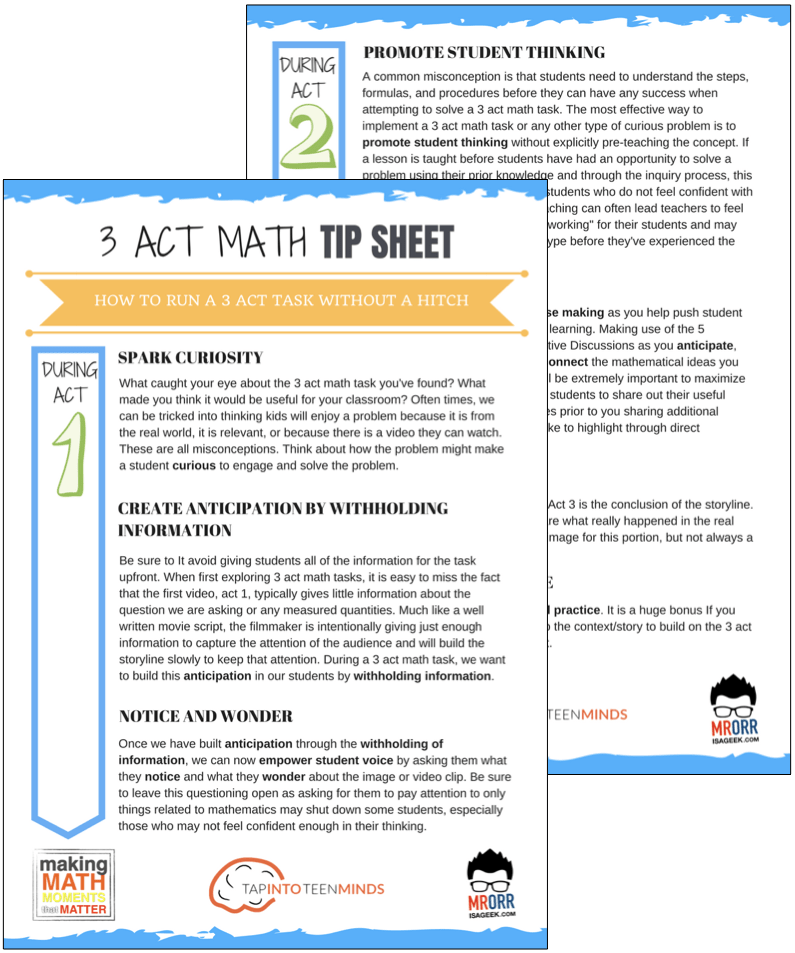
DOWNLOAD THE 3 ACT MATH TASK TIP SHEET SO THEY RUN WITHOUT A HITCH!
Download the 2-page printable 3 Act Math Tip Sheet to ensure that you have the best start to your journey using 3 Act math Tasks to spark curiosity and fuel sense making in your math classroom!
LESSONS TO MAKE MATH MOMENTS
Each lesson consists of:
Each Make Math Moments Problem Based Lesson consists of a Teacher Guide to lead you step-by-step through the planning process to ensure your lesson runs without a hitch!
Each Teacher Guide consists of:
- Intentionality of the lesson;
- A step-by-step walk through of each phase of the lesson;
- Visuals, animations, and videos unpacking big ideas, strategies, and models we intend to emerge during the lesson;
- Sample student approaches to assist in anticipating what your students might do;
- Resources and downloads including Keynote, Powerpoint, Media Files, and Teacher Guide printable PDF; and,
- Much more!
Each Make Math Moments Problem Based Lesson begins with a story, visual, video, or other method to Spark Curiosity through context.
Students will often Notice and Wonder before making an estimate to draw them in and invest in the problem.
After student voice has been heard and acknowledged, we will set students off on a Productive Struggle via a prompt related to the Spark context.
These prompts are given each lesson with the following conditions:
- No calculators are to be used; and,
- Students are to focus on how they can convince their math community that their solution is valid.
Students are left to engage in a productive struggle as the facilitator circulates to observe and engage in conversation as a means of assessing formatively.
The facilitator is instructed through the Teacher Guide on what specific strategies and models could be used to make connections and consolidate the learning from the lesson.
Often times, animations and walk through videos are provided in the Teacher Guide to assist with planning and delivering the consolidation.
A review image, video, or animation is provided as a conclusion to the task from the lesson.
While this might feel like a natural ending to the context students have been exploring, it is just the beginning as we look to leverage this context via extensions and additional lessons to dig deeper.
At the end of each lesson, consolidation prompts and/or extensions are crafted for students to purposefully practice and demonstrate their current understanding.
Facilitators are encouraged to collect these consolidation prompts as a means to engage in the assessment process and inform next moves for instruction.
In multi-day units of study, Math Talks are crafted to help build on the thinking from the previous day and build towards the next step in the developmental progression of the concept(s) we are exploring.
Each Math Talk is constructed as a string of related problems that build with intentionality to emerge specific big ideas, strategies, and mathematical models.
Make Math Moments Problem Based Lessons and Day 1 Teacher Guides are openly available for you to leverage and use with your students without becoming a Make Math Moments Academy Member.
Use our OPEN ACCESS multi-day problem based units!
Make Math Moments Problem Based Lessons and Day 1 Teacher Guides are openly available for you to leverage and use with your students without becoming a Make Math Moments Academy Member.
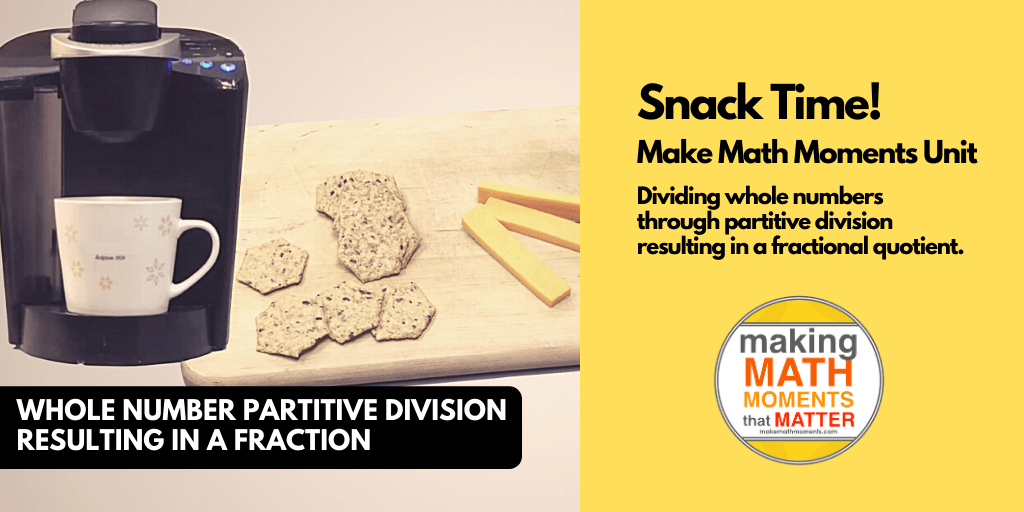
Partitive Division Resulting in a Fraction
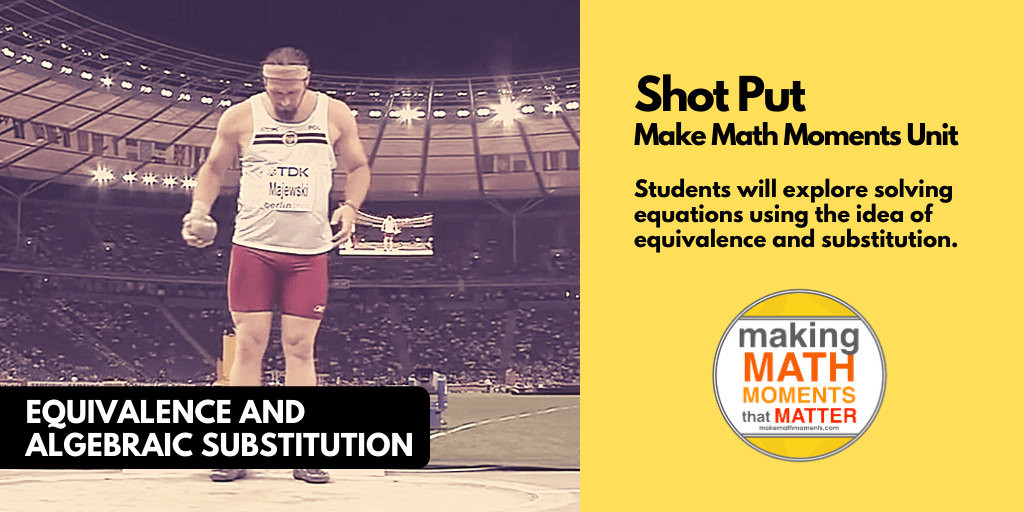
Equivalence and Algebraic Substitution
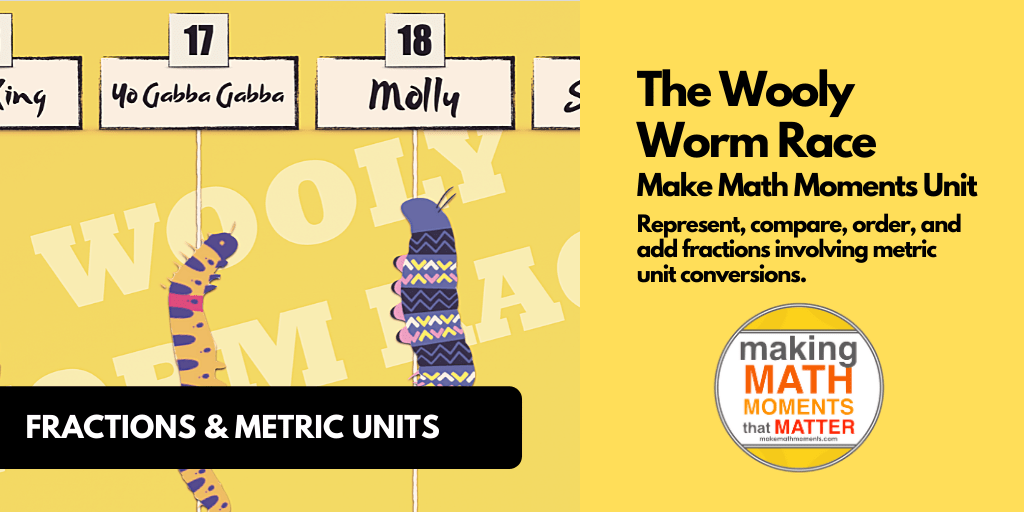
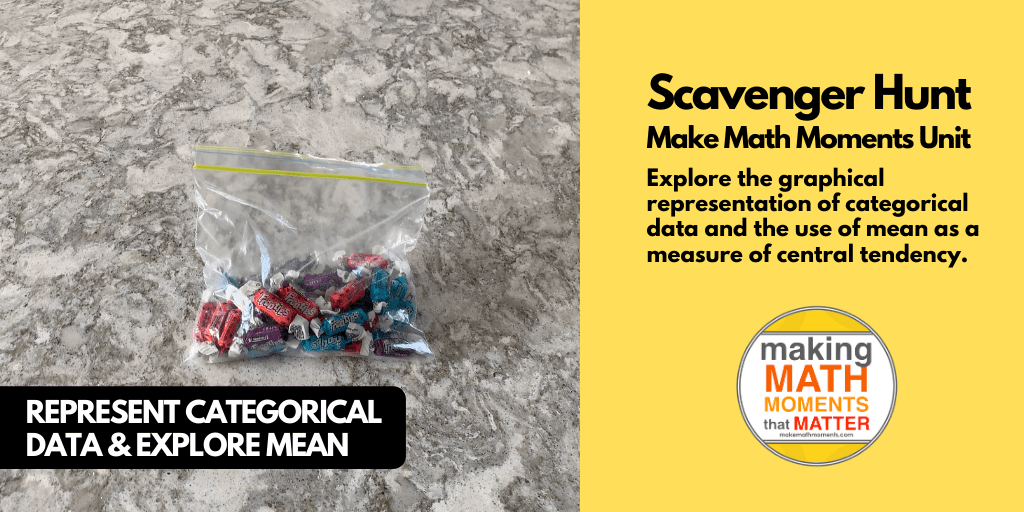
Represent Categorical Data & Explore Mean
Downloadable resources including blackline masters, handouts, printable Tips Sheets, slide shows, and media files do require a Make Math Moments Academy Membership.
ONLINE WORKSHOP REGISTRATION
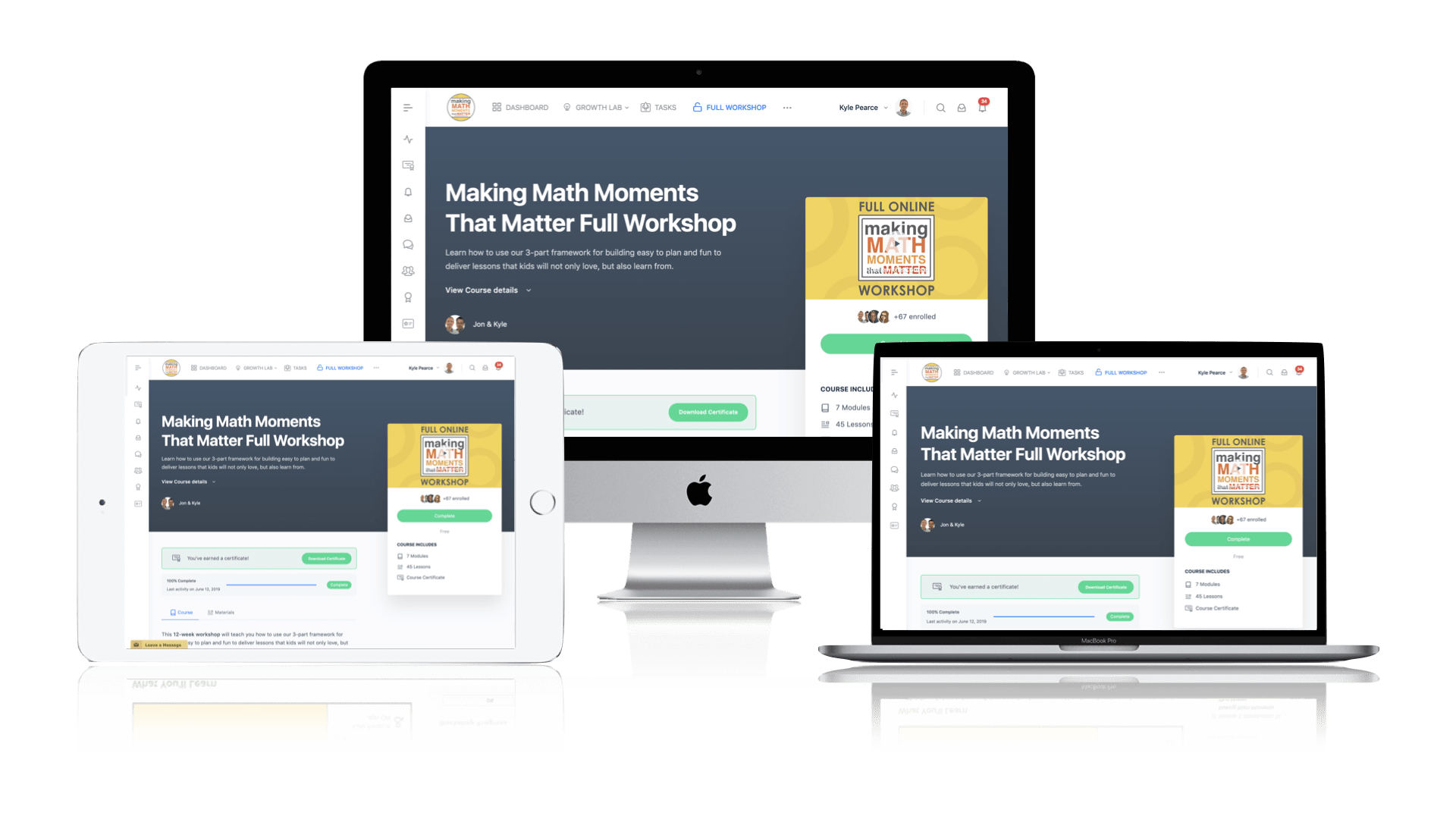
Pedagogically aligned for teachers of K through Grade 12 with content specific examples from Grades 3 through Grade 10.
In our self-paced, 12-week Online Workshop, you'll learn how to craft new and transform your current lessons to Spark Curiosity, Fuel Sense Making, and Ignite Your Teacher Moves to promote resilient problem solvers.
0 Comments