Episode #471: How to Start Connecting Mathematical Representations in Classrooms
LISTEN NOW HERE…



WATCH NOW…
In today’s math classrooms, there’s a growing expectation: students should be able to use and connect multiple mathematical representations. From visual models to symbolic notation, this practice is becoming a key part of high-quality math instruction. But for many teachers, this shift feels challenging—especially when their own experience with math was primarily abstract and procedural.
So what happens when you’re asked to teach in a way you didn’t experience yourself? When you’re expected to connect visual, physical, contextual, and symbolic representations—but don’t feel like you have the tools or confidence to do it? For many educators, this creates an experience gap. And without support, it can feel overwhelming. The reality is, this isn’t just about learning new strategies—it’s about rethinking what it means to understand math, and being willing to learn alongside your students.
In this episode, you’ll explore:
- What it really means to connect mathematical representations
- The difference between strategies and representations
- Why many teachers feel unprepared for this shift—and what to do about it
- How learning alongside students can strengthen your practice
- The role of networks and collaboration in building confidence
- What teachers, coaches, and leaders can do to support this work
If you’ve been asked to implement connected representations in your math classroom but aren’t sure where to start, this episode will help you build clarity, confidence, and a path forward.
Attention District Math Leaders:
Not sure what matters most when designing math improvement plans? Take this assessment and get a free customized report: https://makemathmoments.com/grow/
Ready to design your math improvement plan with guidance, support and using structure? Learn how to follow our 4 stage process. https://growyourmathprogram.com
Looking to supplement your curriculum with problem based lessons and units? Make Math Moments Problem Based Lessons & Units
Be Our Next Podcast Guest!
Join as an Interview Guest or on a Mentoring Moment Call
Apply to be a Featured Interview Guest
Book a Mentoring Moment Coaching Call
Are You an Official Math Moment Maker?


FULL TRANSCRIPT
Yvette Lehman: Today we’re gonna unpack probably one of my favorite topics. We are talking about connecting mathematical representations. In particular, one of the eight effective teaching practices — the exact wording is “use and connect mathematical representations.” If you’re here in Ontario, tools and representations is one of our high-impact instructional practices outlined in the ministry document.
Yvette Lehman: And I think that across North America, we’re becoming familiar with this language and that this is an expectation of a high-quality mathematics classroom. But here’s the problem. What if I’m a teacher and I’m teaching sixth, seventh, eighth grade and I’m being asked to implement this effective practice, but I don’t have a huge toolkit of representations in my own pocket?
Yvette Lehman: My own experience relied heavily on the abstract representation, and now I’m being asked to take the entire grade-level curriculum and connect it to visual, physical, contextual, verbal, and symbolic representations, but I have an experience gap myself. I only know what I know.
Jon Orr: For sure. And this is the likelihood, right? We are all living in a world where the current body of teachers learned math in a very traditional algorithmic way. We did — all three of us here learned it this way. Every time I meet with a new team from across North America, we talk about what the state of mathematics looks like in their buildings. And we hear this. It’s a very sage-on-the-stage, very algorithmic approach. Making sure we get to that algorithm and making sure we’re strong on that algorithm — that’s what basic math learning really looked like. We all came from a system like that.
Jon Orr: But connecting representations is now part of policy and part of where we want to go as a math community, because we know it’s good for student learning. All of the curriculums across North America, no matter which one you have, are all writing for this policy component to make sure that we’re embedding it in where we go. But you’re right — we came from a place where we didn’t focus on connecting representations and making sure that we have the strategies and the models to communicate that. So this is foreign to us.
Jon Orr: As teachers, this is not a strength for us as teachers, as leaders. But we do want this to be part of what we’re doing in our math class, because we know it’s good for students. The research is supporting that. So the question is, how do we do that? Beth, where do you want to start? Do you want to start from the teacher perspective? Because what we want to address here today is what can we do as a teacher, knowing that this is what we want to be doing — either through policy or just through ourselves — and then what do we want to do as a coach, as a system leader, to think about structuring how to make this more repeatable and confident in our classrooms?
Beth Curran: Yeah, I can start by speaking to what teachers could do. They’ve been handed a curriculum that’s embracing these mathematical representations but can very easily be taught procedurally as well. So if the goal is to develop that deeper conceptual understanding with students by having them work through those concrete and pictorial representations, then we as teachers need to be relentless in learning that ourselves.
Beth Curran: Yes, it’s going to feel unfamiliar. It’s going to be scary. We’re going to make mistakes. We’re going to flub up lessons. But in the grand scheme of things, what we’re saying is that it’s worth it. It’s worth it to take the risk and to try something new. Because if we don’t, we’ll never have the opportunity to figure it out.
Jon Orr: So you’re saying that if I’m listening right now as a teacher, I have to own the fact that I need to learn this a little bit deeper. And if I really believe that this is an important component of what we should be doing in class, I have to strengthen this part — whether I have time or not, whether the system supports me or not. I have to own that component. Is that what you’re saying?
Beth Curran: Yes, that is exactly what I’m saying. And that can sound overwhelming to a lot of teachers. I’ve got all this new curriculum, I have to figure out how to teach it, and now I also have to unlearn math and maybe relearn math again in a different way. But I would also say — walk it and live it in your classroom. As you are working through things, there’s that sort of risk, that uneasiness you might feel when a student figures out something that you haven’t quite wrapped your head around yet. But I think it’s okay if we structure our math classrooms to be a place where we’re all learners and we’re learning from each other and we’re communicating and explaining our thinking. Think about all that you as a teacher can learn from that.
Beth Curran: If you don’t see yourself as the sage on the stage, if you see yourself as a learner with your students and you’re open and curious about what they’re doing with those manipulatives or with those drawings, what the curriculum might be asking them to do — then you will just live through that with them and learn along with them. And I think that’s okay. And I think that’s something that teachers don’t hear enough. It’s vulnerable, and it’s okay to learn along with your students.
Jon Orr: That’s a hard thing to let go of or to put into practice. We’ll definitely talk about what conditions we can create to allow our teachers to take steps like that when they’re ready. Yvette, let’s talk about what learning we need to do if we need to own the work of doing the learning ourselves.
Yvette Lehman: I was actually thinking about my own learning journey. I don’t know if I was at an advantage or disadvantage, but I didn’t know the procedures either. And sometimes I think that’s an advantage because I’m not unlearning something, but I also don’t have that really strong foundation.
Yvette Lehman: I remember when I first went in to teach sixth grade I was terrified of teaching math. My sister was coaching me — I was tutoring with her the night before to remember the procedures so I could mimic them for my students the next day, because I had no idea how any of them worked.
Yvette Lehman: So when I started this learning journey, I had my own mathematical epiphany that conceptual understanding was the piece that was going to unlock mathematics for me. And I had a network. I don’t know that this work is possible without a network, truthfully, because you only know what you know. When you hit that point where you’re trying to make sense of something, having other people you can say to, hey, I’m really struggling to connect this ratio table to this strategy that the students shared today — can you help me? That is such a valuable part of this work.
Yvette Lehman: So I wanted to say to anybody listening today — if you don’t have a network, if you feel like you’re on an island, we can be a network for you. Every month we do task training where we really focus on this work, connecting mathematical representations from context to pictorial to abstract. We also have coaching time built into our schedules where teachers and leaders can book a call with us and we can talk through some of this learning. I remember I needed that. I really needed other people who knew maybe not more than me, but different things than me, who could help me make these connections. So certainly part of what we do at Make Math Moments is create a community for others who want to engage in this.
Jon Orr: And that speaks to the how of how we learn — committing to doing this amongst others, knowing that we need a community and a network to take the learning on. But I’m gonna throw it back to both of you to say, what are we actually digging into? What should I know the difference of? What should I really unpack? When we hear representations, what does that really mean, and how do I know I’m on the right path?
Yvette Lehman: I think one of the initial distinctions is the difference between — and I think sometimes we use a lot of words for the same thing — model, tool, representation. These are all kind of synonyms. They might have some nuanced distinctions, but they fit into this same category of how do we make the math visual? Whether that’s through context, through a pictorial representation, through an abstract representation. And that is different yet closely connected to the word strategy.
Yvette Lehman: I’ll give you an example. I had a text from a coach the other day who said, I’m observing a grade one student and they were adding — both times they counted all, but the first time they used a rekenrek and the second time they drew dots and then counted them. And she said, just to confirm, that’s two different representations but the same strategy?
Yvette Lehman: And yes — the strategy was counting all. They used the rekenrek to count all, they drew dots to count all. So that was two different representations but the same strategy. The strategy is almost like the metacognitive process you use in your brain to actually find the answer, whereas the representation is either the tool you use to work through that strategy, or to show your strategy to others.
Jon Orr: Do you find many educators are confusing the two?
Yvette Lehman: I often hear people say things like they use the ratio table as a strategy. To me, the ratio table is not the strategy — maybe partial products within the ratio table or scaling within the ratio table was the strategy. The ratio table itself was a tool for thinking to actually work through the problem, or to communicate your thinking to others. That’s language I’ve pulled from Kathy Fosnot’s work.
Yvette Lehman: So I think that’s a place to start — understanding that when we say “use and connect mathematical representations,” we’re talking about what NCTM describes as visual, physical (which could be concrete), contextual, verbal (using mathematical language to describe your strategy is a representation), or symbolic, which would be your traditional symbolic or algebraic representation.
Jon Orr: So taking the step to really ensure that we’re strengthening both our understanding of strategies and the benefits of certain strategies over others, but also knowing when representations or models make the most sense — because I think a lot of the work we want our students to do is to select the right strategy and also select a good model to help them solve the problem they’re working on or communicate their thinking. And we ourselves have to know how to select and use those strategies so that we can communicate that to our students. That’s the crux — how do we do that, and how do we commit to that?
Jon Orr: Beth has said we’ve got to own it. We’ve got to make sure that we’re striving towards learning that. One of the ways we’ve shared is we have sessions every month. You can head on over to makemathmoments.com forward slash training. You can see which available training is available no matter when you’re listening to this episode, or you can see the past ones to engage in. We’re trying to pluck this pebble from your shoes by giving you that opportunity. There are many other resources, lots of people on podcasts doing that type of work. Where would you recommend people go, Yvette?
Yvette Lehman: I think our recommendation would be to rely on whatever high-quality instructional material you have within your school or district. If it has been selected based on the criteria that it creates opportunities for students to use and connect mathematical representations connected to your state standards or provincial expectations, that’s a great place to start. Beth, I’ll let you elaborate on that before I give another professional resource I’d recommend.
Beth Curran: Yes, definitely leverage your curriculum materials and the resources available there. A lot of newer high-quality instructional materials released in North America include resources, digital resources, and video resources for professional learning. And a lot of teachers aren’t even aware that those exist. So dig into the resources that are currently available and see what is there. Chances are you might find a whole professional learning module or a series or a demonstrated lesson where you can learn how to help students connect these representations and explain their thinking.
Yvette Lehman: As far as a professional resource that is my absolute go-to — I was actually planning this morning, we have a training this evening, and I spent time studying this book to make sure my conjectures and generalizations were accurate. That book is Elementary and Middle School Mathematics: Teaching Developmentally by Van de Walle, Karp, and Jennifer Bay-Williams. The most recent edition was published in 2018. And I should update — there was actually a 2023 edition released by Pearson that includes a study tool. I feel like I have to have that book on hand because when I’m really digging into the conceptual understanding, the nuance in my mathematical language, and trying to be very accurate, that’s where I go to study.
Yvette Lehman: I can imagine that if you had a system that wanted to engage in a book talk or book study, having that study tool to walk alongside would be a really powerful move.
Beth Curran: And I just want to speak to maybe those listeners who don’t have the funding or resources to do what Jon was describing — overhauling the system, putting coaches in place, scheduling PLCs. That’s an ideal situation. But what about the school or school district that’s smaller and doesn’t have those resources? I would say look for the low-hanging fruit. What is the one thing you can commit to doing that won’t cost anything, that’s going to help move the needle?
Beth Curran: And I would say — I think we all would agree to this — commit to doing some math together. Chances are you have some faculty meetings on the schedule. Take 10 or 15 minutes out of every faculty meeting and commit to doing the math together. Costs nothing. Gets everyone working through problems together. That vulnerability can come through. If you know as a team you’re all kind of in the same place, I think that just sets teachers up for that willingness to take those risks in their classroom. So look for the low-hanging fruit.
Jon Orr: If you do want to take the next step and learn a little bit more about how to put this into place in your school system — the low-hanging fruit is a great next step, but it does require a skilled facilitator to help create those math epiphanies. If you’re not sure how to build that first skilled facilitator or create your system around strengthening capacity in these areas, we’d be glad to hop on a call to help you strategize. You can book a call with our team over at makemathmoments.com forward slash discovery. We can help you design your math plans so they’re sustainable and aligned for math improvement.
Thanks For Listening
- Book a Math Mentoring Moment
- Apply to be a Featured Interview Guest
- Leave a note in the comment section below.
- Share this show on Twitter, or Facebook.
To help out the show:
- Leave an honest review on iTunes. Your ratings and reviews really help and we read each one.
- Subscribe on iTunes, Google Play, and Spotify.
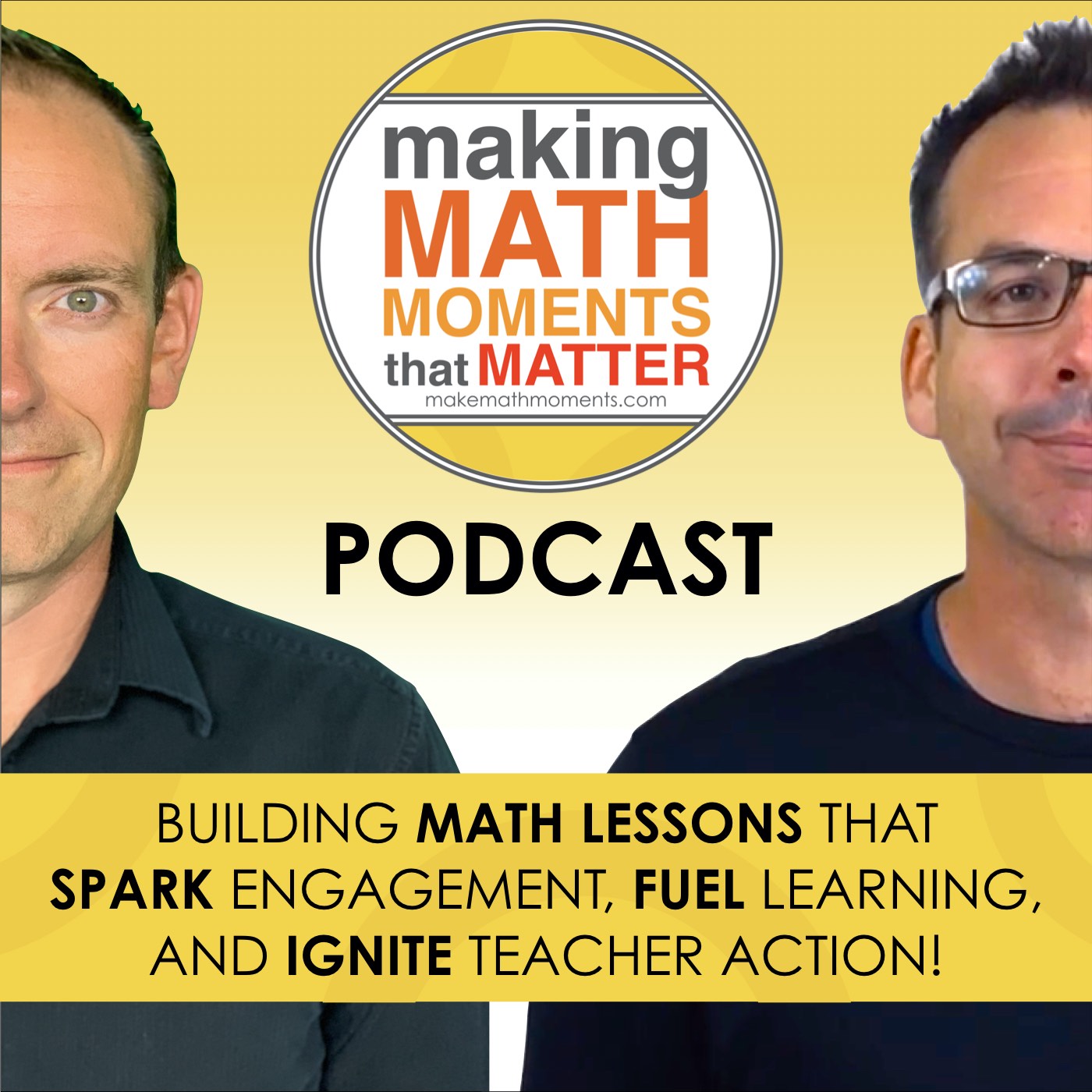
DOWNLOAD THE 3 ACT MATH TASK TIP SHEET SO THEY RUN WITHOUT A HITCH!
Download the 2-page printable 3 Act Math Tip Sheet to ensure that you have the best start to your journey using 3 Act math Tasks to spark curiosity and fuel sense making in your math classroom!
LESSONS TO MAKE MATH MOMENTS
Each lesson consists of:
Each Make Math Moments Problem Based Lesson consists of a Teacher Guide to lead you step-by-step through the planning process to ensure your lesson runs without a hitch!
Each Teacher Guide consists of:
- Intentionality of the lesson;
- A step-by-step walk through of each phase of the lesson;
- Visuals, animations, and videos unpacking big ideas, strategies, and models we intend to emerge during the lesson;
- Sample student approaches to assist in anticipating what your students might do;
- Resources and downloads including Keynote, Powerpoint, Media Files, and Teacher Guide printable PDF; and,
- Much more!
Each Make Math Moments Problem Based Lesson begins with a story, visual, video, or other method to Spark Curiosity through context.
Students will often Notice and Wonder before making an estimate to draw them in and invest in the problem.
After student voice has been heard and acknowledged, we will set students off on a Productive Struggle via a prompt related to the Spark context.
These prompts are given each lesson with the following conditions:
- No calculators are to be used; and,
- Students are to focus on how they can convince their math community that their solution is valid.
Students are left to engage in a productive struggle as the facilitator circulates to observe and engage in conversation as a means of assessing formatively.
The facilitator is instructed through the Teacher Guide on what specific strategies and models could be used to make connections and consolidate the learning from the lesson.
Often times, animations and walk through videos are provided in the Teacher Guide to assist with planning and delivering the consolidation.
A review image, video, or animation is provided as a conclusion to the task from the lesson.
While this might feel like a natural ending to the context students have been exploring, it is just the beginning as we look to leverage this context via extensions and additional lessons to dig deeper.
At the end of each lesson, consolidation prompts and/or extensions are crafted for students to purposefully practice and demonstrate their current understanding.
Facilitators are encouraged to collect these consolidation prompts as a means to engage in the assessment process and inform next moves for instruction.
In multi-day units of study, Math Talks are crafted to help build on the thinking from the previous day and build towards the next step in the developmental progression of the concept(s) we are exploring.
Each Math Talk is constructed as a string of related problems that build with intentionality to emerge specific big ideas, strategies, and mathematical models.
Make Math Moments Problem Based Lessons and Day 1 Teacher Guides are openly available for you to leverage and use with your students without becoming a Make Math Moments Academy Member.
Use our OPEN ACCESS multi-day problem based units!
Make Math Moments Problem Based Lessons and Day 1 Teacher Guides are openly available for you to leverage and use with your students without becoming a Make Math Moments Academy Member.
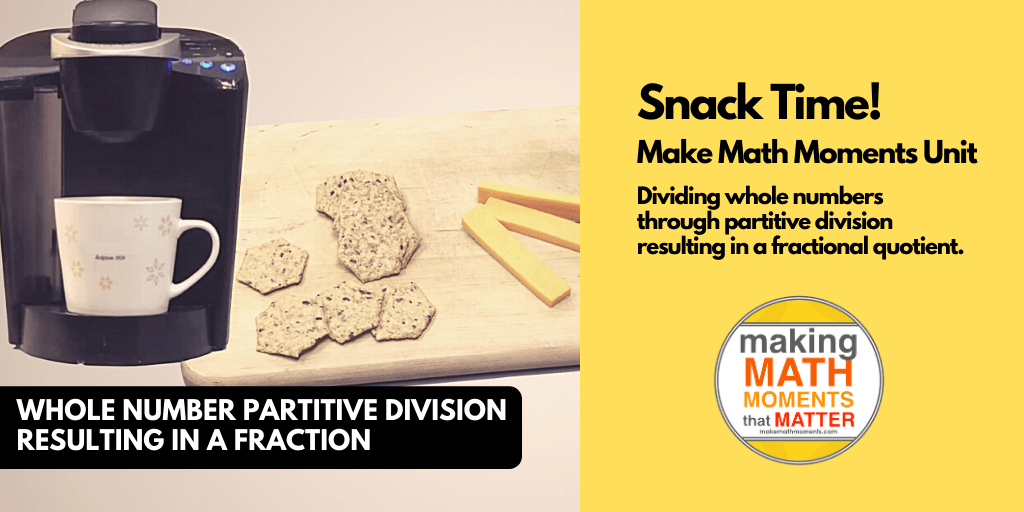
Partitive Division Resulting in a Fraction
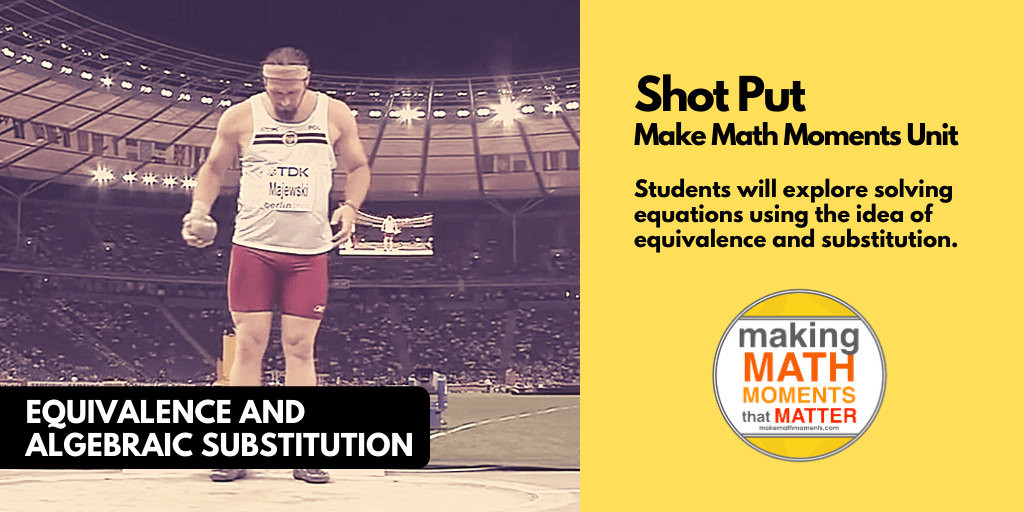
Equivalence and Algebraic Substitution
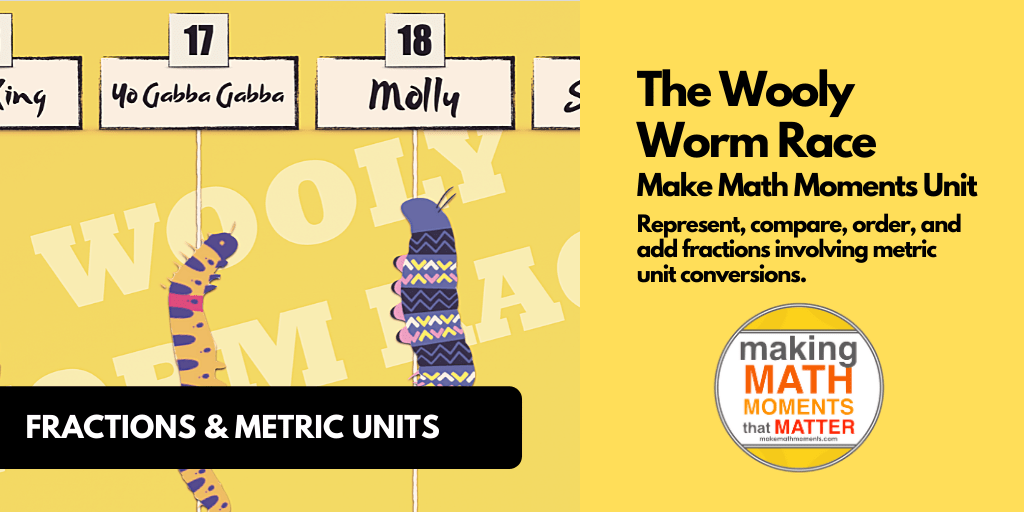
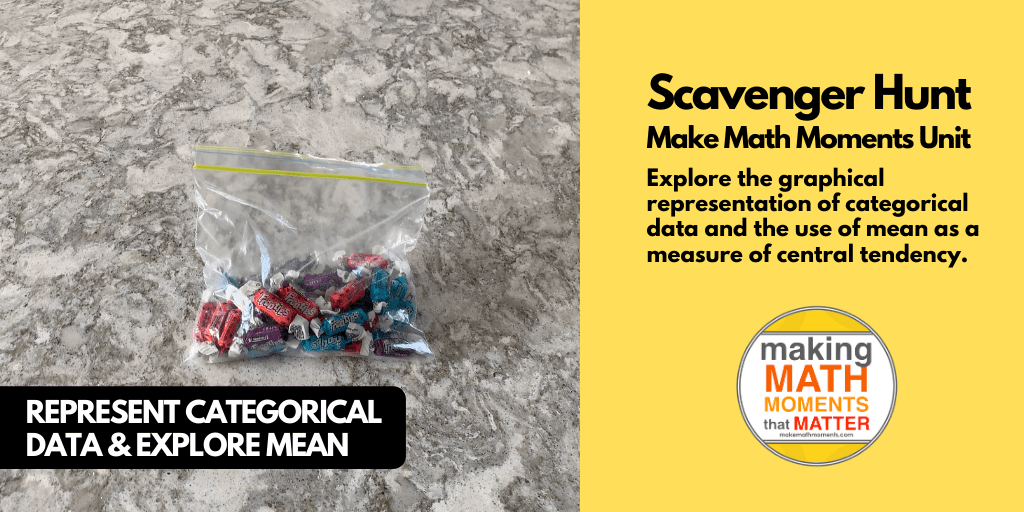
Represent Categorical Data & Explore Mean
Downloadable resources including blackline masters, handouts, printable Tips Sheets, slide shows, and media files do require a Make Math Moments Academy Membership.
ONLINE WORKSHOP REGISTRATION
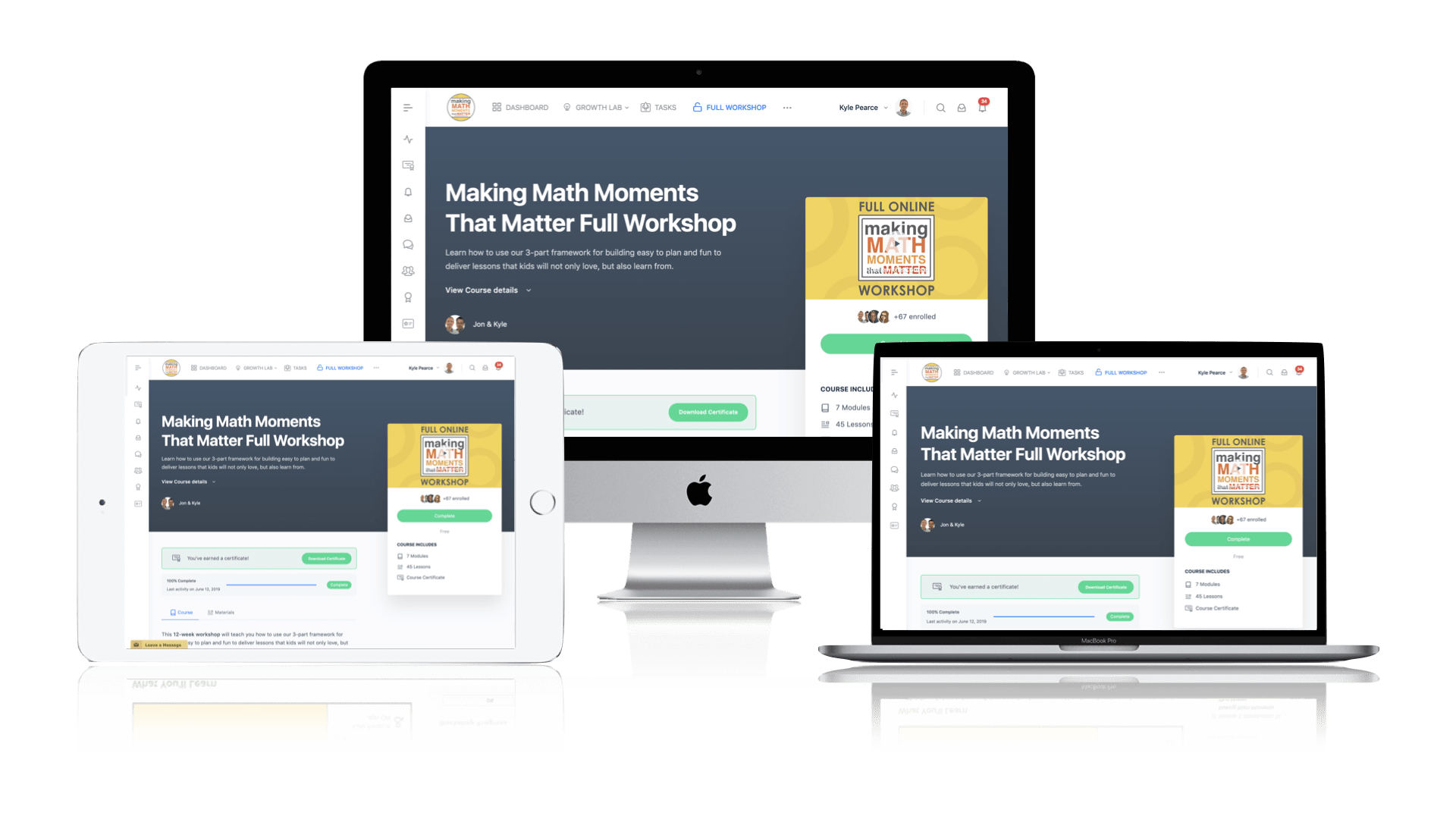
Pedagogically aligned for teachers of K through Grade 12 with content specific examples from Grades 3 through Grade 10.
In our self-paced, 12-week Online Workshop, you'll learn how to craft new and transform your current lessons to Spark Curiosity, Fuel Sense Making, and Ignite Your Teacher Moves to promote resilient problem solvers.
0 Comments