Episode #493: Rewarding Student Thinking: An Interview with Dr. Pamela Seda
LISTEN NOW HERE…
WATCH NOW…
We say we want students to become critical thinkers, problem solvers, and mathematical reasoners. But do the systems in our classrooms and schools actually reward those things—or are we still rewarding speed, compliance, and correct answers?
In this episode, Jon Orr and Dr. Pamela Seda explore the disconnect between the mathematics we say students need and what our systems actually value. They examine how assessment, classroom routines, walkthroughs, and professional learning can unintentionally send competing messages—and what leaders and teachers can begin changing within their control.
In this episode, you’ll explore:
- The two competing visions of mathematical success
- Why speed and correct answers don’t tell us the whole story of student understanding
- How classroom and school systems communicate what we truly value
- Why collecting evidence of student thinking matters more than judging an answer alone
- How formative assessment can prioritize reasoning, justification, and critical thinking
- Why standardized assessments can be treated as the floor rather than the goal
- How leaders can better align what they say matters with what their systems actually reward
- How to recognize when you’re operating within the “old system” so you can begin changing it
Take a closer look at one system you control—your formative assessment, lesson routines, walkthrough tool, or professional learning. What does it communicate to students and teachers about what counts as success in mathematics? Recognizing the old system is the first step toward building something different.
Attention District Math Leaders:
K-12 Math Leaders: Download our free Math Coherence Compass to help your teammates, system leaders, and educators create aligned instructional practices—without adding another initiative.
K-12 Math Leaders: Not sure what matters most when designing math improvement plans? Take this assessment and get a free customized report: https://makemathmoments.com/grow/
K-12 Math Leaders: Ready to design your math improvement plan with guidance, support and using structure? Learn how to partner with us and follow our 4 stage process. https://growyourmathprogram.com
Looking to supplement your curriculum with problem based lessons and units? Make Math Moments Problem Based Lessons & Units
Be Our Next Podcast Guest!
Join as an Interview Guest or on a Mentoring Moment Call
Apply to be a Featured Interview Guest
Book a Mentoring Moment Coaching Call
Are You an Official Math Moment Maker?





FULL TRANSCRIPT
Jon Orr: Hey there, Pam. Welcome back to the Making Math Moments That Matter podcast. It’s been a minute because I just looked this up. The last time we had you on the podcast, it was episode 207. Don’t ask me what year that was, but we probably this recording is 495. So we can do the math maybe there with a weekly podcast and stretch back to a number of years ago we first spoke with you.
But welcome back. We’re excited to have you on here today because we are gonna talk about your upcoming virtual math summit that we host in November. So you’re joining us once again. So we’ll get into that. But before we do, what’s been new? What’s going on over there?
Dr. Pamela Seda: Yeah, well, I guess it’s just implementing the ICU care framework with leaders has really been exciting and I guess that’s pretty much been what I’ve been focused on is shifting the
Jon Orr: Yeah, you’re all in on that. Yeah.
Dr. Pamela Seda: Yeah, shifting the proof from what how does it impact students to well how do we impact leaders? And that’s been my new world of figuring that out.
Jon Orr: Sure, for sure. And that’s a world, you know, we’ve transitioned to in the last number of years as well is helping, you know, leaders think about leadership moves for long term sustainable improvement in mathematics. So we’re in the same world and we’re excited to I’m sure that will come up as we talk about your session. But a question we ask all guests, and it’s been a minute too, we’ve had guests on the show, but a question we used to ask every single guest, which was what is your math moment? But I want you to kind of since you had a math moment shared on the previous episode, let’s do the almost like flip this flip the script a little bit.
Like last time, it’s like most people think about our math moment and we think about our past. We think about what experience did I have in terms of math that shaped who I became and I was as a math learner. But I want to push it to the future a little bit, which means like I want you to think about maybe a student, let’s say you ran into a student 10 years from now, 15 years from now that you may have taught, like down the road, and you ask the student, hey, what did you what was your biggest takeaway from being in my class? Or maybe you were a leader and you could say in my system. I guess the what I what the moment here to think about for the future is what do you want the student to say? What do you hope they say?
Dr. Pamela Seda: Yeah, I I’m thinking that I want the student to say, you made me believe in my ability to learn mathematics and my ability to do mathematics. You made me believe in myself. And I can I can say that I kind of had a slight version of that when I remember this was actually early in my teaching career. A student came back, they were in college, and they were telling me that they were taking all these remedial classes, but not math. In math, they were teaching their colleagues. They were teaching their classmates.
And the reason that stood out to me so much was because he was probably a mediocre student in my class. He wasn’t one of my A students. But the fact that he said, yeah, I’m teaching my classmates, I totally believed him because that was normal in my class. Like I expected all my students to teach each other. That was a part of my rituals and routines. And it was just so exciting to see that he carried that with him into college, even though he did have to take remedial other classes. It translated to him being able to teach his classmates translated to him not having to take remedial math.
Jon Orr: Right. Yeah. Yeah, and it’s in a way his you know, your moment is really his moment or vice versa. And and in a way, that probably moment stuck with him for him to actually say that to you is probably also realizing that, you know, what he got what you were hoping, which is like confidence to discuss math and and help others do the math that they’re working on. But probably stuck with him because he probably realized that the experience you gave him in your class didn’t wasn’t like the norm. You know, like when this is this is how like things stick with us in life. It’s like things are broke like the script gets broken or the experience is slightly different. And we’re like, that’s that’s that’s novel. Now that sticks with me a little bit longer. And that probably stuck with this student longer because that’s why I made a point to say it to you back. Is to say like I went here and this is what happened. But no one else was doing that. And maybe that was how it stuck with them.
Dr. Pamela Seda: Yeah. And the fact that he I think what’s also rare as teachers is oftentimes we don’t get to see that impact. So I’m ecstatic that he came back early in my teaching career to where I he could tell me that and I just held on to that like saying, Yes, this work is paying off. This is the right work to do.
Jon Orr: Right. Right. How does you know, how does your answer there about like having the you know the confidence and the resilience there to kind of move on? How does that like compare that with like with the work you’re doing now with leaders and the ICU framework with leadership? Like what does that look like for that type of work?
Dr. Pamela Seda: Yeah, well, I mean, I think it’s twofold. I kind of have a little selfish motive for doing this because as I shared in that story, one of the reasons why it was so important for me as a teacher to hear that hear him come back and say, You’re on the right track, you’re doing the right thing is because so often as a teacher I never heard that. Like the system was telling me, get through the pacing guide, get high test scores. Like it was rewarding and telling me all the things that I should be doing weren’t necessarily the things that I was wanting for my students. And so I felt like it was important for me to help leaders give teachers the right message, right? If we say we want to develop critical thinking and reasoning, that’s what we need to be telling teachers, right? We need to be saying that to teachers. We need to be rewarding that. We need to be acknowledging that. And so absolutely.
Jon Orr: Right. And like the actions speak louder than words, right? So it’s like you might say it, but then when you go to measure it, it’s like, well, we really meant score test scores really have to be up and that’s really what we’re concerned about. So leadership does need to like have like this like are we practicing what we’re preaching?
Dr. Pamela Seda: Yeah, and so then for leaders, it’s building their confidence to do that work. Especially those leaders who I believe is a majority of our lead school based leaders don’t necessarily have math backgrounds. It’s being able for them to say, I can do this, that I’m instilling their confidence and building their confidence in being able to support math teachers to support their kids.
Jon Orr: Love it. Love it. Yeah. No, amazing, amazing work. And I think as I said, the work around leadership is essential. I feel like especially today. Let’s transition here into your session. So your session that you’re gonna be holding in November is the mathematics students need is not the mathematics most systems reward. Tell us more, like give us the elevator pitch or give us the scenario here because that title itself feels like, wait a minute, what like because you just mentioned systems a little bit just a minute ago. It’s like tell like what are what are we rewarding? Is it just test scores or is there more to that and then and then what are we actually trying to like do here? Is it about, you know, building confidence and what do we really need to be doing? What are we gonna learn in the workshop, Pam?
Dr. Pamela Seda: Yeah, so I’m gonna start off by talking about the fact that we really do have two competing visions of what math success are. One’s rooted in our own traditional experiences of getting answers quickly, accurately, and that’s what builds our confidence in isolation, versus what our students need for the future world, right? This future AI world, this future world full of technology, this world that’s full of jobs that we don’t even know where they’re going to be, jobs that don’t even exist now, preparing our students for that world, they’re going to need to develop critical thinking, problem solving, how to figure out what to do when they don’t know what to do. That’s what students need. Practice on how to do that.
Unfortunately, all of our systems still measure progress based on how quickly and how well kids can get correct answers. Speed, compliance. That’s what our systems are built on. And our systems show up in the walkthrough instruments we use when we go and observe classrooms, the conversations that happen afterwards, our lesson plan templates, our assessment practices. What happens in professional learning? All those are systems that communicate what’s important to the leadership. And they often don’t align with this what we’re saying is developing critical thinking, reasoning, problem solving, teaching kids how to figure out what to do when they don’t know what to do. And I’m gonna really talk about that difference, right? And you know, the importance of aligning them.
Jon Orr: Sure. Sure. How I guess how if you think about thinking about speed, you know, like you he we we I think everyone listening, you’re the type of educator who already is on board with that. You’re like of course, like I’m we’re you know, that speed isn’t mean good at mathematics, but like you said, like what what’s maybe just one way how we could as a system or a teacher think about how to get away from you know thinking about or transitioning speed inside of being good at mathematics in my classroom or as a system leader, like how do I how do I think about that differently, knowing that the system is set up against us in that regard?
Dr. Pamela Seda: Yeah, I think it’s recognizing the value in the learning trajectory and that learning really is a progress. And for us just to stop judging people who aren’t quick. I think about the judgments and assessments that I make about students when they give a wrong answer. And that as a society, we’ve just been conditioned to do that. If somebody gives a wrong answer, we make assumptions. Assumptions that they never learned this, they’re just dumb, they didn’t study, they weren’t paying attention. There’s all these negative assumptions attached to when a kid gets a wrong answer.
Not only get negative assumptions get attached to the kid, they get attached to their teachers. Well, they didn’t teach them correctly, or they weren’t clear enough. Like there’s all these assumptions that we make when students get a wrong answer. And I say, we have to just stop that. To begin with, just stop making assumptions and collect evidence of thinking. That’s where we start. So it’s when we see an answer, that’s just the beginning. Then we start interrogating what the person’s thinking was.
Even with students. I was just on a call with some colleagues yesterday, and we were talking about this very same thing about how students are always asking, and the parents always want to know, and the community always knows is the answer right? Did they get the right answer? Is this is this the right answer? And I said, Yes, our students have totally been conditioned, and that’s all that matters. So I said, to me a better question is what was the reasoning? Is this the correct reasoning that will lead to the correct answer? Will this reasoning lead to the correct answer? One, because that’s what’s really important. Will is this reasoning lead to the correct answer? And we can’t know that if we don’t ask about how they got there to expose the reasoning.
But I think even a more important question, which hardly ever gets asked, is what will this reasoning, what answer will this reasoning lead to? Because that to me is even a more important question. And sometimes there’s a lot of mathematics there that we never even explore. Because we’re so focused on is this the correct answer?
Jon Orr: Absolutely. It reminds me of I guess my immediate thought when we talked about, you know, speed and getting correct answers was like when we think about our lessons and the structure of our lessons and how quick we are to ask questions and then how quick we are to reward those who have fast answers in that say so could have, you or socrative lesson technique where we’re asking questions and kids are raising their hands and it’s like we pick the ones that are answering very quickly. But that’s a systemness of us rewarding those who think fast and then also are bold enough to be able to like project their answer in front of everybody else. It’s like there’s this fast and slow.
It’s like there are it made me well years ago I remember thinking about this and and trying to change like ask, you know, questions where we did not raise hands, that everything had to be like which is where our whiteboards came in and and and we all did work before any hand raising. We shared. We did the think pair share, like because all we were doing is perpetuating math was quick, but also rewarding those who answered very quickly, but then they got the feedback they need and therefore in a way the rich get richer and the poor get poorer in a way, right?
And it reminded me actually of a podcast episode by Malcolm Gladwell years ago where he looked at he does he did like a mini study where he looked at he looked at SAT scores and and how many like basically it’s like how fast you have to answer questions in it. Actually no it was the it was the the law test like the law test. What’s the law test called? It’s like LSAT or something like that. LSAT yeah one of those. But he looked at that and he was basically he only had so much time to answer a section or a question. And and he basically said like if it becomes a speed game because you put time in. Like if you took time out of the equation, every like people who are dedicated enough would then you would completely have most people be able to pass that that test. Because you could think long and hard or you’ve studied long enough to be able to answer these types of questions. But it’s like when speed gets put in, the fac all of a sudden it changes who is successful on these exams.
Instead of rewarding those who could be successful but they didn’t weren’t but just because they weren’t fast thinkers, they needed more think time. Like their your brains needed to have that careful thought versus quick reaction. And it was it’s very interesting, say, study slash podcast episode where he he unveils this and say like he compared it to chess. If the if you were played speed chess versus regular chess and you took chess the time element out of chess, all grandmasters would tie. Like they do a switch because they have infinite amount of time to think about the moves. And then but you put speed in, it changes the game completely. It’s like a different game. You’re measuring something completely different, which is not your thought on chess or your thought on on the law exam. You’re measuring how fast you can answer, which is what we’re doing in education when we ask questions like that. It’s like we’re not measuring how well you think, right? We’re measuring how fast you answer. And that’s a that’s a completely different assessment. Because when you start to put time in, that’s what you’re assessing. You’re assessing speed, not understanding.
Dr. Pamela Seda: And like the chess comparison you gave there, whether if you took all the time out or not and the different results, because I think the goals are very different, right? If you take the time out, you really want to know they’re thinking and how great they are at thinking about chess. So you take the time out. But if you want competition, then you have to have a way of comparing. And so the time becomes a way to compare.
And we have to be honest with ourselves about the role of school. Because there are those who just want schools to fulfill the purpose of comparing and sorting so we can decide who gets the good stuff and who doesn’t. There are people who that’s they believe that’s the goal. I believe that’s how our schooling systems were set up, that that was the goal. But society seems to have something different now, especially since civil rights movement, and we’ve just as a society have different expectations, and we’ve now started at least espousing the fact that education should at least level the playing field. Somewhat so that everybody has an opportunity to have access to the good stuff. And but that’s what we espouse, but I don’t know that we’ve ever changed our structure to match.
Jon Orr: Right. And that’s sometimes like is it a bystander effect? Like everyone’s thinking someone else is gonna do it? Like where where does it start, right? Like where does the shifting of the systemness and the rewarding start? Because you know you’ve got I remember this vividly. Kyle and I visited a school district in British Columbia a number of years ago and we walked into a kindergarten class and they were doing a math talk. But then we were talking with a teacher after and one I remember hearing them saying, I gotta prepare them for grade one. I gotta prepare them for grade one.
And so this idea of like was it was the same conversation you have with an eighth grade teacher who’s thinking about getting that student prepared for the next year. Like everyone’s always looking at what the next year is supposed to be instead of thinking about what the kids are in front of. And and it and my wonder is like you’ve got probably this is like why we do what we do at calculus or, you know, in in higher level mathematics is we’ve got to prepare them for the next level. Like is it is it start with like post secondary education has to start to shift their beliefs and around where assessment is, or do we start with teachers? We s like how does this wave? I know you know, if you could answer this, you have solved the world’s problems, by the way. But it’s like how do we start shifting this, right? ‘Cause it’s like it’s so interconnected and so hard that we do want to shift the system to think and and reward the right things. But does it where does it start? Individually or or as a as a whole? Like it’s it’s hard to think about. What do you think?
Dr. Pamela Seda: Well, I remember when I returned to the classroom after being an instructional coach, after I already received my PhD, after I had already been a math supervisor in two previous school districts, I decided to return to the classroom, felt like a total failure because I thought I was supposed to be measuring up to all the system’s demands and I couldn’t until I decided to quantify all the expectations. I assigned minutes to how much time does it take each week to do the expectations? It came to over 78 hours. And I realized I can’t do it. I’m not going to.
So that was a system, right? And I realized I can’t, I can’t do that. But the shift was I can only change that which I can control. I can’t change the system. So I’ve got to figure out how to do the things that matter most for my kids. That’s what I chose to focus on. But it was how I chose to interpret things. So for example, we can’t change state tests not anytime soon. State tests are going to be multiple choice. They’re going to be used for accountability measures, whether I agree with that or not.
I think the problem is as a school leader or as a system leader, district leader, we have to decide how we’re going to respond in assessing and what formative assessment looks like, because that’s what we control, right? As a teacher, I control formative assessment. Well, too many of us automatically knee-jerk reaction, model our formative assessment after state assessment. I think that’s the wrong choice. I say we choose to because the state assessment is the floor. We can always choose to go higher. And that’s what I tell teachers that I work with. We should teach beyond the test. The answer is just the floor. That’s all the state’s asking. That doesn’t mean that’s all we ask.
We gotta put ankle weights on our kids. We gotta make them run five miles instead of the one mile that they have to to win the race. Like that’s a choice that I have as a classroom teacher, how I’m gonna respond. That the state says this is how you’re assessing. And I said, that’s not good enough for me and my students. I’m gonna assess the mathematical practices, I’m gonna assess critical thinking, I’m gonna give them plenty of practice on explaining and reasoning and justifying, in addition to that answer. That’s kind of like how I feel like we control what we can control.
Jon Orr: Love it. Love it. And it’s yeah, it’s so and so important for us to think I think you phrased it and put the thought exercise there perfectly is that the state assessments, the standardized tests are there to measure the floor and and therefore if you’re modeling your assessment and your standard acquis like, hey, this you have you met the standard based off this criteria, you’re aiming for the floor, not above the floor. And there’s nothing saying that you shouldn’t be aiming for higher than than that because that’s gonna help your kids in front of you. That’s a that’s a great way to think about it.
Dr. Pamela Seda: Yeah, I thought about that. I came up with that analogy really because I started thinking about I ran cross country in high school. And, you know, one of the things I loved about it was when people realized, you’re running eight miles, like they were just their heads were hurt, and there was just such this pride that I ran eight miles today. Our race was only three point two miles. We ran eight miles. Why? And that wasn’t considered extraordinary, right? It was considered normal. Because you know if performance matters. You have to overtrain. We all we understand that implicitly in sports.
I’m not saying that math should be performance. It just is right now. It’s a reality. That there’s a day that you have to perform. So we gotta overtrain our kids.
Jon Orr: And as a class Yeah. And absolutely. And at least like this reminds me of the move that I made, you know, years ago in my classroom is that, you know, you had students who game the system, right? ‘Cause as a classroom teacher, you’re you’re also teaching because whatever you’re doing in your class, kids start to if you you’re following the this typical math class script, you know, kids start to game the system of like what it was required for me to put in to get to the grade level, the gr yeah, the minimum pass level. Like you’ve got kids who are like setting goals like wherever the kids set the goals for themselves, whether it’s past, whether it’s like 75 or whether they’re aiming for the A, they set the goals for themselves and then they go, What’s the minimum for me to do to get to that point? Like that’s the game of math that most kids end up playing because of the system they’re in.
But I remember trying to trick them. Because I was trying to put their ankle weights on their on their feet, just like you said. It’s it’s saying like, okay, I’m not going to give you a sixty five on this test. I’m going to give you feedback on the test, and but I’m gonna say you have to fix it or you have to do better than what you have done here because it’s not it’s not at acceptable level yet. But my acceptable level I had aimed for like everyone getting like an eighty five. I’m as the floor, but they didn’t know that. Right. They didn’t know that that’s what level they were trying to like bring their floor to. So the kids who were aiming for fifties are now aiming for eighty fives because I would hand it back to them and say, It’s not done yet. We gotta fix it up. We gotta fix it up. We gotta fix it up. It’s like you haven’t ran your race yet. You know, you only ran though two miles today. You didn’t run the eight. Let’s run eight. And so that w feels like so then when you look at your actual outcome at the end of the year, you’re like, Darn, I ran eight. I only needed to run three. Look at me. Perfect.
Dr. Pamela Seda: Yeah, I I believe even what you just described, I really think about that’s part of the problem is we’re still sorting. And so, you know, I’ve asked myself, why do we need different levels of failure? It’s proficient or it’s not. We keep working until it’s proficient. Now, then we can talk about is it beyond proficient? What makes it better? What makes it excellent? What makes it unique? What makes it creative? Imagine being creative and unique in math class. Or what makes it funny? Like I think all of those things are great. But why do we accept anything less than proficient? The only reason I the only answer I have for that is because we’re too busy sorting and competing. And we’re not really more interested in teaching.
I know, I remember when my mom taught me how to clean up the kitchen, there was no have to. You didn’t get to leave the kitchen until it was clean, according to her standard. Not my standard. My standard didn’t matter. I didn’t leave the kitchen until everything was done.
Jon Orr: That’s right. That’s the standard. You gotta reach it. And she said the standard or for for you, even though someone else’s kitchen might have been like that kitchen is extremely clean. That’s way cleaner than my kitchen.
Pam, I can’t wait for this conversation. You know, in the conversation to happen even more thoroughly in November. When we talk about the systems and and helping our students think about privilege and speed and procedural compliance and correct answers and how do we design that system? I’m excited to hear the lessons, the the practicalness that you’re going to be putting into into the the session that’s in November. If there is one thing, one big takeaway that you want listeners today to not miss, so that they’re like, I gotta go register right now, what is that one thing that everyone needs to know?
Dr. Pamela Seda: To recognize when you’re operating in the old system so that you can have a chance of revising it to the new.
Jon Orr: Perfect. Perfect. Everyone listening right now, Pam is presenting in the twenty twenty six, I believe this is the eighth annual virtual summit that’s happening in November. It’s a one day only, November fourteenth. In past years we were over the whole weekend. We are going to do one day. We’re doing one Saturday. And Pam’s joining us live for a session on that Saturday. There is a registration link somewhere around the video or the audio you’re listening to right now. Go and click that description link. Get yourself registered. Registration is open right now so that you can go and and take advantage of there. It is completely free. We’re excited to have Pam join us there. Pam, thanks so much for joining us here on the Making Math Moments That Matter podcast. We look forward to connecting in person the next time we meet up.
Dr. Pamela Seda: Thank you so much for having me.
Thanks For Listening
- Book a Math Mentoring Moment
- Apply to be a Featured Interview Guest
- Leave a note in the comment section below.
- Share this show on Twitter, or Facebook.
To help out the show:
- Leave an honest review on iTunes. Your ratings and reviews really help and we read each one.
- Subscribe on iTunes, Google Play, and Spotify.
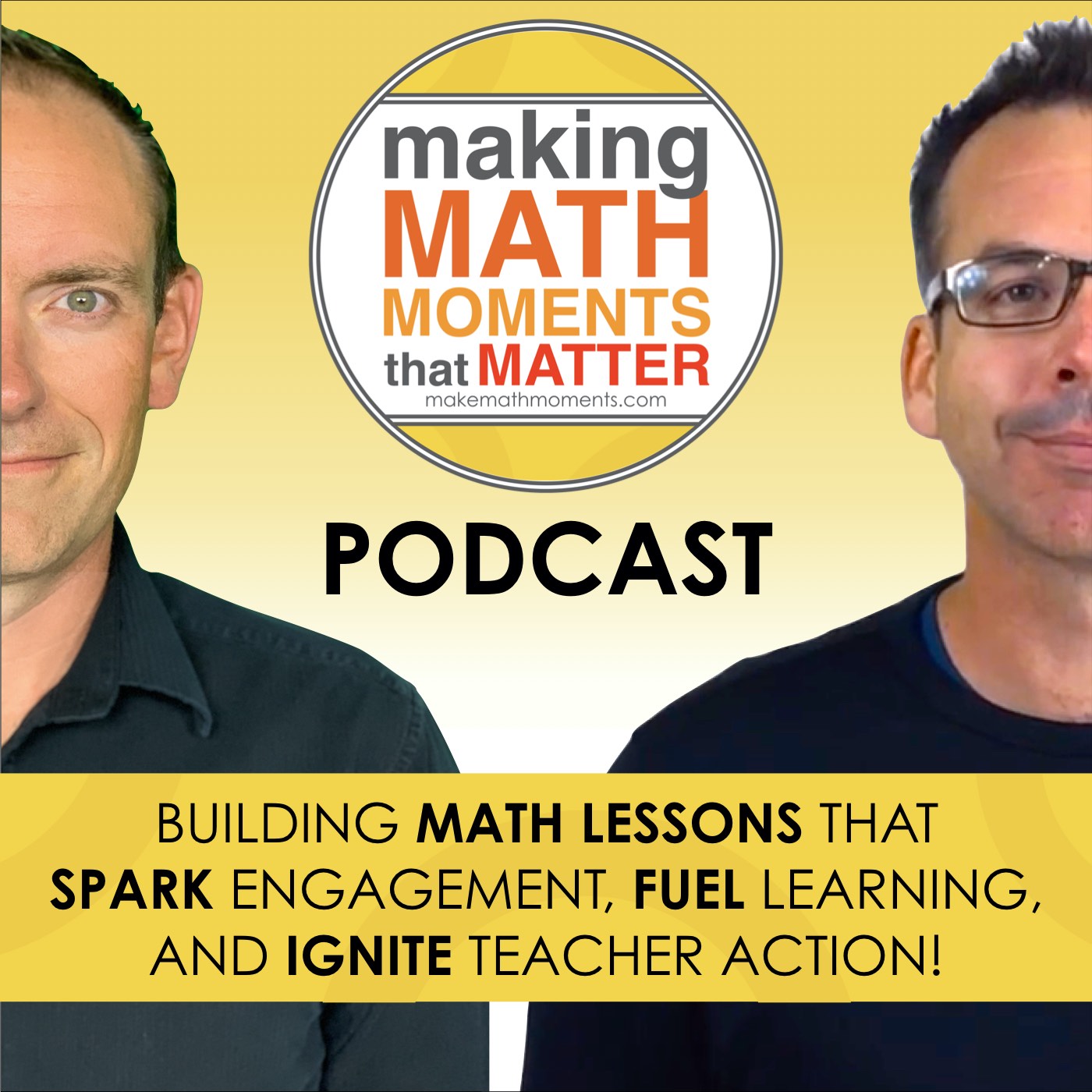
DOWNLOAD THE 3 ACT MATH TASK TIP SHEET SO THEY RUN WITHOUT A HITCH!
Download the 2-page printable 3 Act Math Tip Sheet to ensure that you have the best start to your journey using 3 Act math Tasks to spark curiosity and fuel sense making in your math classroom!
LESSONS TO MAKE MATH MOMENTS
Each lesson consists of:
Each Make Math Moments Problem Based Lesson consists of a Teacher Guide to lead you step-by-step through the planning process to ensure your lesson runs without a hitch!
Each Teacher Guide consists of:
- Intentionality of the lesson;
- A step-by-step walk through of each phase of the lesson;
- Visuals, animations, and videos unpacking big ideas, strategies, and models we intend to emerge during the lesson;
- Sample student approaches to assist in anticipating what your students might do;
- Resources and downloads including Keynote, Powerpoint, Media Files, and Teacher Guide printable PDF; and,
- Much more!
Each Make Math Moments Problem Based Lesson begins with a story, visual, video, or other method to Spark Curiosity through context.
Students will often Notice and Wonder before making an estimate to draw them in and invest in the problem.
After student voice has been heard and acknowledged, we will set students off on a Productive Struggle via a prompt related to the Spark context.
These prompts are given each lesson with the following conditions:
- No calculators are to be used; and,
- Students are to focus on how they can convince their math community that their solution is valid.
Students are left to engage in a productive struggle as the facilitator circulates to observe and engage in conversation as a means of assessing formatively.
The facilitator is instructed through the Teacher Guide on what specific strategies and models could be used to make connections and consolidate the learning from the lesson.
Often times, animations and walk through videos are provided in the Teacher Guide to assist with planning and delivering the consolidation.
A review image, video, or animation is provided as a conclusion to the task from the lesson.
While this might feel like a natural ending to the context students have been exploring, it is just the beginning as we look to leverage this context via extensions and additional lessons to dig deeper.
At the end of each lesson, consolidation prompts and/or extensions are crafted for students to purposefully practice and demonstrate their current understanding.
Facilitators are encouraged to collect these consolidation prompts as a means to engage in the assessment process and inform next moves for instruction.
In multi-day units of study, Math Talks are crafted to help build on the thinking from the previous day and build towards the next step in the developmental progression of the concept(s) we are exploring.
Each Math Talk is constructed as a string of related problems that build with intentionality to emerge specific big ideas, strategies, and mathematical models.
Make Math Moments Problem Based Lessons and Day 1 Teacher Guides are openly available for you to leverage and use with your students without becoming a Make Math Moments Academy Member.
Use our OPEN ACCESS multi-day problem based units!
Make Math Moments Problem Based Lessons and Day 1 Teacher Guides are openly available for you to leverage and use with your students without becoming a Make Math Moments Academy Member.
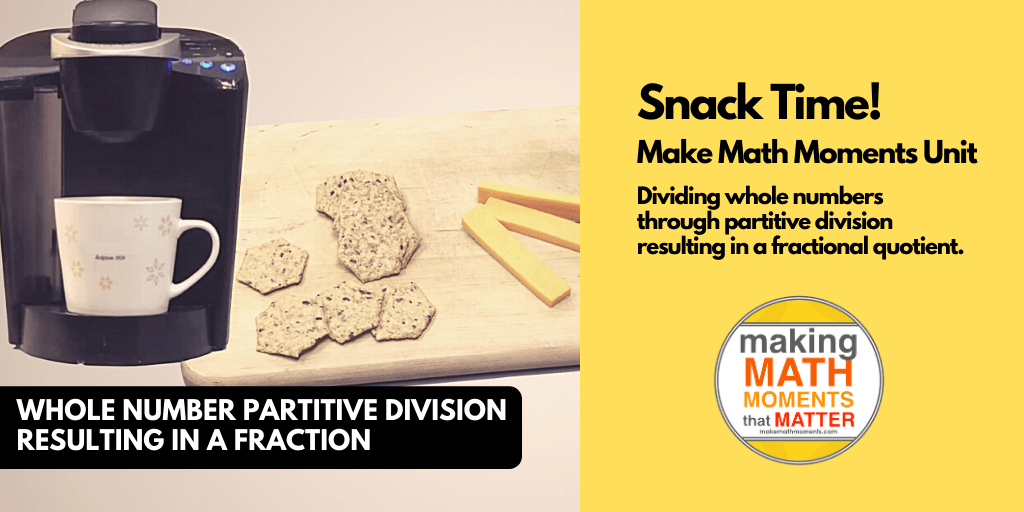
Partitive Division Resulting in a Fraction
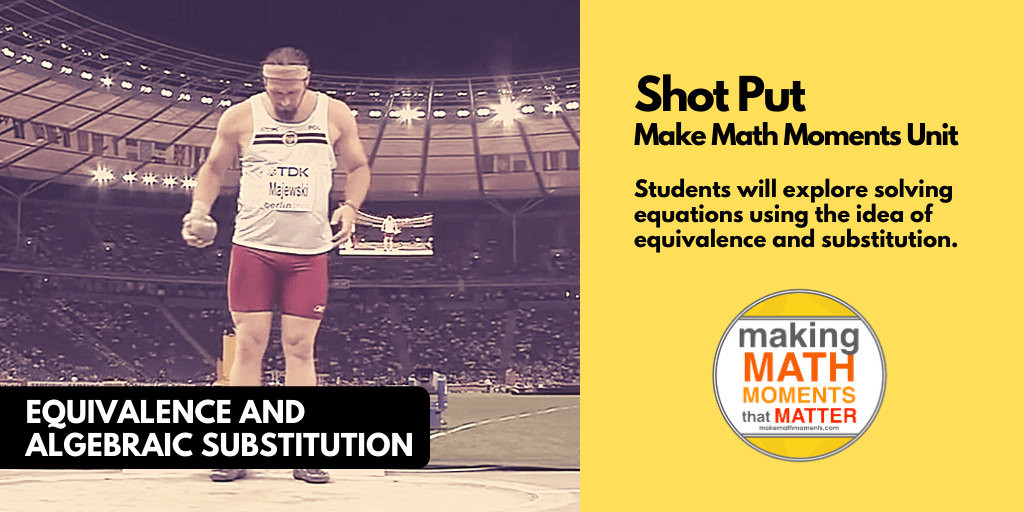
Equivalence and Algebraic Substitution
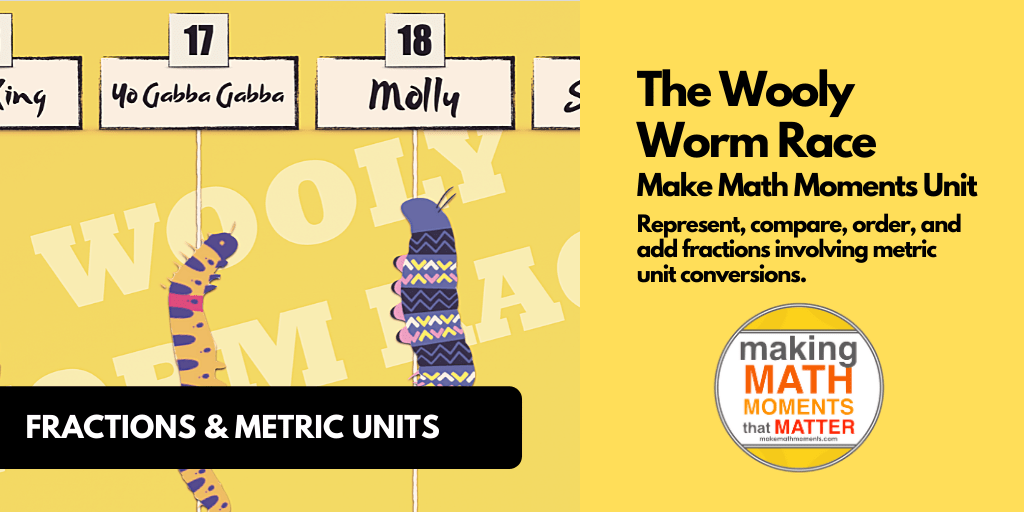
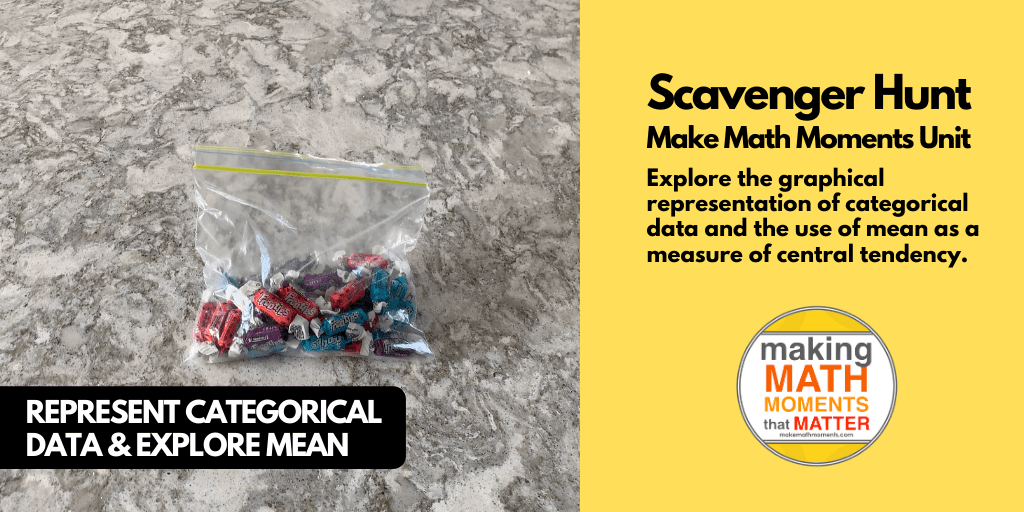
Represent Categorical Data & Explore Mean
Downloadable resources including blackline masters, handouts, printable Tips Sheets, slide shows, and media files do require a Make Math Moments Academy Membership.
ONLINE WORKSHOP REGISTRATION

Pedagogically aligned for teachers of K through Grade 12 with content specific examples from Grades 3 through Grade 10.
In our self-paced, 12-week Online Workshop, you'll learn how to craft new and transform your current lessons to Spark Curiosity, Fuel Sense Making, and Ignite Your Teacher Moves to promote resilient problem solvers.

0 Comments