Episode #507: James O’Neal Jr: Reaching Hard-to-Reach Learners
LISTEN NOW HERE...
WATCH NOW...
In this episode, Jon Orr talks with James O’Neal Jr. about his upcoming session at the 2026 Make Math Moments Virtual Summit on motivating and supporting hard-to-reach students. James describes these students as learners who carry years of what they believe is failure in math, and explains why picking up a pencil can feel heavy when it’s tied to memories of not getting it.
James shares why he builds math motivation around four connected cultures: praise, competence, belonging, and autonomy. He explains why students need opportunities to win, how sense-making builds ownership, and why the first shift for teachers is believing that students can. Jon connects James’s ideas to the Results Pyramid and the role experiences play in shaping beliefs.
In this episode, you'll explore:
- What James hopes former students will say about their math experience years from now
- What makes a student hard to reach, and why years of perceived failure matter
- Why praise, competence, belonging, and autonomy are central to math motivation
- How competence and belonging are closely connected in math class
- Why James asks teachers: Where will your kids win today?
- How routines like Which One Doesn’t Belong and Notice and Wonder give every student an entry point
- How letting students discover why anything to the zero power is one builds ownership
- Why the first lift for teachers is believing that students can
- Why students may need several positive math experiences to outweigh a negative one
- How experiences shape beliefs, and beliefs shape the actions students take in math class
As you plan your next lesson, ask yourself James’s question: Where will my students win today? Look for one moment where a hesitant student can enter the math successfully, and one idea you usually summarize for students that they could discover on their own. Then notice how those students respond, and think about how you could build more of those positive experiences into the weeks ahead.
Attention District Math Leaders:
K-12 Math Leaders: Download our free Math Coherence Compass to help your teammates, system leaders, and educators create aligned instructional practices—without adding another initiative.
K-12 Math Leaders: Not sure what matters most when designing math improvement plans? Take this assessment and get a free customized report: https://makemathmoments.com/grow/
K-12 Math Leaders: Ready to design your math improvement plan with guidance, support and using structure? Learn how to partner with us and follow our 4 stage process. https://growyourmathprogram.com
Looking to supplement your curriculum with problem based lessons and units? Make Math Moments Problem Based Lessons & Units
Be Our Next Podcast Guest!
Join as an Interview Guest or on a Mentoring Moment Call
Apply to be a Featured Interview Guest
It will take less than two (2) minutes to book your Math Mentoring Moment call.
Book a Mentoring Moment Coaching Call
Take two (2) minutes to book your Math Mentoring Moment call and let's work together to shake that math pebble out of your shoe!
Are You an Official Math Moment Maker?
Ensure that you follow, rate and review on Apple Podcasts, Spotify and other platforms to show your support and ensure other math educators can find the show.



FULL TRANSCRIPT
Jon Orr: Hey James, welcome back to the Making Math Moments That Matter podcast. I looked it up. You were with us not too long ago, a couple years ago for a podcast episode. You presented at the summit last year. And we're having you back again this year, 2026 Make Math Moments Virtual Summit. One of your sessions are one of the most well attended and also one of the most well watched afterwards as well. So glad to have you back. How are things over in your world right now?
James O'Neal, Jr.: Jon, appreciate you. Things are good. It's sunny here in Charlotte, North Carolina. The humidity is now fleeting us and the trees are just like, hey, let's change our colors. And so I went outside this morning. It was like a good seventy degrees. It's like my perfect weather. So I'm feeling good on the side.
Jon Orr: Perfect. Yeah. Yeah. Love it. Love it. The weather here also in the, you know, this the southern point of Canada is always nice. And this is our Thanksgiving weekend coming up. So we're having Thanksgiving on the Monday and it's always fall, you know, it's the kickoff of fall for us, you know, thinking specifically about, you know, the foliage, you know, and the looks around the cool weather for sure, for sure.
One of the questions we're asking every guest to kind of kick things off is thinking about a math moment. But if longtime listeners know the math moments we typically have asked in the past have been about past moments, the moments that stick with us for years, that define who we are as mathematicians and how who we are as educators for the kids that we serve every day. But in this series, what we're looking at is pushing the math moment into the future. What we're asking is to say, imagine you met a student years after they left your system or your care, or maybe you were influencing some teachers and they left their care and you ran into them at the store. You ran into them years later, they're adults, and you asked them, you said, you know, what was your big takeaway from, you know, mathematics and experiencing mathematics in my classroom? I guess what we want you to kind of think about is and this is the moment for the future, is what do you want that student to say?
James O'Neal, Jr.: Yeah, that's a really good question. I love it. I want all of them pretty much to say the same thing. So it's almost like every time if I would run into a student, it's more so that I finally got it. And I finally started loving math when I had you as a teacher or the teachers that I coach now, like they really started to get it. And it's not just like I got it correct, but they love the atmosphere that they were learning math in. They love the culture that was built in the classroom around mathematics and they really love the experience. And then hopefully they will say that experience some time some kind of altered their life. You know, a lot of people don't go into certain degrees if it has mathematics in it. It's like I can't do it, I don't want to do that because it has math in it. And so hopefully they'll say, like, because of that experience I was more open, more open to a different pathway, and ultimately it changed my life in a way that's positive.
Jon Orr: Right. Yeah, love it, love it, love it. And this I'm generally curious about because, you know, I think the same things and the folks that we've asked this question to typically say something similar, not the exact same because everyone's got their own take on that question, but imagine like you randomly plucked a teacher today, would they say the same?
James O'Neal, Jr.: If I randomly do what with the teacher?
Jon Orr: Just if you randomly grabbed a K to twelve teacher, well in your experience, like the teacher is like, you know, when you walk into a building and you're like, I'm meeting you for the first time and it's like you've randomly plucked a teacher in K to twelve and you ask them that same question and then you said, you know, what do you want kids to say? Do we believe that I think that they would say something similar to what you just said? Or do we believe that they would say something different?
James O'Neal, Jr.: I hear teachers saying something along the lines that is similar. Maybe not so much of the life trajectory. That's kind of been like what I felt my call, and my gift back into the earth. But I hear teachers saying that this is the main thing I hear teachers saying, I want my kids to be okay with making mistakes. And things like that, that they that a common language. But I think sometimes the whole thing of empowerment of mathematics, I think that that narrative sometimes is missing.
Jon Orr: Yeah. Yeah. 'Cause I honestly believe that if we ask teachers this question, like everyone's going to say that they want students to understand math or feel confident in math and like math. And I think even though as and I guess maybe that's maybe my I'm projecting my own hope then maybe because maybe that's not the case. But it's like I think most teachers, I think all teachers I'm gonna say for sure, all teachers I think want the best for kids.
James O'Neal, Jr.: For sure, yeah.
Jon Orr: And therefore, when you think you now ask them about mathematics, they want them best for them about mathematics based off what they can then help with them with. What and if they see mathematics differently than we see mathematics different, you know, or I see mathematics, then they still want the best for them to understand that mathematics in the way that they can deliver it. And I think that's just I think one of my fundamental beliefs about educators is they all want the best for kids for sure.
James O'Neal, Jr.: Yes, yes. 'Cause you don't sign up for this job unless you like kids, want the best for kids. I'll say ninety nine point nine percent of us don't sign up we'll do this.
Jon Orr: Gotta be. Yeah. Exactly. And it's like we all do want the best, but then it becomes down to like, what are we doing about that? You know, like if we're trying to, you know, help kids see math differently or understand math or feel confident in math, are we actively making gains in that area and how do we get better at which it kind of brings us into your session, which is about motivating, supporting hard-to-reach students, because if we believe that all students, we want to help all students in our math classes. How do we motivate the ones that are coming in already saying like, I don't even want to be here? And that's what your session at the summit is. And I can't wait for that session. But give us a little snapshot. Like motivating students is probably the most asked for thing. It's like, how do I, especially for the hard to reach students? But I guess what is a hard to reach student in your in your eyes right now?
James O'Neal, Jr.: Yeah. Usually a hard to reach student is a student that has data that says that this content, this subject is not for me. So they're harder to reach because they have years of what they call and they believe is failure as it relates to mathematics. They have years of not feeling like they meet the bar of what a great mathematician is or someone that can do mathematics. And when that is internalized over and over again, that student's gonna be harder to reach because they're coming up with a fixed mindset as it relates to whether this is for me or it's not for me. And if I'm already decided that this is not my thing, then it's going to be harder to reach me in the classroom.
The pencil now becomes a ton because connected to the pencil and doing the work is the remembrance of the failure of the last time I tried it and I didn't get it, or the last time I tried it and the teachers or somebody said something to me that made me feel smaller. So those students usually are the ones who have historically not had success in mathematics.
Jon Orr: Right, right. Now in your session you're going to be talking about, I'm building on praise, competence, belonging, and autonomy, specifically. Like why those four and or are amongst all the other things that we could be focusing on for reaching hard to reach students?
James O'Neal, Jr.: Yeah, so because when I started doing this work, I was asked about that over and over again. Like you said, how do we motivate them? How do I get them engaged? They don't want to talk. They don't want to do anything. They don't want to do that. I hear that over and over again. And so I really started to dive into like what does the research say is about motivation. And I found this article that looked at 150 articles on motivation. And they said that there are three psychological, they first said teachers are far more influential than parents in motivating students to learn. And we know the research is very clear about the most powerful person in that building that has the ability to change the trajectory of a kid is a teacher.
And the correlation between the teacher and the student success is stronger than any other factor. And so when we look at those factors, the research began to look at what are the needs that our students ultimately need in the classroom. And the three things that it said was our students have a need of competence. They have a need of belonging and they have a need of autonomy. And then the fourth one that I brought in was praise and that's just I call it James O'Neill research. Like in me doing this over and over again, like if we have these four cultures embedded inside of our math classroom, I believe students that feel competent will be more motivated. Students that feel praise for their brilliance will be more motivated. Students that have more autonomy will be more motivated. And lastly, students that felt like they belonged, of course, they will be more motivated and more engaged in our classrooms.
Jon Orr: Sure, for sure. What is, I guess, what does say belonging and autonomy look like when you have that student who comes in already, you know, back up against the wall, they're already ready to have a fight about math because of the past experience. Like what are we doing in our classes to bring those along and break down those barriers?
James O'Neal, Jr.: Got it. So one thing beautiful about these cultures is that they always are intersecting. And it's something I'm gonna say often in the session. And so when I think about belonging, a lot of times in a math classroom, belonging is heavily correlated to competence. Because if I don't, when we think about mathematics and competence, like having the ability, competence is your ability or belief that you can do something successfully. And so year after year, if you don't feel that, then ultimately you're gonna decide that you don't belong.
And so with belonging, I find that a lot of times I'll start with competence and build belonging as well. So kids need to win again. And so we need to set up our classrooms. And I ask teachers when I coach them, like, where will your kids win today? And if you can't answer that in your planning, then this whole thought of belonging in mathematics, it's not going to be the case because many of those kids that are harder to reach are used to taking losses, taking L's a lot. And so building on the competence, first asking when are they winning? So those may look like those, which one doesn't belong, where everybody can enter in, like starting there. Which one notice and wonders, like activities that get them to start talking and like take ownership.
When we start building those into the curriculum, into the experience, when kids start winning, they start being like, oh, I actually belong here. And so that's something that I honestly heavily lean on. And when we think about belonging, the autonomy of these routines is that this is yours. And so many times, like if you sat in a classroom and this podcast was about me just talking at you all the time, I don't know what you think. I haven't given you a chance to talk. I don't know what you believe. And so this is James O'Neill podcast, right? And so in classrooms it becomes the teacher show because students don't have the space to actually own the mathematics. And so it's important for that to happen.
Jon Orr: Right. For sure. For sure. Talk to me about then in like the competence side specifically, because I think last time you were here on our podcast, you talked about engagement comes from kids making sense of the mathematics and they go hand in hand. And a lot of times many teachers, and I did for years, thought about them as almost separate. You know, like there's the rigor, there's the mathematics, but then I was like, I have to do tricks, I have to do like stand on my head, I have to perform if I'm gonna get any sort of engagement and I think you know, I've come to learn differently, but talk to us about how you view engagement and competence and making sense of math as all connected.
James O'Neal, Jr.: Yeah, it's definitely heavily connected. I think when I think about that, I think about the math journey of sense making that I had to go on. So I remember one time I was teaching exponents and somebody asked me, why is anything to the zero power one? You know, nobody ever showed me. So I was just like, because it is. Why do you want to know? Like,
Jon Orr: Yeah. Because it is, man. Don't ask me.
James O'Neal, Jr.: why do you want to, why I've never been asked this question. We just take it as is. Like, and so I realized, I don't know why. So let me go on my why journey. And simple as moving down, if you go two squared is two times two, which is four, two to the first power is two. And as you move down the powers, you're dividing by the base. So two to the zero power, if you just look at that pattern, it gives you one. And so once I discovered why, I gave it to my kids.
And I said, now listen, it doesn't take a rocket scientist to realize that you're dividing by two each time. And what ended up happening is, this is a question I always pose to teachers, like, what can you not conclude or summarize for kids that they can get on their own? Now, in order for you to ask that question, you literally have to start with the belief that kids can. And so I look at simple things like that pattern of just dividing by two moving down the base. That's how we end up with just an example of how we get one and it works for every exponent. I'm not gonna tell my kids that, I'm gonna let them discover it.
And so when you pose the question and say, what is two to the zero power, without even saying, like, you gotta find a pattern and you gotta find a rule moving down the base, when they get it, it's like, oh, oh, it's one because I'm dividing by and it works for three and it works for four. That is competence. That's their competence, that's their autonomy, and that's ownership. And that's them making sense of the problem. And guess who owns it? Them. And guess who doesn't have to always remind them what's anything raised to zero power? Because their brain has made sense of it on their own. They own it.
Now you can forget it. Like we forget stuff all the time. But the likelihood of you forgetting it when you went through the productive struggle of making sense of it, as opposed to me just giving it to you, is gonna more likely land and stick when it's done in that way. So it's making sense, belonging, autonomy, all those things tie in to literally the engagement in the classroom.
Jon Orr: When we when I think about coming to the session and hearing, you know, the practical moves that you're gonna be helping us with on motivation, specifically for hard to reach kids, sometimes I think about like what is the heavy lift that I'm gonna have to do come Monday? Like when I go to a session, it's like this is what we should try, this is what we should try, this is what we should try. And then I think about what my curriculum is saying I should do on Monday or what are the learning goals that I'm now preparing and now I'm trying to layer in new ideas? Like help us understand what lift is required, if any. Like what is the shift here that we need to kind of be aware of that we're signing up to complete? It's like think of it as on a continuum. Is it a complete overhaul? Or is this stuff that we can like slide in come Monday morning?
James O'Neal, Jr.: Yeah, yeah, yeah, yeah. So Jon, I'm gonna be honest with you. The first lift is the lift of believing that kids can. Okay. So that's the lift. And I'm a, you know, I like to be honest. If you as a person have had years of experience with the hard to reach students that they don't want it, they don't care about it, and they have concluded that this is not for them, and you have concluded that they've you've come up with the same conclusion that they have, then the lift first is to remind you that success is the thing that we always crave, which is something that I'm gonna talk about in my session as well. Like failure, the reason why a kid will not pick up a pencil many times is because they're protecting themselves from the feeling of failure.
And so if you get them to win more, it feels better than not knowing. Like, I'm sorry. Like, this is just like the common sense thing. And so I think the first lift is to remind yourself, like, they do want it, even though their persona, the facade, even some of the things that they say out of their mouth says otherwise, because the feeling of success is better than the feeling of failure in the shutdown we see. I think that's the first lift.
And then when we start to lift that, when I start saying, hey, try this one move if it's lighter. It's not like, well, I've tried this before. I don't know. No, no. You start believing in kids again and you try it from a standpoint of, hey, you know, you did a lot of summarizing today. You want to just give them one thing that they can capture on their own and make sense of it and then turn and talk to their partner about why they are correct or their thinking. Like, and so that feels lighter now because the lift of believing in kids is off of you.
Jon Orr: Absolutely. Absolutely. I'm glad you said that. What's one other say big takeaway that you haven't yet described here today that we'll get by attending this session in November?
James O'Neal, Jr.: Yeah, I think the other big takeaway is I kind of said it a little bit earlier, but the session talks about the culture in which we learn mathematics. I believe that foundationally pedagogy and instructional practices, great instructional practices have to be the floor. So me being a content expert and knowing my content is going to be really important for the success of my students. That's number one. But the experience that our kids are having when they come into your classroom with you being the content expert, they have to have an invitation to try again.
So one thing that Zaretta Hammond's work on negativity bias says is that it usually takes three positive experiences to offset a negative one. So three to one ratio. That's math, right? And so what the big takeaway that I really want that I haven't said so far is that your kids need to be bombarded with positive experiences over and over and over to take away the negative taste out of their mouth as it relates to mathematics.
So going back to the question that you asked me in the very beginning, I taught middle school math and I taught high school math. And by that time the kids came to me, they had made up their mind whether this was for them or not. And so when I meet a kid in the future that says, hey, I believe I love math after your class. What they're really saying to me is the experience that I had with you, it counteracted all the years of those negative experiences where I now believe that I can. And so that's the biggest takeaway. We have to bombard them with these positive experiences day in, day out, because they're not gonna let that identity go until they have a reason to do so.
Jon Orr: Absolutely. Absolutely. I'm glad you said that too. It reminded me of a book I just recently read a month or so ago called Change the Culture, Change the Game. And it's not an education book, it's more of like an organizational leadership book, but they outlined a pyramid and they call it the results pyramid. And so organizations are striving for results, right? And they're saying that typically the most people are striving for results, or most organizations or leaders are striving for results and they start mid pyramid. Which basically says if I need results, I have to do actions. And I need to do those actions well to get results. And so when we think about education, the actions are like, I need to put instructional practices into my classroom in a better way to get results, kids to learn, kids to achieve their standardized test scores.
But the bottom part of the pyramid where those rest on, that I think we don't start with, which we always should start with, which made me remember, remind me what you just said, which is underneath actions is beliefs. And then underneath beliefs is experiences. And so the experiences are the biggest part of the pyramid that's basically says you beliefs like results won't change unless actions change. Actions won't change unless we believe and we have certain beliefs about those actions and therefore we're motivated to take action. And then our beliefs don't change unless we have certain experiences that tell us or influence those beliefs. And so therefore we have to start with experiences.
So your bombardment of positive experiences in math can then shift beliefs in our classroom with our kids, with ourselves. And then those will shift the actions kids take in our lessons, motivation, like doing the mathematics. And then those shift their actual results, which is their maybe achievement scores down the road or which is from that pyramid. So very much in line with, you know, some of the research around that idea for sure.
James O'Neal, Jr.: Jon, you summarize it up so well, sir. I'm taking that. So thank you for that. Yes, sir.
Jon Orr: Take it. Go read that book. It's a very influential book. But James, thanks again for being here. James's session is at the 2026 Virtual Summit on Saturday, November 14th. That's a one day only live event. The replays will be through the weekend. There are recordings and they're all live events. James is doing a live event with us. You can go register right now. Hit the link in the description below. James, thanks so much for being here and can't wait to see you in virtual person and maybe in actual live person in a month or so.
James O'Neal, Jr.: I'll be there all week, Jon. All week. All
Jon Orr: All right. Awesome. Take care.
James O'Neal, Jr.: right, you too.
Your Customized Improvement Plan For Your Math Classroom.
Take the 12 minute assessment and you'll get a free, customized plan to shape and grow the 6 parts of any strong mathematics classroom program.
District leader/math coach? Take the District Assessment
Thanks For Listening
- Book a Math Mentoring Moment
- Apply to be a Featured Interview Guest
- Leave a note in the comment section below.
- Share this show on Twitter, or Facebook.
To help out the show:
- Leave an honest review on iTunes. Your ratings and reviews really help and we read each one.
- Subscribe on iTunes, Google Play, and Spotify.
The Making Math Moments That Matter Podcast with Kyle Pearce & Jon Orr
Weekly interviews, strategy, and advice for building a math classroom that you wish you were in.
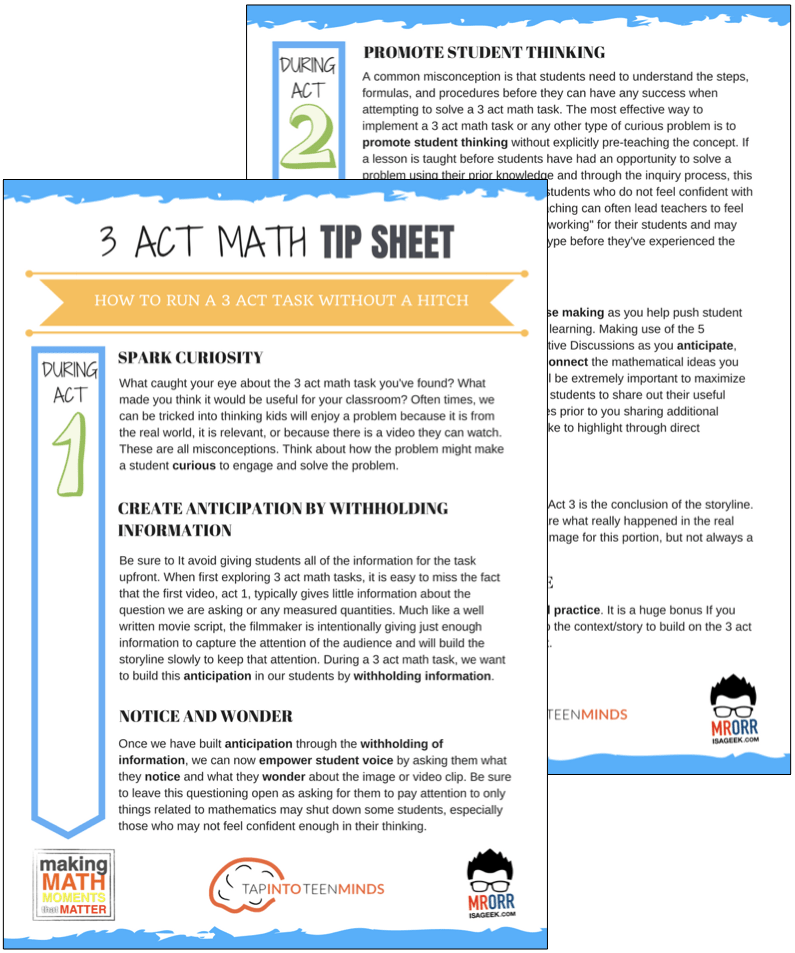
DOWNLOAD THE 3 ACT MATH TASK TIP SHEET SO THEY RUN WITHOUT A HITCH!
Download the 2-page printable 3 Act Math Tip Sheet to ensure that you have the best start to your journey using 3 Act math Tasks to spark curiosity and fuel sense making in your math classroom!
LESSONS TO MAKE MATH MOMENTS
Each lesson consists of:
Each Make Math Moments Problem Based Lesson consists of a Teacher Guide to lead you step-by-step through the planning process to ensure your lesson runs without a hitch!
Each Teacher Guide consists of:
- Intentionality of the lesson;
- A step-by-step walk through of each phase of the lesson;
- Visuals, animations, and videos unpacking big ideas, strategies, and models we intend to emerge during the lesson;
- Sample student approaches to assist in anticipating what your students might do;
- Resources and downloads including Keynote, Powerpoint, Media Files, and Teacher Guide printable PDF; and,
- Much more!
Each Make Math Moments Problem Based Lesson begins with a story, visual, video, or other method to Spark Curiosity through context.
Students will often Notice and Wonder before making an estimate to draw them in and invest in the problem.
After student voice has been heard and acknowledged, we will set students off on a Productive Struggle via a prompt related to the Spark context.
These prompts are given each lesson with the following conditions:
- No calculators are to be used; and,
- Students are to focus on how they can convince their math community that their solution is valid.
Students are left to engage in a productive struggle as the facilitator circulates to observe and engage in conversation as a means of assessing formatively.
The facilitator is instructed through the Teacher Guide on what specific strategies and models could be used to make connections and consolidate the learning from the lesson.
Often times, animations and walk through videos are provided in the Teacher Guide to assist with planning and delivering the consolidation.
A review image, video, or animation is provided as a conclusion to the task from the lesson.
While this might feel like a natural ending to the context students have been exploring, it is just the beginning as we look to leverage this context via extensions and additional lessons to dig deeper.
At the end of each lesson, consolidation prompts and/or extensions are crafted for students to purposefully practice and demonstrate their current understanding.
Facilitators are encouraged to collect these consolidation prompts as a means to engage in the assessment process and inform next moves for instruction.
In multi-day units of study, Math Talks are crafted to help build on the thinking from the previous day and build towards the next step in the developmental progression of the concept(s) we are exploring.
Each Math Talk is constructed as a string of related problems that build with intentionality to emerge specific big ideas, strategies, and mathematical models.
Make Math Moments Problem Based Lessons and Day 1 Teacher Guides are openly available for you to leverage and use with your students without becoming a Make Math Moments Academy Member.
Use our OPEN ACCESS multi-day problem based units!
Make Math Moments Problem Based Lessons and Day 1 Teacher Guides are openly available for you to leverage and use with your students without becoming a Make Math Moments Academy Member.
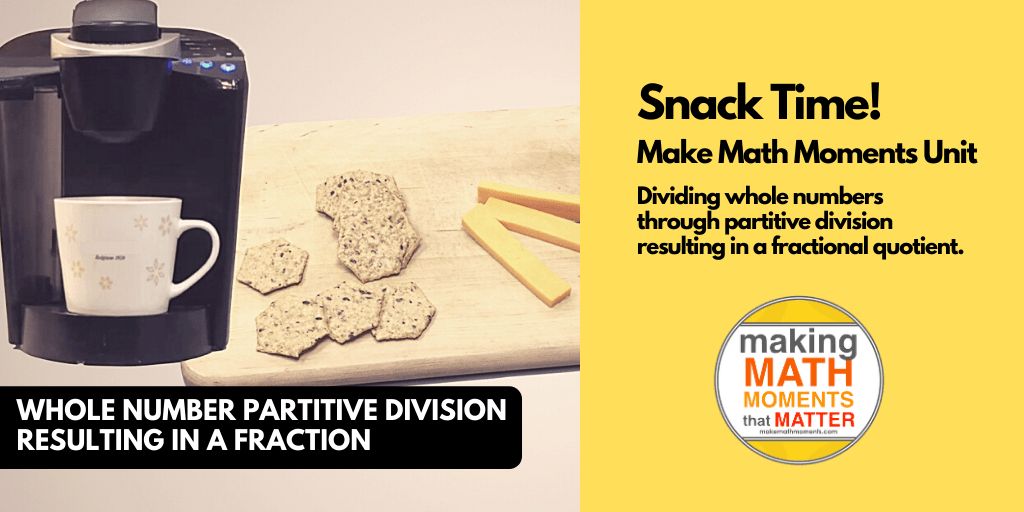
Partitive Division Resulting in a Fraction
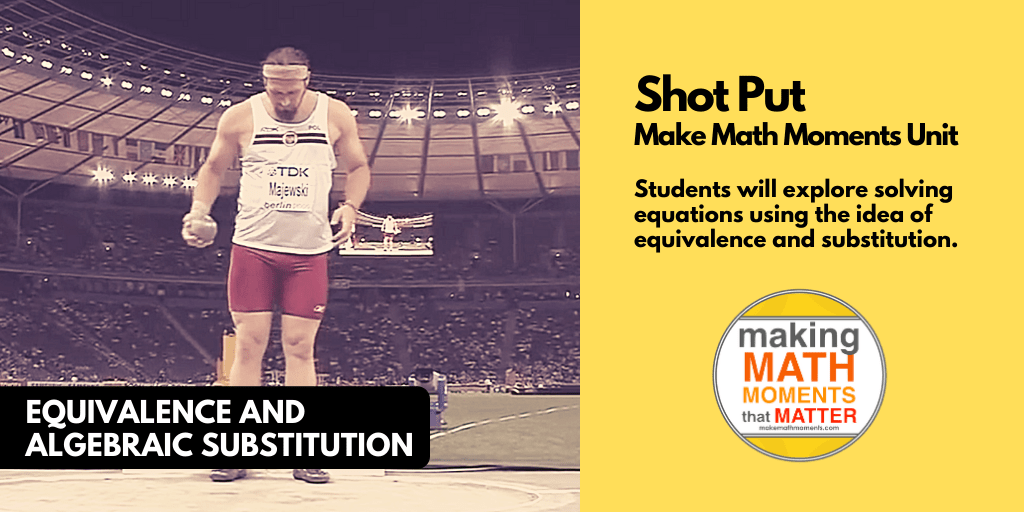
Equivalence and Algebraic Substitution
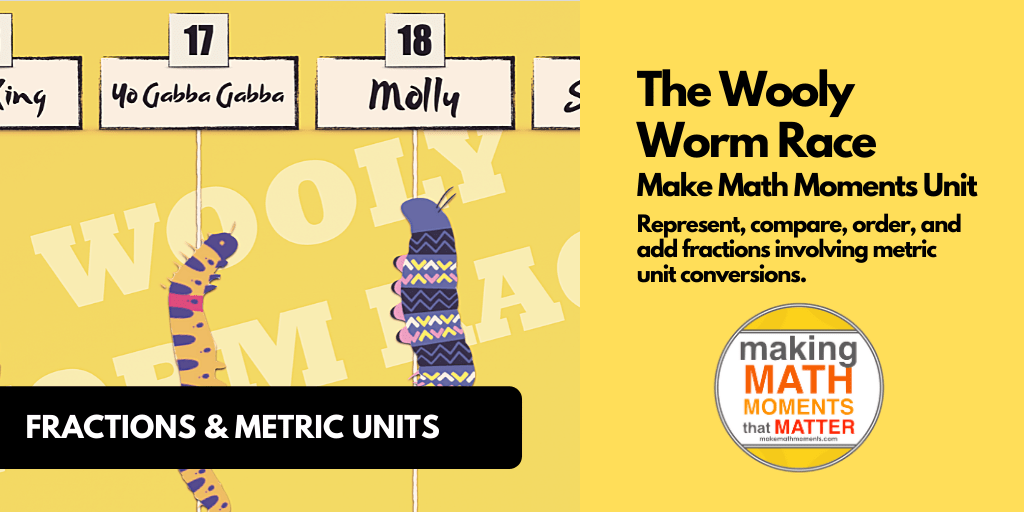
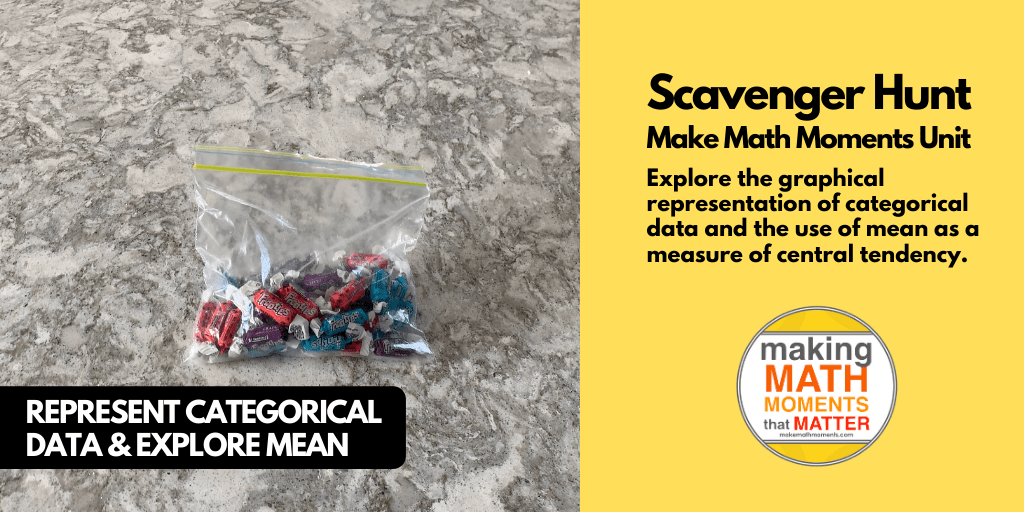
Represent Categorical Data & Explore Mean
Downloadable resources including blackline masters, handouts, printable Tips Sheets, slide shows, and media files do require a Make Math Moments Academy Membership.
ONLINE WORKSHOP REGISTRATION
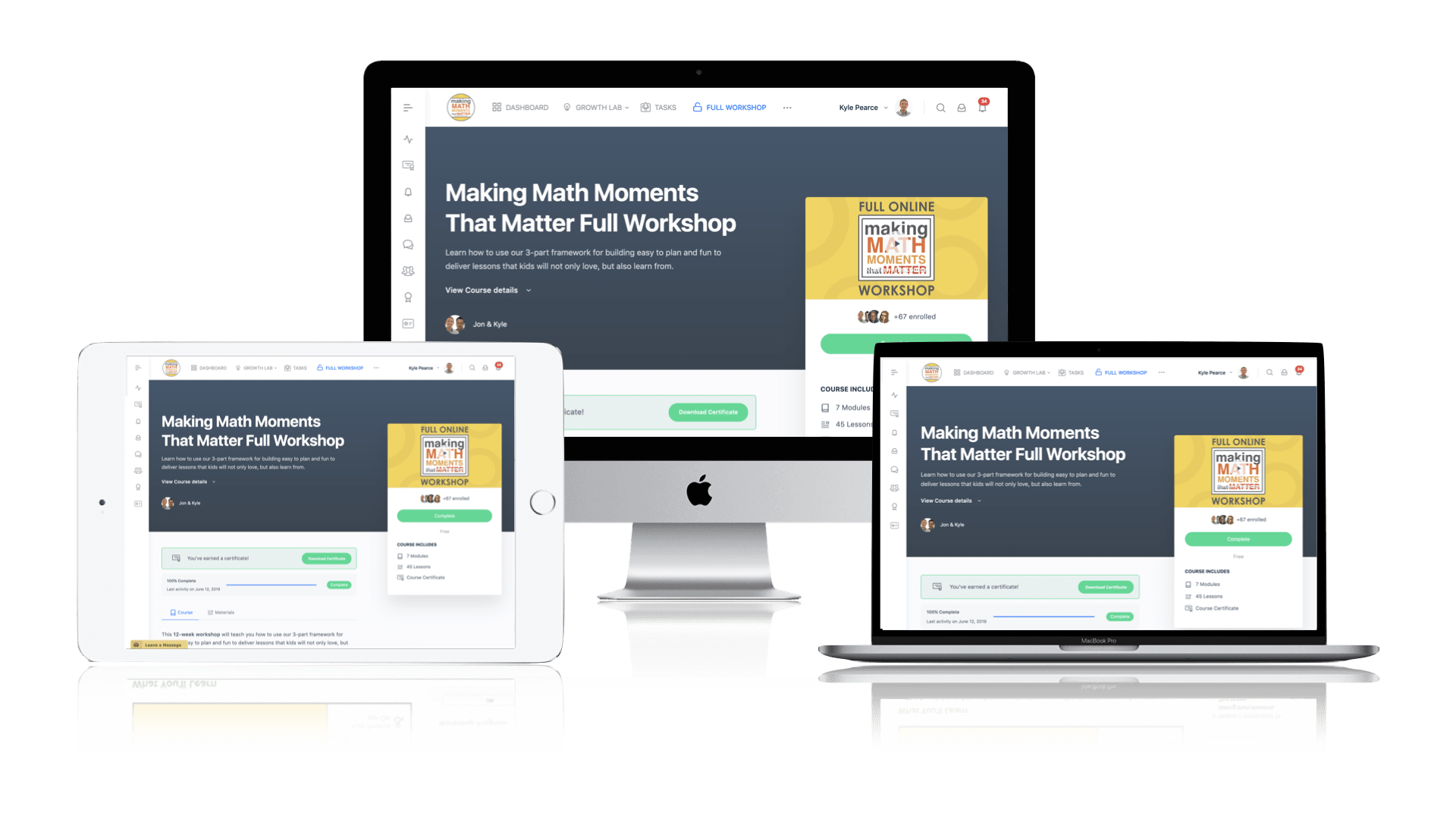
Pedagogically aligned for teachers of K through Grade 12 with content specific examples from Grades 3 through Grade 10.
In our self-paced, 12-week Online Workshop, you'll learn how to craft new and transform your current lessons to Spark Curiosity, Fuel Sense Making, and Ignite Your Teacher Moves to promote resilient problem solvers.
0 Comments