Episode #461: What Is Conceptual Understanding in Math? And Why It Matters for Fluency
LISTEN NOW HERE…



WATCH NOW…
What if one of the most common terms in math education — conceptual understanding in math — isn’t actually understood the same way across schools, systems, or even math classrooms?
A recent podcast sparked a big question: is conceptual understanding in math poorly defined? The challenge wasn’t just the definition itself, but the claim that conceptual understanding in math may be getting in the way of math fluency. In this episode, Jon Orr, Yvette Lehman, and Beth Curran unpack that tension and wrestle with a deeper issue: maybe conceptual understanding in math is not poorly defined in research, but poorly understood and inconsistently implemented in practice.
In this episode, you’ll learn:
- Why conceptual understanding in math and math fluency should not be framed as opposing goals
- How conceptual understanding in math supports retention, reasoning, and equitable access to math learning
- Why poor implementation of conceptual understanding in math can create confusion and pushback
- How overemphasizing one part of math instruction can unintentionally crowd out purposeful math practice and explicit math instruction
- Why dips in math data should not automatically trigger a rejection of conceptual understanding in math
- How math leaders can build coherence around what conceptual understanding in math actually looks like in math classrooms
Ask yourself: when your team says “conceptual understanding in math,” do you all mean the same thing? If not, that may be the real math improvement work ahead.
Attention District Math Leaders:
Not sure what matters most when designing math improvement plans? Take this assessment and get a free customized report: https://makemathmoments.com/grow/
Ready to design your math improvement plan with guidance, support and using structure? Learn how to follow our 4 stage process. https://growyourmathprogram.com
Looking to supplement your curriculum with problem based lessons and units? Make Math Moments Problem Based Lessons & Units
Be Our Next Podcast Guest!
Join as an Interview Guest or on a Mentoring Moment Call
Apply to be a Featured Interview Guest
Book a Mentoring Moment Coaching Call
Are You an Official Math Moment Maker?



FULL TRANSCRIPT
Yvette Lehman: I was listening to a podcast the other day and it left me wondering about my own understanding of a term that I feel I use all the time. That is one of the core beliefs of my instructional approach as an educator, which is the idea of conceptual understanding. And in the podcast I was listening to, one of the guests said this — essentially that conceptual understanding is not a well-defined term. And I walked away from the episode asking myself, is that true?
Jon Orr: And what was it in context of? Like, tell me more about the episode and that phrase.
Yvette Lehman: So they were highlighting a myth in math education and they were basically debunking some approaches that they felt maybe were counterproductive to the results we’re all trying to achieve. And one of their arguments was that conceptual understanding, this poorly defined term, is getting in the way of building fluency.
Yvette Lehman: And I really wondered because again, this is my entire identity — it’s wrapped up in a belief that conceptual understanding is a path to creating more equitable access to math education for more students, supporting retention, supporting deep reasoning. And so then I actually asked myself, is it poorly defined? Is that true? And so I want to hear what you think. Do you believe that the term conceptual understanding is poorly defined or undefined?
Beth Curran: I would say that I am in the same place as you, right? I feel like I have developed my whole math identity around helping others embrace this idea of developing conceptual understanding. So is it poorly defined? I think that there are plenty of definitions out there about it. I would say in a nutshell, what I typically say is conceptual understanding is understanding why the math works the way that it does. And then you’ve got your skills, which are how to do that math that you now understand.
Beth Curran: I am a firm believer that conceptual understanding needs to come before we teach the skills. But I can see the argument for having them go kind of hand in hand as well. So in a simple definition, it’s looking for connections between mathematical concepts, deeply understanding how the math works and how those algorithms and procedures that we’re telling students work — why they work the way that they do before teaching the how.
Jon Orr: Now, I’m going to say something that I strongly believe, and this is gonna sound funny. It’s a phrase actually we’ve shared here on the podcast before, but both of you have kind of said like your identities are wrapped up in an idea. And I think one of the things I strongly believe is that I should have strong beliefs, but I need to loosely hold them.
Jon Orr: I need to be able to loosely hold them because if I’m presented with evidence, if I’m presented with new thinking, if I’m presented with something that shifts the way I’ve viewed my identity for a long time, I need to be able to reposition that or rethink myself. And that’s something that I believe and I want to believe about all things — I should have strong beliefs, but I should loosely hold them because I should be able to change my mind. And you should be able to change your mind too.
Jon Orr: And so having said that, what do I believe now is the important part, right? It’s like, what will I believe 10 years from now? I don’t know. I hope my beliefs are different. I hope I’ve learned other things and taken in different points of view along the way that helps shape what I think about. And I think that’s a really important message here today as we address this key idea that a lot of schools, a lot of teachers, a lot of districts, a lot of district leaders are getting pushback on — this idea of conceptual understanding and how we teach mathematics.
Jon Orr: And this war, in a way, has been going on for a really long time. This battle back and forth between direct instruction and conceptual understanding and teaching through — it’s been in there. But I always try to root myself in saying strong beliefs, loosely held.
Jon Orr: Now, going back to the question — is it not defined well? Is it too messy? Is it not clearly defined? In a way, I believe yes and no. Yes, I believe that it’s clearly defined. You can see and read research articles. You can hear people who have studied this idea for a long time and more than we have clearly articulate what learning through conceptual understanding looks like and sounds like in different scenarios, different ideas, different concepts.
Jon Orr: What I also believe is that it is vague and messy for most teachers — what that really means. So while some people who are smarter than me are clear on what this means, I know for the mass majority of us that it is true that we don’t really know what this looks like in practice, or we may not know. And so when I’m thinking about a school, you walk into a school and say, if I asked 10 people about conceptual understanding and what that looks like, you’re gonna get 10 different responses. So yes, it’s messy. Yes, it’s not well-defined for those people yet. Is it well defined elsewhere? Sure. But I think that’s where the crux lies — as a society, as school systems, we don’t have a solid shared understanding of what this really means.
Jon Orr: I was going to say, totally agree. We were just coming off the weekend — that’s the time it was recorded. We had our leadership summit and one of the sessions specifically talked about the implementation stages that we learned from Jim Knight about the five different stages of implementation. And it immediately comes to mind to say, we’re stuck in the middle. We’re stuck in this messy mechanical stage. And if we’re all using this term about trying to teach from conceptual understanding towards strengthening procedural fluency, most of what school systems have typically done so far is really get awareness. You’re in the mechanical or you’re in this clunky area, but we’re not moved towards what it coherently looks like, and then towards a more routine and proficient stage.
Jon Orr: And what that really means is that when that happens, we tend to start to play the blame game when something doesn’t go as well. Think about this — it’s like maybe you’ve been in a situation where you are in youth sports and your kid is playing and the team is losing. Guess what happens? You start questioning the coaching and you start playing the blame game. It’s like, well, that’s not working over here. Why aren’t you doing this? Because the poor implementation of the strategy — it’s not the strategy or the moves that the coach may be making, it’s just maybe the poor practice, the poor implementation of that.
Jon Orr: And that’s what’s happening in a way for many different mathematical instructional practices. We get to these mechanical stages and then we start playing the blame game about what else we could be doing. We gotta go back to the basics. We gotta be doing this. Because we’ve just not spent enough support time to help people through mechanical into the routine and the proficient stage on an instructional practice. And so then it’s like, that’s getting in the way. And yes, Yvette, it’s more our poor implementation as a system of what this looks like in the classroom that is in a way getting in the way.
Yvette Lehman: You mentioned the blame game and I was on a call yesterday with one of our partners and this is exactly the situation that they’re in. Their most recent scores have come in, they’ve dipped a little bit, and right away there’s fear and frustration of why did our scores dip? And then now we’re starting to look at, well, is it because we’ve been focusing on conceptual understanding for the past three years?
Yvette Lehman: They’ve been working on deep conceptual understanding, really grasping concepts around fractions and algebra — that’s been the work they’ve been doing in professional development through capacity building. And so right away we start to think about that implementation failure diagram, right? Where all of a sudden we see a dip in scores, which is a different cohort than the previous year. I’m going to mention — this is a different group of students who are being assessed from last year’s students.
Yvette Lehman: But right away, because of some of the conversations in the media, they’re starting to feel the pressure and feeling as though they have to defend themselves. And it’s a difficult position. When you’re leading an entire district in math improvement and you start to feel the pressure, how do you confidently move forward without creating — and my advice to them was like, we are not debating whether conceptual understanding is more important than fluency. It’s not a debate.
Yvette Lehman: They’re equally important, as well as adaptive reasoning and strategic competence and productive disposition. These are not polarizing ideas. They actually weave together to build really strong mathematicians in our classes. But what the challenge is, as we talked about with poor implementation, is that sometimes if we’ve been pushing conceptual understanding, people don’t hear everything else.
Yvette Lehman: So imagine you’ve been pulling people for PD and you’ve been prioritizing tasks that promote reasoning and problem solving through the connection of a variety of strategies and mathematical representations, but what they don’t hear is purposeful practice. What they don’t hear is opportunities for direct explicit instruction. And the same thing is happening right now in literacy.
Yvette Lehman: When we are pushing out science of reading, if teachers hear a lot about phonics-based instruction but they don’t hear about comprehension and vocabulary and syntax, what ends up happening is so much of our literacy block now becomes phonics instruction, because it’s just the thing that we keep talking about. And so going forward, it’s like how do we position ourselves to be very clear that although we support students understanding why —
Yvette Lehman: We know that the research suggests that when students understand why a procedure works, retention is better. So we want students to be well positioned. We want students to be efficient. We don’t want them blindly following steps that they don’t understand and clunking their way through problems. We want them to be sophisticated and efficient, but it doesn’t mean that it’s in lieu of explicit instruction and opportunities for purposeful practice and to consolidate skills.
Jon Orr: I was going to go back to when you were talking with our district team that we were supporting and they were getting some pushback from higher above and thinking about scores dipping. They’ve had really good scores for years in that school district. They’ve been spending time building conceptual understanding and what this looks like in the classroom of their teachers for years. But one of my immediate thoughts too was that this is the hard part about when you’re getting pushback — a lot of times everyone’s making a guess. Because you don’t have the data in front of you that suggests the relationship that you should be looking at.
Jon Orr: So when someone says, hey, we’ve had scores dip, that means what we’re doing isn’t working — I’m going to argue that when you have that thought as a leader, you have to ask yourself, well, what evidence have I collected other than student data that says that what we’re doing actually isn’t working? Because if I’ve been trying to strengthen educators’ understanding of mathematics so that the curriculum is being taught at the right rigor — like are we measuring the things that we wanna see improved?
Jon Orr: Because if I had that evidence in front of us, we’d say, look, our scores dipped, yes, but look at these measures that we are building upon year to year to year. And these are all exactly where we want them to be. All of a sudden, this is probably a non-issue. So the idea of saying — and again, think of this as a system issue — some people who are worried aren’t maybe included in the work, or they don’t understand the work that’s happening and they don’t understand the key ideas. And that right there is a coherence issue amongst the team.
Jon Orr: Has the person pushing back been included in some of the math education or math professional development strategies or the math improvement plan strategies, maybe from the beginning? And all of a sudden now questioning? There is this teamness that needs to happen. You have to think about who your allies are and make sure that you’re strategizing with those key people. Because you want to collect the right data, but you also want to make sure that the key individuals have the information they need so that we can feel together that we’re working towards the right things, instead of someone all of a sudden coming out and saying, well, we’ve been doing it all wrong, we gotta switch.
Beth Curran: I also just want to talk about — Yvette brings this up a lot — this idea of looking at data and we’ve got our satellite, our map, and our street data. And I think if you have to consider where you’re seeing that dip, if you’re seeing a little dip in your satellite data, your standardized test scores, that’s not going to mean as much as the other forms of data. Because what you’re looking for are trends over time.
Beth Curran: Even with that little dip, are they still higher than maybe they were five years ago, three years ago? And as Yvette mentioned, that’s just one cohort of students, right? So when we’re looking at our satellite data, our standardized test scores, we have to consider that there’s going to be little fluctuations, but what we want to look for are trends over time. So don’t just abandon all your initiatives because you’re seeing a little dip in your standardized test scores. You have to look at the bigger picture.
Yvette Lehman: As we wrap up this idea today, I feel like one of the big ideas we landed on, and I hope that we are able to communicate to our listeners, is that we don’t believe conceptual understanding and procedural fluency are opposing ideas. They’re actually partners.
Yvette Lehman: Conceptual understanding can actually increase fluency significantly. I share this based solely on even my own experience in my sixth grade classroom — if you are really strong with conceptual understanding, you can actually automatize different steps or procedures far more efficiently than if you just followed the standard algorithm.
Yvette Lehman: And so these are not polarizing ideas. But I think where we did land as a team is that we do need to be cautious about implementation. When we just roll an idea out to an entire system and say, now you’re going to teach through conceptual understanding and you’re going to prioritize strategies and models, but teachers maybe aren’t well positioned to do that work, and maybe that’s the only thing they’re hearing — now they’re losing sight of opportunities for explicit instruction, direct instruction, purposeful practice. Maybe that’s where the debate comes into play.
Yvette Lehman: So these are kind of the big ideas from today. But I guess where I leave the conversation is I don’t believe conceptual understanding is poorly defined. I don’t believe that. I think that’s just not true. But I can definitely get on board with the idea that we don’t have coherence around its definition across our systems.
Jon Orr: Right, right, yeah. That’s the question you wanna ask yourself at your school and the team that you’re working with — do we all understand what we say this term means, what that looks like, sounds like? Because that’s the starting point if you’re listening right now.
Jon Orr: And if you are trying to create coherence and know that that’s an important component, then you may want to get your hands on the math coherence compass, which is a decision-making framework tool that can help with designing and creating more coherence at your school or your school district. You can head on over to makemathmoments.com forward slash coherence. There is a template, an example, and also a video on how to create your own coherence compass that you can get at makemathmoments.com forward slash coherence.
Jon Orr: And if you’re looking to create more coherence and implementation — we talked about implementation failure here today — this is what we do. We help teams implement the ideas and the goals and the structures and the math improvement plans and develop those improvement plans. This is what we do on a regular basis with the school teams and district teams that we meet with. If you want help with implementation, head on over to makemathmoments.com forward slash discovery. And we could be talking about what our support could look like in your school or your school system.
Thanks For Listening
- Book a Math Mentoring Moment
- Apply to be a Featured Interview Guest
- Leave a note in the comment section below.
- Share this show on Twitter, or Facebook.
- Leave an honest review on iTunes. Your ratings and reviews really help and we read each one.
- Subscribe on iTunes, Google Play, and Spotify.
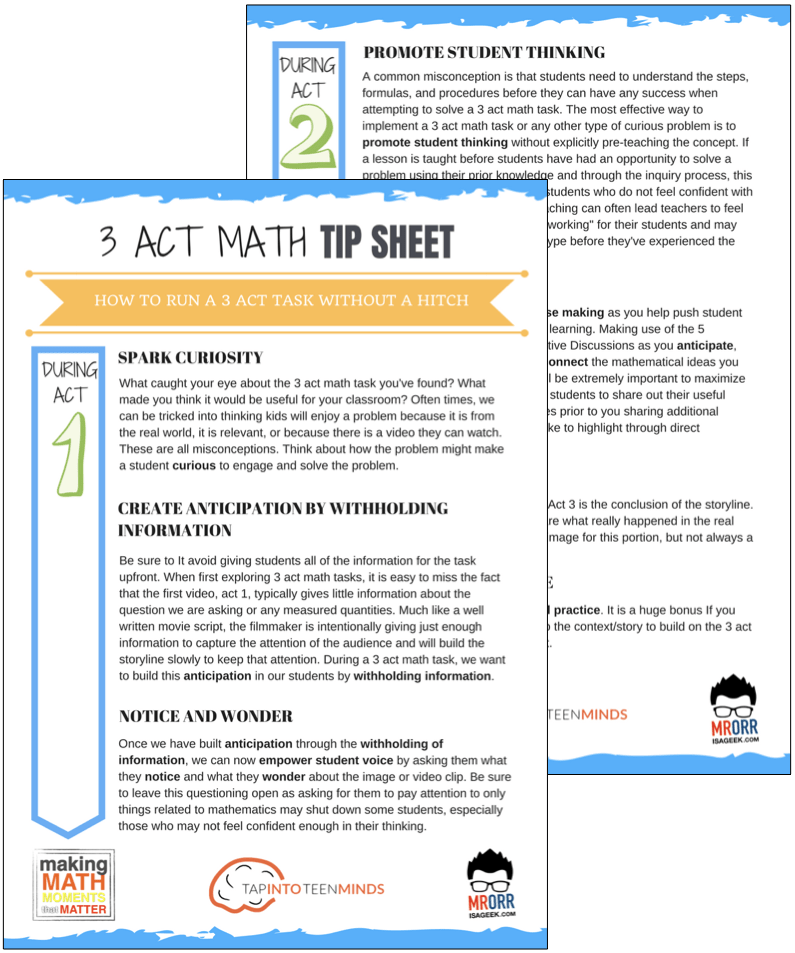
DOWNLOAD THE 3 ACT MATH TASK TIP SHEET SO THEY RUN WITHOUT A HITCH!
Download the 2-page printable 3 Act Math Tip Sheet to ensure that you have the best start to your journey using 3 Act math Tasks to spark curiosity and fuel sense making in your math classroom!
LESSONS TO MAKE MATH MOMENTS
Each lesson consists of:
Each Make Math Moments Problem Based Lesson consists of a Teacher Guide to lead you step-by-step through the planning process to ensure your lesson runs without a hitch!
Each Teacher Guide consists of:
- Intentionality of the lesson;
- A step-by-step walk through of each phase of the lesson;
- Visuals, animations, and videos unpacking big ideas, strategies, and models we intend to emerge during the lesson;
- Sample student approaches to assist in anticipating what your students might do;
- Resources and downloads including Keynote, Powerpoint, Media Files, and Teacher Guide printable PDF; and,
- Much more!
Each Make Math Moments Problem Based Lesson begins with a story, visual, video, or other method to Spark Curiosity through context.
Students will often Notice and Wonder before making an estimate to draw them in and invest in the problem.
After student voice has been heard and acknowledged, we will set students off on a Productive Struggle via a prompt related to the Spark context.
These prompts are given each lesson with the following conditions:
- No calculators are to be used; and,
- Students are to focus on how they can convince their math community that their solution is valid.
Students are left to engage in a productive struggle as the facilitator circulates to observe and engage in conversation as a means of assessing formatively.
The facilitator is instructed through the Teacher Guide on what specific strategies and models could be used to make connections and consolidate the learning from the lesson.
Often times, animations and walk through videos are provided in the Teacher Guide to assist with planning and delivering the consolidation.
A review image, video, or animation is provided as a conclusion to the task from the lesson.
While this might feel like a natural ending to the context students have been exploring, it is just the beginning as we look to leverage this context via extensions and additional lessons to dig deeper.
At the end of each lesson, consolidation prompts and/or extensions are crafted for students to purposefully practice and demonstrate their current understanding.
Facilitators are encouraged to collect these consolidation prompts as a means to engage in the assessment process and inform next moves for instruction.
In multi-day units of study, Math Talks are crafted to help build on the thinking from the previous day and build towards the next step in the developmental progression of the concept(s) we are exploring.
Each Math Talk is constructed as a string of related problems that build with intentionality to emerge specific big ideas, strategies, and mathematical models.
Make Math Moments Problem Based Lessons and Day 1 Teacher Guides are openly available for you to leverage and use with your students without becoming a Make Math Moments Academy Member.
Use our OPEN ACCESS multi-day problem based units!
Make Math Moments Problem Based Lessons and Day 1 Teacher Guides are openly available for you to leverage and use with your students without becoming a Make Math Moments Academy Member.
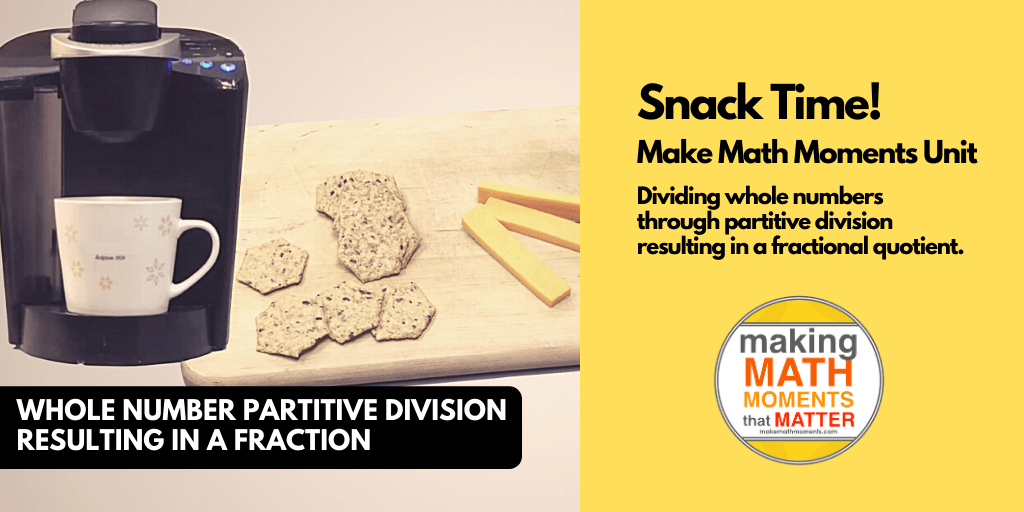
Partitive Division Resulting in a Fraction
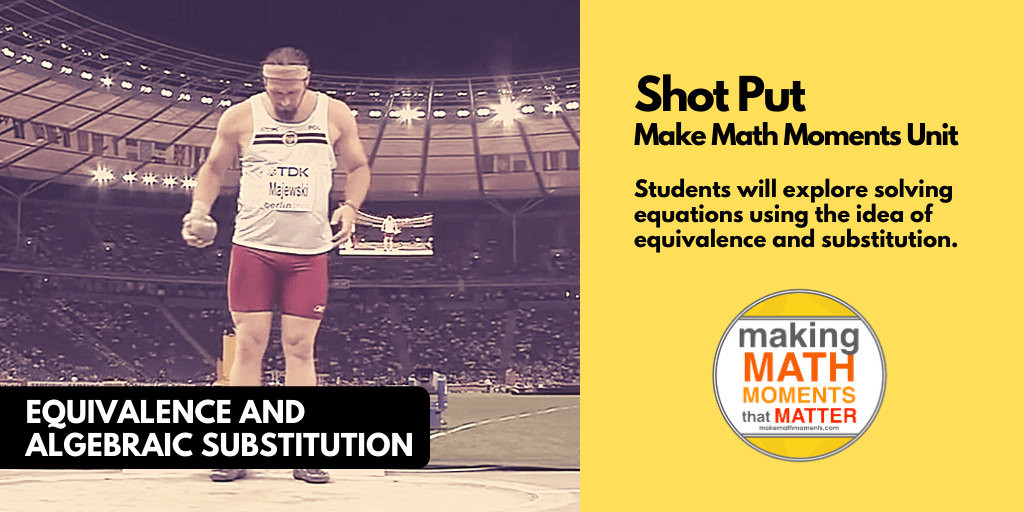
Equivalence and Algebraic Substitution
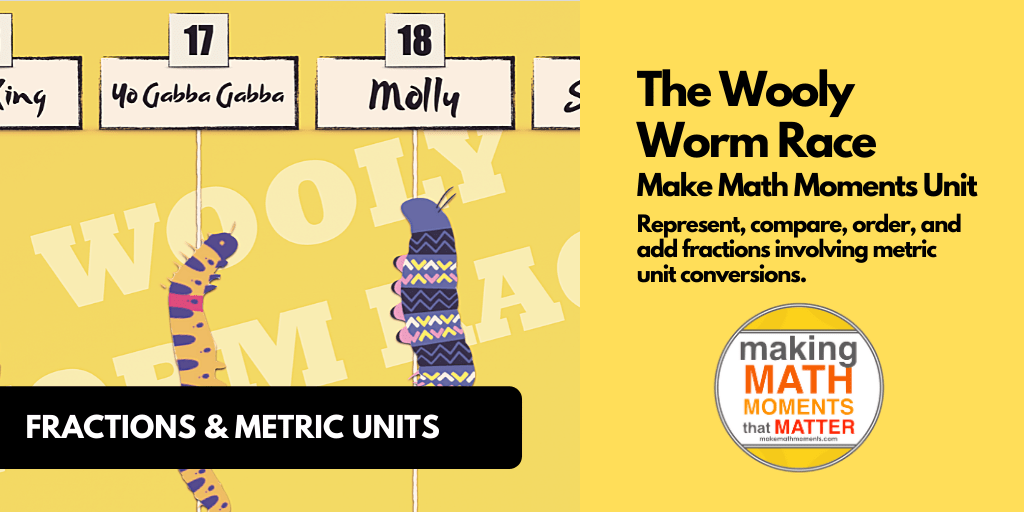
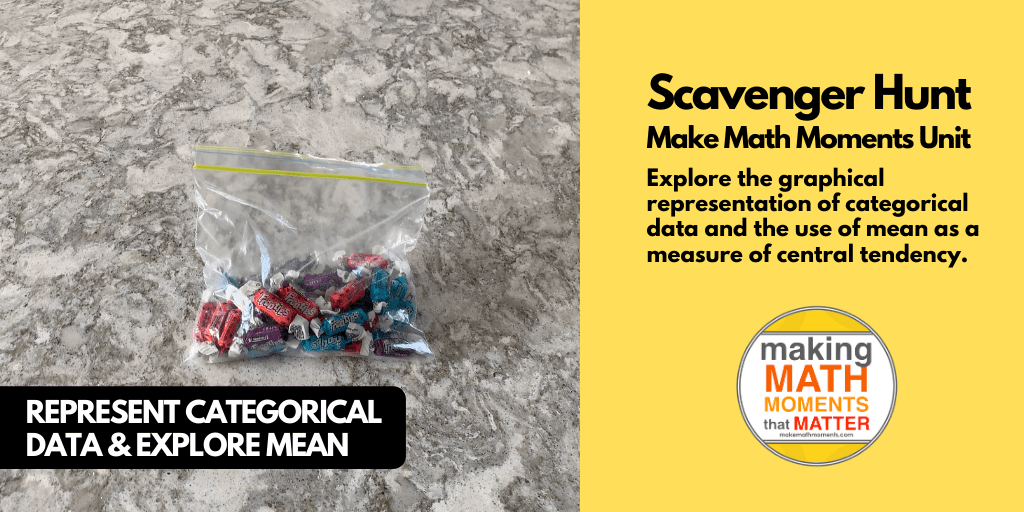
Represent Categorical Data & Explore Mean
Downloadable resources including blackline masters, handouts, printable Tips Sheets, slide shows, and media files do require a Make Math Moments Academy Membership.
ONLINE WORKSHOP REGISTRATION
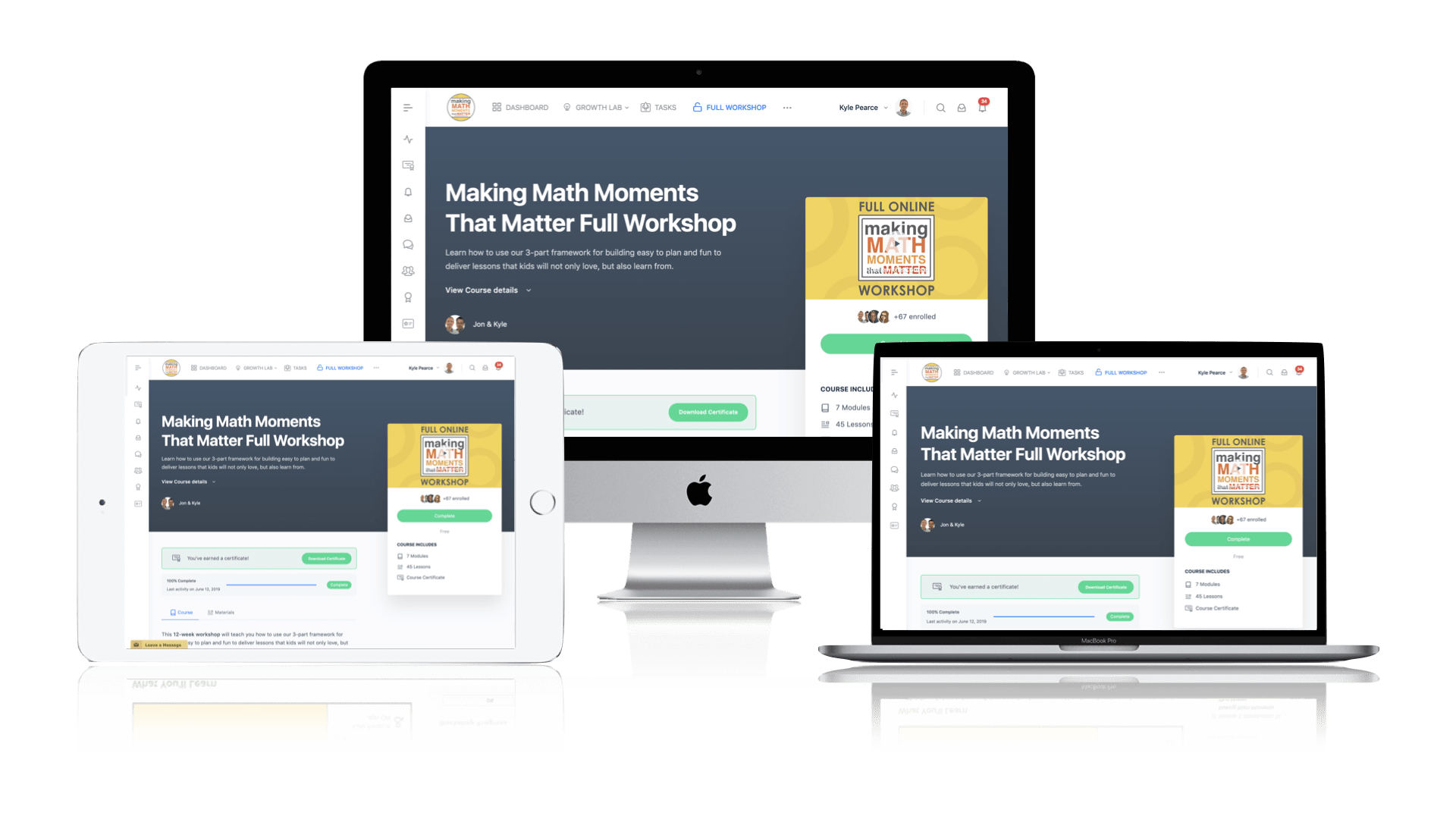
Pedagogically aligned for teachers of K through Grade 12 with content specific examples from Grades 3 through Grade 10.
In our self-paced, 12-week Online Workshop, you'll learn how to craft new and transform your current lessons to Spark Curiosity, Fuel Sense Making, and Ignite Your Teacher Moves to promote resilient problem solvers.
0 Comments