Episode #470: How to Overcome Push-Back in Math Education
LISTEN NOW HERE...



WATCH NOW...
In math classrooms, there’s something that shows up again and again: resistance. It can come from students, from teachers, and sometimes even from the school system itself. And over time, it can start to feel like your job is to constantly push against it—trying to convince, redirect, and move people forward.
But what if we’ve been thinking about resistance all wrong? What if it’s not something people are, but something they’re experiencing in the moment? Because when students push back or teachers hesitate to try something new, it’s easy to label that as unwillingness. In reality, it’s often rooted in something deeper—fear of being wrong, uncertainty about expectations, past experiences with math, or a lack of trust. And in many cases, the system itself creates the very conditions that lead to resistance in the first place.
In this episode, you’ll explore:
- Why resistance is a state—not a trait
- What’s really behind student and teacher pushback in math
- How trust plays a critical role in reducing resistance
- Why fear and past experiences influence willingness to try new approaches
- How inconsistent systems and shifting priorities can reinforce resistance
- What coaches, leaders, and teachers can do to build trust over time
If you’ve ever struggled with resistance in your classroom, your coaching, or your school, this episode will help you reframe what’s really happening—and how to respond more effectively.
Attention District Math Leaders:
Not sure what matters most when designing math improvement plans? Take this assessment and get a free customized report: https://makemathmoments.com/grow/
Ready to design your math improvement plan with guidance, support and using structure? Learn how to follow our 4 stage process. https://growyourmathprogram.com
Looking to supplement your curriculum with problem based lessons and units? Make Math Moments Problem Based Lessons & Units
Be Our Next Podcast Guest!
Join as an Interview Guest or on a Mentoring Moment Call

Apply to be a Featured Interview Guest
It will take less than two (2) minutes to book your Math Mentoring Moment call.
Book a Mentoring Moment Coaching Call
Take two (2) minutes to book your Math Mentoring Moment call and let's work together to shake that math pebble out of your shoe!
Are You an Official Math Moment Maker?
Ensure that you follow, rate and review on Apple Podcasts, Spotify and other platforms to show your support and ensure other math educators can find the show.


FULL TRANSCRIPT
Yvette Lehman: I feel like resistance is something that we face in the math education world. I know that I felt resistance as a math teacher, resistance as a math coach or district coordinator. It's an uncomfortable feeling, right? In math in particular, there's something about it that puts people's backs up.
Jon Orr: People like to push back on math, right? Like when you say that you're a math teacher to other math teachers or other parents, it's like, ooh, I'm glad I'm not doing that. Because what they're imagining is that people hate math and don't want to do math. So your job is now just convincing others to do what you want them to do, which sounds like many people view math teaching as — my whole job is to just convince them. This is right, this is the right way, learning math is good for you. That's my whole existence.
Jon Orr: And because of resistance — student resistance, same with coaching. If I'm coaching teachers, it's like now I have to convince them about mathematics and thinking about mathematics or doing it this way, because no one wants to do it. If you're in the math space, resistance is just part of what we do.
Yvette Lehman: I feel like that is absolutely true. That's been my experience. But over the past year, I feel like I've been on a journey to reframing how I view resistance. And I really found that during our leadership summit, I had two sessions with Jim Knight and Jim Strachan, who have both dedicated their entire careers to coaching, to really deeply understanding what motivates people and how to inspire growth and change within individuals as part of a system that's supporting improvement.
Yvette Lehman: I really loved that both of their sessions touched on some of these big ideas. And Jim Strachan had a quote that I've been repeating to myself and to others often lately, which is that resistance is a state, not a trait.
Jon Orr: Right. And I think why that's important to think about is that, especially whether you're a classroom teacher or a coach in mathematics, when you come up against a student who is pushing back or a teacher who is pushing back, we often automatically think about them as being a resistant teacher or a difficult student. And it's not like they are that. It's not like that's just who they are and what they are. It's what they're feeling currently — a state. They're in a certain state. It doesn't mean that they will always be in that state.
Jon Orr: And they might always be in that state for you. But it doesn't mean that that's who they are generally. A lot of times I think we think about it like that — we think that's just the resistant teacher and therefore they're always gonna be a resistant teacher. We hear it on coaching calls when we're guiding our teams. One of the most common questions we get is about how to help teachers who don't want to be helped. And they're already right there still thinking that teacher is a resistant teacher and therefore always will be.
Beth Curran: So I think maybe we need to dig in a little bit to why teachers might be resistant. So I've got a couple of ideas. I believe that it's important for administrators and coaches to evaluate what they value. So if a teacher has been in a system where the coach or the administrator comes in to evaluate them and they get wonderful scores on everything if their students are compliant — whereas if they are encouraged to try something different that might be messy, with students talking, students thinking, students attempting to solve a problem that I haven't shown them how to do, the classroom might get a little bit noisy and my evaluation scores might drop — right? So a teacher might be resistant to try something new because they're worried.
Beth Curran: If the administrators or the coaches, whoever is evaluating that teacher, have always prioritized compliance in a classroom over actual good solid mathematics instruction, then that can put a teacher in a state of, I don't want to try something new.
Jon Orr: For sure. So what you're saying is that is in a way a system issue — a coach might be recommending moves that are new, and an administrator might not be in line with those or understand what's happening there. And therefore the alignment is off. There's no coherence around the moves of the teaching practices. The value of what this move looks like done effectively versus another move done effectively — there's misalignment there. Which means the teacher is now unsure of what matters most. And therefore they're putting their emphasis on, well, I get evaluated this way.
Jon Orr: This other person's asking me to do this, and it seems like there are competing things here. Why would I want to do that when my job security or my reputation as a good teacher might be at risk if we don't align on the definition of what good teaching looks like in mathematics?
Yvette Lehman: I think another reason that both students and teachers might be in a state of resistance is out of fear of not being right or doing something well the first time. The example I always think about as far as resistance was when I tried to make a shift in my classroom away from a gradual release model to a more task-based, student-centered model. And I had a lot of students who wanted to sit around and wait for me to tell them how to do it.
Yvette Lehman: And I could have perceived that as they're unmotivated, they don't care, they don't want to put in the effort. But I think what was really happening is that they were the product of a system. They'd had many experiences in the past that had worked for them — just follow the steps and get the right answer, get check marks on my work, get a star at the top of my page. Now you're asking me to take a risk. I might be wrong. I may not get all the check marks. I may not get the level four on my paper at the end of this task because this is different and it feels uncomfortable.
Yvette Lehman: And I think teachers feel that as well. If you've felt good about what you were doing and you're like, I'm confident, I know how to do this and I feel like I can do this well — you're asking me to do something that I'm not good at yet. It's going to be uncomfortable. I'm going to make mistakes. And so again, we might perceive that as they just don't want to, they're unwilling. When in reality it comes down to — and you say this all the time, John — creating psychological safety for people, making it clear that it is going to be messy and that we don't expect perfection. The journey is worth it.
Jon Orr: Yeah, let me ask you this. Think about a person. I want you to think about this person — it's almost like you trust them more than 100%. If they said you should try that or had a recommendation or just did something a certain way, you'd trust them. Think about that person for a moment, because you're gonna trust them no matter what they say. And they've built that trust relationship with you over multiple experiences. It wasn't just immediate trust. Who is this person?
Beth Curran: Wow, I've had a lot of really influential people in my life. So to pinpoint just one is going to be tough for me. But I can think of bits and pieces of a lot of different people who have built that trust with me, who encouraged me to try things, to step outside of my zone, who took the time to observe me as I was trying to figure things out and to highlight the moves that I was making and maybe share them with others. Yeah, a lot of people have been in my life in that way. You ask because trust is a big deal.
Jon Orr: Well, that's in a way what we're asking everyone to do. If we're a teacher or a coach, we are in a position of building trust with others. And we can't expect shifts in behavior or action to happen without building relationships and building trust. When we think about resistance, what often happens — and we talked about fear, we talked about what it really comes down to — is that if a student or a teacher truly trusted you and believed you had their best interests in mind always, then the resistance often fades away.
Jon Orr: So like Yvette's example about changing the classroom environment from sit-and-get direct instruction to more problem-based. If you roll back to episodes on this podcast, like 200 episodes ago, we had many interviews with teachers who had issues with kids pushing back. And one of the moves we talked about back then, and still today, is that a lot of times that pushback comes either from them or the parents. And the real underlying issue is that many times the students just didn't view that the teacher had their best interests at heart during that time during that lesson. Because they were unsure.
Jon Orr: They had success in this mode over here, the way they'd been taught before. And now you're asking them to do something different, and their spidey senses are up — I'm not sure whether this is going to be successful for me or not. But if the coach or the teacher reassures that student through all the little actions they do every single day, then that resistance fades away. The kids don't have to worry. And I remember thinking that I didn't have a ton of resistance issues when I shifted my instruction because the kids knew they could trust where we were trying to go.
Jon Orr: And those are little actions that build up over time. The same is true with coaching — you're still going to have resistance with anyone who doesn't trust that you have their best interests at heart. But you can't immediately gain trust. You can't immediately overcome resistance. It has to be built with little actions, little things that tell that teacher that you have their back, you are going to be there to catch them, these pebbles you're trying to remove from their shoes are real. These are the things we often build over time.
Jon Orr: But you can't just expect, I have resistance, and what can I do now to overcome it? It's not as easy a solution as everyone wants. The easy solution is you have to build a lot of trust over multiple instances before a lot of that resistance just fades away.
Beth Curran: Absolutely. And a lot of that trust, I do feel, with students or as a coach working with a teacher, comes from celebrating the journey as opposed to focusing so heavily on that end result. We want to see teachers make a change, but we realize it's going to be a journey to get there. So celebrating the little steps along the journey as opposed to just getting frustrated, or the teacher maybe not even hearing the little celebrations of the bits of progress that they're making.
Beth Curran: The same thing can happen in the classroom, right? If we overemphasize getting the correct answer and we don't allow students to really dig into that process of learning — how it's gonna be a little messy, but look at what you did, you persevered through this — celebrating the journey toward that end is a way that can really help build that trust with teachers and with students, for sure.
Jon Orr: Yeah, for sure. And I think those are some really important moves. Like you're saying, normalize struggle, normalize that it's gonna be messy along the way, and value that as an important component that also builds the trust that teachers need. We have to be there to help guide people. And I think that's the way we have to look at the roles we play — as a teacher or a coach — and know that if there is resistance here, we have to step back and go, what conditions have created this resistance? And how do I help either remove those conditions or at least address them so that I can build trust so that the resistance will fade down the road? That's how we become better coaches, become better instructional leaders, and also better teachers in our classroom.
Beth Curran: So another thought. You're a coach, you're working with a teacher who you've developed rapport with, they trust you, they invite you in to co-teach with them, yet they're still resistant because they say, I've been here long enough. I know that this is just a passing phase and that eventually we're gonna go back to the way that I've always taught. Thoughts on that?
Jon Orr: You know what, they're not wrong. Because if that's their experience, they have learned through behavior from the system over the course of years. You're right — initiatives come and go. But what remains is that my practice is my practice because no one really pushes back on it and kids are doing okay. Parents expect it. But it's not rooted in the research practices that are actually good for all students necessarily.
Jon Orr: And then we haven't as a system honored what the instructional practice could look like, supported over a long enough time horizon to see those gains and have that teacher be supported through the messy middle. We often move along too quickly. But think about that teacher — they taught the way that they were taught. They had 13 years before they became a teacher where this is what math class looked like, and this is what got them to where they are. So that behavior, the way it was structured, had 13 years of experience behind it. And where was the 13 years of support on say one of the eight effective teaching practices from Principles to Action? It hasn't been there consistently.
Jon Orr: We haven't had all that time to support all of those practices. And we were switching around too often to create the level of support and the level of experience that we need. So teachers become hesitant to accept new advice because we haven't stuck to our guns on the things that matter. Too often we're moving initiatives way too quickly. So the teacher learns this behavior — like, what you talked about at the PD day last year and what I got supported on twice in my classroom in a coaching cycle — well, you're changing the game on me this year. Now you're talking about this other thing and you're going to send me a coach to do two things twice this year. Like, come on.
Jon Orr: Treat it with a grain of salt and go back to what I was doing, because like you said, my administrator is valuing me this way. It's competing with what you're talking about over here. This is why the system has to be redesigned. If you want different results, the system has to change to get those results. Part of it is sticking to high-priority moves consistently year to year without changing the focus, so that teachers learn that these are the most important components of what mathematics instruction should look like, and it's not going away. And I'm gonna get support on it.
Jon Orr: Because we can't just say, do it without the support. We've talked about here on the podcast that teachers need 49 professional development hours — effective professional development hours — to shift instruction so it shows up as achievement in the classroom. And we're not doing that on a consistent basis. Every time you switch, you've got to start those 49 hours over again. So we're never going to get there if we keep switching ideas. And therefore that teacher will always say, I'm just gonna go back to doing what I'm doing because you're not supporting me in the right way. You're not clearing pebbles out of my shoe. So why should I trust you? The trust issue comes back because you're going to switch it on me again anyway.
Beth Curran: Right. And I would say even echo that down into the classroom with students, right? You're trying to make a shift. You're trying to get students engaged in solving a problem that you haven't already shown them how to solve. You're getting resistance. Students aren't working. So you think, okay, didn't get through the lesson today because I had a whole bunch of students who just sat and wouldn't engage. So okay, tomorrow I'm going to try something different. Okay, that failed too. So tomorrow I'm going to try something different again.
Beth Curran: And so the same thing — if the students aren't seeing consistency, they're not seeing that you really value this instructional move in the classroom, and you're switching things up too often, it does the same thing. Students eventually learn, if I just dig my heels in, no matter what the teacher's trying, eventually the teacher's going to go back to just telling me how to do it. So I don't have to think, right?
Jon Orr: Yeah. And it comes down to the micro behaviors — the micro moves that you can make on a consistent basis, whether you're a coach or a teacher, to show everyone this is what we do, this is how we do it, and you can rely on this. It's trust building, and important elements of designing coaching and important elements of designing your own math lessons as a classroom teacher.
Jon Orr: So again, this conversation really started because of some of the pebbles we've been hearing from the teams that we support in our district improvement programs and school improvement programs — support calls and sessions on resistance and pushback. How do we plan for that? What do I do? We consult and help teams plan around resistance and through resistance to create their math improvement plans.
Jon Orr: And we gained a lot of expertise and understanding from our mentors, Jim Knight and Jim Strachan, through those sessions at the summit back in February — our leadership summit that we hosted this year. We'll host another one next year. Right now, all those recordings are in our academy, the Make Math Moments Academy. You can head on over and join the academy at makemathmoments.com forward slash academy. You can register there and get access to all of our courses, all of our sessions from all of our summits, all of our tasks and resources that we've created to help create memorable math moments in the classroom.
Jon Orr: And if you want to have an in-depth look at your math program itself, to get some insight on designing aligned and sustainable math improvement, you can reach out and book a call with our team over at makemathmoments.com forward slash discovery. We could be talking about the elements where we could be making small micro moves so that you gain the trust but also build your math program to help you reach your goals. Again, that's makemathmoments.com forward slash discovery. We'll see you next week.
Your Customized Improvement Plan For Your Math Classroom.
Take the 12 minute assessment and you'll get a free, customized plan to shape and grow the 6 parts of any strong mathematics classroom program.
District leader/math coach? Take the District Assessment
Thanks For Listening
- Book a Math Mentoring Moment
- Apply to be a Featured Interview Guest
- Leave a note in the comment section below.
- Share this show on Twitter, or Facebook.
To help out the show:
- Leave an honest review on iTunes. Your ratings and reviews really help and we read each one.
- Subscribe on iTunes, Google Play, and Spotify.
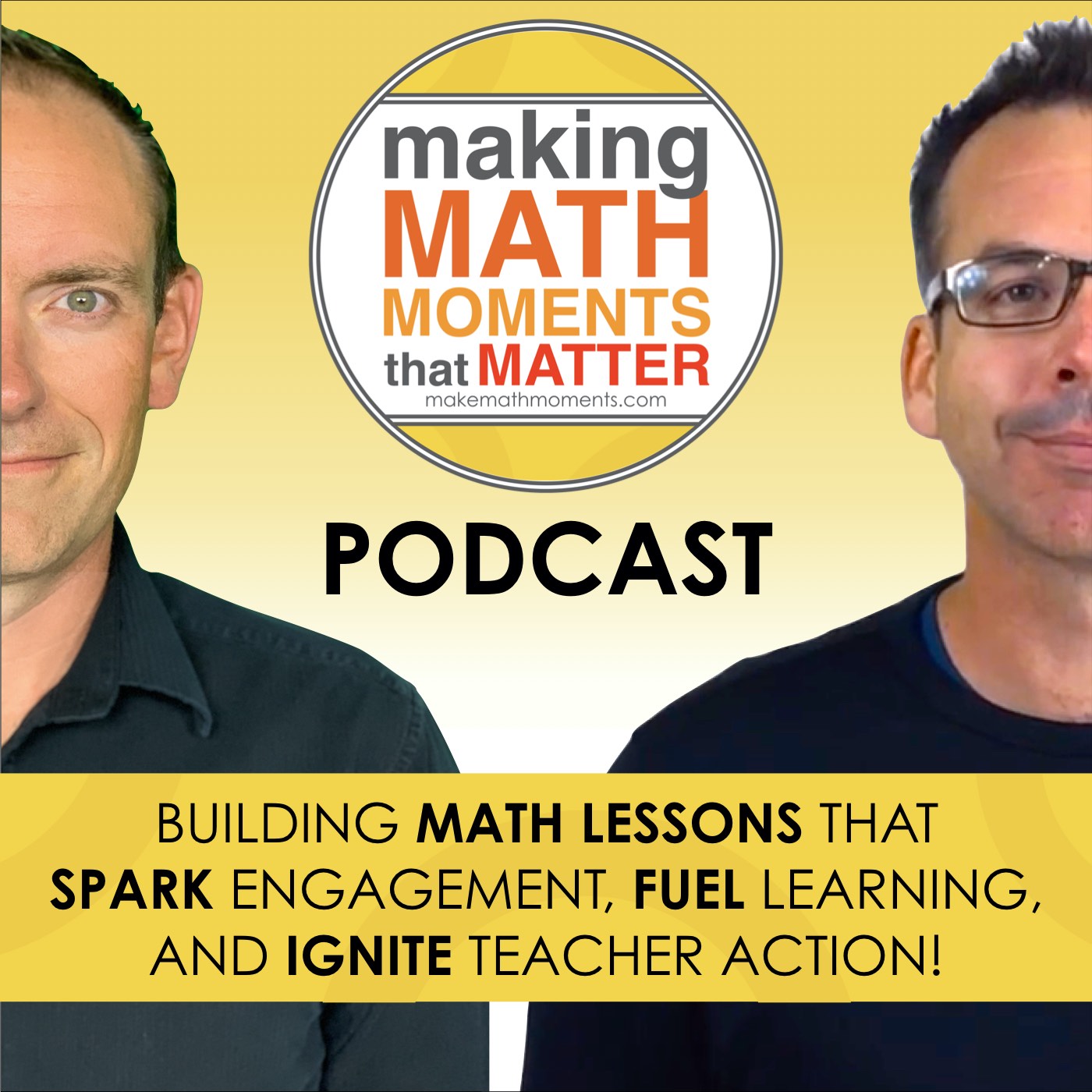
The Making Math Moments That Matter Podcast with Kyle Pearce & Jon Orr
Weekly interviews, strategy, and advice for building a math classroom that you wish you were in.
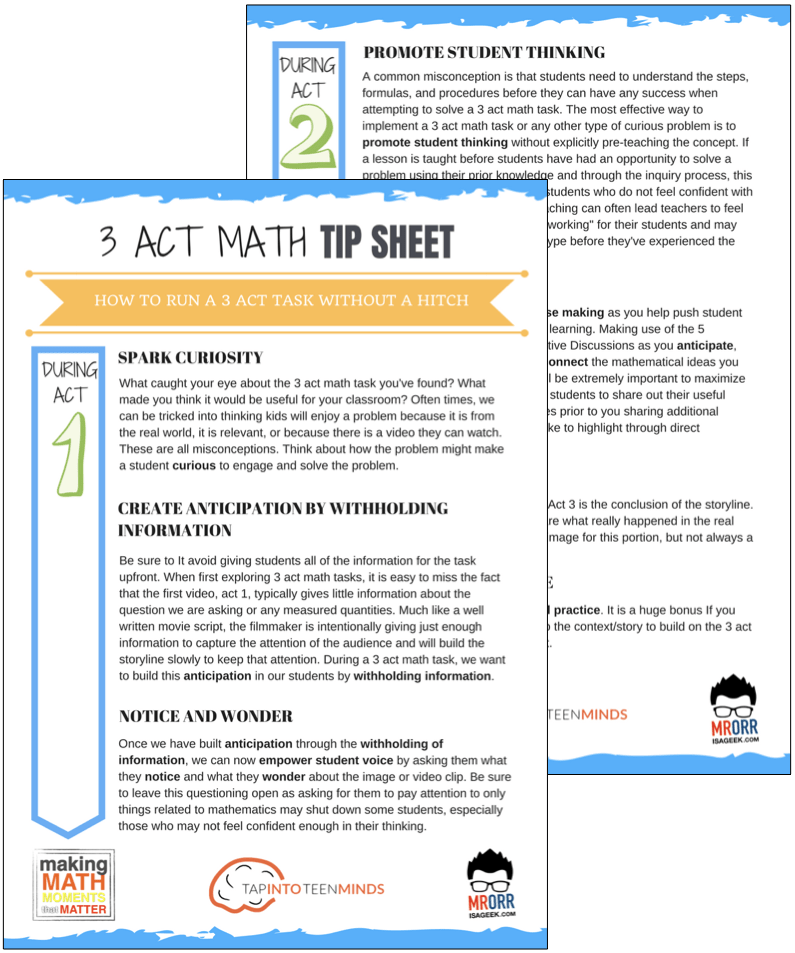
DOWNLOAD THE 3 ACT MATH TASK TIP SHEET SO THEY RUN WITHOUT A HITCH!
Download the 2-page printable 3 Act Math Tip Sheet to ensure that you have the best start to your journey using 3 Act math Tasks to spark curiosity and fuel sense making in your math classroom!
LESSONS TO MAKE MATH MOMENTS
Each lesson consists of:
Each Make Math Moments Problem Based Lesson consists of a Teacher Guide to lead you step-by-step through the planning process to ensure your lesson runs without a hitch!
Each Teacher Guide consists of:
- Intentionality of the lesson;
- A step-by-step walk through of each phase of the lesson;
- Visuals, animations, and videos unpacking big ideas, strategies, and models we intend to emerge during the lesson;
- Sample student approaches to assist in anticipating what your students might do;
- Resources and downloads including Keynote, Powerpoint, Media Files, and Teacher Guide printable PDF; and,
- Much more!
Each Make Math Moments Problem Based Lesson begins with a story, visual, video, or other method to Spark Curiosity through context.
Students will often Notice and Wonder before making an estimate to draw them in and invest in the problem.
After student voice has been heard and acknowledged, we will set students off on a Productive Struggle via a prompt related to the Spark context.
These prompts are given each lesson with the following conditions:
- No calculators are to be used; and,
- Students are to focus on how they can convince their math community that their solution is valid.
Students are left to engage in a productive struggle as the facilitator circulates to observe and engage in conversation as a means of assessing formatively.
The facilitator is instructed through the Teacher Guide on what specific strategies and models could be used to make connections and consolidate the learning from the lesson.
Often times, animations and walk through videos are provided in the Teacher Guide to assist with planning and delivering the consolidation.
A review image, video, or animation is provided as a conclusion to the task from the lesson.
While this might feel like a natural ending to the context students have been exploring, it is just the beginning as we look to leverage this context via extensions and additional lessons to dig deeper.
At the end of each lesson, consolidation prompts and/or extensions are crafted for students to purposefully practice and demonstrate their current understanding.
Facilitators are encouraged to collect these consolidation prompts as a means to engage in the assessment process and inform next moves for instruction.
In multi-day units of study, Math Talks are crafted to help build on the thinking from the previous day and build towards the next step in the developmental progression of the concept(s) we are exploring.
Each Math Talk is constructed as a string of related problems that build with intentionality to emerge specific big ideas, strategies, and mathematical models.
Make Math Moments Problem Based Lessons and Day 1 Teacher Guides are openly available for you to leverage and use with your students without becoming a Make Math Moments Academy Member.
Use our OPEN ACCESS multi-day problem based units!
Make Math Moments Problem Based Lessons and Day 1 Teacher Guides are openly available for you to leverage and use with your students without becoming a Make Math Moments Academy Member.

Partitive Division Resulting in a Fraction
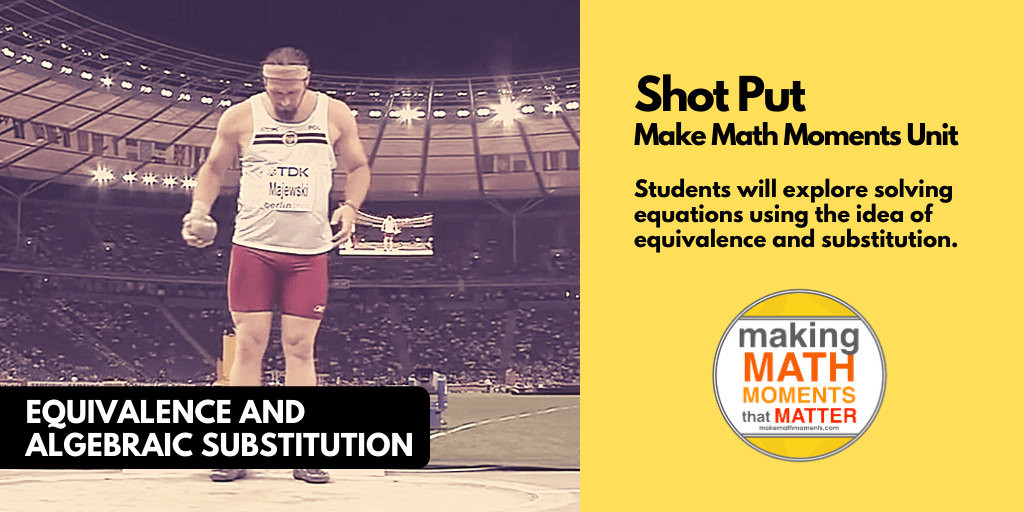
Equivalence and Algebraic Substitution

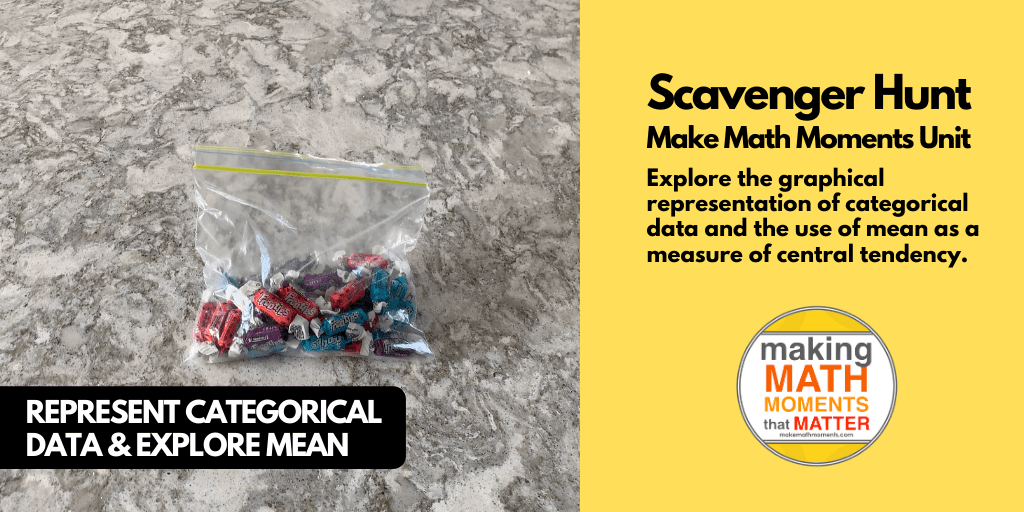
Represent Categorical Data & Explore Mean
Downloadable resources including blackline masters, handouts, printable Tips Sheets, slide shows, and media files do require a Make Math Moments Academy Membership.
ONLINE WORKSHOP REGISTRATION
Pedagogically aligned for teachers of K through Grade 12 with content specific examples from Grades 3 through Grade 10.
In our self-paced, 12-week Online Workshop, you'll learn how to craft new and transform your current lessons to Spark Curiosity, Fuel Sense Making, and Ignite Your Teacher Moves to promote resilient problem solvers.
0 Comments