Episode #436: Rest, Reflection & Math Leadership Wins – A Holiday Message from the MMM Team
LISTEN NOW HERE…




WATCH NOW…
Feeling behind? Tired? Wondering if your math improvement efforts are making a difference?
In this episode released on Christmas Day, Jon Orr shares a message just for you—educators, coaches, and leaders doing the slow, often invisible work of math improvement. No training, no strategies—just honest reflection and a reminder that you are not alone.
You’ll hear a different lens on what progress looks like—one that recognizes the quiet wins:
- A teacher asking better math questions than last year
- A PLC focusing on student thinking, not just pacing
- A shift from “What resource should we buy?” to “What understanding are we trying to build?”
- More clarity, less overwhelm
- Rest without guilt, community without performance
Take a moment to pause and reflect. Then, share your own win from 2025—big or small—by sending a voice note to: admin@makemathmoments.com. Your story might be just what another educator needs to hear.
Attention District Math Leaders:
Not sure what matters most when designing math improvement plans? Take this assessment and get a free customized report: https://makemathmoments.com/grow/
Ready to design your math improvement plan with guidance, support and using structure? Learn how to follow our 4 stage process. https://growyourmathprogram.com
Looking to supplement your curriculum with problem based lessons and units? Make Math Moments Problem Based Lessons & Units
Be Our Next Podcast Guest!
Join as an Interview Guest or on a Mentoring Moment Call
Apply to be a Featured Interview Guest
Book a Mentoring Moment Coaching Call
Are You an Official Math Moment Maker?



FULL TRANSCRIPT
As we head into the holiday season, the Make Math Moments team here and I wanted to pause. Not to teach, not to train, and not to push the next big idea. But simply just speak directly to you. If you’re listening to this the day it was released, it’s Christmas Day in 2025. And we can’t be more honored that you’re listening to us during the holiday season.
So this is to you teachers, this is to you math coaches, math coordinators, district and school leaders doing the work of math improvement and math teaching, often quietly, often behind the scenes. This time of year naturally invites reflection and in a role like yours, reflection can be complicated because
When you care deeply about improvement in students and educators, it can be hard to slow down long enough to notice what has changed. So today, on Christmas Day 2025, this message is about gratitude, perspective, and the community that we have here. We’ve built here together.
If you’re listening to this and you’re thinking I should be further along by now during this time of year in terms of my math improvement plans or the my classroom progress or where I am on my standards. And sometimes we ask ourselves why does this feel so hard. I want you to hear this clarity teaching and math leadership is long cycle work. You’re not implementing a program you’re you’re shifting beliefs.
And that’s the fundamental work that we’re doing. The fundamental work you’re doing is you’re building understanding in classrooms, building understanding with educators and PLCs and the work that you’re doing in professional development. You’re aligning systems that were never designed to move together and that is hard. And that kind of work rarely feels clean and it rarely feels efficient. So most days it feels slow and it feels messy and it feels like two steps forward and
and sometimes one step backwards. You’re holding this vision that others may not fully see yet. You’re navigating resistance that isn’t always loud but shows up in inertia. And you’re often expected to produce results before the system has had time to actually change. And if this year at this time of year stretched you, if it required more patience than you expected,
If it asked you to sit in uncertainty longer than you really wanted to, that doesn’t mean you’re doing it wrong. It means that you’re doing real work. That’s the real work here. One of the biggest challenges in math leadership is recognizing wins when they don’t look dramatic. It’s sometimes boring work. It’s sometimes work that’s not flashy. It’s not like the big show. So let me offer a different lens.
You know, the wins you’re looking for, a win might be if you’re a math coach or coordinator or principal asking better math questions than they did last year. Teachers debating strategies instead of answers or just how to get this next resource. Could be a PLC conversation that lingered on student thinking and looked at student artifacts instead of focusing on pacing. It could have been fewer initiatives but deeper follow through.
a shared language that emerges and has been emerging even when it’s still imperfect. Some of the most important wins don’t show up in the dashboards, they don’t show up in the data right away. They show up in confidence, consistency, and the quality of the conversations happening behind closed doors and in closed meetings. If instruction feels uneven right now, that may not be your failure. It’s not a failure at all.
It may be a system in transition and that matters. That’s the work of math improvement. Whether we’re in the classroom trying to strive for math improvement as a teacher leader, principal striving for math improvement in our buildings, or coordinator striving for math improvement across a collection of schools or even a state trying to strive for math improvement across an entire state.
One thing we’ve learned over the years, over and over again, that math leadership can feel incredibly isolating. You see everyone’s else…
You see everyone else’s polished success stories. You hear about what other districts are doing, and it’s easy to assume you’re the only one still navigating uncertainty. But here’s the truth. Everyone you admire has the messy middle moments. We’ve had the messy middle moments. Everyone doing meaningful math improvement has questioned themselves, and no one sustains this work alone. That’s why we’ve tried to build communities here and make math moments.
We’ve tried to build this community of podcast listeners. We’ve tried to build the community in our annual virtual summit. We host our monthly sessions on building capacity to try to build community and our capacity so that we’re positioned to do this work in our classrooms. Every month we bring the leaders who are part of the leadership program that we’re hosting here at the Make Math Moments team together every month so that we can create that community. The communities exist not to perform, not to compete.
but to remind each other that progress is happening and when it’s quiet, even when it’s quiet. Your story matters. Your perspectives matter. And your wins, especially small ones, deserve to be heard. So I want to model what we’re about to ask you, if you will indulge us by sharing a few of my own wins. One win for me this year has been watching leaders move from asking what resource should we buy next? It’s just…
typical question we get asked when first approached to asking what understanding are we actually trying to build? Another win has been seeing districts shifts away from the one-off PD model towards a systems.
that are designed to last. I recently heard James Clear, who is the author of Atomic Habit, say that
Goals are for people who are concerned about winning once. Whereas systems are for people who are concerned about winning consistently.
And that’s what we’re seeing in our community. People are committed to building the systems on a personal level. A win has been staying committed to this long-term work, even when quicker pass were available. And maybe the biggest win of all has been hearing from leaders who say, I finally feel clarity instead of overwhelm. That tells me the work is landing where it matters the most. Now we want to invite you into this moment. Here’s the ask. It’s simple. Take one minute.
Open the voice recorder on your phone right now and record your biggest win from the year so far. It could be personal. It could be professional. It could be small. It could be unfinished. Then take a moment and email that audio file to us at admin at make math moments dot com or reply to any of the emails you’ve gotten from us and let us know. Here’s my win for 2025 so far. We love to share these wins back to the community so no one feels like they’re doing this work alone.
And think that’s important. Your voice might be exactly what someone else needs to hear right now at this time of year. As we head into the holidays, we want you to hear this. You don’t need to fix everything this year. You don’t need to carry the system on your own shoulders.
And you don’t need to earn rest. Rest is not quitting. Reflection is not falling behind. community is not a luxury. It’s how this work becomes sustainable. Thank you. Thank you for the care you bring to math education. Thank you for the patience this work demands. And thank you for being part of a community that believes math and the people who teach it truly matter. From all of us here at Making Math Moments That Matter, we wish you rest, renewal, and a holiday season filled with moments that matter.
Thanks For Listening
- Book a Math Mentoring Moment
- Apply to be a Featured Interview Guest
- Leave a note in the comment section below.
- Share this show on Twitter, or Facebook.
To help out the show:
- Leave an honest review on iTunes. Your ratings and reviews really help and we read each one.
- Subscribe on iTunes, Google Play, and Spotify.
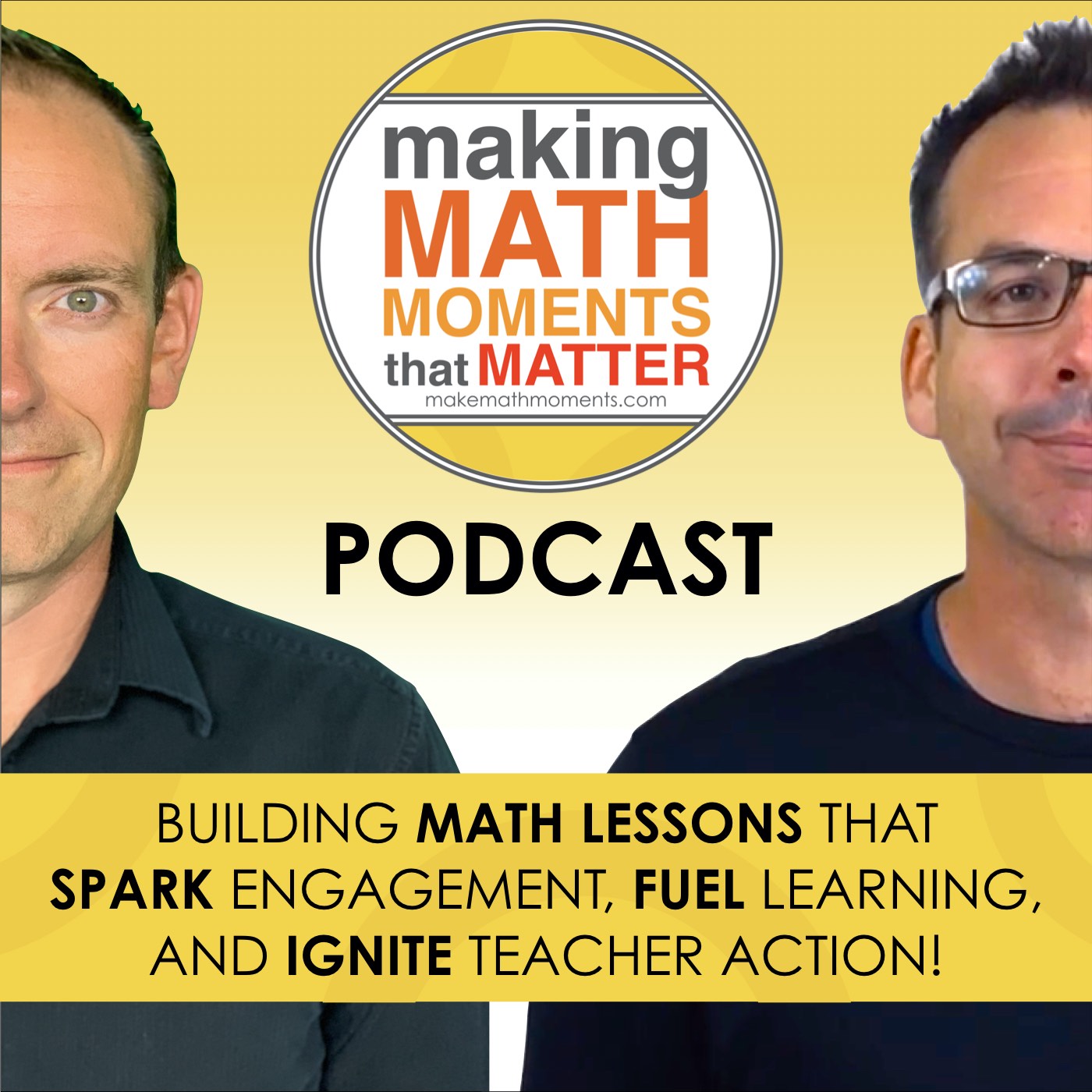
DOWNLOAD THE 3 ACT MATH TASK TIP SHEET SO THEY RUN WITHOUT A HITCH!
Download the 2-page printable 3 Act Math Tip Sheet to ensure that you have the best start to your journey using 3 Act math Tasks to spark curiosity and fuel sense making in your math classroom!
LESSONS TO MAKE MATH MOMENTS
Each lesson consists of:
Each Make Math Moments Problem Based Lesson consists of a Teacher Guide to lead you step-by-step through the planning process to ensure your lesson runs without a hitch!
Each Teacher Guide consists of:
- Intentionality of the lesson;
- A step-by-step walk through of each phase of the lesson;
- Visuals, animations, and videos unpacking big ideas, strategies, and models we intend to emerge during the lesson;
- Sample student approaches to assist in anticipating what your students might do;
- Resources and downloads including Keynote, Powerpoint, Media Files, and Teacher Guide printable PDF; and,
- Much more!
Each Make Math Moments Problem Based Lesson begins with a story, visual, video, or other method to Spark Curiosity through context.
Students will often Notice and Wonder before making an estimate to draw them in and invest in the problem.
After student voice has been heard and acknowledged, we will set students off on a Productive Struggle via a prompt related to the Spark context.
These prompts are given each lesson with the following conditions:
- No calculators are to be used; and,
- Students are to focus on how they can convince their math community that their solution is valid.
Students are left to engage in a productive struggle as the facilitator circulates to observe and engage in conversation as a means of assessing formatively.
The facilitator is instructed through the Teacher Guide on what specific strategies and models could be used to make connections and consolidate the learning from the lesson.
Often times, animations and walk through videos are provided in the Teacher Guide to assist with planning and delivering the consolidation.
A review image, video, or animation is provided as a conclusion to the task from the lesson.
While this might feel like a natural ending to the context students have been exploring, it is just the beginning as we look to leverage this context via extensions and additional lessons to dig deeper.
At the end of each lesson, consolidation prompts and/or extensions are crafted for students to purposefully practice and demonstrate their current understanding.
Facilitators are encouraged to collect these consolidation prompts as a means to engage in the assessment process and inform next moves for instruction.
In multi-day units of study, Math Talks are crafted to help build on the thinking from the previous day and build towards the next step in the developmental progression of the concept(s) we are exploring.
Each Math Talk is constructed as a string of related problems that build with intentionality to emerge specific big ideas, strategies, and mathematical models.
Make Math Moments Problem Based Lessons and Day 1 Teacher Guides are openly available for you to leverage and use with your students without becoming a Make Math Moments Academy Member.
Use our OPEN ACCESS multi-day problem based units!
Make Math Moments Problem Based Lessons and Day 1 Teacher Guides are openly available for you to leverage and use with your students without becoming a Make Math Moments Academy Member.
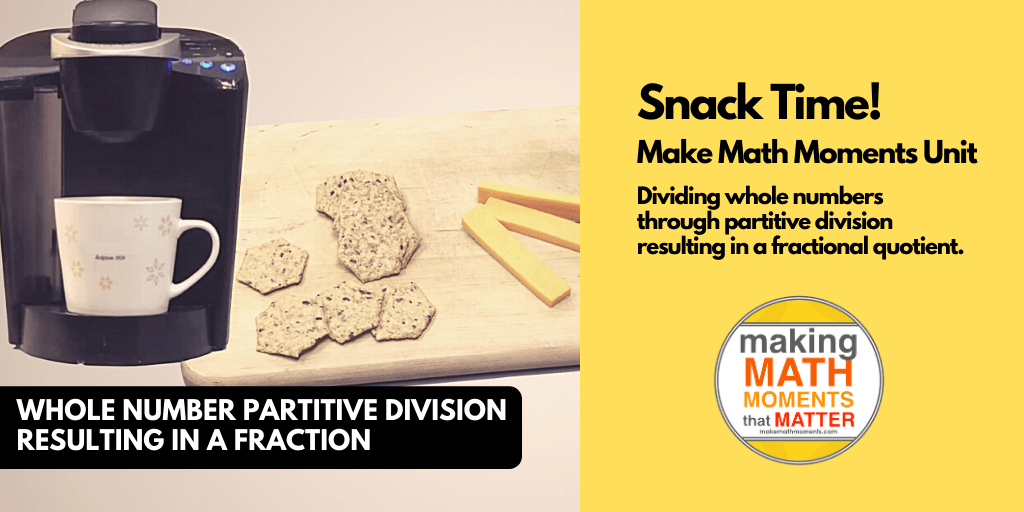
Partitive Division Resulting in a Fraction
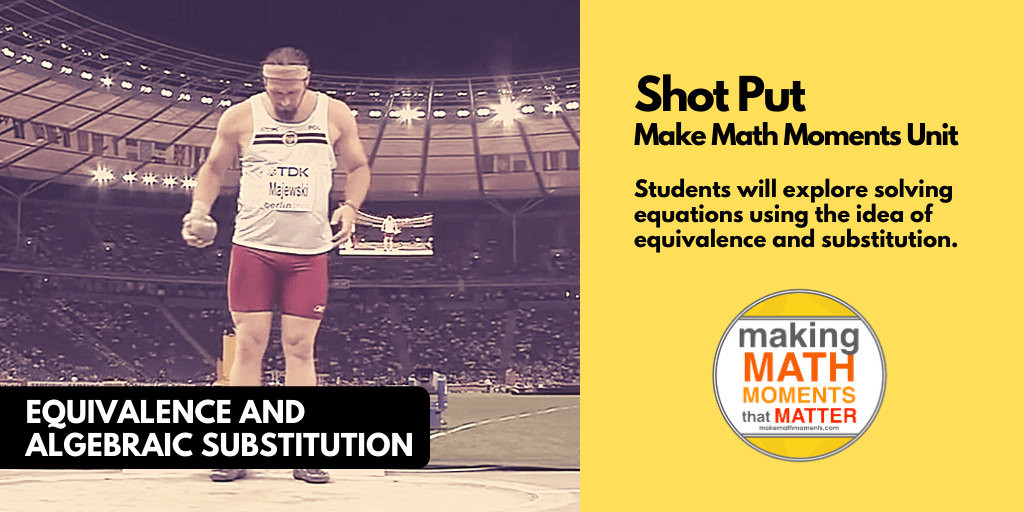
Equivalence and Algebraic Substitution
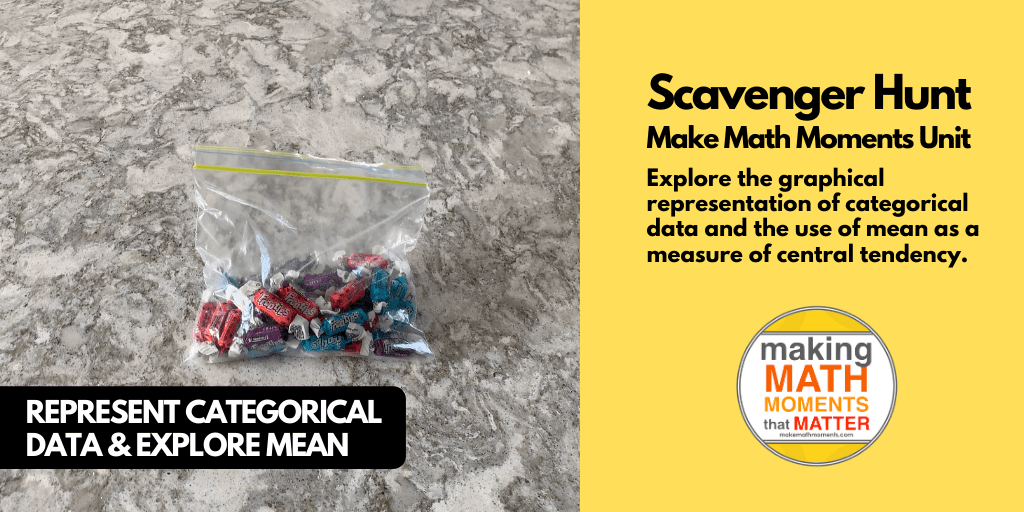
Represent Categorical Data & Explore Mean
Downloadable resources including blackline masters, handouts, printable Tips Sheets, slide shows, and media files do require a Make Math Moments Academy Membership.
ONLINE WORKSHOP REGISTRATION
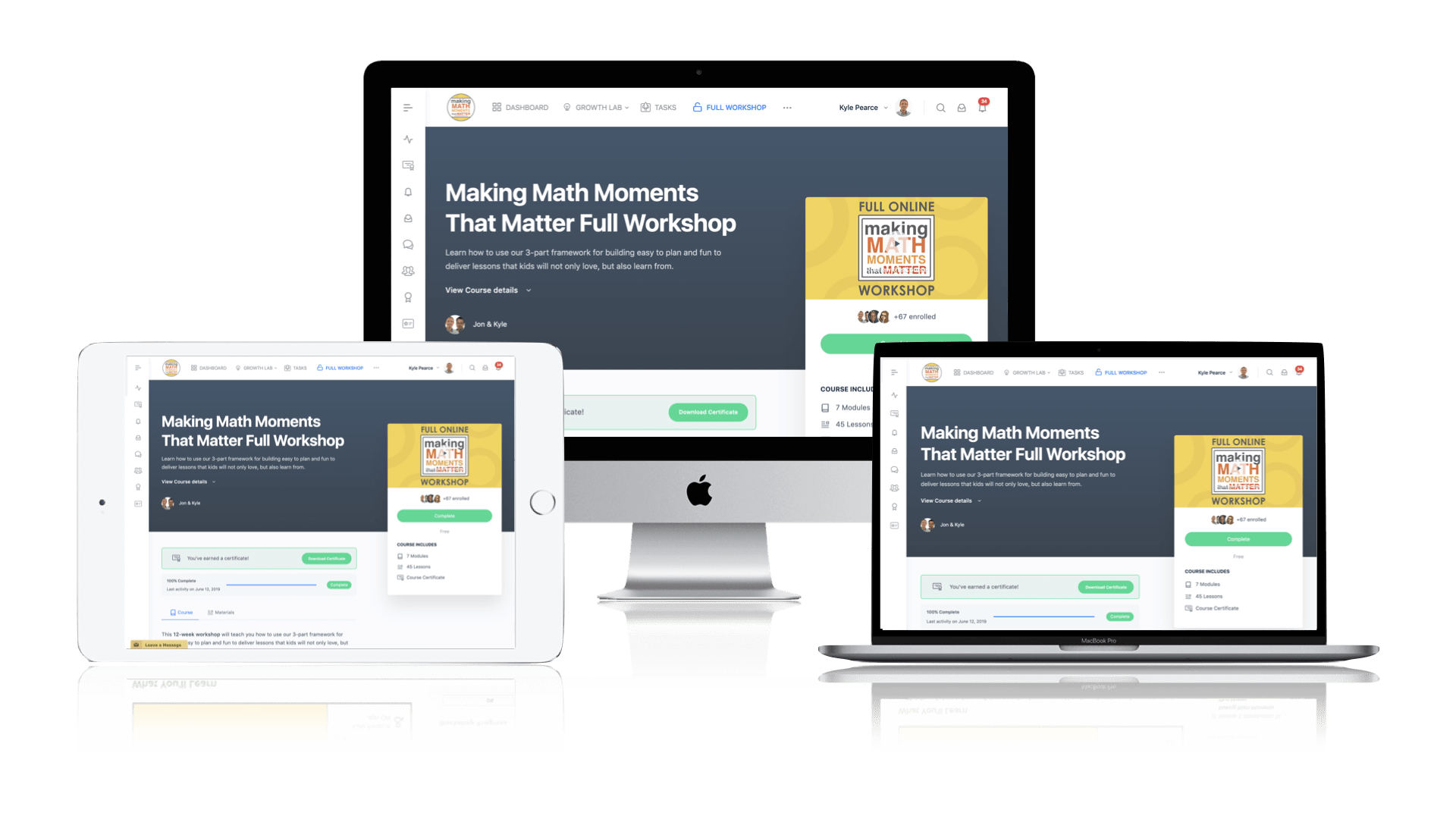
Pedagogically aligned for teachers of K through Grade 12 with content specific examples from Grades 3 through Grade 10.
In our self-paced, 12-week Online Workshop, you'll learn how to craft new and transform your current lessons to Spark Curiosity, Fuel Sense Making, and Ignite Your Teacher Moves to promote resilient problem solvers.

0 Comments