Episode #430: Essential Math Coaching: The Highest Leveraged Move You Can Make For Math Improvement
LISTEN NOW HERE…



WATCH NOW…
Why are so many districts pouring resources into math PD but seeing so little classroom change?
It’s not because teachers aren’t trying. It’s not about motivation or willingness. The real reason is this: most systems aren’t built to support true instructional transformation. In this episode, we unpack the disconnect between a district’s vision for math learning and the day-to-day realities of classroom practice—and we make the case for math coaching as the essential lever most districts are missing.
Drawing from research, real-world examples, and the common challenges we hear from district teams, Jon challenges leaders to rethink how professional learning is structured—especially when funding is limited, time is tight, and expectations are high.
Listeners Will:
- Understand the research behind why math PD alone doesn’t shift math instruction
- Learn how math instructional coaching dramatically increases classroom implementation
- Explore what it takes to design a system that supports consistent, lasting change
- Reflect on the “greatest good dilemma” and why starting small may be your best bet
- Get inspired to build the next round of math leaders—one teacher at a time
If your district is serious about improving math instruction, press play and discover the one investment that creates real, sustainable impact.
Attention District Math Leaders:
Not sure what matters most when designing math improvement plans? Take this assessment and get a free customized report: https://makemathmoments.com/grow/
Ready to design your math improvement plan with guidance, support and using structure? Learn how to follow our 4 stage process. https://growyourmathprogram.com
Looking to supplement your curriculum with problem based lessons and units? Make Math Moments Problem Based Lessons & Units
Be Our Next Podcast Guest!
Join as an Interview Guest or on a Mentoring Moment Call
Apply to be a Featured Interview Guest
Book a Mentoring Moment Coaching Call
Are You an Official Math Moment Maker?


FULL TRANSCRIPT
Let me ask you a hard question. Your district has invested thousands, sometimes actually millions in high quality curriculum, in summer PD, in workshops and in PLC structures. So why aren’t we seeing more shifts in our math classrooms? This is the question we constantly ask ourselves. Why are instructional practices mostly the same year after year when even teachers want to grow?
today I’m going to show you a main reason why this keeps happening and the one investment that finally makes professional learning stick.
I’m John Orr from the Make Math Moments team where we help hundreds of schools, school districts, systems of education develop sustainable, aligned, and tractionable math improvement plans each year. Across North America, math leaders are frustrated. The resources are good, the PD is inspiring, but the classroom results are falling flat or maintaining, and that leads to that uncomfortable question. Like, why aren’t…
us teachers, like why are these good hearted human beings, these amazing teachers, consistently implementing the strategies that we’re trying to share with them in our PD sessions, our PLCs. And here’s the real truth. It’s not because they don’t care. It’s not because they’re resistant. It’s not because the PD was bad. It’s not any of those things. It’s because the system is not designed to support real instructional change. That’s right, the system you currently have is not designed
to get you the results you want. It’s actually currently designed to get you the results you’re currently getting. And most districts unintentionally skip a crucial component, and one that research says is actually non-negotiable.
And let’s take this a little bit further. You’ve seen this before, like the powerful PD day comes, teachers are excited, mostly, but by October, most of what they’ve learned is either gone or it didn’t show up in the classrooms. And here’s why. The National Staff Development Council found that teachers need actually 30.
to 100 hours of sustained learning over 6 to 12 months to truly shift towards more inquiry oriented teaching. The Learning Policy Institute also found that a threshold of about 49 hours per year to measurably move teacher performance and student outcome, 49 hours of professional development time per year.
to translate professional learning into the classroom and have achievable outcomes for students. And let’s be honest, most districts offer maybe 12 hours of PD total. And then when you think about all of those hours added up and the professional learning communities and the time spent, are we actually making use of those 12 hours appropriately? There’s some data that suggests 75 % of the time is logistics and pacing and things that could have been done in an email and not actually professional development time.
around aligning your curriculum, aligning the resources, the instructional practices towards the student achievement and student outcomes. It’s tough. So of course, change isn’t sticking if we know that 49 hours are needed, but we’re not getting close to those hours. And our system, again, is perfectly designed to keep us doing what we’re doing. And in a way, this is where the missing link comes in. So if you’ve ever doubted instructional coaching, this is your time to perk up.
because instructional coaching is that gap. Okay, so think of PD as like the dose teachers need. Coaching is the delivery system that makes it work. So here’s some more research. Joyce and Shower showed that the impact, this impact clearly, like workshops alone. So if you just do PD and workshops and sessions, five to 10 % of teachers implement that strategy. Workshops plus coaching.
jumps that, this is sustained coaching, jumps that to 80, 90%. Like why is that the difference? Because you’re getting more of those 49 hours in the coaching. Because the coaching closes the knowing and doing gap. Coaches do what PD, like the PD session simply just can’t do. like you’re modeling strategies, the coaching and model strategies with real kids in real time.
They can, you can co-plan, co-teach. You can provide just-in-time feedback. You can reinforce the priorities. You can be the bridge between the district’s priority or goal or objective into the classroom and with the school principal. You can, you know, we can keep teachers from slipping back into old habits because they have that consistent routine, that consistent touch point, consistent follow-up. You get to build confidence because you have a peer. You get just the same momentum when things get hard.
And we typically don’t, we don’t focus on providing teachers with a coach as much as we should. know, coaching is the difference between hearing about instruction and actually doing it. So let’s take this a little bit further too. Like there are four components, teachers and educators, we are educators, like we need these. This is true for learning, like any learning really, is that we need these four components. And if we don’t have these four components, then you,
you’re not making up the hours that you could be or the time you could be like these need to be focused hours. So one is you need alignment with a shared vision. Like we need to know that this is the right thing and we have to have that like that that that belief that we’re all moving towards this moral this moral place. This is this is the right move to make. And sometimes we make that with data. Sometimes we make that with emotion. Sometimes we make that with with with pointing direction like this is where
It’s important, but we have to have alignment there. So you need that. So teachers need to believe that this is worth doing. Sometimes that’s hard. The second component here is teachers need opportunities to observe. we need that modeling. We need to see it in action. Teachers need to able to do that. So we need to, you know, have that time to model. The third component here is teachers need to believe in their ability that they can do this and that their students can do this.
Coaching can do that. Coaching can help in that area. Obviously the more practice we get and the consistency we get helps us do that. We can believe that we can do it. Seeing someone else do it doesn’t necessarily mean you can believe you can do it. And the fourth component here, which makes up most of that 80 to 90 % of adoption, is basically saying we need that ongoing support. And that’s where the coaching comes in. You need the ongoing support and follow up. The most…
the most fragile and often most missing component was right here. Like we tend to do maybe one, two and three like without coaching teachers sometimes do number one and number two, like number one being we get some alignment, this is the right move. We try to convince people it’s the right move. Number two is like, we’ll model it, we’ll show it. Like, sometimes you just talk about it. But but you know, you take it a little bit step further and you show it. And three is occasional because you have that belief. But typically, you never get number four if you don’t like you’re never going to get number four if you don’t have coaching. And that’s
And that’s so important for us to make sure. Like if you’ve ever doubted, like we should remove coaches from our buildings. This is why we have stagnant. Like if we, if we have funding for coaching, this is, these are the reasons we need to keep that going. And the question is not about, you know, how many we like, how do we get coaching? It’s like, well, how many can we coach this year? How many bright spots can we create? That’s the important question. And it’s.
who is positioned to do that coaching and how do I support those? Because here’s one of the drawbacks when we think about that. We call this the greatest good dilemma in education. Most times we struggle with the greatest good dilemma, which is basically we believe in equity, we believe it’s wrong to only give coaching to some teachers and not all teachers. Therefore, we should not do it at all if we can’t give it to everyone. And that is.
That limits us and that prevents us from actually getting traction and creating bright spot classrooms, bright spot teachers, teachers that can compound the work that we’re trying to do, share the work that we can do. They can be the bridges between, you know, high quality instructional practice and what that looks like and sounds like so that teachers can see more of it, can believe they can do it and not being able to do that.
And this is actually what one of the teams we just talked to in one of our calls that we hold regularly was dealing with. Like they were thinking they should not engage in coaching because they can’t structure it for everyone. We get this like, well, it’s only just, and here’s the other thing. It’s like, if it’s only just me, if I’m the lone provider of professional development in my school or my school district and I don’t have coaches,
You tend to think, well, then I can’t provide coaching. But the question is, not that I can’t. It’s like, how many can you coach? Like you can coach. You could decide that that’s the most impactful thing. And then you have to get over the greatest good for the greatest number. typically when you think about the greatest good for the greatest number, you’re going to coach from afar and you coach groups. And then what you’re doing is you’re spreading yourself too thin. You can’t get in to provide the ongoing follow up in the support.
And then therefore no one gets what you need and you have surface level learning and you’re stuck at that five to 10 % of adoption forever for a long time. This is why that we say it takes so long to move a group of educators is because we’re not trying to build one teacher at a time and committing to that. And if, if I was trying to make a case here is if you are, are that low and professional development provider in your building, how you just have to decide how many teachers can I work with this year and not
stick back and go, I can’t provide that support to everyone, so I won’t. Equity doesn’t mean giving everyone equal time. Equity means giving everyone access to an equal impact. And then therefore, we can provide coaching like when we focus coaching on the teachers most ready for growth, those classrooms get transformed. And then other teachers start to ask what’s going on over there? Can I get support too? And then you can have that problem, like work with that problem when it shows up. Don’t just stop and not…
not work towards building capacity and you’re building one teacher at a time until it becomes a problem. Change will spread through the early adopters and give the support to those early adopters. In our system and the way that we support our teams and our districts, help them focus on how do we create bright spots? How do we create these teachers that will showcase the vision for math instruction in the district or the school and be the beacon?
that we can all say like that is where we’re trying to go. And we can put new teachers in there to see what’s happening. We can pair teachers up. We need that compounding effect to actually happen.
Deep, sustained coaching works like compound interest. You you support one teacher deeply for a year and that teacher becomes a model classroom, a leader in the PLC, a mentor for peers, a co-facilitator PD, a proof point that the vision is possible and you know what you’re doing? Is you’re building the next round of leaders. And if you’re not focused on building the next round of leaders, you’re building a fragile system. So we need to make sure that we’re focusing on that. That’s another reason that coaching can help you build what you want to build. You have to dedicate that time.
If your goal is to shift instruction across an entire district, coaching is the lever with the highest return. Nothing else will come close. When districts skip coaching, predictable things happen. Teachers nod during PD, but the practice won’t change. New routines get tried once, but meet friction and then get abandoned. Teachers feel isolated. Old habits return. Initiatives stall. Leaders feel frustrated with the inconsistency. Teachers feel overwhelmed and blamed.
Vision stays on paper instead of classrooms and the cycle keeps continuing. This is not a teacher problem. This is a system design problem. Coaching is the mechanism that makes the system work. So if you’re a math coordinator, here’s your takeaway. You cannot improve math instruction at scale without investing in that coaching, whether you’re starting with one teacher and one coach or starting with a few coaches and a few teachers.
not, know, coaching isn’t a nice to have. It’s, it’s mandatory because it’s the only structure that links vision to consistent high quality classroom practice. It’s PD that provides the spark. Like PD provides the spark. Coaching is going to turn that flame into something that lasts. If your district is serious about math improvement, coaching must move from the margins to the center of your strategy. The reality is if, if you believe like we do that this is the most important structure you can implement, then the question is not how
Can I provide coaching to everyone? It’s how many can you provide coaching to? And here’s the real reality. If you don’t have a coach, you’re the coach.
Thanks For Listening
- Book a Math Mentoring Moment
- Apply to be a Featured Interview Guest
- Leave a note in the comment section below.
- Share this show on Twitter, or Facebook.
To help out the show:
- Leave an honest review on iTunes. Your ratings and reviews really help and we read each one.
- Subscribe on iTunes, Google Play, and Spotify.
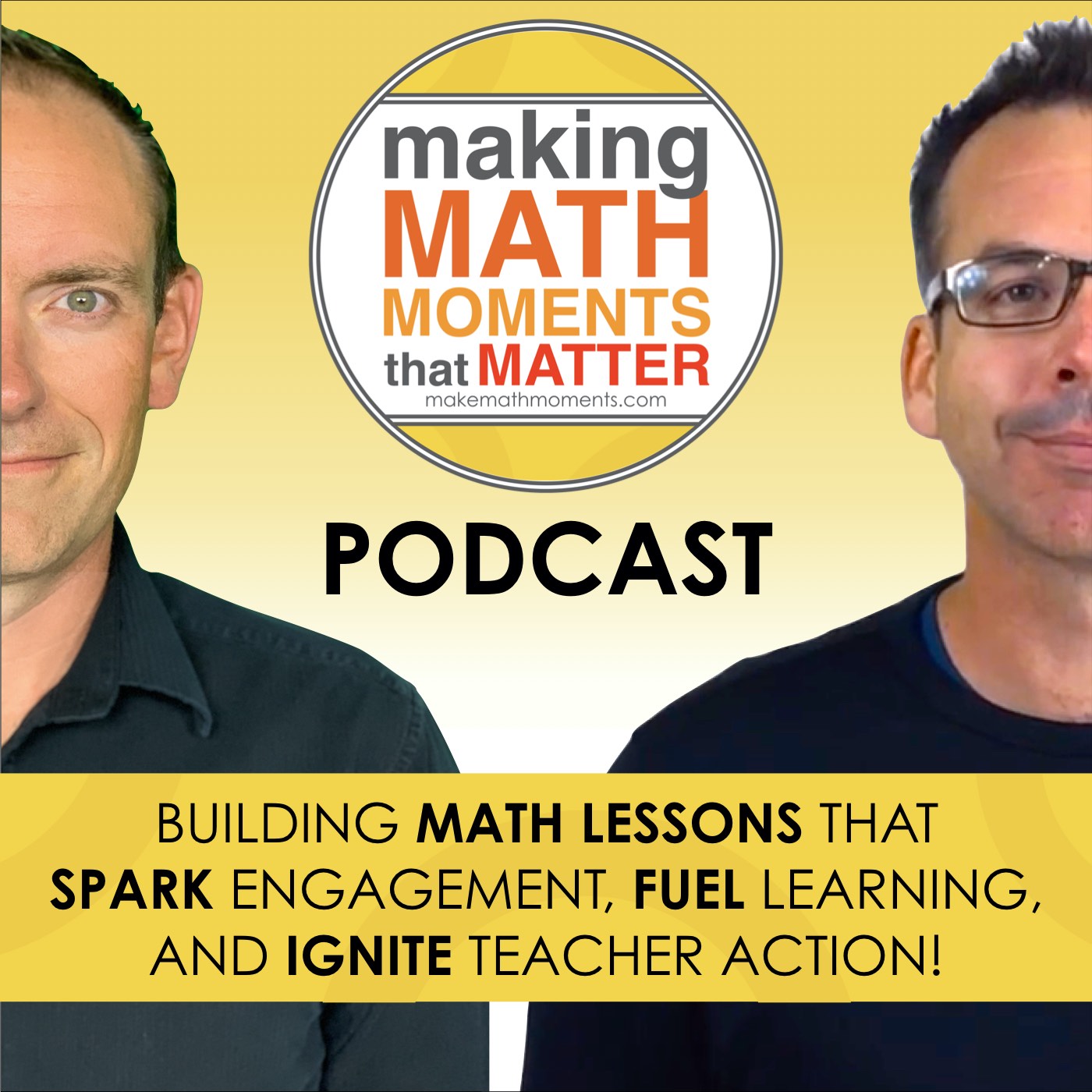
DOWNLOAD THE 3 ACT MATH TASK TIP SHEET SO THEY RUN WITHOUT A HITCH!
Download the 2-page printable 3 Act Math Tip Sheet to ensure that you have the best start to your journey using 3 Act math Tasks to spark curiosity and fuel sense making in your math classroom!
LESSONS TO MAKE MATH MOMENTS
Each lesson consists of:
Each Make Math Moments Problem Based Lesson consists of a Teacher Guide to lead you step-by-step through the planning process to ensure your lesson runs without a hitch!
Each Teacher Guide consists of:
- Intentionality of the lesson;
- A step-by-step walk through of each phase of the lesson;
- Visuals, animations, and videos unpacking big ideas, strategies, and models we intend to emerge during the lesson;
- Sample student approaches to assist in anticipating what your students might do;
- Resources and downloads including Keynote, Powerpoint, Media Files, and Teacher Guide printable PDF; and,
- Much more!
Each Make Math Moments Problem Based Lesson begins with a story, visual, video, or other method to Spark Curiosity through context.
Students will often Notice and Wonder before making an estimate to draw them in and invest in the problem.
After student voice has been heard and acknowledged, we will set students off on a Productive Struggle via a prompt related to the Spark context.
These prompts are given each lesson with the following conditions:
- No calculators are to be used; and,
- Students are to focus on how they can convince their math community that their solution is valid.
Students are left to engage in a productive struggle as the facilitator circulates to observe and engage in conversation as a means of assessing formatively.
The facilitator is instructed through the Teacher Guide on what specific strategies and models could be used to make connections and consolidate the learning from the lesson.
Often times, animations and walk through videos are provided in the Teacher Guide to assist with planning and delivering the consolidation.
A review image, video, or animation is provided as a conclusion to the task from the lesson.
While this might feel like a natural ending to the context students have been exploring, it is just the beginning as we look to leverage this context via extensions and additional lessons to dig deeper.
At the end of each lesson, consolidation prompts and/or extensions are crafted for students to purposefully practice and demonstrate their current understanding.
Facilitators are encouraged to collect these consolidation prompts as a means to engage in the assessment process and inform next moves for instruction.
In multi-day units of study, Math Talks are crafted to help build on the thinking from the previous day and build towards the next step in the developmental progression of the concept(s) we are exploring.
Each Math Talk is constructed as a string of related problems that build with intentionality to emerge specific big ideas, strategies, and mathematical models.
Make Math Moments Problem Based Lessons and Day 1 Teacher Guides are openly available for you to leverage and use with your students without becoming a Make Math Moments Academy Member.
Use our OPEN ACCESS multi-day problem based units!
Make Math Moments Problem Based Lessons and Day 1 Teacher Guides are openly available for you to leverage and use with your students without becoming a Make Math Moments Academy Member.

Partitive Division Resulting in a Fraction
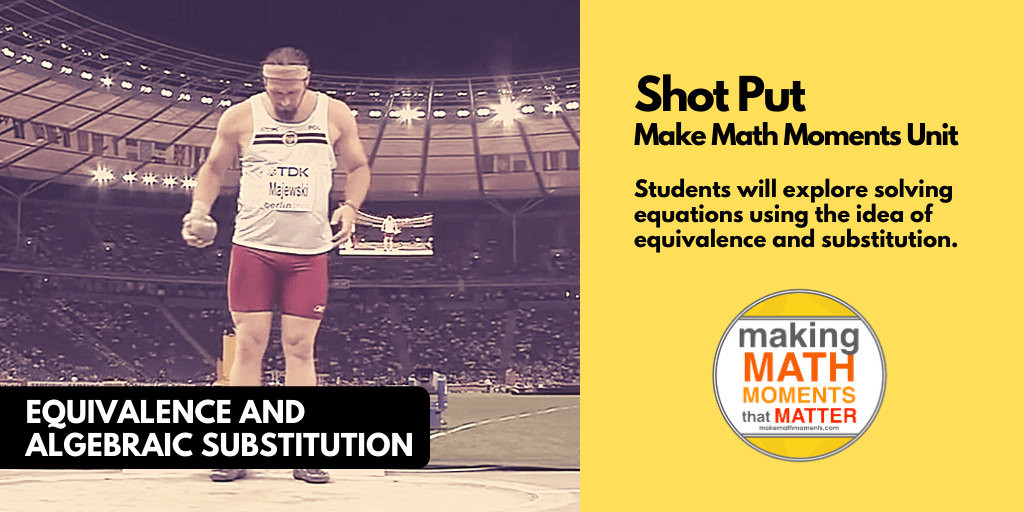
Equivalence and Algebraic Substitution
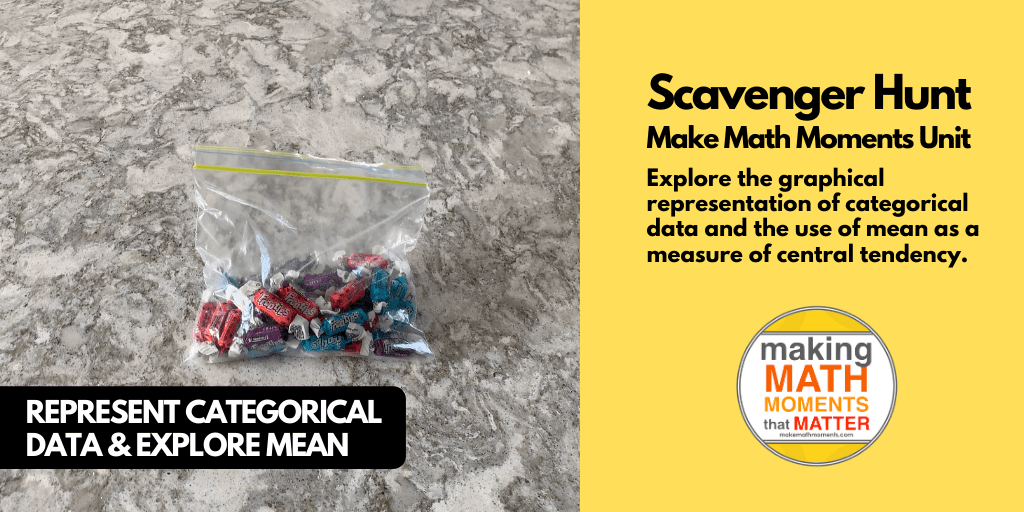
Represent Categorical Data & Explore Mean
Downloadable resources including blackline masters, handouts, printable Tips Sheets, slide shows, and media files do require a Make Math Moments Academy Membership.
ONLINE WORKSHOP REGISTRATION
Pedagogically aligned for teachers of K through Grade 12 with content specific examples from Grades 3 through Grade 10.
In our self-paced, 12-week Online Workshop, you'll learn how to craft new and transform your current lessons to Spark Curiosity, Fuel Sense Making, and Ignite Your Teacher Moves to promote resilient problem solvers.

0 Comments