Episode #474: 3 Barriers to Improving Math Instruction and Student Achievement
LISTEN NOW HERE...



WATCH NOW...
Improving student achievement in mathematics is a goal shared by schools, districts, and systems everywhere. Yet despite years of effort, many classrooms still aren’t seeing the shifts in instruction or outcomes that we’re aiming for. If the goal is clear, why does progress feel so inconsistent?
The challenge isn’t a lack of effort. Teachers are working hard, and schools are investing time into professional learning and new initiatives. But even with well-established teaching practices and research-backed strategies, something isn’t sticking. In many cases, the issue lies not in the practices themselves, but in the systems designed to support them. Without clarity, alignment, and the right focus, it becomes difficult to create meaningful and lasting change in math instruction.
In this episode, you’ll explore:
- Why math achievement hasn’t improved despite years of effort
- The three key barriers preventing instructional change
- How a lack of clarity and coherence impacts teacher practice
- Why measuring the wrong things leads to stalled progress
- What it means to focus narrowly for greater impact
- Why building teachers’ math understanding—not just pedagogy—is essential
If you’re trying to improve math instruction in your classroom, school, or system, this episode will help you rethink your approach and focus on the changes that truly move the needle.
Attention District Math Leaders:
We built a simple Math Coherence Compass to help district and school leaders make aligned decisions around math—without adding another initiative. Get your free copy and training here: https://makemathmoments.com/compass/
Not sure what matters most when designing math improvement plans? Take this assessment and get a free customized report: https://makemathmoments.com/grow/
Ready to design your math improvement plan with guidance, support and using structure? Learn how to follow our 4 stage process. https://growyourmathprogram.com
Looking to supplement your curriculum with problem based lessons and units? Make Math Moments Problem Based Lessons & Units
Be Our Next Podcast Guest!
Join as an Interview Guest or on a Mentoring Moment Call
Apply to be a Featured Interview Guest
It will take less than two (2) minutes to book your Math Mentoring Moment call.
Book a Mentoring Moment Coaching Call
Take two (2) minutes to book your Math Mentoring Moment call and let's work together to shake that math pebble out of your shoe!
Are You an Official Math Moment Maker?
Ensure that you follow, rate and review on Apple Podcasts, Spotify and other platforms to show your support and ensure other math educators can find the show.


FULL TRANSCRIPT
How do we improve student achievement in mathematics? This is the question that all school systems, schools, countries, school boards are trying to solve. And for good reason. We want students' disposition towards mathematics to change to a productive one. We want to improve procedural fluency. We want to strengthen adaptive reasoning. These are valid and noble skills that we want to translate from classrooms into their
students' daily lives, like we believe that these are the reasons we teach mathematics. Understand conceptually what is happening in the background. These are the five proficiencies of mathematics from adding it up. This is what we're trying to do. We're trying to strengthen all five of these every single day in our classrooms. And how do we typically try to strengthen and change this in our school systems? Because I think a lot of us are
looking at our results and our achievement and our saying we could do better. We could do better. And so where schools, school districts, school boards, countries, states, all change and focus their attention to is mostly teacher practice. We can make the biggest difference in our classrooms outside of family life while the students are with us.
we can make that impact with the instruction that we give them, that tier one instruction. Now, there is no secret here. In mathematics, there are principles that have been around for 10 plus years. Principles to Action was published by National Council of Teachers of Mathematics, NCTM, is North America's big board that says these are the things, these are the things that we're trying to do to strengthen mathematics. There are...
eight effective teaching practices that has been around since 2014 that says if we do more of these practices, then we're going to see more of those five proficiencies shifted in our classrooms. The problem that we're seeing from most teams that we talked to, we've talked with probably 200 math leaders in schools, states, countries.
around what they're doing for mathematics improvement and mathematics improvement planning. And what we're hearing is that there is an inconsistency here in these eight effective teaching practices. We are not seeing them show up in the classrooms as much as we should or as much as we would like, which is probably what's causing or not improving those student achievement results we're really looking for.
And so you have to take a step back. If that we've been trying to improve these for 10 years, what have we really been doing? What are the systems that have helped us create that? And so we often reflect, what are we doing to make shifts? If we don't like the results we're getting, is our system designed to make those results happen? Because your system is perfectly designed to get you the results you're currently getting. So if you're sitting in and leading a school, if you're leading a country in mathematics, you're leading a district,
in mathematics, you're leading a classroom in mathematics. And if you're not getting the results, you're not seeing the shifts and changes that you really like to see, you have to take a step back and go, what is the system? Like the system I currently have is actually perfectly designed to get me where I am right now. Therefore we need to shift the system if we are looking for different results. And that's where I think we've stumbled here, especially in North America, is we stumbled on
on not shifting those systems. We've been trying the same old things and seeing the same results and not getting those results better. There are actually three barriers that I want to address here that are preventing traction and impact in the math classroom, specifically for teacher practice and how we can design the system around supporting our teachers and the classrooms in a different way that will actually drive that student achievement up. If you're not sure who I am, I'm John Orr. I'm from the Make Math Moments team.
And we help teams and school systems, countries, states, individual small schools, big schools, school districts, design math improvement plans. And we want to unpack what is the theory? How do we do that? And how do we design systems to make that happen? We do that in a number of different ways. We support teams individually to cultivate strong, healthy math programs. We have a podcast that we produce twice a week.
that you could be tuning into and learning from us along the way. Every single episode we are talking about effective math teaching practice and then how to support that with coaches, coordinators, principals, administrators to make that happen at varying levels. So let's get into the three barriers here that I want to address today. Here are those barriers. One is that we typically have a lack of clarity that's preventing this tractionable system that we're creating, a focus and alignment.
I've been measuring things in the wrong ways and we want to shift that because if we measure things in the right ways we can get some better results. And then also we've been supporting our teachers backwards. So that one in particular is going to hit home a little bit down the road when I when I address this. But let's start with the first one here which is talking about a lack of clarity focus and alignment because I think where.
where most teams look is to say like we are going to shift student achievement in our schools, in our classrooms. We have to support teachers practice, but what we're seeing is a lack of buy-in. We're not seeing that practice just show up. We've got, you know, we've got inconsistent engagement. And what's happening here is you don't have a lack of buy-in. You don't have a lack of effort because teachers are working hard in your schools. They're working at all of those things.
every single day, they're doing the day in day out of working with kids. They're trying to implement initiatives. They're trying to make sure that they're covering their standards or their curriculum. They're doing amazing things. But what they aren't maybe doing is saying seeing those consistent, effective teaching practices stick into their classroom routines. And what's really happening is that you've got so many puzzle pieces. You've got some great puzzle pieces of
this curriculum resource or this routine. You've got this teacher doing wonderful things down the hallway. You've got maybe some resources that you're relying on that are amazing for student achievement. These are all puzzle pieces and what's happening here is that you've got so many puzzle pieces that we're not sure exactly what puzzle piece moves the needle and we're not sure, teachers aren't sure what puzzle piece actually is the right puzzle piece to get to the level of instruction that we're trying to get to.
while we all think that we have a lack of buy-in and a lack of consistency, what you're really seeing is you have a lack of coherence. You have a coherence problem because teachers aren't, they don't know exactly what it should look like in the classroom for effective teaching practice. And that's our assumption. When we talk about fluency strategies in the classroom, when we talk about productive struggle strategies in the classroom, when we talk about
you know, helping appropriate mathematical discourse in the classroom. We say these words and we make the assumption that our teachers, our administrators, our coaches, our coordinators, we all know what that means, but we don't. And that's a coherence problem. So if I say we're working on fluency and this teacher over here says, yeah, I'm working on fluency, but we have two completely different visions.
of what that looks like in the classroom. Because if I say, hey, I'm working on fluency and this teacher is saying like timed tests and speed is fluency, but you've got your coach or coordinator over here saying like flexibility, accuracy, efficiency, that's what make fluency. Then those are completely different things, but we are using the same term. And when we use the same term like that, we make assumptions, then it's hard for us to gain traction in those teaching practices. Because when you say we have to do more of this, the teachers like I'm doing that.
And what we were missing here is putting this puzzle together. And so to create coherence, what we have to do is we have to design the puzzle that we want our teachers to work towards. We have to paint the picture. What does this look like in the classroom? What is the vision for math instruction in our classroom? Does my administrator know it? Does my teacher know it? Do we all have the exact same mental model, the exact same picture of what?
an effective classroom lesson is supposed to look like. A lot of times we make that assumption in terms of our professional development and our professional learning, and we have to make it more clear. So teams, schools, districts, countries need to design the puzzle. They have to paint that picture. Systems for Instructional Improvement, which is a great resource to help structure math improvement planning across systems.
says right at the center that you need learning goals and for instructional vision. We have to give the teachers, our administrators, our coaches, all that same mental model. We have to make sure that we're all working together. So if I'm supporting math instruction at a country level and I've got a classroom level, we need them both to say the same thing when we say fluency. It's essential to coordinate those systems to support teachers learning.
and supports for others in the role groups. We all have to be speaking the same language, which means that we have to develop the vision for mathematics. Do we have a vision for mathematics? Does my vision at my school level support what the country is saying or what my district is saying? Are we all working towards the same things? Because when we work towards different things, we're throwing spaghetti at the wall. We're hoping something sticks. We got all these puzzle pieces, but we don't have the puzzle. And so our recommendation
is that you have to build that puzzle. You have to make it clear. to make it clear, you have to come up with that vision. You have to state it. And then you have to work towards creating the look-fors. does everybody, has everyone had the glimpse of what this looks like in the classroom? So the teams that we've supported along the way create their math vision. They create their math vision at their district level. They create their math vision that could support at the school level.
We all have to be speaking the same language. And that is that first par. It's one of the barriers we're up against. And typically we haven't been solving for that. Most schools, school districts, states just don't have a vision for instruction and they haven't just made that clear. Now, do you have to have a vision at every single level at the country, at the state, at this classroom, at this, you know, at the school? No. But you could, what is important is coherence and structuring the coherence around
the key terminology, the key words, the key drivers, the key zones of improvement. We all have to know what that means. And that's the key idea here. And a lot of times when we plan PD, we just we just aren't thinking that way. And that's what I wanted that first barrier is we have to overcome that thinking. That's a problem that needs to be solved so that teachers can take the step forward when they need to. That when a coach is is recommending a practice like productive, productive disposition like
getting kids to question more, getting kids to talk more in class, the coach has to know, when the coach recommend that, the teacher has to know that the principal knows exactly what that looks like, sounds like. So that they can take that step. They can say like, I can move that way because I know that my principal supports this. My coach supports this. My fellow teachers support this. We all need to work together and we all need to own it. We have to own this type of work. So whether I'm at the school or I'm at the district office or at the
Maybe I'm at the Ministry of Education or the Department of Education at a state level. I need to say this is a problem that I need to work towards solving and designing your vision or designing what you're really focusing on and making it coherent across your system is very, very important. Okay, let's talk about another barrier here, which is indicator inaccuracies. And when I say that, it's basically saying we've measuring the wrong things.
When you get to the end of the year, you have to answer a question that everyone has to answer, which is basically saying, I look back on the year, where did I create shifts? Where did I create achievement change? Where did I create improvement in my system, at my school level, at my state level, at my district level? Where did I create that shift and how do I know? And when we have that, that's really what we're after when we talk about measuring. Because a lot of times we can't answer that. We look to state data. We say, hey, I...
I'm going to shift instruction this way, and therefore I'm going to see it in the way that these goals come out. Here's typical goals. It's like we set a goal. Let's change proficiency in mathematics. Let's measure it by any sort of, you know, state tests that we have. We're going to choose the actions to improve those. But what happens is when you go to look at those state tests or those provincial tests or those national tests to tell you whether you made improvement on it, it's fuzzy.
You cannot confidently say that the change you saw in those test results was a direct result to the work that you would have done during the year to create shift. That's that's when you let's say you have your vision and you're trying to make work towards it. You won't be able to make that conclusion. So what happens is we all start over again. We go back to the drawing board. I don't know if that made we got to try something new. And that continually adds things to teachers plates.
because we actually been measuring, since we've been measuring wrong, we keep adding to teachers plates, but we don't know what to take off their plate because we're worried that if we take that thing off their plate, then maybe the whole plate crumbles and the whole system will fall apart. We just don't know what we're measuring. We need to measure more accurately. And so that's a really important component of measuring, measuring change you want to see. And that's what we, our recommendation is, is,
Just ask yourself when you get to the end of the year, do I know for sure that the shifts I helped my teachers make this year in their instruction, did that cause the change that I was looking forward? Like did the moves shift that instruction? And really what you need to do is decide on how you're measuring. Like are you measuring the right things? Because if you're looking for a shift in instruction, measure the shift in instruction. Don't measure student achievement at the end of the year to tell you that your shift works.
Measure the shift. If you're looking for a change in confidence of teachers' mathematical proficiencies for themselves, then measure the shift that they had throughout the years. Get the baseline. Look at the assessment data for themselves. Define the change that you want to see and then create the measure to actually capture that change. That's an important component of any sort of effective mathematics improvement process. So if I'm at a school,
I need to say, well, what do I really want to see shifted in this year? Well, of course I want to see teachers or a student's achievement data shifted. Great. But what am I prepared to shift to make that happen? That right there is where you start to go. Well, how will I know that happened? And what can I capture or what can I measure or can I observe to see that shift? Because that teacher shift or that shift in my lesson structures or
or how I show up in my professional learning communities or the teacher practice work that we're putting into place, that's the shift that you wanna measure because that will tell you at the end of the year that you made progress. And when you make many progresses, you stick to many progresses. And that's an important habit to build towards this. So what we say is you've probably just been measuring wrong to create the system that you're creating. And if you shift your measurement practices, then you're...
on your pathway to designing the system that will get you the results you want to get and not perpetuate this the results you're getting with the current system you have. And so when you do that what we encourage you is to focus narrowly and when you focus focusing narrowly is essential because there's so many things you could be focusing on shifting. But here's a key fact. It takes 49 professional development hours to produce measurable gains in both teaching and student learning.
When you think about one practice, one practice takes 49 hours to make meaningful shifts in routines and instruction and that show up in student student learning. That's the obscene amount of numbers of professional development hours. Like you can't do that in a year for a teacher. That's per teacher. So why it's not it's not meant to scare you. It's meant to say that if I continually shift my practices, we're going to work on
Number sense routines. And I want to work on helping a teacher understand their mathematical proficiency in fractions. Know that there's two forty nine hours there and when you can't focus on everything. So go narrow and help a teacher build their capacity in an area and that will spill over into other areas. That's what we mean by going narrow. So what we want to do is measure measure accurately and go narrow with what you're going to measure and what you're going to create shifts in.
So we've got, again, lack of clarity. We're gonna design puzzles. And when we measure wrong, we're gonna shift those measurements. We're gonna measure change, or we're gonna focus narrowly on inputs and not those outputs. Okay, last barrier here to address is we've been supporting our teachers backwards. And when we think about supporting our teachers backwards is that most times teams are saying, we're struggling with
the teacher engagement. We're not seeing this show up consistently. We have low student engagement. just not seeing that. But what we're really doing is typically when we think about how systems structure professional development, they use a model like this. This is from everything you need to know about coaching mathematics. It is a good resource. I just think that the structure of their system is a little bit missing. It's missing a piece. And I will outline that in just a moment. But to understand
how they're saying you structure professional development for teachers, just so it shows up in classrooms, is you think about those mathematical practices that we want students to achieve in. So you could think your own practices in your own state or your own country, but you could also think about those five proficiencies I put at the beginning of this video. And then we decide on what shifts do we wanna make in our practice to support those practices. And then I should focus on the zone that helps me improve. And then I should look.
to support those shifts and that then becomes a cycle. The problem here is this just assumes that the solution to why we're not seeing practices show up in our classrooms is a pedagogical solution and not a math proficiency solution and that's what we've been missing. If you think about it, we've got an army of teachers in our schools, in our districts, in our states, in our complexes, in our countries.
that all learn math a very procedural way. We didn't know what we didn't know back then. And therefore we then teach it typically the way we learned it. And so teachers are still teaching in this very linear way, this very procedural way. But every single one of those practices that I stated at the beginning that NCTM is recommending for us to shift towards requires a teacher to be flexible in the moment. Think on their feet. Hear what students.
problem solving strategies are so that we can engage that in productive discourse. It requires that teacher to be flexible. And if a teacher is flexible because they know their mathematics inside and out and they know they know the different models that they could be using with students to help them understand visually what this could look like. They know the different strategies other than that one procedural way. They view mathematics as a as a as an important subject that says like it takes time and strategy and problem solving.
versus like quick and fast, we have to make that shift. And we only make that shift when we start to make math epiphanies and help teachers understand the math. Like, do they know that there's two types of division and it matters when I use language around one versus the other? Or did I know that the Pythagorean Theorem was actually a representation of areas of shapes around a triangle. And it actually doesn't even matter what shape it is as long as it's a regular shape. The area of this one,
is equal to the area of the other two. It could be octagons. It's the same. But why did we use squares? Like these matter because it helps a teacher be flexible in the moment. And most times we just don't work mathematics proficiency into our professional development. When was the last time in your school, your school district, or your country focused on helping teachers improve their own mathematics in a flexible way? Like those five mathematical proficiencies,
I stated at the beginning, this is true for teachers too. Do teachers have adaptive reading and reasoning, strategic competence? Like how we strengthen all five of these up in our own educators or in our own coaches and our own teachers so that they could also do that in their classrooms. What we're seeing from meeting with hundreds of leaders across North America right now is that we have not, we have not been spending time helping them. We've been spending time on pedagogy first and hoping
that it translates into understanding math better. We say focus on the math first and that always will cause a change in pedagogy because when a teacher has a math epiphany, they're like, my gosh, I did not know that there was two types of division and it matters when I say that that versus that. They will never forget that. And then their next question is how do I do that in my classroom? Focus on helping them understand their mathematics first and
the pedagogy will come. Don't focus on pedagogy first because they have to know the math anyway. That's why you get flexibility in the classroom. As some teacher understood the math at a very deep and conceptual level to allow them to move and be flexible in the classroom, to show this and really like that strategy and talk about that strategy and show that those two strategies are the same is because a teacher has that deep conceptual understanding of mathematics. We need to build that.
for our teachers. can't assume that they have it because we all didn't learn that that way. So this model should be shifted into making sure that we build that into the work we do. And that's an important component of designing mathematics improvement. We have to build these five. How many last year did you work towards helping teachers understand what all five of those are and what that looks like in the classroom and what that looks like for themselves? It's got to be a necessary component of the work you do. And that's what we've been missing.
And that's what probably has been missing from making shifts in your school and your school systems and seeing that achievement show up. So when you think about, know, there's many barriers to the work that we're all doing, but these are three big ones at a system level. At my school system level, at my district system level, at my country system level that we're all trying to tackle. And we have to know that we're up against these things so we can design carefully around them. So no matter what role I have in the system,
I need to understand that I need to design puzzles. I need to know what the vision should look like. I need to make sure I'm measuring the right things and measuring shifts and not just relying on student achievement data from someone else to tell me what shifts I made with teachers. I need to focus on narrowly on the inputs and not outputs. I need to create more math epiphanies with my teachers this year in my schools, in my states, in my districts, in my countries.
We typically do this by helping these teams develop this through a flywheel. And when you design better, when you optimize your structures and know that you have professional development structures that we all have to design, like PLCs or coaching or staff meetings, like how do I use those to solve these problems? How do I design effectively? How do I build capacity of teachers? Because I know that's an essential component of the work that we need to do.
How do I inspire teachers to take that next step? And how do I inspire leadership to continue this work on so that it doesn't die when I move on from roll to roll? It takes immense effort to get your flywheel moving initially. A lot of times it's a lot of learning that we as leaders have to do in the early stages that make the difference down the road because the flywheel will spin faster and faster and faster every year when we design appropriately, take the structures that we have and make sure they're optimized, build capacity of teachers.
inspire that next generation. This is how we design math improvement plans and this is the work that we all have to do. We all have to own this work at our own roles and we all have to know that these are the things we're up against and that's the work that you're going to be doing and the work you do need to do and the question is are you ready to take that step? What are the things that you need to take into account to make that next step? Because we all are here together to work at doing
these types of things. I'm John Orr from the Make Math Moments team and we're here to help you do this type of work and design your math improvement flywheel.
Your Customized Improvement Plan For Your Math Classroom.
Take the 12 minute assessment and you'll get a free, customized plan to shape and grow the 6 parts of any strong mathematics classroom program.
District leader/math coach? Take the District Assessment
Thanks For Listening
- Book a Math Mentoring Moment
- Apply to be a Featured Interview Guest
- Leave a note in the comment section below.
- Share this show on Twitter, or Facebook.
To help out the show:
- Leave an honest review on iTunes. Your ratings and reviews really help and we read each one.
- Subscribe on iTunes, Google Play, and Spotify.
The Making Math Moments That Matter Podcast with Kyle Pearce & Jon Orr
Weekly interviews, strategy, and advice for building a math classroom that you wish you were in.
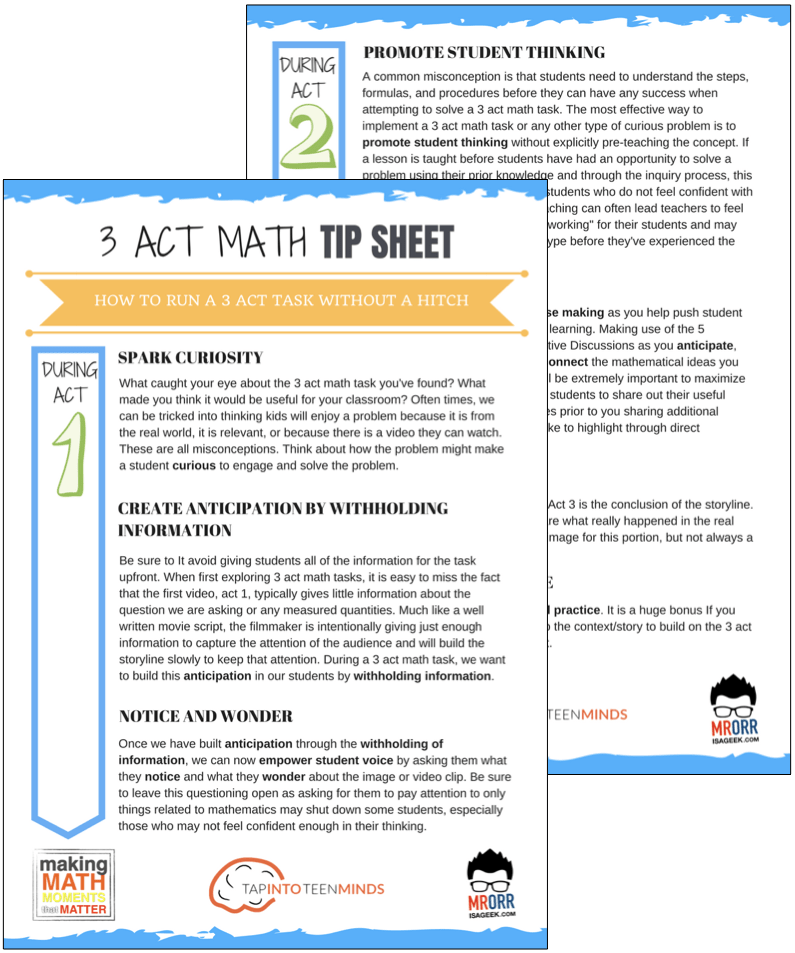
DOWNLOAD THE 3 ACT MATH TASK TIP SHEET SO THEY RUN WITHOUT A HITCH!
Download the 2-page printable 3 Act Math Tip Sheet to ensure that you have the best start to your journey using 3 Act math Tasks to spark curiosity and fuel sense making in your math classroom!
LESSONS TO MAKE MATH MOMENTS
Each lesson consists of:
Each Make Math Moments Problem Based Lesson consists of a Teacher Guide to lead you step-by-step through the planning process to ensure your lesson runs without a hitch!
Each Teacher Guide consists of:
- Intentionality of the lesson;
- A step-by-step walk through of each phase of the lesson;
- Visuals, animations, and videos unpacking big ideas, strategies, and models we intend to emerge during the lesson;
- Sample student approaches to assist in anticipating what your students might do;
- Resources and downloads including Keynote, Powerpoint, Media Files, and Teacher Guide printable PDF; and,
- Much more!
Each Make Math Moments Problem Based Lesson begins with a story, visual, video, or other method to Spark Curiosity through context.
Students will often Notice and Wonder before making an estimate to draw them in and invest in the problem.
After student voice has been heard and acknowledged, we will set students off on a Productive Struggle via a prompt related to the Spark context.
These prompts are given each lesson with the following conditions:
- No calculators are to be used; and,
- Students are to focus on how they can convince their math community that their solution is valid.
Students are left to engage in a productive struggle as the facilitator circulates to observe and engage in conversation as a means of assessing formatively.
The facilitator is instructed through the Teacher Guide on what specific strategies and models could be used to make connections and consolidate the learning from the lesson.
Often times, animations and walk through videos are provided in the Teacher Guide to assist with planning and delivering the consolidation.
A review image, video, or animation is provided as a conclusion to the task from the lesson.
While this might feel like a natural ending to the context students have been exploring, it is just the beginning as we look to leverage this context via extensions and additional lessons to dig deeper.
At the end of each lesson, consolidation prompts and/or extensions are crafted for students to purposefully practice and demonstrate their current understanding.
Facilitators are encouraged to collect these consolidation prompts as a means to engage in the assessment process and inform next moves for instruction.
In multi-day units of study, Math Talks are crafted to help build on the thinking from the previous day and build towards the next step in the developmental progression of the concept(s) we are exploring.
Each Math Talk is constructed as a string of related problems that build with intentionality to emerge specific big ideas, strategies, and mathematical models.
Make Math Moments Problem Based Lessons and Day 1 Teacher Guides are openly available for you to leverage and use with your students without becoming a Make Math Moments Academy Member.
Use our OPEN ACCESS multi-day problem based units!
Make Math Moments Problem Based Lessons and Day 1 Teacher Guides are openly available for you to leverage and use with your students without becoming a Make Math Moments Academy Member.
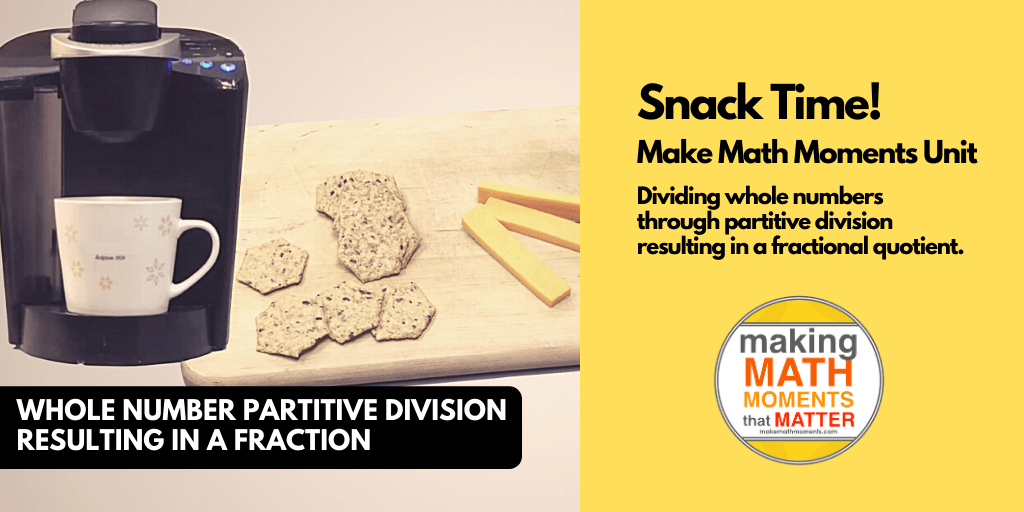
Partitive Division Resulting in a Fraction
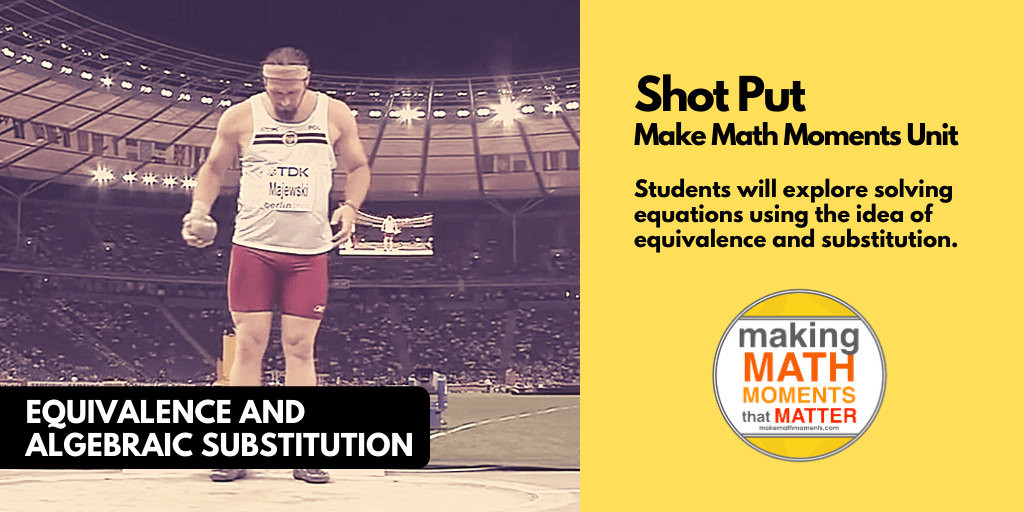
Equivalence and Algebraic Substitution
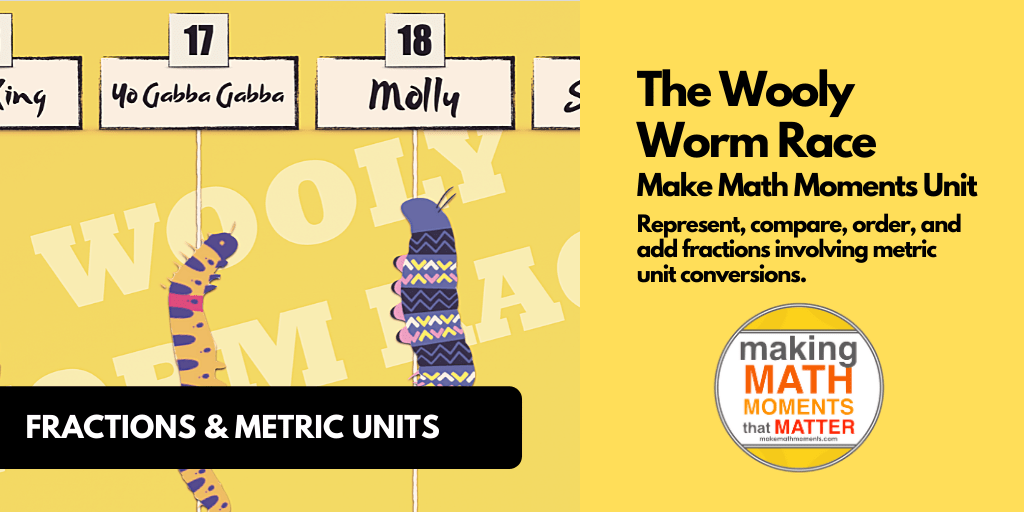
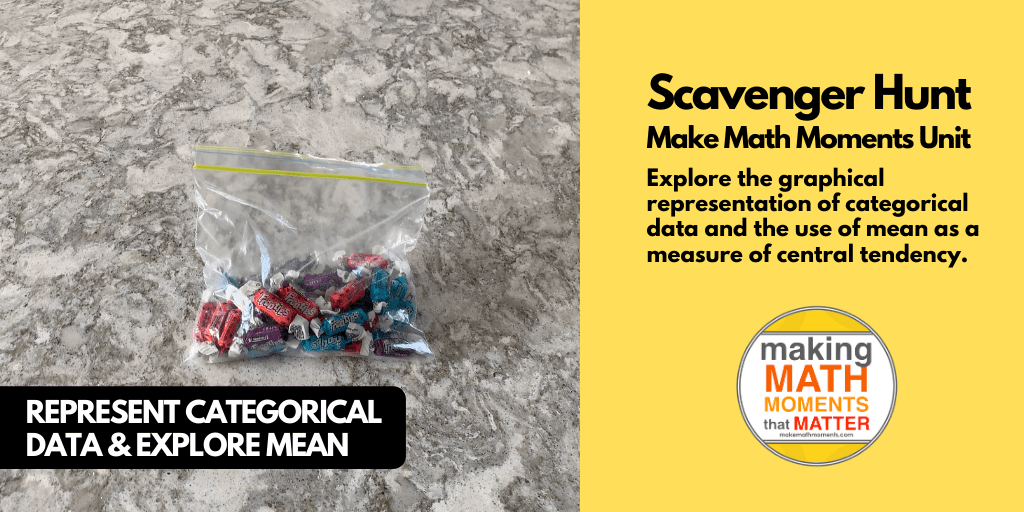
Represent Categorical Data & Explore Mean
Downloadable resources including blackline masters, handouts, printable Tips Sheets, slide shows, and media files do require a Make Math Moments Academy Membership.
ONLINE WORKSHOP REGISTRATION
Pedagogically aligned for teachers of K through Grade 12 with content specific examples from Grades 3 through Grade 10.
In our self-paced, 12-week Online Workshop, you'll learn how to craft new and transform your current lessons to Spark Curiosity, Fuel Sense Making, and Ignite Your Teacher Moves to promote resilient problem solvers.
0 Comments