BE A GUEST ON OUR SHOW!
What Is The Making Math Moments That Matter Podcast?
In a nutshell, we want The Making Math Moments That Matter Podcast to be a resource that all educators who teach mathematics can turn to in order to learn from others in the mathematics education space. Each episode typically involves Jon and I conversing about ideas in math teaching and learning, Math Mentoring Moments with teachers who join us on the show for a coaching call, and interviews with influencers in the mathematics education space.
We would love to explore your story in mathematics education, the challenges you may have experienced along the way, and the current projects you are currently working on to raise awareness of all the great things happening with our Math Moment Maker Community of listeners.
If you want to get more of a feel for the style of the show, you can listen to previous episodes right from this webpage or, take them with you by listening in on all common podcast platforms such as iTunes, Google Play, and Spotify.
Interview Structure
Each interview is intended to be a free-flowing conversation.
However, early in the call we like to help listeners get a better sense of your story. This will include these three questions early on in the conversation:
- Tell us a little about yourself. What’s your math teaching story/journey?
- What inspired you to become a math educator / researcher / involved in mathematics education?
- When you think back to your own education experience, what memorable math moment has stuck with you?
Framing how you might respond to each of those three (3) questions ahead of time can be helpful for making things flow into the next section of the chat.
We then typically send you some high-level questions related to your specific work ahead of time. The conversation will dictate which pre-planned questions we discuss in the interview as well as any new questions that might arise.
Share Your Current Work
Consider your work and what might provide value for the Math Moment Maker Community:
- Are you currently promoting a book?
- Releasing a new podcast?
- Publishing a new research paper?
- Launching a new project or tool?
- Something else?
Be ready to share details with our audience (i.e.: website url, social media handle(s), etc.) to ensure they know where they can learn more about you and your work.
If interested, we would be happy to run a contest for a copy of your new book, resource, tool, etc.
Just let us know!
Interview Logistical Details
To ensure you have what you need to connect with us for an interview, we’ve created a list of the most important details:
- The interview will be audio only conducted via a web based tool called Zencastr via a link we would send in a follow-up email.
- The total time commitment would be approximately one hour.
- Secure yourself a microphone that connects to your computer. You don’t need to buy one at all if you have earbuds with a microphone attached. (For example I use the pair of earbuds that came with my iPhone). Note that sometimes bluetooth headsets can cause problems with delay, sound quality, etc. We’d recommend getting “wired in” if you can.
- Try to avoid using a tablet or Chromebook for this call. Our recording software isn’t a big fan of them and does much better with a desktop or laptop as the audio is recorded locally in your own computer web browser.
- Ensure that at the time of the call you are connected to high speed internet and using an updated web browser like Google Chrome or Firefox. Sadly, Internet Explorer and Safari don’t play well with our recording software.
Don’t hesitate to contact us if any of this is unclear or if you have additional questions about compatible technology.
We’d love to help!
NEXT STEPS…
Are you interested in joining us for an interview?
Contact us and we’ll send on our booking calendar to reserve you a date and time that works best for you!
Listen To Our Recent Episodes:
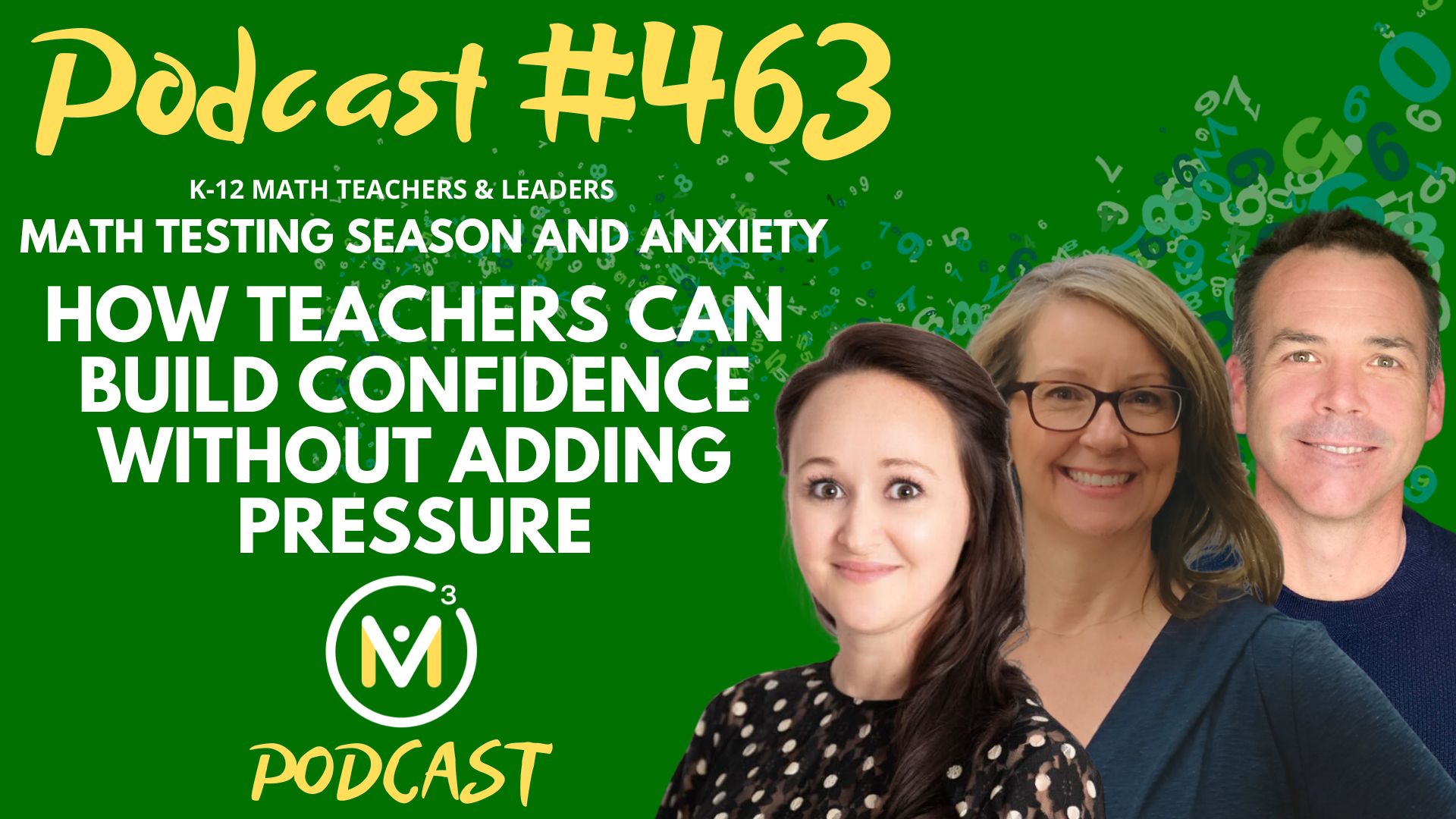
Episode #463: Math Testing Season and Anxiety: How Teachers Can Build Confidence Without Adding Pressure
How can math teachers maintain high expectations without creating pressure during testing season? In this episode, we explore how shifting from outcomes to process can build confident, capable math students.
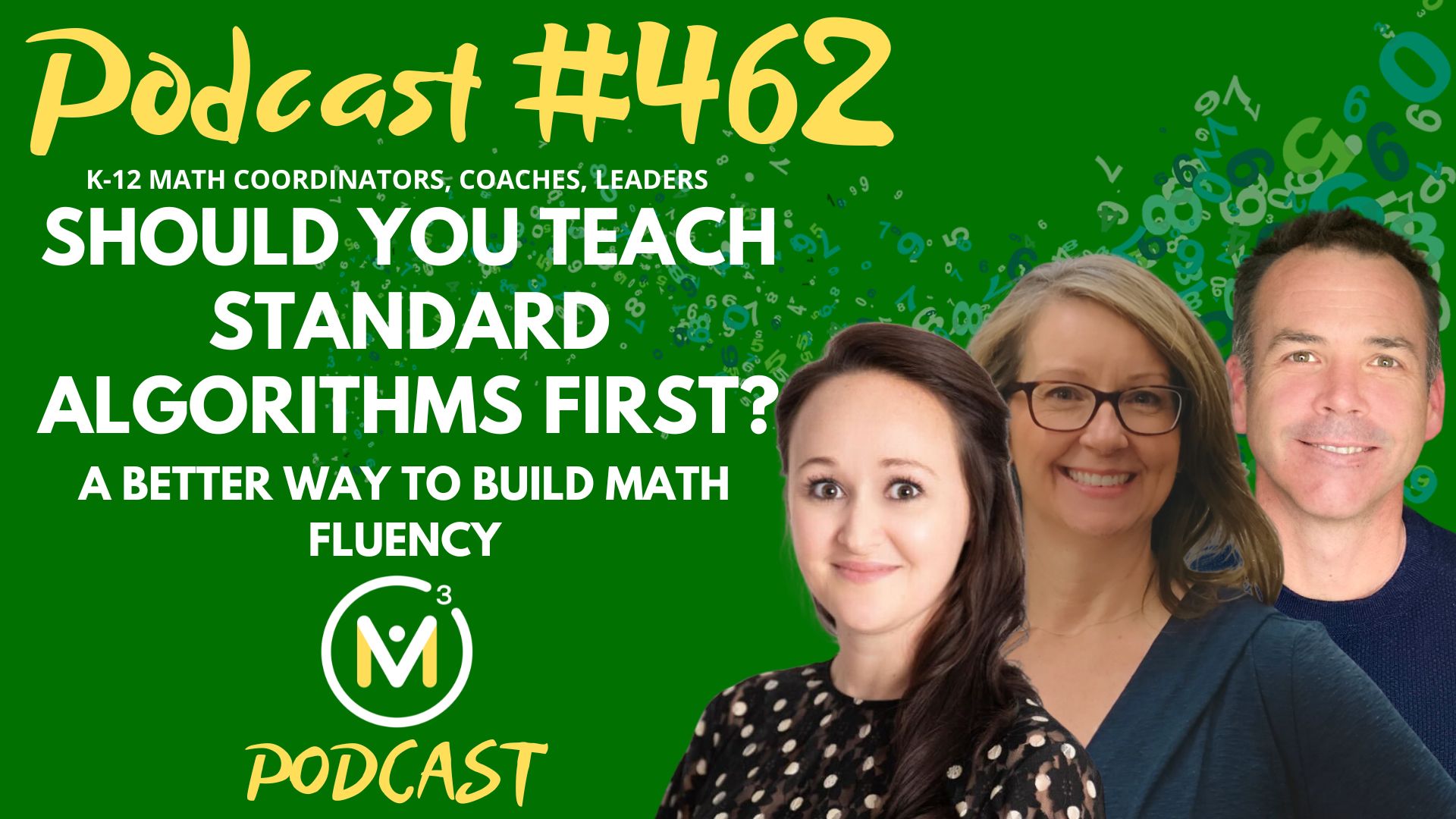
Episode #462: Should You Teach Standard Algorithms First? A Better Way to Build Math Fluency
Should students learn standard algorithms first? Discover why number sense, reasoning strategies, and flexible thinking are essential for building true math fluency.
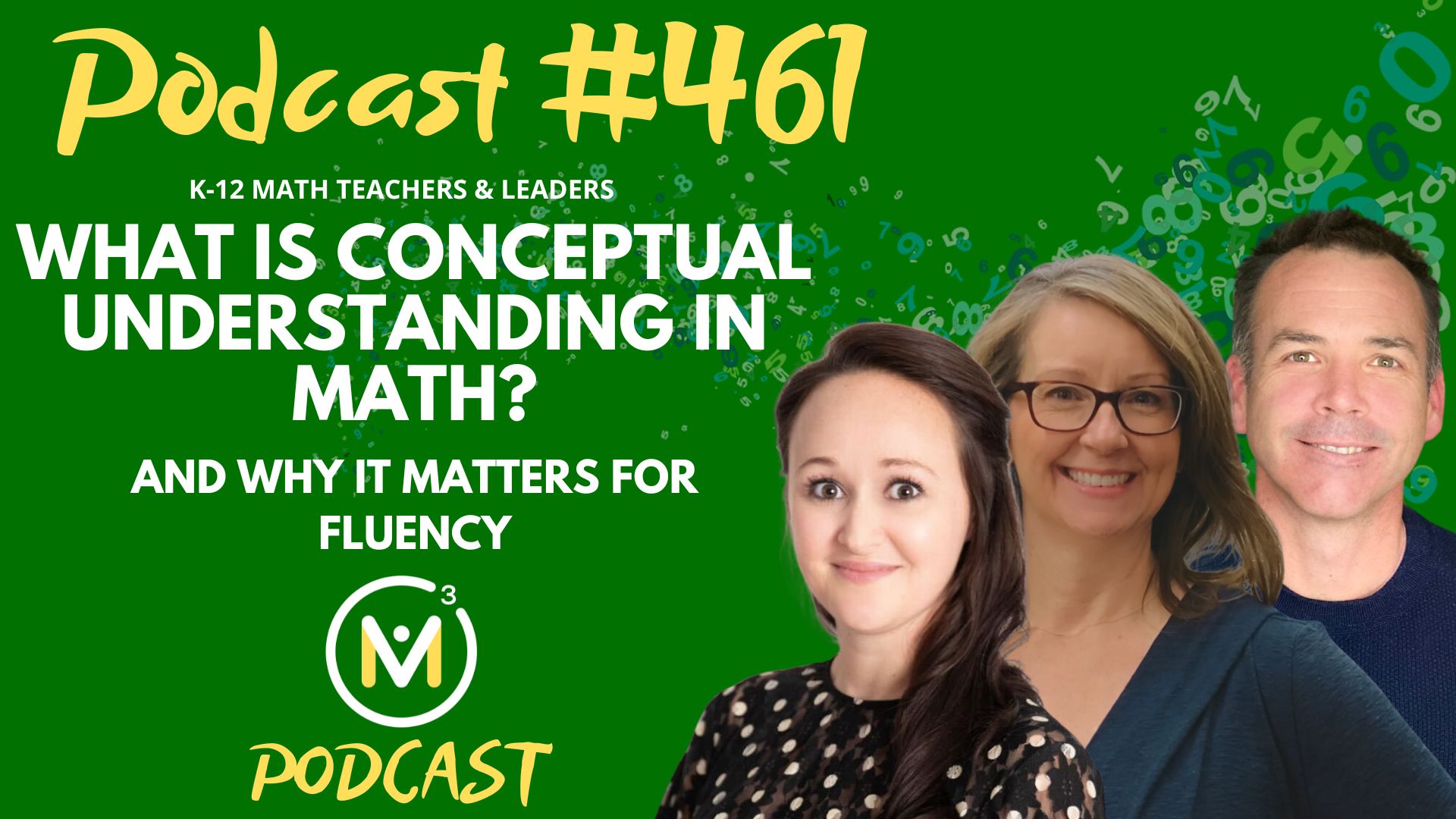
Episode #461: What Is Conceptual Understanding in Math? And Why It Matters for Fluency
Is conceptual understanding in math actually poorly defined? In this episode, we unpack the debate around conceptual understanding in math and math fluency, explore why these ideas are often framed as opposites, and argue that the real problem is not the definition of conceptual understanding in math—but the inconsistent implementation of it across math classrooms and math systems.
Episode #460: Should Students Show Their Work in Math? What Teachers Should Actually Assess
If a student gets the correct answer in math but doesn’t show their thinking, should they lose marks? In this debate episode, we unpack the difference between assessing fluency and assessing understanding in math—and how teachers and leaders can align grading with clear learning goals.
Episode #459: Tier 2 Math Intervention: How Coaches and Teachers Can Use Small Groups More Effectively
A teacher with 34 students asks: “In math, I feel obligated to pace to the middle—but I’m losing other students. How do I actually split into small math groups after the main lesson?” In this episode, we unpack how CRA math phases and formative math assessment can drive Tier 2 math grouping—without lowering Tier 1 math rigor.
Episode #458: How to Prepare for Standardized Tests In Math Class Without Test Prep Mode
Testing season is close and teachers feel pressure to pause instruction and start test prep. In this episode, Jon Orr, Yvette Lehman, and Beth Curran argue that cramming review often increases math anxiety and doesn’t stick. Instead, the best test prep is strong Tier 1 math instruction built on problem solving, cumulative practice, and formative assessment—plus daily opportunities for students to work independently and build math resilience.
Episode #457: Don’t Let March Kill Your Momentum: When Planning for Next Year Hurts This Year
March fatigue is real. Leaders start thinking about budgets, staffing, and next year’s plans—and unintentionally take their foot off the gas. In this episode, Jon Orr, Yvette Lehman, and Beth Curran unpack how to push through the March slump, protect your math improvement momentum, and finish the year strong without abandoning the systems you’ve worked hard to build.
Episode #456: How to Help Students With Word Problems in Math—and Coach Teachers to Do the Same
Students can compute—but math word problems (especially multi-step) break them. In this episode, we unpack why keyword strategies fail, how problem types/structures clarify the math, and the first move leaders can use to build staff capacity with strong assessment and cumulative practice.
Episode #455: How to Teach Grade-Level Math Without Leaving Students Behind
Math teachers feel trapped: “My students haven’t mastered this unit, but it’s January and we’re falling behind.” In this episode, Jon Orr, Yvette Lehman, and Beth Curran unpack when it’s okay to move on in math, why waiting for full mastery can widen opportunity gaps, and how strong math assessment, spiraling, and tiered instruction help teachers keep Tier 1 math rigorous while still supporting students who need more time.
Episode #454: “I Want to Strengthen Math Fact Fluency”—But I Don’t Know Where to Start
Math teachers are hearing that fluency isn’t about speed drills or flashcards—but that doesn’t answer the real question: what do I do tomorrow? In this episode, Jon Orr, Yvette Lehman, and Beth Curran unpack the first practical moves teachers can make to build math fluency (basic facts and procedural fluency), without stopping grade-level instruction—using screeners, number talks, and simple fluency games as an entry point.
STAY IN THE LOOP:
JOIN THE COMMUNITY
KYLE PEARCE & JON ORR