Episode #453: “We Want Number Sense and Fluency”—So Why Are You Skipping Data?
LISTEN NOW HERE…




WATCH NOW…
Why does data always feel like the thing we don’t have time for in math?
Teachers and leaders say they want students who can think critically, reason mathematically, and engage with real-world problems. But when time gets tight, data is often the first strand to go—seen as extra, wishy-washy, or disconnected from “real math.” In this episode, Jon Orr and Yvette Lehman challenge that thinking and argue that data isn’t competing with number sense—it’s one of the most powerful ways to build it.
In This Episode, You’ll Learn:
- Why data is often perceived as less rigorous or less important in math
- How data naturally supports number sense, proportional reasoning, and multiplicative thinking
- Why real-world data creates more authentic math experiences than contrived word problems
- How data supports critical thinking, discourse, and visual reasoning
- Why interpretive math isn’t “soft”—it’s essential
- Practical ways to integrate data without derailing pacing
- Resources teachers can use right away to bring meaningful data into instruction
If you’ve ever felt like you have to choose between number sense and data, this episode will help you rethink that tradeoff—and give you concrete ways to make data a meaningful part of math learning.
Attention District Math Leaders:
Not sure what matters most when designing math improvement plans? Take this assessment and get a free customized report: https://makemathmoments.com/grow/
Ready to design your math improvement plan with guidance, support and using structure? Learn how to follow our 4 stage process. https://growyourmathprogram.com
Looking to supplement your curriculum with problem based lessons and units? Make Math Moments Problem Based Lessons & Units
Be Our Next Podcast Guest!
Join as an Interview Guest or on a Mentoring Moment Call
Apply to be a Featured Interview Guest
Book a Mentoring Moment Coaching Call
Are You an Official Math Moment Maker?



FULL TRANSCRIPT
Jon Orr: All right, here’s a question that we often get asked from teachers who are looking to do the right thing. They want to do, they want to, they’re like, I want to do this. Or it’s leaders, I’m like, I want to help teachers do more of blank. And the blank here is like, I don’t have time to focus on like the not so important stuff, you know, the non algebra stuff, the non, the non number sense stuff, stuff like data. I don’t have time to focus on strands like data. But then they also on the other hand say, I just, gotta do more number sense. I gotta make sure my kids are fluent in number sense in operation. They’re saying both of those things at the same time. Today we’re gonna talk about how to marry those two things together and give you some practical resources for classroom teachers. Also, if you’re a leader supporting teachers who are also trying to solve this problem, we got some suggestions for you. So, Yvette, let’s get into it.
Yvette Lehman: I think you’re right John, when you were saying, know, sometimes we say we don’t have time for these things because we need to focus on number sense. We need to focus on the foundational skills. And it’s like, well, if they don’t have that, how are we going to do measurement or data or, you know, these other strands? But I feel like I’ve been inspired. Yeah. And I’m like, geometry is its own beast too, right? Like that’s the big spatial part. But I feel like I was inspired by two experiences this year. So the first one was going to see the movie Count It Out that we attended here at our film festival. And then hearing Joe Bowler speak at the summit. And that recording is available to the public. Correct me if I’m wrong.
Jon Orr: Geometry. It is. huh. Yep, we saw that together. It’s on our YouTube plant channel, so you can head over to our YouTube channel, this Cirque’s Macbeth Moments on YouTube, you’ll find it there for sure. That’s probably the easiest place to find it.
Yvette Lehman: Yeah, so data mines was the topic of Joe Bowler’s presentation at the summit. And it really got me thinking about, you mentioned this, you know, we don’t have time for it. We have to focus on number sense. But at the same time, we almost always hear when we do the magic one wish list, whether it’s with district leaders, classroom teachers, school principals, I would say we are guaranteed that one of the things people will wish for is that their students are engaged in critical thinking, that they’re interacting with, we hear all the time, like real world problems, you know, that it’s authentic and it’s meaningful and engaging. And I’m like, is there anything more real world, authentic, engaging than data? Like, I just don’t, like we try to make these situations in classrooms sometimes that are super contrived through word problems and you know, all of these different.
Jon Orr: For sure. 18 watermelons.
Yvette Lehman: Right. And it’s like, what is more real world than looking at things that are happening around us today that are meaningful and then building our number sense from that data set, like from that real world information and that’s represented graphically.
Jon Orr: Yeah. Totally, totally. By the way, the Magic One wishlist activity that Yvette is referencing here is an activity that we help our schools, our district partners, who we support in the district improvement program with when we’re in the early stages of developing what a vision for math instruction should look like and creating coherence around that with many key education partners in their school system. that’s what she was referencing there. It’s an important activity, I think, to create that coherence. Okay. Let me ask you this. Why do you think? Because it’s like you’re making sense. It’s like how do you get more real world than using actual data that’s out there in the real world and how and use that to to teach the things I want them to get stronger at anyway as like my word problem or my you know real world scenario. Why do you think we shy. Because I have a feeling we shy away from the data. So why do think that’s the case?
Yvette Lehman: I don’t know, truthfully. think maybe it’s because of the way that textbooks traditionally siloed data. Do you think it’s because it’s a relationship between two attributes? So like it’s not, you know, it’s a relationship that exists between, you know, X and Y. Like there’s this correlation between. There’s two units. ⁓ Hmm.
Jon Orr: You I think we’re scared of it. I think we’re scared of it. It’s, this is, this was not part of our, we’re going down an alley here in this episode where we’re gonna talk more philosophical than I think we were intending to because what I think partly to answer that question of like why we shy away from it is one, it’s like do we, are we scared of the math behind it? But on the other side, which is almost like a complete direct opposite of what I just said is that many teachers view it as a wishy-washy subject. then therefore, right, and then therefore, I don’t want, like, I’ll spend time over here because that’s real math. And this is kind of like, there’s no right answer over here. Well, I’m thinking about like correlations and thinking about data that way and interpreting mean, meaning, and mode and you know.
Yvette Lehman: man, that breaks my heart. Hmm. man. I was thinking the opposite. I was like is it because it’s too complex? Mm-hmm. For sure.
Jon Orr: and interpret like all these things are you know they’re they’re they’re they’re not the here’s the right answer math like your algebra like your pattern like your your your your fact fluency so it’s like I know high school teachers for sure shy away from teaching the data management which is a course here in in in Ontario for senior level mathematics all around data management at grade 12 level we’ve in more context here is that we’ve done a better job here in Ontario in recent years of introducing or building in more data in earlier years in grades nine and 10 in high school. But in the 12th grade there’s a whole course on it and many high school teachers who teach senior level mathematics shy away from that course because it’s not calculus, because it’s not advanced functions, which is like algebra two, because it’s not like here’s the one way.
Yvette Lehman: Right? And that’s where I feel like when you want critical thinking, you know, like when you say to a student, okay, here’s your data set. You’re gonna determine the appropriate graphical representation, which means they need to know the attributes of both units. So they’re like, okay, are these discrete? Are they continuous? Is this a measure or is this countable? You know, and then they’re talking about that they have to select the scale. They have to think about what they want people to take away from the representation and how that’s going to influence their choice of graphical representation or scale. If they’re doing mean media in their mode or measures of central tendency, it’s like, which one’s going to convey the message that you’re wanting people to hear? Because there is so much bias, but the problem is, of course, there’s bias in the data that we receive, right, from the media.
Jon Orr: It’s very interpretive. Exactly. Mm-hmm.
Yvette Lehman: So like what’s more critical than having an informed population who can make sense and question what’s being shared with them through media sources about the world that they exist in. So, I mean, that’s my pitch for data, but I want to talk about it. That’s for the critical thinking aspect of data and like why it’s such a huge lever for when we say real world, when we say critical thinking, when we say discourse, it’s a great place for this to live. But I actually think it’s a great place to see the math. because it’s naturally visual. Like we always talk about visual representations as being an opportunity to solidify conceptual understanding. And I think about Dr. Alex Lawson’s podcast from January 1st, if you haven’t listened to it yet, please do, where she challenges us to rethink about the way we introduce multiplication as rather than, you know, groups of, it’s actually like a multiplicative comparison to a referent. So we’re actually looking at like how many times greater or how many times less something is relative.
There’s like a ton of relative thinking and multiplicative thinking. So I’m picturing, you know, early comparison work where you’re saying like how much more, how much less, how many times bigger, how many times smaller, using bar graphs as a way to engage in that conversation. And it could even be concrete bar graphs with linking cubes to start. But again, it’s like, the numbers have a context, like they’re numbers that matter. They’re not just like random scenarios that we’ve invented that feel super contrived. We could be talking about snowfall accumulations or record breaking temperatures and looking at integers and, you know, in a way that is far more authentic than just, you know, the random word problem that happened to show up in today’s textbook.
Jon Orr: Hmm. Yeah. Yeah, important ideas, important ideas for sure. I think when you, as a classroom teacher, when you also are like nodding your head and saying like, I agree, I want that to happen. think part of that work that is ahead of you, if you haven’t done this already, is because I think what you’re coming from, you’re talking the way you’re talking and providing some of the suggestions you’re suggesting, and I know you, you’re… You’re constantly thinking about like, what are the big ideas that I want to make sure are true and come about in the work that I do with this class this year? And it’s like an underlying tone that guides all your decision-making. Like you have these fundamental ideas that you know are important, regardless of grade level, like fluency and making sure numbers sense and not like you don’t take shortcuts. around things you try to steer because it will help you get to your greater purpose because you’ve to yourself created these fundamental truths that you want to share to your students. And you have to have that in this case.
Like if you’re going to say I’m going to take 20 minutes on Fridays to do more data to strengthen this type of thinking it’s because you believe that that type of of resource or that type of work will add to all of the work you’re going to do this year with kids and their understanding because it’s this fundamental belief and how am I going to get these fundamental beliefs into students’ heads that may be not written in a curriculum somewhere, but know that it’s important to be successful learning the other pieces of this curriculum. Like you have to almost like decide for yourself what are those big beliefs that I want to convey this year when I teach so that I can work them in? And this is a way to work them in when it’s not maybe part of your day-to-day script, you know, or your, and I don’t want to say script, because you’re listening to this, you’re probably not doing that, but I mean, your agenda, your pacing guide is really what I was saying.
Yvette Lehman: You mentioned earlier that it’s like, maybe we shy away from data because we see it as this like wishy washy or like extra thing. And I’m thinking from an elementary context and maybe that’s because, you know, what I often see in elementary schools is that like data looks the same from first grade to sixth grade. We’re just like doing surveys about favorite animals. And I think like it’s like going back to that wish list item, it’s like, we want critical thinkers, we want informed citizens, we want them to be questioning and seeking information in the outside world. it’s like, data’s probably where it’s at, but it’s not surveys of favourite colours or favourite sports teams. That’s not going to get us what we’re talking about here today. which is like, and it’s not about always creating graphical representations. Like sometimes you mentioned, John, it’s like, how do I deviate? I have a pacing guide.
I want to bring in this type of learning in a really meaningful way, but I, you know, I also need to be accountable to my curriculum. So you mentioned like, is this something that we can bring in once a week or as a warmup to the start of our lessons where it’s like, either we take something that’s really current, like a current event, something that matters, that’s meaningful, that’s personally relevant to our students. And we bring in a graphical representation and we have them interpret it and draw conclusions about it and share the bias that might exist in it or talk about questions like, well, what if we change the scale on this graph? How would that change the viewer’s interpretation? And maybe you feel ready, you’re a listener and you’re like, I love that idea and I’m gonna commit to taking. I would love to tie this to literacy where it’s like you read a current event article. In the US, there’s a platform where essentially you do like news articles throughout the entire week around like current event topics and you read different articles on that topic throughout the entire week. And it’s to build schema for students. So it’s to build their background knowledge and vocabulary and understanding of, you know, these really important concepts. in the real world. And imagine you brought in your graphical representation into your language block.
So it’s like, doesn’t have to necessarily be in the pacing guide with your math curriculum. It could be something that you do really in a meaningful way to supplement in elementary, if you teach both subjects, some of the current events that you’re focusing on in your language or science unit, or your social studies or history units. But we can also not only talk about the implications of what we’re learning about that concept, but the math. The number sense lives within these graphical representations. There’s a lot of number sense that we can do if we know what we’re looking for. So that’s kind of a recommendation. It doesn’t have to just be in math. It’s not isolated to just your math block that we could be leveraging data in a really meaningful way. And maybe a place to start if you’re like, hey, I want to do this, but that’s a big ask to create all these graphs or to connect it to my current events. There is a website that I’ve used in the past for PD sessions or with students, which is called slowrevealgraphs.com. And that might be a place to start. And you actually might be able to say, you know, in science or in social studies or history, this is the concept that we’re currently exploring. Can I find a slow reveal graph here that could
Jon Orr: Yeah. True. Yeah. Mm-hmm. Right, No, we put those links ⁓ in the show notes for sure to Joe Buller’s session on data, to Alex Lawson’s podcast episode that we just talked about about multiplication and. And we’ll put the slow reveal graphs link in the show notes. I know that I’ve used that as well a number of times a great a great resource for sure We were eat Okay, you looked it up you looked it up
Yvette Lehman: I also remembered the literacy one everybody. So yeah, I did. It’s ReadWorks. So ReadWorks is the literacy platform where you can essentially search by grade level and concept and you can get these like news articles, five of them for the whole week on current events.
Jon Orr: Got it, got it. Okay, awesome stuff. And thanks again for listening in today. We know it took time out of your day, whether you’re on your way to work, or maybe it’s during your prep time, or maybe you’re exercising or doing the dishes. But we wanna thank you for joining us here on the Making Math Moments That Matter podcast. We look forward to hearing, seeing, knowing that you’re listening. is every week we are honored that you’re here listening with us. We just put out a new ebook called Coherent by Design. It’s got 50 principles for math improvement planning that guides the work that we do when we support teams and districts and schools in the math improvement planning process. You can get that ebook in all 50 principles. so that you can learn those same principles and apply them in your school district over at makemathmoments.com/ebook
Thanks For Listening
- Book a Math Mentoring Moment
- Apply to be a Featured Interview Guest
- Leave a note in the comment section below.
- Share this show on Twitter, or Facebook.
To help out the show:
- Leave an honest review on iTunes. Your ratings and reviews really help and we read each one.
- Subscribe on iTunes, Google Play, and Spotify.
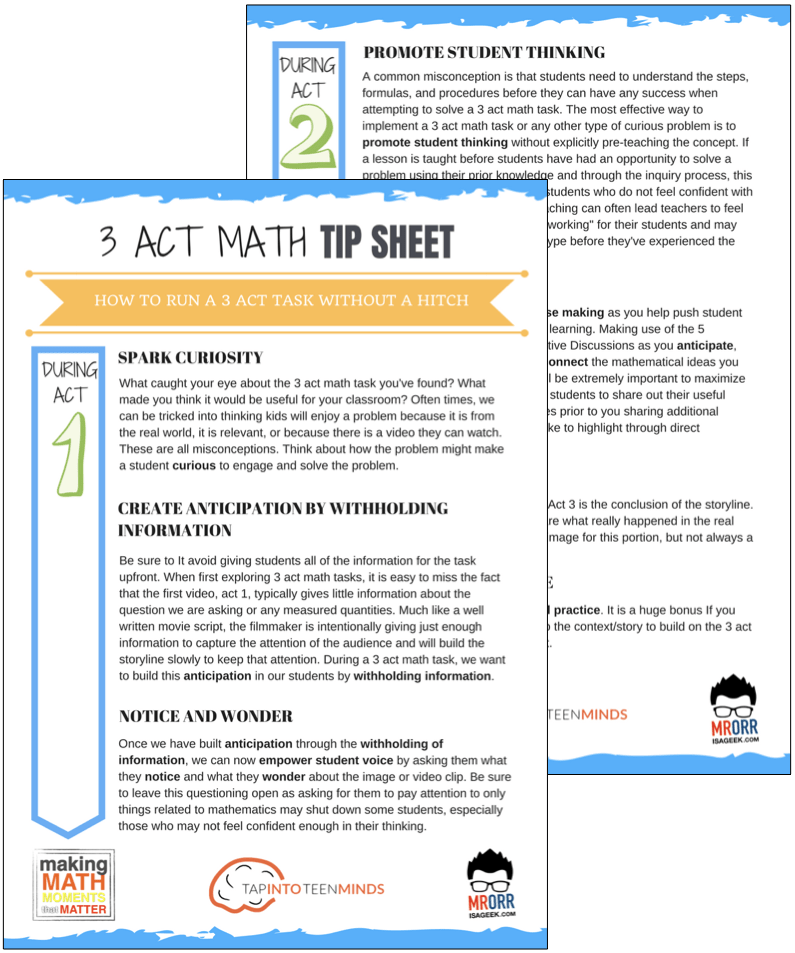
DOWNLOAD THE 3 ACT MATH TASK TIP SHEET SO THEY RUN WITHOUT A HITCH!
Download the 2-page printable 3 Act Math Tip Sheet to ensure that you have the best start to your journey using 3 Act math Tasks to spark curiosity and fuel sense making in your math classroom!
LESSONS TO MAKE MATH MOMENTS
Each lesson consists of:
Each Make Math Moments Problem Based Lesson consists of a Teacher Guide to lead you step-by-step through the planning process to ensure your lesson runs without a hitch!
Each Teacher Guide consists of:
- Intentionality of the lesson;
- A step-by-step walk through of each phase of the lesson;
- Visuals, animations, and videos unpacking big ideas, strategies, and models we intend to emerge during the lesson;
- Sample student approaches to assist in anticipating what your students might do;
- Resources and downloads including Keynote, Powerpoint, Media Files, and Teacher Guide printable PDF; and,
- Much more!
Each Make Math Moments Problem Based Lesson begins with a story, visual, video, or other method to Spark Curiosity through context.
Students will often Notice and Wonder before making an estimate to draw them in and invest in the problem.
After student voice has been heard and acknowledged, we will set students off on a Productive Struggle via a prompt related to the Spark context.
These prompts are given each lesson with the following conditions:
- No calculators are to be used; and,
- Students are to focus on how they can convince their math community that their solution is valid.
Students are left to engage in a productive struggle as the facilitator circulates to observe and engage in conversation as a means of assessing formatively.
The facilitator is instructed through the Teacher Guide on what specific strategies and models could be used to make connections and consolidate the learning from the lesson.
Often times, animations and walk through videos are provided in the Teacher Guide to assist with planning and delivering the consolidation.
A review image, video, or animation is provided as a conclusion to the task from the lesson.
While this might feel like a natural ending to the context students have been exploring, it is just the beginning as we look to leverage this context via extensions and additional lessons to dig deeper.
At the end of each lesson, consolidation prompts and/or extensions are crafted for students to purposefully practice and demonstrate their current understanding.
Facilitators are encouraged to collect these consolidation prompts as a means to engage in the assessment process and inform next moves for instruction.
In multi-day units of study, Math Talks are crafted to help build on the thinking from the previous day and build towards the next step in the developmental progression of the concept(s) we are exploring.
Each Math Talk is constructed as a string of related problems that build with intentionality to emerge specific big ideas, strategies, and mathematical models.
Make Math Moments Problem Based Lessons and Day 1 Teacher Guides are openly available for you to leverage and use with your students without becoming a Make Math Moments Academy Member.
Use our OPEN ACCESS multi-day problem based units!
Make Math Moments Problem Based Lessons and Day 1 Teacher Guides are openly available for you to leverage and use with your students without becoming a Make Math Moments Academy Member.
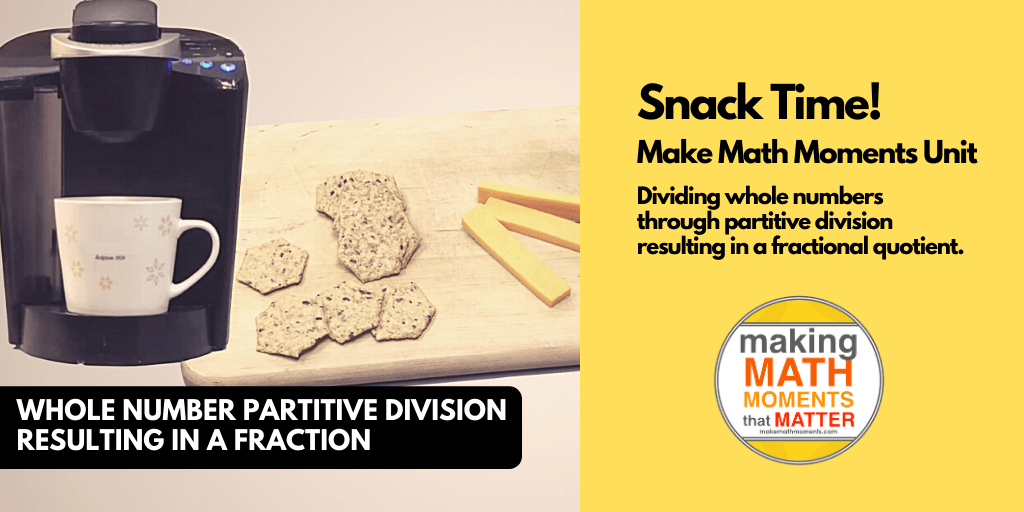
Partitive Division Resulting in a Fraction
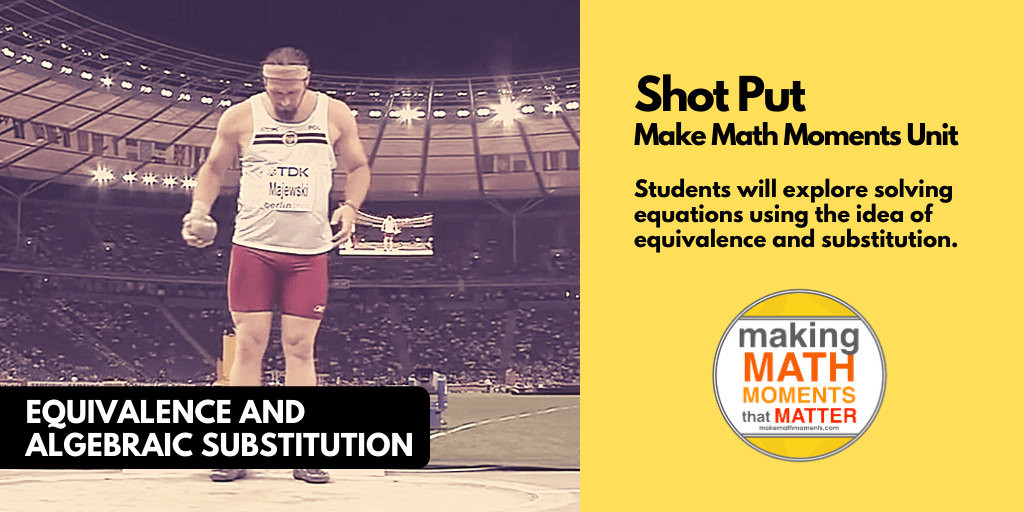
Equivalence and Algebraic Substitution
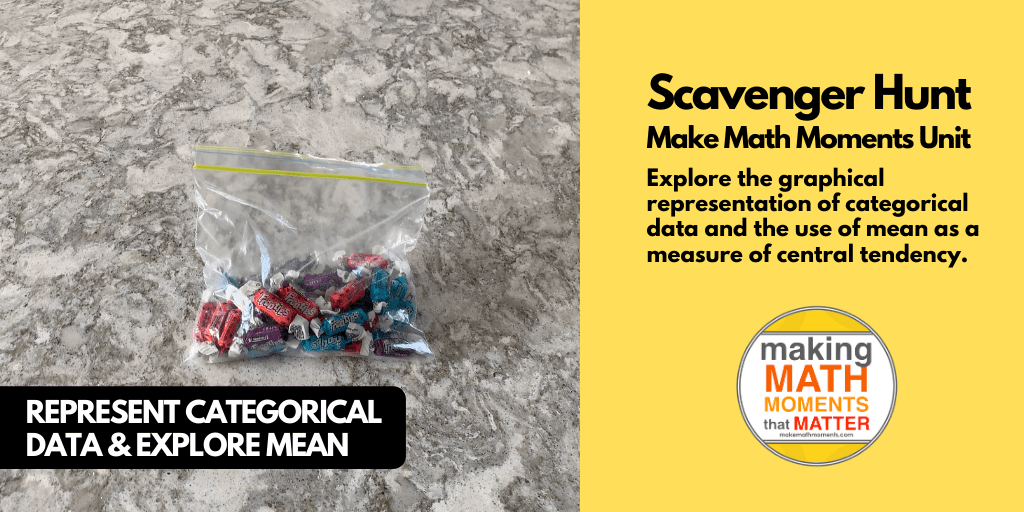
Represent Categorical Data & Explore Mean
Downloadable resources including blackline masters, handouts, printable Tips Sheets, slide shows, and media files do require a Make Math Moments Academy Membership.
ONLINE WORKSHOP REGISTRATION
Pedagogically aligned for teachers of K through Grade 12 with content specific examples from Grades 3 through Grade 10.
In our self-paced, 12-week Online Workshop, you'll learn how to craft new and transform your current lessons to Spark Curiosity, Fuel Sense Making, and Ignite Your Teacher Moves to promote resilient problem solvers.
0 Comments