Episode #455: How to Teach Grade-Level Math Without Leaving Students Behind
LISTEN NOW HERE...




WATCH NOW...
If you wait until every student has mastered a math concept, you might still be in Unit 1 in December.
Many teachers feel they can’t move on until students demonstrate mastery—especially after recent learning gaps. But staying in one math unit for weeks or months often creates a different problem: reduced access to grade-level math, missed standards, and growing opportunity gaps for the entire class. In this episode, Jon Orr, Yvette Lehman, and Beth Curran explore the question teachers are asking right now: When is it okay to move on in math—and how do you do it responsibly?
In This Episode, You’ll Learn:
- Why “don’t move on until everyone gets it” is unrealistic for Tier 1 math instruction
- How experienced math teachers plan for concepts to return through spiraling and connections
- Why “moving on” is often an assessment and grading philosophy issue
- How formative math assessment helps teachers move forward without abandoning learning
- How lesson structures can create a “safety net” for Tier 2 support while Tier 1 continues
- How leaders and coaches can support teachers in pacing, rigor, and access to grade-level math
- Why slowing everyone down can unintentionally widen opportunity gaps
If you’re trying to balance pace, rigor, and student understanding in math, this episode will give you a clearer framework and practical moves for moving on with intention.
Attention District Math Leaders:
Not sure what matters most when designing math improvement plans? Take this assessment and get a free customized report: https://makemathmoments.com/grow/
Ready to design your math improvement plan with guidance, support and using structure? Learn how to follow our 4 stage process. https://growyourmathprogram.com
Looking to supplement your curriculum with problem based lessons and units? Make Math Moments Problem Based Lessons & Units
Be Our Next Podcast Guest!
Join as an Interview Guest or on a Mentoring Moment Call
Apply to be a Featured Interview Guest
It will take less than two (2) minutes to book your Math Mentoring Moment call.
Book a Mentoring Moment Coaching Call
Take two (2) minutes to book your Math Mentoring Moment call and let's work together to shake that math pebble out of your shoe!
Are You an Official Math Moment Maker?
Ensure that you follow, rate and review on Apple Podcasts, Spotify and other platforms to show your support and ensure other math educators can find the show.




DOWNLOAD OUR HOW TO START THE SCHOOL YEAR OFF RIGHT GUIDE
Start your school year off right by downloading the guide that you can save and print to share with colleagues during your next staff meeting, professional learning community meeting or just for your own reference!
FULL TRANSCRIPT
Yvette Lehman: We had a conversation with a teacher recently who I think it was maybe in December and they were talking about, you know, how far into the curriculum they were at that point in the year and already feeling that, you know, I'm not going to get to everything because I've been spending weeks and weeks and weeks or months on these concepts because my students haven't demonstrated mastery or proficiency yet and feeling like I can't move on until we get this figured out.
But now it's coming on January and there's still a lot of content that we haven't even explored. And so the question that we're answering today is when is it okay to move on? At what point can we say, okay, we're gonna step away from this particular unit or concept, we're gonna move into the next when maybe not everybody has demonstrated that they've met the standard.
Jon Orr: Have you had experience not moving on?
Yvette Lehman: Have I? That's a good question. I mean, have I?
Jon Orr: You're like, wait a minute, because you're saying like, well, when do we move on? But have you had a time where you're like, you know what, I'm not moving on?
Yvette Lehman: Personally, I don't think I have.
Jon Orr: Why not?
Yvette Lehman: Okay, so early in my career, I wouldn't have stayed on that unit forever, for weeks and weeks and weeks because I would have felt the pressure of pacing, right? Of curriculum coverage. It's like, I need to get through this entire textbook and this is how I've paced it. And if I spend an extra month on this unit, I'm gonna be off pace.
I think later in my career, I would have moved on because I would have recognized that those concepts would come back up and I'd have other opportunities to strengthen and reinforce them through other strands. So like just because we haven't all mastered division in this division unit, I know that division is not going away. But I do know that we talk to teachers who maybe sometimes feel like, well, my students don't have addition and subtraction mastered, I can't move into these other strands or units.
Jon Orr: Right. How do you, what do you think, because I think what you're saying is yourself, is that you with experience, you knew that you were going to recycle ideas, you were going to bring ideas back. You were gaining the assessment and understanding of where your students were on these ideas, knowing that you're almost like earmarking that student A is here on division but needs to get to here.
And student B is here on division, but needs to get to here by the end of the year. And I know that there's opportunity later on for us to revisit. So it's okay for me to shift into maybe a different topic, or all of a sudden we're moving on to this strand, because we are going to cycle back or spiral back to bring those students back. So we're not just one and dunning it.
So I guess if I'm a teacher who's resistant to doing that, what are some of the key understandings that maybe they haven't had yet that they need to have about that?
I think you had a good understanding eventually of where your curriculum and where your teaching moves were going to live because you actively assessed where students were and where they needed to go, but then knew that because you had flexibility later or you were going to build flexibility into your program that you could revisit because you knew that you needed to make that happen.
And I think, I guess if I'm a teacher and I'm saying like, my kids don't get it, I know I'm supposed to move on, but then like, could I, like maybe they're not ready to move on, now what? And so I'm frustrated because I don't have so much time in the day to teach my curriculum and I never get to everything because I'm slowing it up. I'm making sure that they, I gotta stick with this one because they don't get it.
But what key insight does this teacher need to have to make them feel okay with moving on? Because I think what Yvette's saying is like, she was okay with moving on. I was okay with moving on because of these ideas.
Beth Curran: Right, right, right. So I think deeply understanding the content that you are teaching is helpful in that because Yvette was able to look at her curriculum and know that if the students don't have addition and subtraction with regrouping right now, I know it's going to come up again later, or I'm going to build in that extra practice time for students.
I know it's going to come up again because every time we get to measurement, they're adding and subtracting lengths, they're adding and subtracting weights. And so it's going to provide an opportunity for that additional practice. So I think it's deeply knowing the content that you're teaching and not teaching concepts in isolation and knowing that things are connected and that if they didn't master addition and subtraction with regrouping in that chapter, it's okay to move on because even though the next chapter is called measurement, we're still gonna practice adding and subtracting as we're working through measurement.
So I think it's understanding that. And that's really hard for a first year teacher or a teacher who's new to a curriculum at this time.
Jon Orr: Yeah, for sure. And I think what you said, a key kind of triggering word for me, is that when teachers think like, oh, I'm not going to be able to come back to this, we think like I have to give a grade to this student and assess where they are. I'm not going to ever come back to this and therefore that grade's going to go in there. And so it's like, yeah, they don't get it. So then all of a sudden the grade looks not so great here, but then we never revisit it.
And I think what I heard you say is really this is an assessment philosophy issue. If I'm worried about not moving on and I can't move on until I'm ready to move on, we need to have full mastery understanding of what we're teaching at our grade level and where we're trying to go and what that looks like.
And we also need to help teachers fully understand how they think about assessment for instead of as. I can't move on because this is the unit we're going to do this in. We're going to do adding and subtracting and multiplying and dividing and maybe integers and then algebra down the road over here as well.
Why can't I take that information and go back and adjust a grade on subtraction strategy? We get hung up on these buckets that that's where that lived and that can't live anywhere else, even though you've witnessed it over the course of a year strengthening.
I know that sometimes teachers get anxiety over that because it's like, well, then am I assessing all year long? And the answer is yes. Yes, you are. There isn't just like the unit is over. You are assessing all year long and it's okay to look for those assessments or the understanding or the key understandings down the road and be flexible enough to go back and adjust a grade if that's what you're worried about.
Beth Curran: And I think maybe, John, you just opened another complete can of worms is how do we record student understanding? How do we let parents know where their child is as far as meeting standards? Is my school still using a percent grade and I assess them and I put a percent grade in a book, or have we shifted to a more standards-based assessment? Which I think is a little bit more flexible in what you're saying.
If I'm assessing students growth toward meeting a standard, then yeah, maybe first quarter they are scoring here, but by second trimester I've reassessed and now they're here. And now they're getting a little bit closer and a little bit closer.
That's a big can of worms. And some things that, if you're a teacher listening, you probably don't have control over what your report card looks like. These are conversations to maybe start having and questions to start asking. Why does our report card look the way that it does? And is it time to maybe rethink this?
Jon Orr: That's another episode, Beth. Because I now have a million thoughts to share with you.
Beth Curran: Right? Maybe that's going to be next time.
Yvette Lehman: Hahaha.
Beth Curran: But I think formative assessment is a big part of knowing where your students are, knowing whether or not it's okay to move on.
One other quick thought that I had is that I often tell teachers that if you've got this wide range of students in your classroom, think about how you're structuring your lesson so that you allow for maybe that small group remediation, that tier two instruction to happen while your tier one instruction is moving on at grade level.
Because what that provides you with is, and I often call it a safety net, I'm doing my whole group part of my lesson. I'm identifying through formative assessment that some students just aren't grasping what they need to grasp. But I'm going to keep moving on to a point where I know that the majority of the students have mastered, or maybe half or whatever it might be, have mastered this concept and are ready for some independent work.
And then my safety net is I know that I'm going to grab this group who is showing confusion throughout the lesson so that I can give them that tier two instruction right there during my lesson.
So it's maybe rethinking how to structure your lesson in a way that's going to provide that safety net for those students so that you're not feeling like, I can't move on. We have to do one more problem because I have these three or four or five students who aren't understanding it.
But you probably have a lot of students who are understanding it and who are ready to move on or to do some independent practice.
Yvette Lehman: It's funny how so many of our conversations always come back to assessment. At the heart of really quality instruction is this deep understanding of the three types of assessment and how they inform instruction.
But one of my concerns coming into this call was that if we are always slowing the pace or reducing the rigor of tier one to meet the middle or to make sure that everybody has access, then are we unintentionally creating opportunity gaps for everyone?
If in our effort to make sure everybody gets up to grade level standard, are we actually creating gaps for the entire class because we're not actually getting to all of the standards or to the depth of the standard?
If that happens year after year after year, then we're compounding the gaps in opportunity for all learners.
So it comes back to assessment, formative assessment, having a really good understanding of where we need to be by the end of the year, and then helping to move every student as close as we can to meeting the standard by the end of the year through strong tiered instruction, but without losing the rigor of our tier one.
Jon Orr: Well said. I think you've nailed the big issue we're up against. Focusing on assessment can be a major game changer for your classroom, for yourself, or for your school system.
Do we feel like we have a good handle of what grade level expectations look like? Are we actively structuring how we're positioning our lessons to give more opportunities to see that and making sure that we're teaching to grade level and not adjusting and then trying to make sure everyone gets to these points but missing out on some other important ideas?
If you want to continue this conversation and structure your math program to focus around assessment, you can head on over to MakeMathMoments.com forward slash discovery and hop on a call with us. We can talk about what this could look like for you going into next year.
Your Customized Improvement Plan For Your Math Classroom.
Take the 12 minute assessment and you'll get a free, customized plan to shape and grow the 6 parts of any strong mathematics classroom program.
District leader/math coach? Take the District Assessment
Thanks For Listening
- Book a Math Mentoring Moment
- Apply to be a Featured Interview Guest
- Leave a note in the comment section below.
- Share this show on Twitter, or Facebook.
To help out the show:
- Leave an honest review on iTunes. Your ratings and reviews really help and we read each one.
- Subscribe on iTunes, Google Play, and Spotify.
The Making Math Moments That Matter Podcast with Kyle Pearce & Jon Orr
Weekly interviews, strategy, and advice for building a math classroom that you wish you were in.
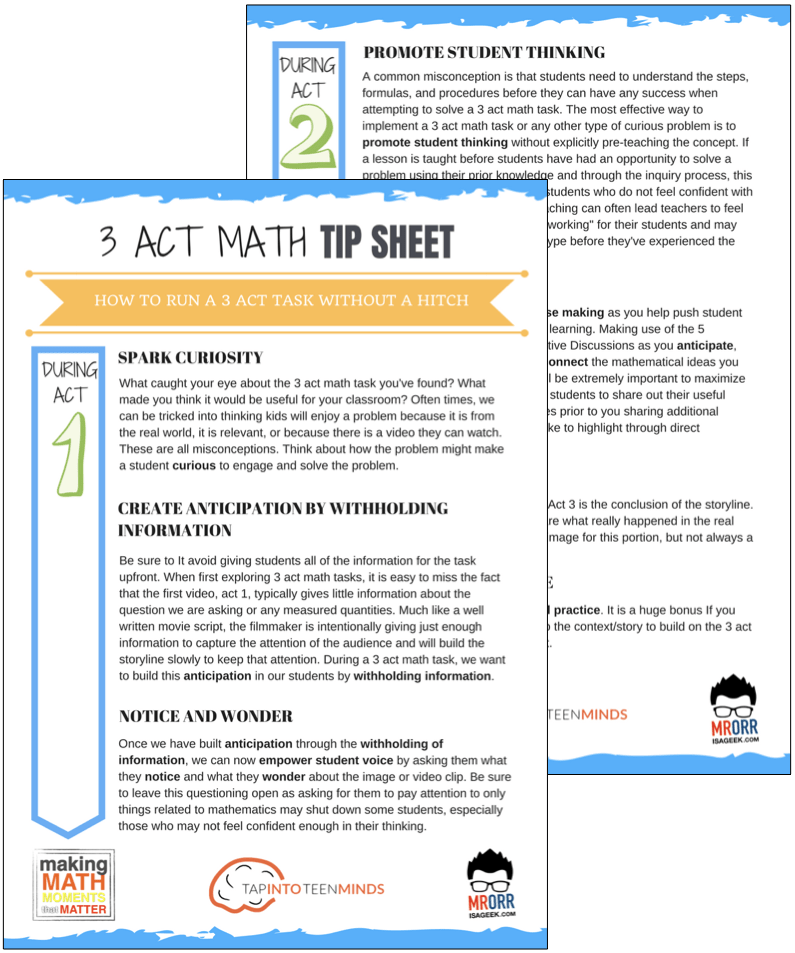
DOWNLOAD THE 3 ACT MATH TASK TIP SHEET SO THEY RUN WITHOUT A HITCH!
Download the 2-page printable 3 Act Math Tip Sheet to ensure that you have the best start to your journey using 3 Act math Tasks to spark curiosity and fuel sense making in your math classroom!
LESSONS TO MAKE MATH MOMENTS
Each lesson consists of:
Each Make Math Moments Problem Based Lesson consists of a Teacher Guide to lead you step-by-step through the planning process to ensure your lesson runs without a hitch!
Each Teacher Guide consists of:
- Intentionality of the lesson;
- A step-by-step walk through of each phase of the lesson;
- Visuals, animations, and videos unpacking big ideas, strategies, and models we intend to emerge during the lesson;
- Sample student approaches to assist in anticipating what your students might do;
- Resources and downloads including Keynote, Powerpoint, Media Files, and Teacher Guide printable PDF; and,
- Much more!
Each Make Math Moments Problem Based Lesson begins with a story, visual, video, or other method to Spark Curiosity through context.
Students will often Notice and Wonder before making an estimate to draw them in and invest in the problem.
After student voice has been heard and acknowledged, we will set students off on a Productive Struggle via a prompt related to the Spark context.
These prompts are given each lesson with the following conditions:
- No calculators are to be used; and,
- Students are to focus on how they can convince their math community that their solution is valid.
Students are left to engage in a productive struggle as the facilitator circulates to observe and engage in conversation as a means of assessing formatively.
The facilitator is instructed through the Teacher Guide on what specific strategies and models could be used to make connections and consolidate the learning from the lesson.
Often times, animations and walk through videos are provided in the Teacher Guide to assist with planning and delivering the consolidation.
A review image, video, or animation is provided as a conclusion to the task from the lesson.
While this might feel like a natural ending to the context students have been exploring, it is just the beginning as we look to leverage this context via extensions and additional lessons to dig deeper.
At the end of each lesson, consolidation prompts and/or extensions are crafted for students to purposefully practice and demonstrate their current understanding.
Facilitators are encouraged to collect these consolidation prompts as a means to engage in the assessment process and inform next moves for instruction.
In multi-day units of study, Math Talks are crafted to help build on the thinking from the previous day and build towards the next step in the developmental progression of the concept(s) we are exploring.
Each Math Talk is constructed as a string of related problems that build with intentionality to emerge specific big ideas, strategies, and mathematical models.
Make Math Moments Problem Based Lessons and Day 1 Teacher Guides are openly available for you to leverage and use with your students without becoming a Make Math Moments Academy Member.
Use our OPEN ACCESS multi-day problem based units!
Make Math Moments Problem Based Lessons and Day 1 Teacher Guides are openly available for you to leverage and use with your students without becoming a Make Math Moments Academy Member.
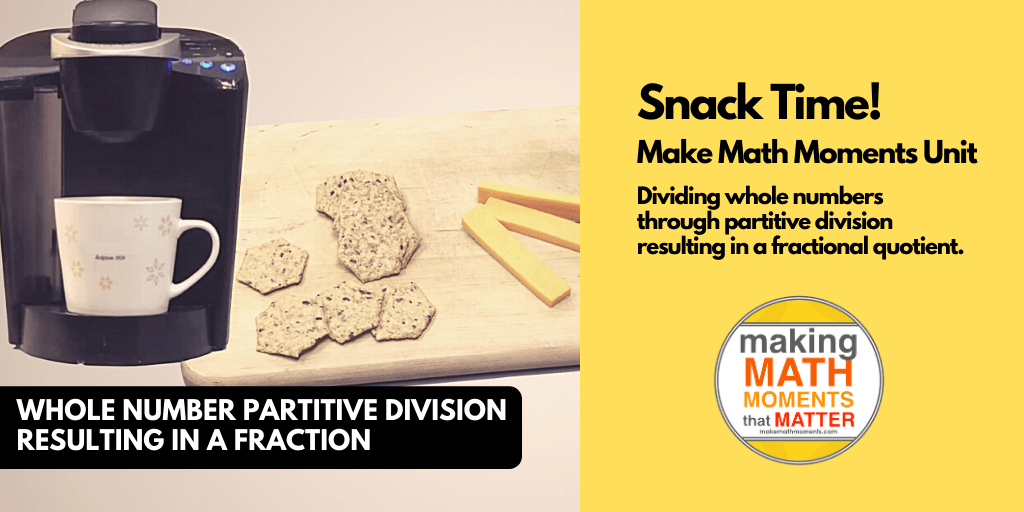
Partitive Division Resulting in a Fraction
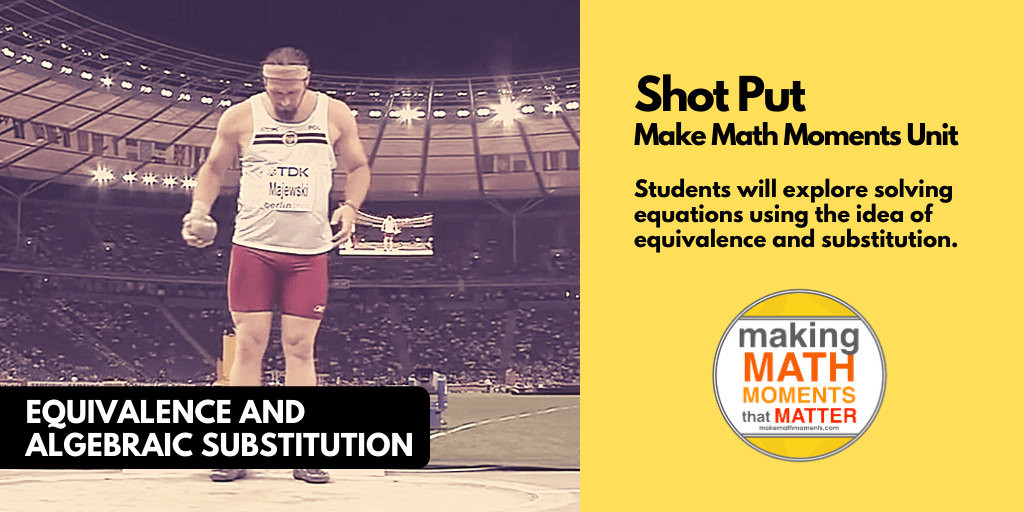
Equivalence and Algebraic Substitution
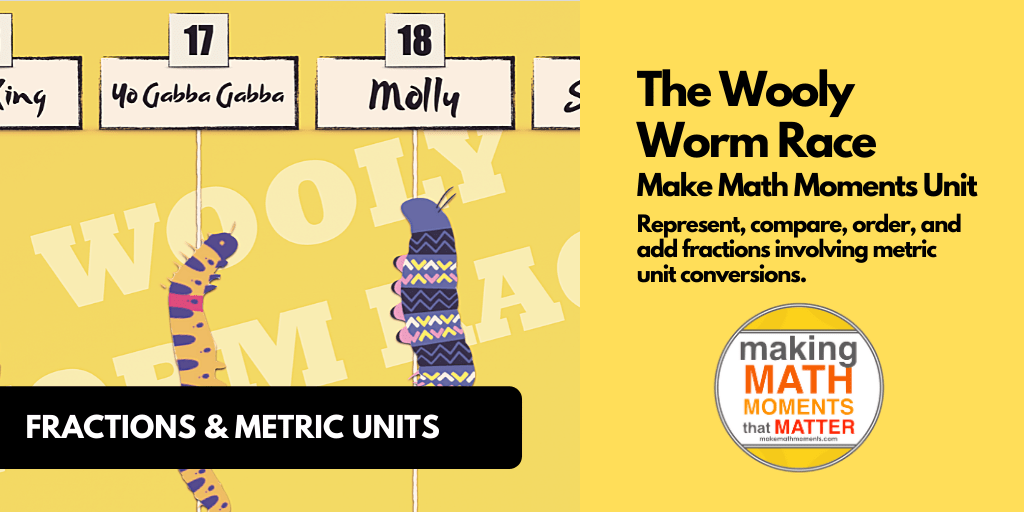
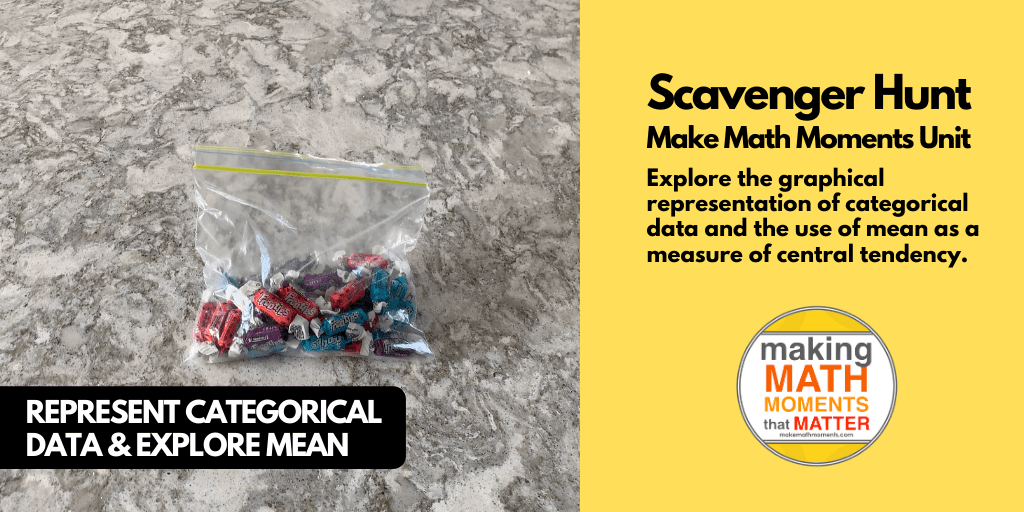
Represent Categorical Data & Explore Mean
Downloadable resources including blackline masters, handouts, printable Tips Sheets, slide shows, and media files do require a Make Math Moments Academy Membership.
ONLINE WORKSHOP REGISTRATION

Pedagogically aligned for teachers of K through Grade 12 with content specific examples from Grades 3 through Grade 10.
In our self-paced, 12-week Online Workshop, you'll learn how to craft new and transform your current lessons to Spark Curiosity, Fuel Sense Making, and Ignite Your Teacher Moves to promote resilient problem solvers.
0 Comments