Episode #475: Improved Math Achievement: Here’s What It Actually Takes!
LISTEN NOW HERE…




WATCH NOW…
Improving math instruction and student achievement is something every school and system wants. But despite that desire, real, lasting change often feels out of reach. Not because educators don’t care—but because the work required to get there is harder than expected.
It’s easy to want the outcome: stronger math programs, more confident teachers, improved student results. But those outcomes depend on a set of consistent, intentional inputs—time, focus, and sustained effort. And that’s where many systems struggle. The reality is, meaningful improvement isn’t about finding a quick fix. It’s about committing to the long-term work, even when progress feels slow and the process is challenging. Like any complex skill, the results only come when the required effort is sustained over time.
In this episode, you’ll explore:
- Why improving math instruction requires more than good intentions
- The difference between wanting results and committing to the work
- What “inputs vs outputs” really means in education
- Why sustainable improvement takes time and consistency
- How systems can think more intentionally about long-term change
- What it means to “choose your hard” in math improvement
If you’re working to improve math instruction in your classroom, school, or system, this episode will challenge you to think differently about the commitment required—and help you decide what path forward you’re ready to take.
Attention District Math Leaders:
We built a simple Math Coherence Compass to help district and school leaders make aligned decisions around math—without adding another initiative. Get your free copy and training here: https://makemathmoments.com/compass/
Not sure what matters most when designing math improvement plans? Take this assessment and get a free customized report: https://makemathmoments.com/grow/
Ready to design your math improvement plan with guidance, support and using structure? Learn how to follow our 4 stage process. https://growyourmathprogram.com
Looking to supplement your curriculum with problem based lessons and units? Make Math Moments Problem Based Lessons & Units
Be Our Next Podcast Guest!
Join as an Interview Guest or on a Mentoring Moment Call
Apply to be a Featured Interview Guest
Book a Mentoring Moment Coaching Call
Are You an Official Math Moment Maker?




FULL TRANSCRIPT
Jon Orr: I just got off a call with a potential district partner. On a regular basis, every day, our team meets with schools, school teams, districts, and even states to consult on their math programs and what that looks like going into next year — over a course of three years, designing tractionable, aligned, and sustainable math improvement plans. This is what we do here.
Jon Orr: The call reminded me of a couple of choices I’ve made, and that others I’ve spoken with have made. I was just talking with Kyle — one of the co-hosts of the Making Math Moments That Matter podcast — about this idea of time and commitment. It made me want to share this with you, because maybe you can relate, or it will give you something to think about, or maybe it will just put your mind at ease.
Jon Orr: The story starts here. When I was on vacation not too long ago — the longer backstory is that I used to live on the island of St. Martin. I lived there for a few years. I taught math there in my early years of teaching, and I met my wife there. We went back this year as a family, and one of the things I’d always wanted to do when I lived there was more water sports. So when we went back for vacation, I decided: I want to learn kitesurfing. I want to be a kite surfer.
Jon Orr: This felt like a real vision. We live relatively close to lakes here in Southern Ontario, so I was picturing myself going out and buying the board, buying the kite, driving out to the lake on summer weekends, and living the kite surfer lifestyle. So while we were at St. Martin, I signed up for lessons every day. My daughters came along. We went out with a guide in a boat, an hour and a half each day. We kitesurfed.
Jon Orr: I knew it was going to be hard, but I was realistic-ish. After each lesson, I’d think about my progress and set a goal for the next session. Then I’d go back and watch YouTube videos. One video gave me the perspective I needed. It said: realistically, you’re looking at 20 to 40 hours of time before you can kitesurf on your own — without a guide, without a boat following you, where you can actually control the kite safely. At that point I had done about three and a half to four hours of lessons over three days. I was getting up on the board and could make it move, but turning around? Hadn’t even attempted that. Slowing down when I wanted to? Still working on it.
Jon Orr: And so I looked at my time, my life, my family’s time, and I thought: I can see it taking 30 hours of time on the board to make this a reality. And I made the choice that I don’t think I’m going to be a kite surfer. I’m not prepared to spend 30 to 40 more hours to get to the level I’d need to feel comfortable and safe on the water. I wanted the output, but I wasn’t prepared to put in the required inputs. And that’s a fair choice to make. We make choices like this in our lives all the time. I have to be mentally and emotionally okay with not being a kite surfer — at least right now.
Jon Orr: When I talked with Kyle about this, he brought up running a marathon. He said, I always wanted to run a marathon. But when he actually thought about what it would take — getting up every day, logging many miles a week, time away from family, that level of sustained commitment — he stepped back and asked himself: could I run a marathon? Could I build up the stamina? Absolutely. But was he prepared to live that input life? He decided he wasn’t, and he made peace with that.
Jon Orr: He also mentioned poker. Years ago he studied hard to become a great poker player. He learned the game, understood the hands and probabilities. But he struggled with the emotional side — when a hand that probability said he should win came out the other way, it was hard to handle. To keep improving at poker at a high level, he’d need more time, more practice, more exposure to those emotional challenges. Could he have become a great poker player? Absolutely. He just decided it wasn’t where he wanted to commit his time and energy. And that was okay.
Jon Orr: Why I’m sharing these stories is because of the call I just got off with a school district team looking to strengthen their math program. And we talked about what it really takes. There are required inputs to get to the output you’re looking for. And I think a lot of times we aren’t sure that we really want to live the input life.
Jon Orr: Developing a real math improvement plan is hard. A lot of us are looking for an easy solution to a complex problem, but that doesn’t exist. There are inputs that can get you toward that output, but they are hard to achieve and you have to stick to them. We talked about setting a vision and collecting the right voices to build it. That is dedicated, sustained work. We talked about modifying PLCs to use that time for high-leverage moves — unpacking standards, understanding what grade level looks like, linking it to assessment. That is long, slow, important work that requires building your own capacity to lead it effectively.
Jon Orr: These are the requirements of a sustainable and tractionable math improvement plan for long-term success. And sometimes the question is simply: do you want to live the life and go down the roadmap? As the saying goes — you have to choose your hard. Do you want to live the hard life of committing to a long-term process of making micro moves, sticking to a vision, monitoring goals, strengthening PLCs — knowing you may not see results before you move on to another role, but knowing you’re setting up success for the people who come after you? Or do you keep doing what you’re doing and keep getting the same results?
Jon Orr: We just have to make that call. Do we want to commit to the inputs, even though they’re hard? And I think this team was unsure. They weren’t sure they could take that on, coordinate that kind of work, or dedicate resources to it. And that is not a wrong answer. It’s just deciding which outputs you’re willing to live with, knowing which inputs you’re willing to commit to.
Jon Orr: A lot of us get bogged down and frustrated because we want the outputs — we want the change — but we aren’t yet ready as a system, or as a collection of individuals, to commit to the pathway required to get there. And that’s not wrong. It’s just choosing which road to walk down.
Jon Orr: There’s no big call to action here today. It’s a message I think we all need to hear — not just in math improvement, but in any area of life. Whether it’s financial planning, parenting, personal goals: if you want an output, decide what the required inputs are, and decide honestly whether they’re worth it. Sometimes they are. Sometimes they’re not. And if they’re not, that’s okay — but we have to be mentally and emotionally at peace with that choice, just like I had to be okay with not being a kite surfer.
Jon Orr: Anyway, just wanted to share this with you. Looking forward to connecting through email, or maybe someday in person. Take care and have a great rest of your day.
Thanks For Listening
- Book a Math Mentoring Moment
- Apply to be a Featured Interview Guest
- Leave a note in the comment section below.
- Share this show on Twitter, or Facebook.
To help out the show:
- Leave an honest review on iTunes. Your ratings and reviews really help and we read each one.
- Subscribe on iTunes, Google Play, and Spotify.
1 Comment
Submit a Comment
DOWNLOAD THE 3 ACT MATH TASK TIP SHEET SO THEY RUN WITHOUT A HITCH!
Download the 2-page printable 3 Act Math Tip Sheet to ensure that you have the best start to your journey using 3 Act math Tasks to spark curiosity and fuel sense making in your math classroom!

LESSONS TO MAKE MATH MOMENTS
Each lesson consists of:
Each Make Math Moments Problem Based Lesson consists of a Teacher Guide to lead you step-by-step through the planning process to ensure your lesson runs without a hitch!
Each Teacher Guide consists of:
- Intentionality of the lesson;
- A step-by-step walk through of each phase of the lesson;
- Visuals, animations, and videos unpacking big ideas, strategies, and models we intend to emerge during the lesson;
- Sample student approaches to assist in anticipating what your students might do;
- Resources and downloads including Keynote, Powerpoint, Media Files, and Teacher Guide printable PDF; and,
- Much more!
Each Make Math Moments Problem Based Lesson begins with a story, visual, video, or other method to Spark Curiosity through context.
Students will often Notice and Wonder before making an estimate to draw them in and invest in the problem.
After student voice has been heard and acknowledged, we will set students off on a Productive Struggle via a prompt related to the Spark context.
These prompts are given each lesson with the following conditions:
- No calculators are to be used; and,
- Students are to focus on how they can convince their math community that their solution is valid.
Students are left to engage in a productive struggle as the facilitator circulates to observe and engage in conversation as a means of assessing formatively.
The facilitator is instructed through the Teacher Guide on what specific strategies and models could be used to make connections and consolidate the learning from the lesson.
Often times, animations and walk through videos are provided in the Teacher Guide to assist with planning and delivering the consolidation.
A review image, video, or animation is provided as a conclusion to the task from the lesson.
While this might feel like a natural ending to the context students have been exploring, it is just the beginning as we look to leverage this context via extensions and additional lessons to dig deeper.
At the end of each lesson, consolidation prompts and/or extensions are crafted for students to purposefully practice and demonstrate their current understanding.
Facilitators are encouraged to collect these consolidation prompts as a means to engage in the assessment process and inform next moves for instruction.
In multi-day units of study, Math Talks are crafted to help build on the thinking from the previous day and build towards the next step in the developmental progression of the concept(s) we are exploring.
Each Math Talk is constructed as a string of related problems that build with intentionality to emerge specific big ideas, strategies, and mathematical models.
Make Math Moments Problem Based Lessons and Day 1 Teacher Guides are openly available for you to leverage and use with your students without becoming a Make Math Moments Academy Member.
Use our OPEN ACCESS multi-day problem based units!
Make Math Moments Problem Based Lessons and Day 1 Teacher Guides are openly available for you to leverage and use with your students without becoming a Make Math Moments Academy Member.
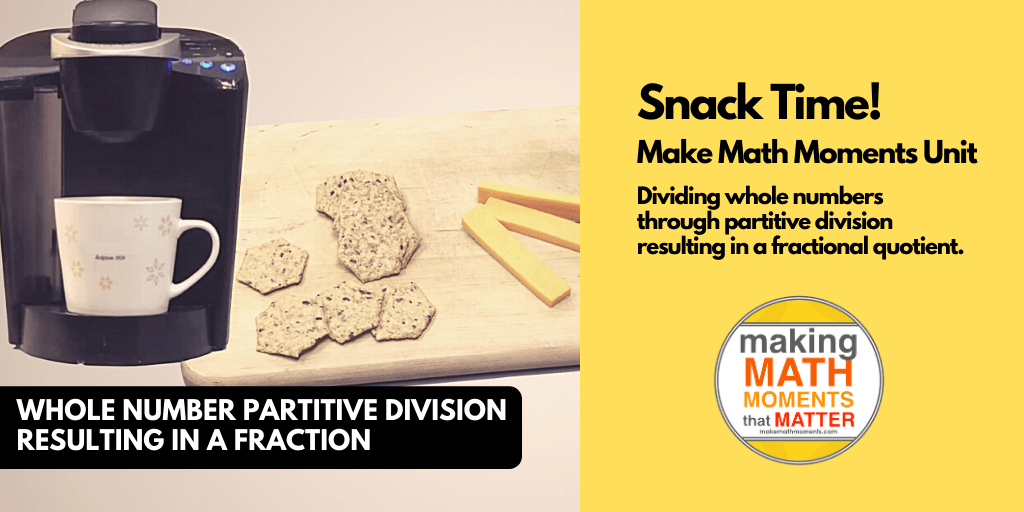
Partitive Division Resulting in a Fraction
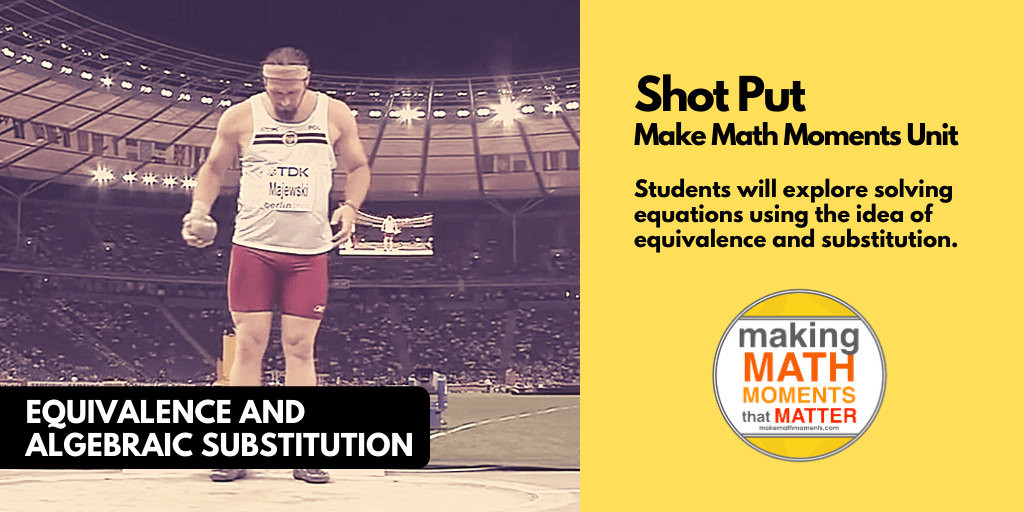
Equivalence and Algebraic Substitution

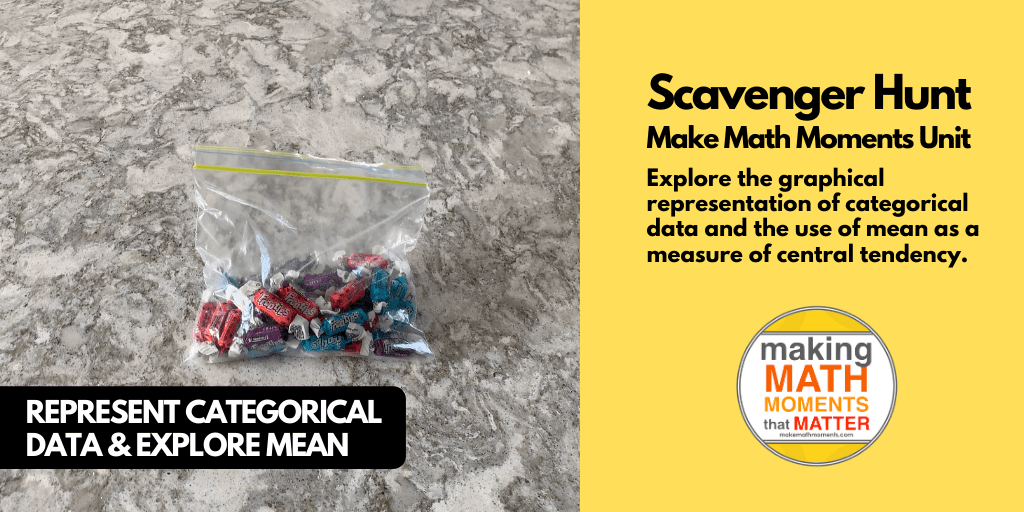
Represent Categorical Data & Explore Mean
Downloadable resources including blackline masters, handouts, printable Tips Sheets, slide shows, and media files do require a Make Math Moments Academy Membership.
ONLINE WORKSHOP REGISTRATION

Pedagogically aligned for teachers of K through Grade 12 with content specific examples from Grades 3 through Grade 10.
In our self-paced, 12-week Online Workshop, you'll learn how to craft new and transform your current lessons to Spark Curiosity, Fuel Sense Making, and Ignite Your Teacher Moves to promote resilient problem solvers.

The measurement point is the piece that gets skipped in a lot of fluency work. Time spent practicing is easy to track, but it does not tell you whether the student is retrieving the fact or rebuilding it every time.
I ran into this at home first. My daughter could use a strategy for a fact and still hesitate the next week, so the concept was not the whole problem. The useful measure was much smaller: can this fact come back in about three seconds, and if not, does it come back again later instead of disappearing into a completed worksheet pile?
That is why I built Math Builders around short daily recall checks and spaced reintroduction of the slow facts. It is not the whole math program. It is just a clean way to see which facts are actually automatic, so the bigger instruction is not fighting hidden recall drag underneath it.