
Episode #495: Peter Liljedahl: Can We Teach Students to Be Resilient?
LISTEN NOW HERE…
WATCH NOW…
We want students to be curious, persistent, and resilient problem solvers. But what if those aren’t qualities students simply bring into our classrooms? What if we can actually create the conditions for them to emerge?
In this episode, Jon Orr and Peter Liljedahl – author of Building Thinking Classrooms explore the difference between states and traits and what that distinction means for teaching mathematics. Peter shares how thoughtfully designed experiences can create moments of confidence, productive struggle, and resilience—and how repeated experiences can eventually shape who students become as mathematical thinkers.
In this episode, you’ll explore:
- The difference between a state and a trait
- Why resilience isn’t something students either “have” or “don’t have”
- How repeated states can eventually develop into traits
- Why productive struggle is more likely when challenge follows success
- How task sequencing can build confidence before students encounter greater challenge
- Why showing students how to solve problems isn’t the same as helping them become problem solvers
- How Building Thinking Classrooms practices can create conditions for resilience
- Why teachers have an important role in designing environments that invite different student behaviours
Instead of asking, “Why aren’t my students more resilient?” consider asking, “What conditions could I create that give them an opportunity to step into resilience?” We can’t expect different student behaviours without creating environments that invite those behaviours.
Attention District Math Leaders:
K-12 Math Leaders: Download our free Math Coherence Compass to help your teammates, system leaders, and educators create aligned instructional practices—without adding another initiative.
K-12 Math Leaders: Not sure what matters most when designing math improvement plans? Take this assessment and get a free customized report: https://makemathmoments.com/grow/
K-12 Math Leaders: Ready to design your math improvement plan with guidance, support and using structure? Learn how to partner with us and follow our 4 stage process. https://growyourmathprogram.com
Looking to supplement your curriculum with problem based lessons and units? Make Math Moments Problem Based Lessons & Units
Be Our Next Podcast Guest!
Join as an Interview Guest or on a Mentoring Moment Call
Apply to be a Featured Interview Guest
Book a Mentoring Moment Coaching Call
Are You an Official Math Moment Maker?





FULL TRANSCRIPT
Jon Orr: Welcome back to the Making Math Moments That Matter podcast, Peter. It’s been a minute since we last talked to you, but I think, you know, you aren’t new to the show. I looked up the history ’cause I think we’re this is gonna be like episode five hundred and one or something like that over the years, but you first I looked it up. You were episode twenty one, which was April of two thousand and nineteen. So this is going back some years that we first talked to you and this is before your book was published. So episode twenty one, but then we’ve had you on a number of times, you know, like you’ve been here with us and we are so thankful for, you know, taking the time to speak with us, speak with the Make Math Moments That Matter audience.
Maybe before we get into it, ’cause we’re gonna talk about your summit session here today, but one of the questions we’ve always asked and we probably asked you a number of times as well, is your math moment. These are the moments that we remember that stick with us. I don’t want you to think about the moment you would have said back then. I want you to think about because you’ve been here a lot of times. I want you to think about a future moment. I want you to think like, imagine you ran into a student that you taught a number of years ago, or maybe you taught or maybe you were you’re going to teach someday and you ask them a question, what’s the biggest takeaway you had from being in my classroom or being in my school system or being in my care. The question we have to answer is, what do you want them to say? You know, ’cause it’s a future student. What do you want a kid to say about their math experience with you?
Peter Liljedahl: It okay. This is actually a really good question. I think yeah, yeah.
Jon Orr: I threw a curveball at you here right from the get go.
Peter Liljedahl: And I think I would want them to say that you made a difference. Like I think that’s what I’m looking for, right? Like and what that difference is is depending on the students. Like maybe I made a difference in the sense that they stayed in math a little bit longer or that they renegotiated the relationship with mathematics. Or that they felt that they had a human connection with an adult in their building, right? Like that they felt that I had empathy for them and I cared about how they turned out.
And I think that the reason I can come up with that answer so quickly is because I’ve had the opportunity in the last, let’s say, well, in the last 20 years, where I’ve actually bumped into former teachers of mine. And in both of those cases, that was the first words out of my mouth was you made a difference.
Jon Orr: You made a difference.
Peter Liljedahl: And I think that that’s important. Like if you can leave that kind of a legacy with students, I think that that’s the best that we could actually hope for, right? It would be nice if a student said, I was you completely changed the course of my life and I decided to pursue a degree in mathematics and become a high school math teacher so I could be just like you. Like, but but I don’t think that’s our goal, right? Like that is not our goal. Our goal is to turn out good, caring human citizens who go out into the world who and in particular with mathematics who view mathematics as something not to be afraid of, but and something that they can use and pursue. So I guess that’s my answer.
Jon Orr: Yeah. Yeah. It’s a great answer ’cause I think that’s all we can really really want, you know, to ask for is to make the difference with kids and and like you said, we’re trying to help everyone be the best they can be and we want to make sure that we honor that. And I think math is for us, you know, and you and me and other math teachers, math is like the vehicle to get there. Right. Like it’s it’s one of the vehicles that we can get there. It’s not the vehicle, right? And I think that’s how we want to think about the work that we do is it’s not always like I’ve asked this question to hundreds of teachers over the last say four to five years and everyone says a version of something like that. It’s not exactly the way you said it because they’ll say like math was relevant or you know, math made a difference for me. But it’s never like the quadratic formula. Like that was that was sunk for it, you know? Like that was that wasn’t the key thing.
Peter Liljedahl: What? That doesn’t make number one?
Jon Orr: Like you really internalize that for me, you know? Like anything specific to content knowledge, it’s not there. It’s more like even if there’s anything, it’s more of the practical mathematical practice standards. Something related to those, right? And that’s the way I think we want to view what we’re trying to do every day in our classrooms.
Peter Liljedahl: You know, and can I just jump in on that for a second? I was, you know, I was working with a group of teachers in a relatively low performing, impoverished, diverse neighborhood in the US last year. And we were getting ready. We were about twenty teachers. We had planned a lesson on solving systems of linear equations, right? Like right up there with quadratic formula. But we’d planned we planned this lesson and we were gonna go in. I was gonna co-teach it with a classroom teacher. And just before we left the room, I said to the teachers, I said, So what are we teaching today? And everyone said, Systems of linear equations. I said, What are we teaching today? And they’re like, systems of linear equations. And I said, What are we teaching today? And they’re like, now they’re like a chorus, right? Systems of linear equations. I said, Huh. I thought we were teaching students. And the room just went silent.
And I just said, turn and talk, how is that going to change what we’re going to do in the room today? And we just spent two hours being really focused on the content. And what was really interesting about that was what came out of that conversation was no, we gotta be focused on the human in the room, right? Like we gotta be focused on meeting the students where they’re at and responding to their needs in the moment. And how do we pivot in that space? And I think it’s really important to remember that. And I think this is why I said you made a difference. And it’s not math specific. It’s like, are we meeting these people, these humans, where they are and moving them forward? And content is just context, right? Like math is just the context in which we do that, as you said, the vehicle.
Jon Orr: Absolutely. Absolutely. I could keep having, you know, going down this thread of conversation for sure. But let’s get to the summit. The twenty twenty six Make Math Moments Virtual Summit is coming up in November. You are presenting once again, and we’re excited to kind of have you be there again. Your title that you’re gonna be talking about is Building Resilient Problem Solvers: States versus Traits. Fill us in. Because I feel like some of us are reading that title and saying like, Peter, what are you talking about? Like give me the lowdown. There was some cry what do you mean states? States of what? Traits of what? Is where’s the cryptic you know, it’s cryptic, Peter. Fill us in on the details here. What are we talking about? What are you gonna teach us when we’re there?
Peter Liljedahl: So well I hope you read the abstract too, because it’ll fill you in a little bit. But nonetheless, yeah, no, no, but that sort of makes this talk a little redundant.
Jon Orr: I was gonna let you kinda get into that. Right, exactly. Yep, yep.
Peter Liljedahl: So states and traits, this is something, this is a way that psychologists speak, right? And it’s actually something that’s become really important for my thinking about what my job is in the classroom, right? So first of all, what’s the difference between a state and a trait? And my prototypical example of this is you know when you’re hangry, right? Like that’s that’s a state. Okay.
Jon Orr: Yep. I get that. I was a pro about that about ten minutes ago.
Peter Liljedahl: There we go. That’s a state. All I have to do is feed you, and you’re gonna be fine, right? But think about that uncle you have, the one who doesn’t like dogs, doesn’t like kids, complains everyone’s driving too fast. This just to grump, right? Like that’s a trait. So this is the difference, right? Like the between states and traits. States is who you are in the moment, and traits are who you are in any moment and every moment, right?
So, and it’s really important to think about the difference between these two things. So, one of the ways we can think about this in context of education is John Dewey talked about interest in an interesting way, ironically. He talked about the difference between what he called situational interest and personal interest. So let’s put that into a math classroom, right? It’d be nice if my students came skipping into the classroom going, I can’t wait for what’s happening today. I don’t know what we’re doing, but I am so excited, right? Like that’s a personal interest. They’re just interested in math. And they just come into your classroom and they just that’s like they’ve just been waiting for this all day. And this is it’d be nice if all our students were like that, but the reality is they’re not, right?
But what we do know is I can put together a kick-ass lesson, right? Like I can hook with maybe a an interesting introduction, right? Maybe with a video or something, and I get them hooked, and then they get engaged in this in the moment, and then the bell rings and they walk out and it risen resonates with them for maybe an hour or so, maybe for a day or so, but like I managed to get them in that moment. I was able to create a state in which they became interested in the situation I’ve created. Right.
So we tend to think about, we tend to want the best in our learners to be traits, right? I want them to be curious. I want them to be interested. I want them to be resilient, right? I want them to come in the door that way. They just don’t. Right, like certain students do, but most of them don’t, right? So what do I do? Do I just sit there and bemoan the fact that these students are not coming to me the way I want them to? Like it’d be nice if kids came out of the package that way. They just don’t, right? So what do I do? Right. So I can I can gripe about it or I can try to create a state in which they become interested, in which they become curious, in which they become and exhibit resilience, right?
Like, and it’s a really interesting space for me to think about, especially through my work on building thinking classrooms, because building thinking classrooms is all about creating an environment in which students will think, right? It’s not relying on the idea that students are going to come into the classroom predisposed to thinking and being resilient. I am going to create it. And it’s a tremendous responsibility because whereas traits are sort of the responsibility of the students, responsibility is the right wrong word, but states are definitely my responsibility as a teacher. And so, you know, your theme of your summit is about resilience. And I sat there and I thought about this. And I said, well, okay, so like is resilient a state or a trait? Right?
Yes, we have students who are more resilient than others, but even the most resilient student gives up under the wrong circumstances, and even the most vulnerable student you know, rises to the occasion under the right circumstances. So, like the circumstances, those states, that’s my responsibility. So, how can I, as a teacher, take on this challenge? So, that’s what this talk.
Jon Orr: Yeah. Yeah. No. That’s amazing ’cause it’s like there’s a bunch of thoughts that I had specifically. It’s I guess part of it is when you think about, let’s say, resiliency, if we think it is a state and we can create resilient moments in our classroom or resilient experiences for students to engage in and have that state while they’re there. But yeah obvious and I guess the way I think about it sometimes is that states like resiliency is it is it like it’s by sometimes it’s by topic, you know, it’s like I can be I can be resilient here but not here. Right? And that’s and that’s what like the where I think where the generalness, like when we say this like ’cause my I got a lot of thoughts about this because it’s like now, you know, it’s related to teachers saying, like, well you’re a you’re a level two student. Well, you might be so far on that topic, but overall, like you’re lumping. You’re like you’re like this is where the trait versus the state is really separated.
And part of that part of my thinking here that and I and I do want to explore this with you is because it’s like it made me think also about like atomic habits. It’s like we are a collection of our habits and in the things that we put out into the world. And so then the more times I could be in a state, does that make me like if I can say like I’m always in this state, does that all of a sudden become a trait?
Peter Liljedahl: Yeah. So this is actually how we know we traits are formed, right? Is traits are formed through repetition and immersion and so on and so forth. So yeah, if I can if I can create a sustained state of engagement for you, engagement might become your trait, right? So but you know, you hit on something really interesting or two things there. One was, you know, this is context-specific. Like a student may be very resilient on the soccer pitch or on the football field, but not very resilient in the math classroom, right? Like so resilience is not something that is just something that is part of their trait in every context, right? So it could be very contextual.
And I certainly know that about myself, right? Like I have really good discipline in around a lot of things in my life, but like you put candy in front of me and I’m like, yeah, okay, like say go, right? And don’t ever say stop, right? So it’s we have this, we have these traits and they’re very contextual. But the other thing I think you said that was really important is this the power of the yet, right? Like like we tend to think about students as monolithic, right? Like they come to us and then they the the way they come into us on day one is who they are going to be all year. And and and so like this, well, this student’s not very they’re not very persistent. This student is not very dedicated, this student is not very curious, this student’s not very interested.
And, you know, and we tend to attribute this, and this is actually feeding into my talk at NCSM this year, where I’m looking at these competencies, let’s call them, right? And to what degree are these developmental? Like, like we tend to think of these as binary. You either have it or you don’t. And then it’s static. It’s a fixed, it’s a fixed quality in you. But I think I can develop these in you. I like, and if I if I believe I can’t, then what’s my what’s my job? Right? Like, am I really just the person here who’s meant to present content to you? Or am I here to try to actually make you more mathematical? And this kind of leads into a into a into a related question that you know I’ve asked previously, which is how do we know if our students are better at math at the end of the year than they were at the beginning of the year? Right? Like I taught them stuff and and they know more things because they’ve seen more things, but does that actually mean that they’re better at math? Right? And and the answer is until we actually start looking at things like competencies like resilience and perseverance and reasoning, the ability to organize your thoughts until we actually start to look at those things, it’s really hard to answer that question.
Jon Orr: Absolutely. And in and in a way, trying to build those things actually cycles back to your main kind of what you were hoping students were getting out of the work that you were doing with them, right? Made a difference. And like that’s you’re basically saying there are competencies that I need to build in you, and that’s actually what makes a difference in a student’s life is is trying to like work on those.
Peter Liljedahl: Yeah. Those are the things that are transferable. Yeah.
Jon Orr: Exactly. Yeah. So what are like when as a teacher, if I’m thinking about as a classroom teacher and I think about, yeah, I just want my kids to be more resilient, what are because it’s like I taught this, but then as soon as I sit down, or as soon as I start moving around the classroom, or or as soon as, you know, I stop talking, or or now it’s group work, it’s like kids don’t they don’t keep going. It’s like they hands go back up, you know. Like I used to I used to think about that. It’s like I think I just did the perfect lesson, but now it’s like, wait a minute. They still need my hand holding, you know, and it’s like, okay, so there’s there’s the lack of resilience. What what are the competencies we do need to look at or what are the components we do need to look at if I do want to like create the state so that while the students are there and the control I have of the room in that moment, the state is getting closer to creating a resilient moment with our kids.
Peter Liljedahl: Yeah. Well, I can tell you what doesn’t work. What doesn’t work is is me just performing resilience for you and saying, see, that’s what you have to do. Like I’m not saying we shouldn’t do that. I’m just saying it’s not enough. It also doesn’t work for me to try to talk you into being resilient. Right. Like I can’t do that. I also can’t just describe it for you and say, be do that or be more like so.
And so how do I actually create the state in which resilience can come up? Okay, so first of all, I have to give them something to be resilient with, right? So I have to give them something to think about, I have to give them a problem to solve, something to persevere at, to persist with, right? But that’s not enough because that’s when the hands go up, right? So I have to I have to create a state where they’re going to meet challenge, but they’re going to meet it in an environment in which they want to seize this.
So one of the things that we have found, so productive struggle is an example of this, right? So productive struggle is a state. I’d like it to be a trait, but it is a state. And what we have found is that productive struggle is more likely to happen if students meet challenge. They need to meet challenge in order to productively struggle, right? They it’s when students meet challenge on the heels of success. Right. So there’s an example of how I can create a state of resilience or productive struggle. If I just give them something hard to think about right out of the gate, most of my students are going to give up. Their hands are going to go up. I don’t know how to do this.
But what if the first thing I ask them to do is relatively easy and they can be successful? And they’re doing it collaboratively, right? And then the second thing, and then the third thing, and then the fourth thing, and then the fifth thing. And then when they hit that challenge on the sixth thing, they’re like, Okay, let’s go for it. Because now they’re full of confidence. They’ve already worked through how we’re gonna work together. They’re feeling good about their group. They’re they’re trusting me because I’ve just shown them five examples. Like I’ve I’ve created five instances where I asked them to do something and they were successful. Which means that they’re starting to trust that if I’m asking them to do it, I believe, I know that they’re going to be successful.
So like I’ve created this environment where they now want to step up and be resilient to embrace that productive struggle, to take on the challenge, right? As opposed to just coming in and going, here’s a really challenging task. And 80% of the kids pack their bags and 20% are like, let’s go for it. And all I’m doing now is preserving the status quo, right? The kids who are resilient are gonna persist. The kids who are not are gonna give up. Right. So it’s not it’s not like I wish the students would be resilient. What can I create so that they they have an opportunity to step into resilience? Right. And then through repeated exposure to that, that they actually start to become resilient.
Jon Orr: Right. Yeah. I was reading a book called Change the Culture, Change the Game recently. And there’s some really great it’s I think it’s an organizational book, not specifically a teacher’s book, but they one of the early lessons of the book was basically saying like you do need to own and be accountable to problems that you have recognized. And that’s just something that I think we step into our classroom and if we say, I want resilient problem solvers, I don’t want kids to to, you know, to just rely on me to give them step-by-step answers all or step-by-step solutions all the time. Do I really want that? I have to own that there’s a there’s a problem there and then own or be part of the solution, then implement a solution, which is kind of saying, like I have to I have to step forward and go, I can create like I am take ownership and accountability to create the state while those students are here with me instead of just say like I’m gonna keep doing what I’m doing. I’m gonna I gotta actually take ownership and do something a little different to create that outcome.
That’s kind of like saying like I want that result over there, but I’m not changing the actions to get that result. I need to change the actions to get a different result, but I own that part and I have to play a role in that part. And I think that’s a really important component. I think I learned not right away as a teacher, you know, it took years to kind of figure out that it’s like, I have to play a huge role in like creating the conditions. If I want to see a change in my students’ behavior, I have to like create that. That’s a state that when they’re there, I have to create that state so that they react the way that they need to react or the way that we want them to react.
Peter Liljedahl: Yeah. Because we can’t keep doing the same thing and expect that they’re going to behave different, right? Like we’re going to have to change something. And part of that owning it is also recognizing that the reason the students are not behaving the certain way you want, or whatever organization you’re in, like you also have to own part of the thing that you’ve created the state in which they haven’t had to own it. But in teaching, in particular, that we have to recognize that we own that as a member of the institution. It’s the institution that has created it, right? Like students come to us after years of being immersed in an institution that has valued things that are different than resilience. Right.
Jon Orr: Absolutely. Absolutely. It made me think of the hero’s journey. You know, like you’re the hero of all these stories are like are set off on this path that they don’t really want to set off on, but because they’re they’re pushed into it. It’s like I’m driven to like accomplish this goal that I really didn’t want to accomplish, but my my duty says I need to. But along the way they have to battle the forces of evil and they have a guide that’s supporting them. Like every one of those stories has a guide along the way. Like in Finding Nemo, like Dory’s the guide when they’re trying to like go on a journey. And it’s like we as teachers are the guide, but we have to continually help them battle the forces of evil, which means we have to put the forces of evil in front of them. Like you said, build on those successes, but you have to keep upping the the struggle component. Otherwise, you’re not actually teaching resilience. You’re not, you know, because what I used to do when I would say, I want a resilient problem solver. So, well, I gotta teach problem solving. Well, Fridays, I’m going to I’m we’re gonna do word problems, but then I would just walk you through word problems. Let me walk you through them, let me walk you through them, let me walk you through them. But where do we where do we land on that curve of continued struggle and and then consistent support along that struggle? Didn’t happen for me for a long time.
Peter Liljedahl: And you know, like it’s I remember when my kids were in elementary, they had a problem solving program in the school, right? Like it wasn’t embedded yet into textbooks and so on. So it was just a separate program that you would check out of the resource library. And like my son’s teacher was doing it in February. And once a week they would, okay, today we’re gonna learn how to solve problems by drawing a picture. Here’s three examples of how we can solve a problem by drawing a picture. Now I want you to solve this problem. And like how are we gonna do it? Well, draw a picture. Good, awesome. All right, next week we’re gonna learn how to solve a problem by working backwards. And it was just this like we want them to become problem solvers, but we are not actually asking putting them in a position to solve problems. What we’re doing is showing them how we solve problems.
Jon Orr: Absolutely. Now, one last question before we kind of wrap here today. You know, of the fourteen practices you outline in Building Thinking Classrooms, which I guess which one would you say speaks mostly for the w you know, what what we need to do if we’re gonna be tackling this idea of states and traits in the classroom and understanding like what are we doing here to kind of what should we think about as a practice that is most impactful?
Peter Liljedahl: Okay, it’s hard to reduce it into one, but I’ll I’ll give you three. Okay, so one is chapter nine, flow, right? We gotta get we gotta create a sequence of tasks that starts relatively simple, even when we’re doing problem solving, right? Like like the first and the first task doesn’t have to be the stumper, right? Like it we gotta build into it, and we gotta then be recognizing that our job in this sequence is to provide just-in-time support as necessary to get them to the next level. And so there’s that sequence. So we gotta give them that sequence of experiences, right? We gotta give them someone to have that with. So that’s the random groups, right? But we gotta also teach them how to be with each other in these groups. And that’s chapter twelve, which is that sort of how do we actually foster the sort of collaborative culture and behavior that we actually need our students to see and how do we actually teach them how to do that through through that. So it’s yeah, I would say those are the important ones in that space. But all of them, all of the practices contribute to creating the environment in which that state can actually start to emerge. And we see it.
We see it all the time in thinking classrooms, right? I mean I do about 80 to 120 lessons a year. I got some coming up in a few weeks where you know, I see it all the time where the kids are walking away from that launch with that first after that first task and they’re like, the answer is four, right? Like the answer’s got to be four. Like, this is too simple. Like, what’s going on here? Right. I thought this was the guy who gets us to think and this is too simple. And then they’re at the boards and they’re working and they’re like, this is a piece of cake, and they’re getting really confident. And then all of a sudden here comes a question. And you just hear the room go, Okay, here it is. This is what we’ve been waiting for. But now they’re they’re they’re completely different individuals from who they were 15 minutes ago, right? They’ve they they have that collaborative ethos within their group. They’re ready to step into this, they’re ready to roll up their sleeves and take on the challenge. Be resilient.
Jon Orr: Love it, love it, love it, can’t wait to learn. If there is one big important idea that we would not want to miss by attending this session, what would that be?
Peter Liljedahl: That recognizing that states are our responsibility as teachers to create states is our responsibility is not a criticism of who we are or who we have been. It is not a it’s not that it’s not an accountability ask. It is not a criticism, it is just a reality that we are ultimately responsible for this and that we can’t expect the kids to behave differently unless we create environments in which the environments ask them to be different.
Jon Orr: Awesome. Can’t wait to learn some some practical ways to do that in our classrooms. Peter, thank you so much for joining us here today. As always, over the years I’ve learned so much from you and and put that into my own teaching practice. And I know that by attending this session we’re gonna continue to learn. So thanks so much for joining us here today. And we can’t wait to see you in the summit in November.
Everyone listening here, there’s a link down below. The registration is open right now. Go ahead and you can register. It’s completely free. Peter amongst many forty plus other speakers are attending the summit over the course of Saturday, November fourteenth. And then the replays will be all week. So thanks so much, Peter, again, for joining us here today.
Peter Liljedahl: My pleasure. Looking forward to it.
Thanks For Listening
- Book a Math Mentoring Moment
- Apply to be a Featured Interview Guest
- Leave a note in the comment section below.
- Share this show on Twitter, or Facebook.
To help out the show:
- Leave an honest review on iTunes. Your ratings and reviews really help and we read each one.
- Subscribe on iTunes, Google Play, and Spotify.
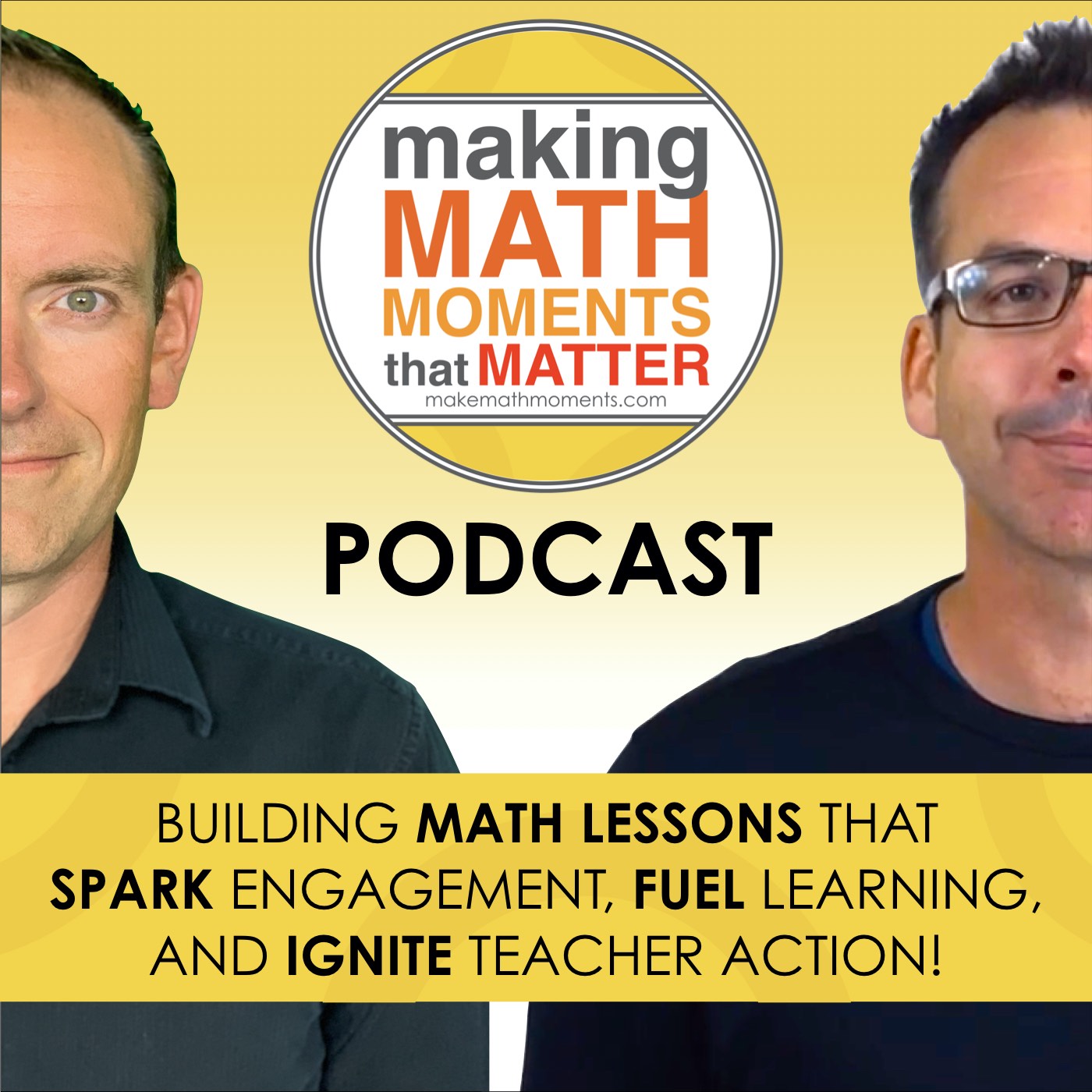
DOWNLOAD THE 3 ACT MATH TASK TIP SHEET SO THEY RUN WITHOUT A HITCH!
Download the 2-page printable 3 Act Math Tip Sheet to ensure that you have the best start to your journey using 3 Act math Tasks to spark curiosity and fuel sense making in your math classroom!
LESSONS TO MAKE MATH MOMENTS
Each lesson consists of:
Each Make Math Moments Problem Based Lesson consists of a Teacher Guide to lead you step-by-step through the planning process to ensure your lesson runs without a hitch!
Each Teacher Guide consists of:
- Intentionality of the lesson;
- A step-by-step walk through of each phase of the lesson;
- Visuals, animations, and videos unpacking big ideas, strategies, and models we intend to emerge during the lesson;
- Sample student approaches to assist in anticipating what your students might do;
- Resources and downloads including Keynote, Powerpoint, Media Files, and Teacher Guide printable PDF; and,
- Much more!
Each Make Math Moments Problem Based Lesson begins with a story, visual, video, or other method to Spark Curiosity through context.
Students will often Notice and Wonder before making an estimate to draw them in and invest in the problem.
After student voice has been heard and acknowledged, we will set students off on a Productive Struggle via a prompt related to the Spark context.
These prompts are given each lesson with the following conditions:
- No calculators are to be used; and,
- Students are to focus on how they can convince their math community that their solution is valid.
Students are left to engage in a productive struggle as the facilitator circulates to observe and engage in conversation as a means of assessing formatively.
The facilitator is instructed through the Teacher Guide on what specific strategies and models could be used to make connections and consolidate the learning from the lesson.
Often times, animations and walk through videos are provided in the Teacher Guide to assist with planning and delivering the consolidation.
A review image, video, or animation is provided as a conclusion to the task from the lesson.
While this might feel like a natural ending to the context students have been exploring, it is just the beginning as we look to leverage this context via extensions and additional lessons to dig deeper.
At the end of each lesson, consolidation prompts and/or extensions are crafted for students to purposefully practice and demonstrate their current understanding.
Facilitators are encouraged to collect these consolidation prompts as a means to engage in the assessment process and inform next moves for instruction.
In multi-day units of study, Math Talks are crafted to help build on the thinking from the previous day and build towards the next step in the developmental progression of the concept(s) we are exploring.
Each Math Talk is constructed as a string of related problems that build with intentionality to emerge specific big ideas, strategies, and mathematical models.
Make Math Moments Problem Based Lessons and Day 1 Teacher Guides are openly available for you to leverage and use with your students without becoming a Make Math Moments Academy Member.
Use our OPEN ACCESS multi-day problem based units!
Make Math Moments Problem Based Lessons and Day 1 Teacher Guides are openly available for you to leverage and use with your students without becoming a Make Math Moments Academy Member.
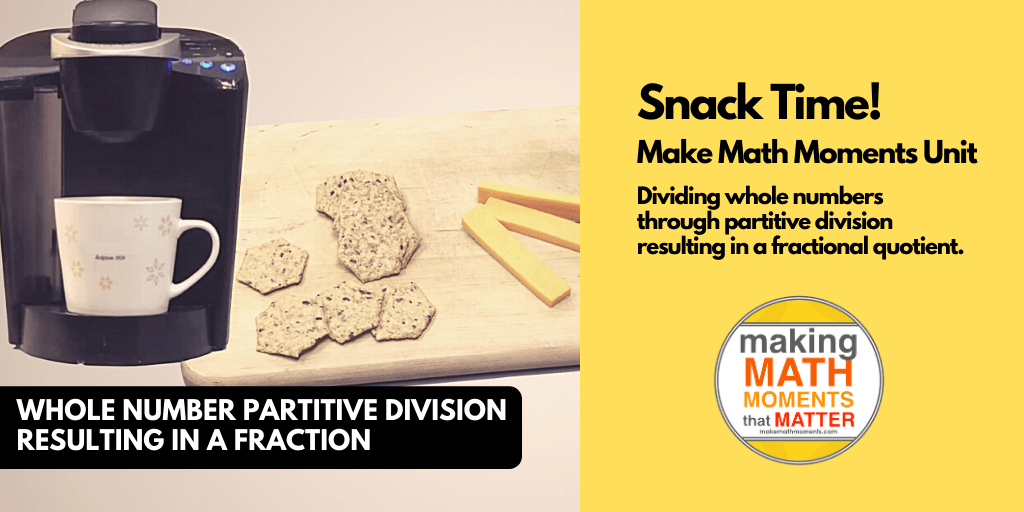
Partitive Division Resulting in a Fraction
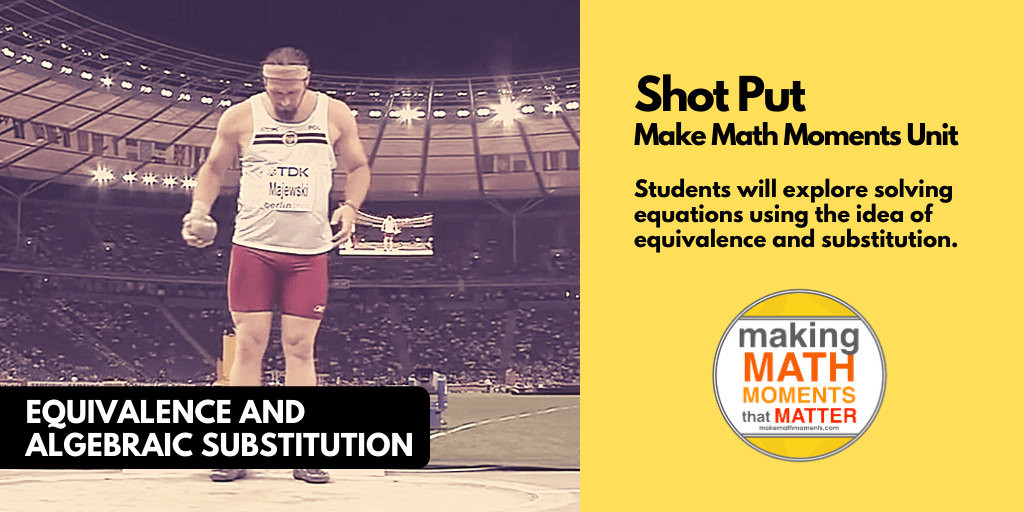
Equivalence and Algebraic Substitution
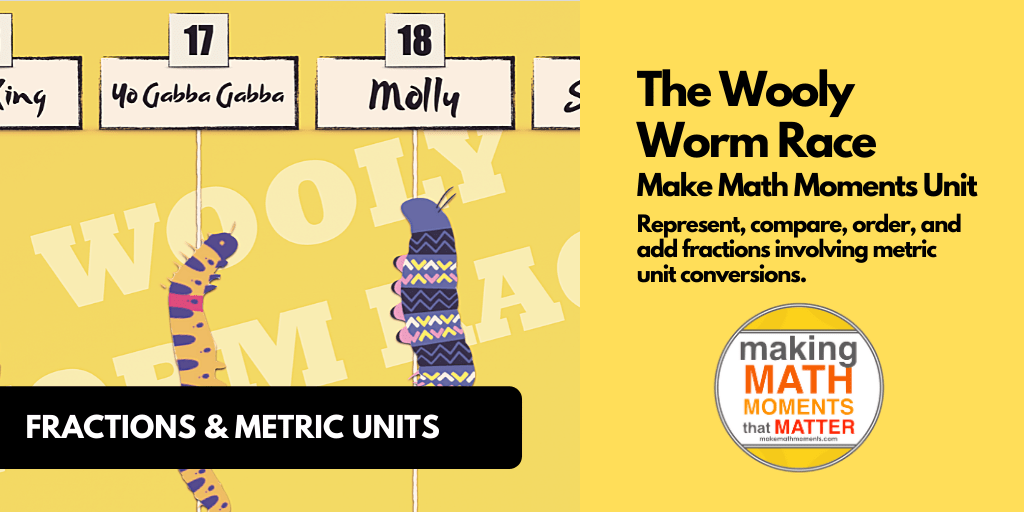
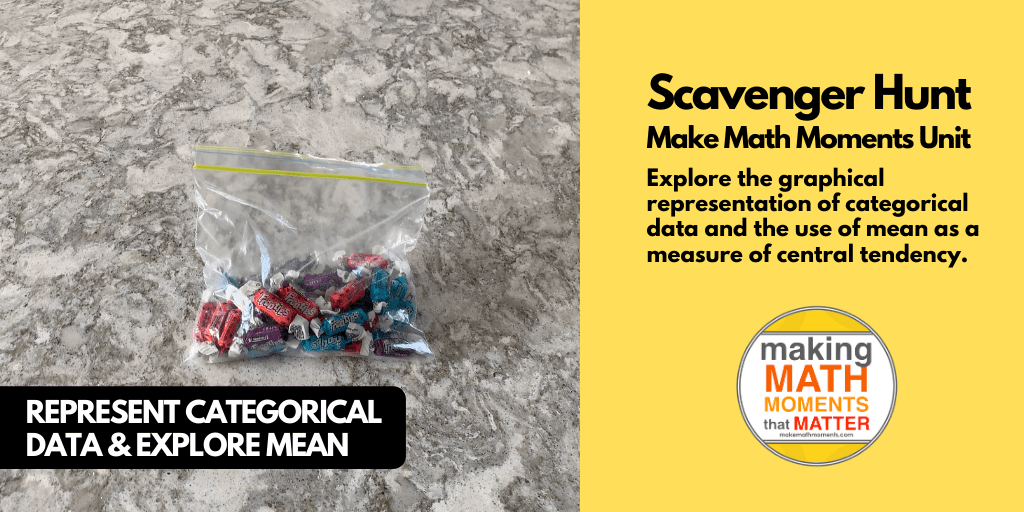
Represent Categorical Data & Explore Mean
Downloadable resources including blackline masters, handouts, printable Tips Sheets, slide shows, and media files do require a Make Math Moments Academy Membership.
ONLINE WORKSHOP REGISTRATION
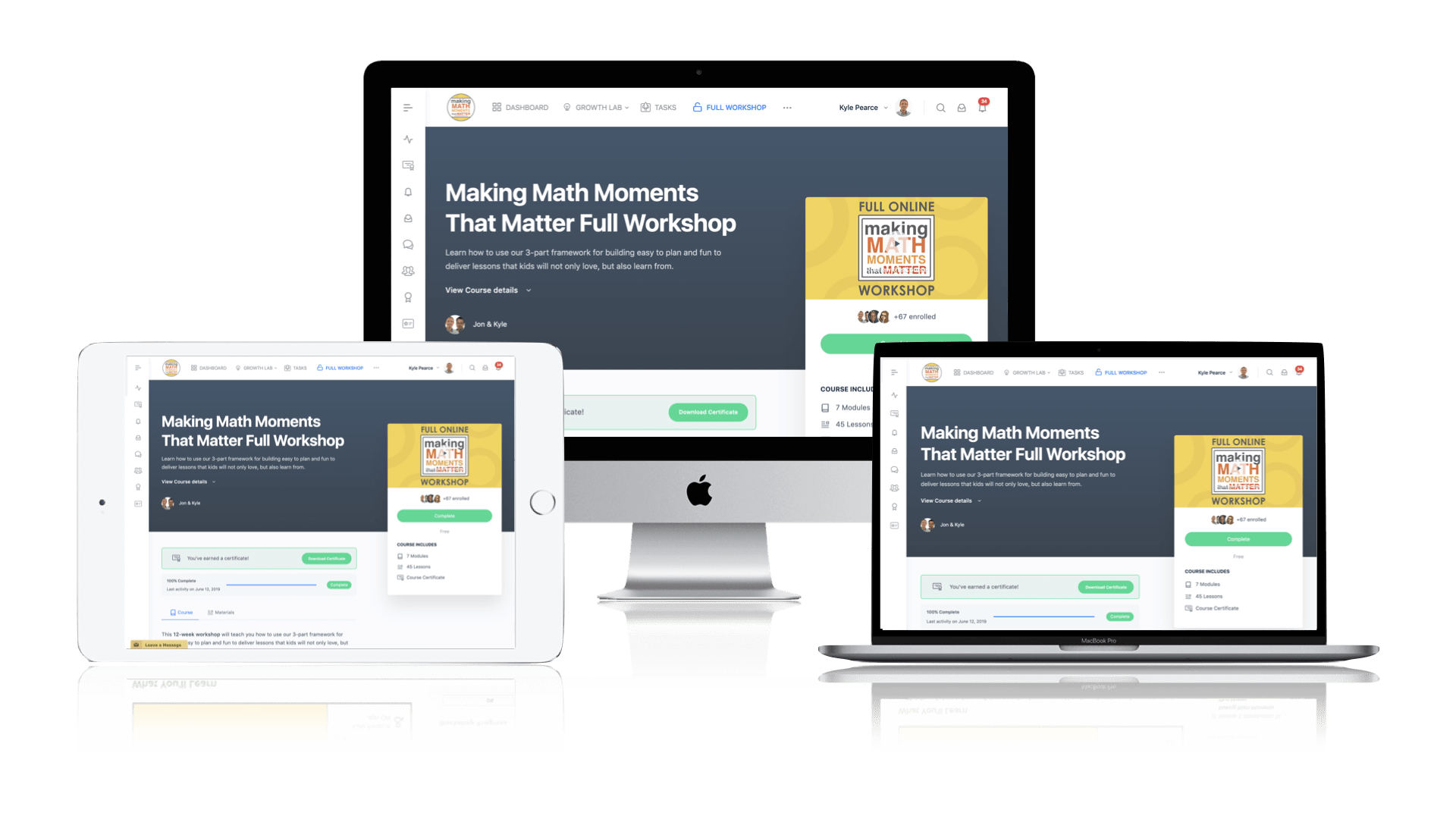
Pedagogically aligned for teachers of K through Grade 12 with content specific examples from Grades 3 through Grade 10.
In our self-paced, 12-week Online Workshop, you'll learn how to craft new and transform your current lessons to Spark Curiosity, Fuel Sense Making, and Ignite Your Teacher Moves to promote resilient problem solvers.
0 Comments