Episode #505: Mona Iehl: Building Problem Solvers With the Curriculum You Have
LISTEN NOW HERE...
WATCH NOW...
In this episode, Jon Orr talks with Mona Iehl about her upcoming session at the 2026 Make Math Moments Virtual Summit. Mona, a former math avoider turned author, explains why students need opportunities to talk about their thinking in math, and why teachers don’t need more word problems. They need ways to bring the problems already in their curriculum to life.
Mona shares the moment she realized she was recreating the math classroom she hated, how a math coach introduced her to the idea of nudging instead of telling, and the daily routine she built around one rich task. She also names a barrier many teachers overlook: helping students learn to listen to each other.
In this episode, you'll explore:
- Why Mona hopes her students leave believing their voice matters in math
- How talk gives students a low-stakes way to try out their reasoning
- Why we don’t need more word problems, just better ways to use the ones we have
- How teachers can adapt curriculum tasks to fit the students in front of them
- The moment a self-described math avoider realized she was recreating the classroom she hated
- What a “nudge” is and how it differs from simply telling students what to do
- A daily routine of launch, grapple time, sharing, discussion, and one more problem
- How replacing textbook characters with students’ own names makes strategies personal
- Why listening is the barrier most teachers don’t see coming
- How changing “tell me” to “tell us” shifts who students are talking to
Choose one word problem from tomorrow’s lesson and ask: How could I bring this off the page? Plan a short launch, give students time to grapple, and pick two students to share their strategies with the class. Then notice your language as you circulate. When a student is stuck, what nudge could you offer instead of an explanation? And when students share, are you saying “tell me” or “tell us”?
Attention District Math Leaders:
K-12 Math Leaders: Download our free Math Coherence Compass to help your teammates, system leaders, and educators create aligned instructional practices—without adding another initiative.
K-12 Math Leaders: Not sure what matters most when designing math improvement plans? Take this assessment and get a free customized report: https://makemathmoments.com/grow/
K-12 Math Leaders: Ready to design your math improvement plan with guidance, support and using structure? Learn how to partner with us and follow our 4 stage process. https://growyourmathprogram.com
Looking to supplement your curriculum with problem based lessons and units? Make Math Moments Problem Based Lessons & Units
Be Our Next Podcast Guest!
Join as an Interview Guest or on a Mentoring Moment Call
Apply to be a Featured Interview Guest
It will take less than two (2) minutes to book your Math Mentoring Moment call.
Book a Mentoring Moment Coaching Call
Take two (2) minutes to book your Math Mentoring Moment call and let's work together to shake that math pebble out of your shoe!
Are You an Official Math Moment Maker?
Ensure that you follow, rate and review on Apple Podcasts, Spotify and other platforms to show your support and ensure other math educators can find the show.


FULL TRANSCRIPT
Jon Orr: Hey there, Mona. Welcome back to the Making Math Moments That Matter podcast. We as always are excited to chat with you. You've got a session coming up in the twenty twenty six Make Math Moments Virtual Summit. We want to dig into that, but before we do, how are things? What's going on over there?
Mona: Things are good. I mean, it's the beginning of the school year. So I feel like we're all settling in. But you know what? I get, I'm now not in the classroom, and I get this job where I get to go into lots of different classrooms. And so it's really neat to have that lens on like seeing how things are going. And let's see, I'm coming up on the one-year anniversary of the book that I wrote, which just seems crazy.
Jon Orr: Amazing. Congrats.
Mona: To be a teacher and write a book, you know, it just wasn't on the bingo card as they say, but I'm really proud of it and really excited to see how it's helping teachers.
Jon Orr: Amazing. Amazing. One of the questions we've been asking every guest in this series so far is thinking about your math moment, but a future moment. So thinking about like this moment where imagine you met a student who was in your care and it's been years after they've left the system or left your classroom. And you have a, you're maybe you saw them at the store and you say, hey, great to see you and then you said, you know what, what was the biggest takeaway? You know, what was the biggest impact you had in math while you were in my classroom or in my system or I was in my care. I guess the prompt I want you to reflect on is what do you want them to say?
Mona: Yeah. I love this prompt because if we're not thinking about the future kid, it can sometimes get really overwhelming when you're looking at the kid right now. And so I want them, I want the conversation to be around like, hey, Miss Eel, that's how you say my last name. Miss Eel, you really showed me that my voice mattered in math. Maybe there was a turning point of like in previous math classes, I didn't get to talk or the talk was just to answer the teacher's question. But you showed me that like my thoughts and speaking them into the classroom like had a place. And so that's really what I hope that kids leave my math spaces thinking.
Jon Orr: Yeah. Yeah. Why do you think that is so important? Because I think like we that wasn't a priority, you know, when we were going to school. I think we're trying to make shifts across the system right now to making that more of a priority. Like in your opinion, 'cause I there's lots of thinking around this and research to back this up, but just in your opinion, what why do we think that like why is that so important right now for kids?
Mona: Well, I mean, we're always trying to get kids to reason in math, right? And maybe when we were in school, reasoning wasn't much of the focus and remembering was maybe more of the focus. And so I'm always trying to get kids to it's the rope, right? It's the five strands of math proficiency. I want kids to be adaptive reasoners, be strategic in the ways that they're making choices in math class. And I think the best way to practice that is low stakes. A conversation to take what's in your brain and bring it out of your mouth and try it out and see if that works first. I think that's one of the reasons why kids are so hesitant to put things on paper, right? Because we're afraid of being wrong. But you know what? It's pretty low stakes to just like, what are you thinking? And it's quick and easy to change that around because it's just a quick thought, right? And so when we're having a conversation, things can move faster in terms of developing reasoning.
I also think that like in a lot of other subject areas, and I spent all of my time being an elementary teacher until the last few years of teaching when I taught middle school math, but everything is language heavy in literacy. Everything in SEL is language heavy. You know, we read a text in social studies and we talk about it. And that just never is the case in math. And like when I made the shift in my classroom to bringing some of those talk routines that were successful in other content areas into math, kids were loving it, but also I was able to reason so much more deeply about the math.
Jon Orr: Love it. Yeah. Yeah. True. Now this plays right into your session, but your session is Think Solve Talk, creating a community of problem solvers with the curriculum you already have. And talk to me about the curriculum we already have, because there's lots of folks that think, you know, I need to either push that to the side or I have to use this, like there's different the continuum there where it's like I need to supplement consistently because it doesn't do what I need it to do. Or I need to like completely push it to the side and start fresh, but then on the other side like, and that's more in the middle, and then more on the other side of the continuum, it's like thou shalt follow exactly. So talk to me about like this idea of like the curriculums we have and what do we do to open these things up and how does that impact like us in a way if I'm supposed to be in coordination with curriculums with my department or my school?
Mona: Yeah. Because my whole thing is word problems. That kind of I fell into this, like I use word problems to get kids talking and thinking and solving. And what I realized was we don't need any more word problems. There are plenty of word problems in the resources that we have that we're either required to use, we hate to use, or we love to use that are already there. And so it's not about getting more things, getting more problems or tasks, but it's about how do we take that task off the page and make it come alive in our classroom. And so that's kind of what I mean by the curriculum is that like whatever, a lot of times that's out of your control, right? Or there's some anxiety around like if I don't do it and like whatnot. So I'm not ever trying to like add more to teachers' plates. It's more like you have a curriculum.
It's about finding the right task, revising that task to fit the students that you have in front of you. You know, I always talk to teachers that, you know, these are just like suburbs of Chicago in the city of Chicago teachers that like might not be listening to math podcasts, right? You know, an overwhelmed second grade teacher who's like, no, but like I just am doing the book. And I'm like, cool, cool. But did you know that this book? It's for every child everywhere. And that might not fit the needs of your students. And as the expert in the room, you get to the the expert in the room on your students, you know them best. You get to make the choices about how to bring those tasks off the page and get kids thinking, talking, and solving.
Jon Orr: Yeah. Do you think teachers majority of like you saying you're going to classrooms, you know, a lot more than your own classroom? And I think this is my own, I guess bias, but also you know, lack of sight I before I went in classrooms as well, which is I felt pretty confident with my math ability, my understanding. Like I came from that place of privilege of saying, like I learned like I have a degree in mathematics and I'm teaching mathematics. And I felt very comfortable taking my tools, the curriculum, the textbook, the resource, and manipulating what I needed to do to get to the learning goals.
And I think, you know, from venturing out outside of my building and outside of myself, you started to see maybe and this is what I wanna want to see if you saw the same thing is many teachers I think don't think they have permission to do that.
Mona: That's right. I totally agree. And deep down, maybe not the confidence to do that mathematically. Because on the other side of the coin, John, you were a confident mathematician and teacher. And I was like a math avoider. I spent my entire life up until about my fourth year of teaching avoiding math, taking the least amount of math classes I could. And you know, when I was actually teaching, just kind of like, let's get it over with and get on to the good stuff part of the day, you know?
And so when I started to make this shift, it wasn't just about, let's get kids to talk more, but like, what are they gonna talk about? And so I did a lot of math learning myself.
Jon Orr: And I guess is that you just saying I'm gonna I need to dig in here? Like what was the change point? Because if I'm if I one is like I'm a I don't I know that I'm not strong in math. I know it's I need to I shy away from it, I push it to the side. We and we know as a whole, if we want our students to be stronger in math, we ourselves have to have that strength as well. But how what was that? Like what was that shift? Is it just like an epiphany, like I have to commit this, or was it like, like, well tell me about that moment, 'cause that's very interesting to me.
Mona: Yeah. Well, and I think that it was the moment was when I was looking out at my third grade class and looking at them, thinking, my goodness, I am creating the math classroom that I hated. The one where the kids were with me while I was modeling the problems on the board. And the minute I was like, okay, try this one on your own. Just write it on your whiteboard, try it on your own. And before I could even turn around from writing it on the board, there was half the class's hands were up and the other half was like hoods up, heads down, pencils breaking, chairs tipping, you know, and like it was just that moment of chaos where I started to see myself in them of like, they are unable to just follow what I'm doing on their own. What's the missing piece here?
And I was at a point in my career where I was ready to take on a new thing, right? Like I think there's also that, and I know you guys talk a lot about that of like I think it's so important that teachers have this like agency, right? And around deciding what they want to learn next, right? Teachers aren't broken. They aren't there, like PD doesn't fix teachers. And so my school wasn't focusing on math, but I made a choice to be like, no, I want to try something different because this isn't it. I don't want these students to end up feeling the way I felt about math.
Jon Orr: Right. Right. So it's like so what I mean, I think I'm hearing is like you became problem aware, which is a phase of like understanding of where we are when we are trying to address problems we have is like I know I have an issue. But in a way it's like when teachers know they have an issue, they also what you said is that we also have to realize like we might not have the capacity, the bandwidth, the support to even try to address the problem, even when we know we have a problem.
Right. And it's like and then in a way, sometimes it's like these things start to align. Like you're maybe at a certain point of life that freedom, the time freedom comes back a little bit because we're not so, you know, our young families are a little older now and there's a little bit more time. Like there's these things that surround us, and we think, why can't we have math improvement here in this classroom and this day and as a leader, if you're thinking about it as a leader? And then we have to realize that there is a problem like we have to be problem aware first and then therefore we have to have the capacity and the bandwidth to be able to like venture forward and go, I now need to seek a solution.
And then that solution, and I'm a strong believer in this, is that we solve we want solutions to problems only if they fit the way that we envision it. Which is sometimes not what you expect to be like, I have a you're asking me to do a master overhaul of what my lessons look like. That's not the solution I was asking for. Like I exact right. And it's like we have to have that before we become like know what solution could solve this problem. And I think that's that speaks to this idea of like we don't have to do an overhaul. Like we can have small little nuggets that we can be putting into play here that are small changes instead of big changes. And I think a lot of us, and especially a lot of teachers, think about these big changes because they may see it or they hear it. Instead of saying I have permission to use exactly what I have and to make small changes to help with my students and I have to then have that support to make that happen.
In your session you used the word nudges and that triggered for me to like go, what are you talking about there? What's a to you, what's a nudge?
Mona: Yeah. Yeah. So I kind of went on this journey after I decided I could make a change. And I dove all the way into the cognitively guided instruction research and this idea of like open up the classroom and let kids just discover. And that freaked me completely out, right? Because it was like, what do you mean? How are they gonna learn? And I had a really smart math coach that happened to be a resident principal at the time. And then she became the math coach. But she said, well, what if you didn't just let them go, but you nudged them?
And so along the way, I've tried to like attach to that language of like, I don't have to tell you everything, but I can give you a little prompt or I can ask you a question or I can point something out here that might help set you on the right path to a solution or help you question yourself of what's going on here. So my favorite nudge is when a kid is like maybe stuck or unable to solve or just kind of like stalled out. I'll just nudge them by saying it's kind of like a wake-up, like, hey, you okay? Like, and I'll just say, do you want me to read you the problem again? And just that sometimes gets the ball rolling again of like, okay. Or if the student says sure and then they keep blank staring you, I'll say, you know, anything. Like just like, what do we know? Can we just talk about the situation? You know, and kind of going back to some of those launching the problem strategies.
But if they're already solving and they need a nudge, maybe they're regrouping their tens in the wrong way or, you know, some sort of content problem like misalignment, then the question would be like, can you explain to me what you're doing here? So instead of me saying, hey, you have a mistake here, can I show you what to do when you get 10 tens and you need to, you know, you gotta move them over here to the hundreds, instead of straight up telling them, giving them that chance, that nudge first to explain their thinking so that I can better understand what they're thinking before I maybe dive in a little bit more.
Jon Orr: What does it look like when I so like so if I'm gonna open up my curriculum, I'm gonna make some adjustments to that curriculum, that lesson, let's say, so that I can get more thinking, more talking in class. Like what in your opinion, like what is that tell me what that looks like? 'Cause I think a lot of teachers, especially like there's a lot of leaders listening to this and who support teachers. There's a lot of teachers listening to this who've dabbled in different areas, but there's probably some teachers still listening to this that go, like, I don't know what this looks like. Because I have relied on the resource and I've not opened up, say, the lesson to adjust, but also to allow for the thinking to be there first. Instead of saying, let me do the examples and then you know, then circulate and do small groups.
Mona: Yeah. And so this the way it looks like to me came out of that, like that capacity question, right? Of like, okay, I want to try some new things and I like am loving CGI and I'm loving five practices and I'm loving all these ideas, but like, how does it really happen every day in the classroom? Like realistically, I know myself. I can't have a different lesson structure every day.
And so I started to develop a routine, a routine where one every day we would take a meaty task from our curriculum, tweaked a little maybe, and we would launch it. And then students would practice or I'm sorry, grapple with it. And that's what I call it. I call it grapple time. And we, you know, embed all our SEL there and all our mindset work and all of that. And they would grapple. And that's when I'm walking around and finding out their thinking, mining, as I like to tell them, mining their brain for little gold nuggets, right? or gems.
And then using that time to choose my shares and position those in a place where everybody could see them after grapple time. So I got into this routine where I would call my third graders up, we'd all go to the carpet. And I'd call on two students to bring their paper to the carpet, and they would stand and they would teach their class while I like scribed their work on a piece of chart paper. And then the next student would share, tell us what you did and why you did it. And everybody's listening and maybe rolling on the carpet. And I'm making sure that they're trying to listen, you know, we're working on our listening skills.
And then we would get into a circle and talk about those two kids' strategies. And a lot of our curriculums have this in it now, right? We've got May and we've got Lynn. And can we compare their two strategies and tell us what you see and what you what's the same and what's different? And I love that. And I don't think that there's like anything wrong with that. I actually just think we have to bring it off the paper and we have to like breathe some teacher life into it. And that's what this routine did.
It started to take Lynn and May are now Jose and Johnny in my class. And we're talking about I can do it Johnny's way. And I see Johnny added 100, but you know, Jose added three to get to a hundred. What's going on here, right? And so it just is so much more personal. And it now builds that momentum for kids to participate and talk and solve and think because they want to be the sharer. They want to be the one that their kids that the kids are talking about.
And then after the discussion, I used to leave it there for years. That was my routine. Then we'd go and we'd open up the book and whatever. But then I was like every day we were doing a problem and they were like not applying what they had done the day before. Even though those chart papers that I was scribing on were hanging on the wall, and I would say, look back at what we did yesterday. I realized that they needed some like immediate application.
So we started to do like what I call reflect, which is the final step in word problem workshop. And where kids would just do one more problem. I would put a post-it note over the numbers, and it would be the same story, the same context, two different numbers. Head back to your seat, answer it on this white on this index card or on your whiteboard or wherever. And just one more problem. And try Johnny's way or try Jose's way. And it was my curriculum task.
So when I went back to the book, all of a sudden they're like, we just did this. I can do this. So I invested that 20 minutes into slowing down with one task and getting everybody to talk and listen to each other. And the rest of that curriculum, a lot of my kids could just go and do it. And then there were a few where I said, okay, come back to the we'd call it the rainbow table now. Come back to the rainbow table because rainbow table is so much better than kidney table, right? So anyway, so then they would come back to the table and we'll work through the problems and maybe I will model some strategies. And then that instruction can be really strategic because we did one problem first and I was able to like slow down with them and see what they were thinking. That was a long answer to your could have been simple response.
Jon Orr: No. Appreciate it. Appreciate it. Appreciate it. So if I'm listening if I'm listening to thinking about like opening up my curriculums, making slight adjustments to things I already have to create more talk, to more thinking, more problem solving. And I'm thinking about barriers to this. And if I'm if I'm thinking about all these barriers, what's a barrier that I'm not thinking about? Because like I can say I don't have time to do you know, there's barriers we all know. But what are in your opinion barriers that you've come up against or you've seen teachers come up against that they didn't anticipate?
Mona: I love this question. I love this question. Thank you for asking me. I think it's listening. I think it's listening. We assume our students are listening, but and sometimes they look like they're listening, right? And sometimes they don't look like they're listening, but it's how much investment and how much time we must invest to teaching kids how to listen.
And sometimes we are a sixth grade teacher myself, and you're like, okay, we're in sixth grade. Like, I shouldn't have to teach you how to listen. I actually had the gift of yeah, right. Like, but then you turn and you look at your like your spouse or your mom or your whoever, and you're still having a hard time communicating with them, right? And so you realize that this is a lifelong pursuit of like becoming a good listener. And like what a gift it is to be able to like teach kids how to listen better. And the best way to listen better is to have more things to listen to.
And by providing kids an opportunity to talk about their thinking, like their friends get to practice listening. And like when you put it out there for kids like that, like I think that that's powerful, but and it sounds good on a podcast, but in the classroom, it's really hard to do and it's really hard to slow down and remind them to listen and have them reflect on their listening and all of these things. But I do think that it is one thing that's missed, but one thing that's so powerful. And an easy shift is like, you know how sometimes we say like, show me or tell me what you did. If we change that language just a little and say, tell us. what you did. Show us. It just it kind of shifts that, that who you're talking to.
Jon Orr: I like that. For sure. For sure. Your session is going to be at the twenty twenty six Make Math Moments Virtual Summit. Registration is open right now. People can register for a slot in there. What is one big takeaway that we will get by attending your session?
Mona: We're gonna look at student work from grapple time and we're gonna think about like nudges. What would you say to this kid to get them to this strategy? Or what are the bridges that we can build between these strategies? And if your learning goal was this, which of these student works might you show and share? And what questions might you ask around those?
Jon Orr: Love it. Can't wait. Mona, thanks again for joining us here today and we look forward to your session coming up.
Mona: Can't wait. See you then.
Your Customized Improvement Plan For Your Math Classroom.
Take the 12 minute assessment and you'll get a free, customized plan to shape and grow the 6 parts of any strong mathematics classroom program.
District leader/math coach? Take the District Assessment
Thanks For Listening
- Book a Math Mentoring Moment
- Apply to be a Featured Interview Guest
- Leave a note in the comment section below.
- Share this show on Twitter, or Facebook.
To help out the show:
- Leave an honest review on iTunes. Your ratings and reviews really help and we read each one.
- Subscribe on iTunes, Google Play, and Spotify.
The Making Math Moments That Matter Podcast with Kyle Pearce & Jon Orr
Weekly interviews, strategy, and advice for building a math classroom that you wish you were in.
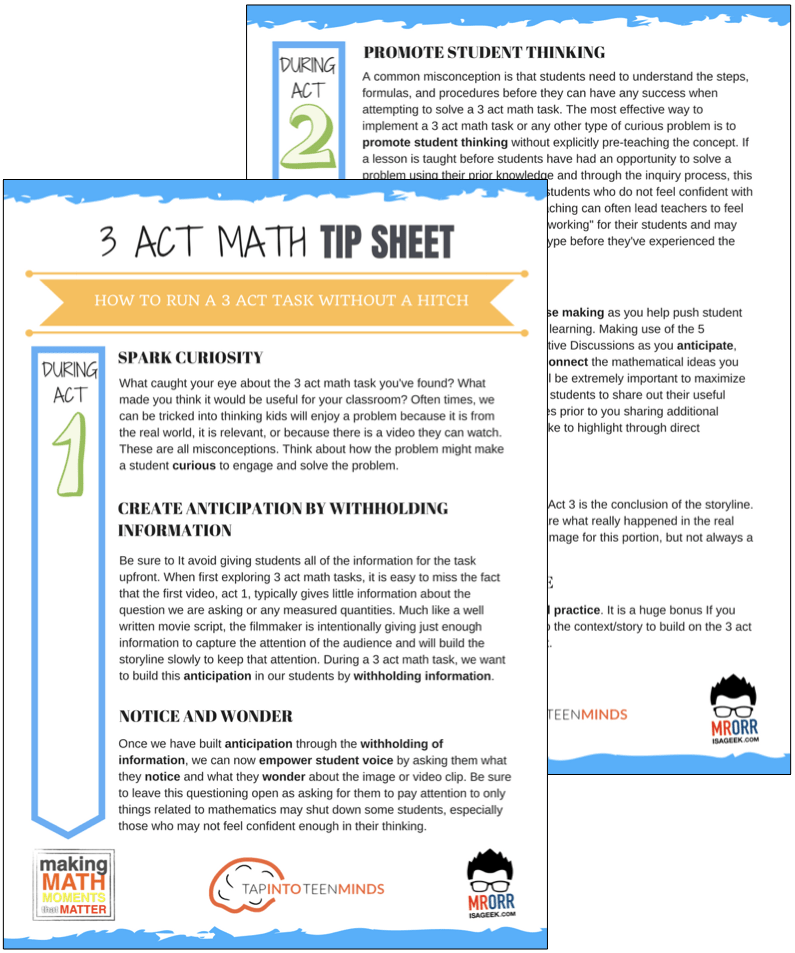
DOWNLOAD THE 3 ACT MATH TASK TIP SHEET SO THEY RUN WITHOUT A HITCH!
Download the 2-page printable 3 Act Math Tip Sheet to ensure that you have the best start to your journey using 3 Act math Tasks to spark curiosity and fuel sense making in your math classroom!
LESSONS TO MAKE MATH MOMENTS
Each lesson consists of:
Each Make Math Moments Problem Based Lesson consists of a Teacher Guide to lead you step-by-step through the planning process to ensure your lesson runs without a hitch!
Each Teacher Guide consists of:
- Intentionality of the lesson;
- A step-by-step walk through of each phase of the lesson;
- Visuals, animations, and videos unpacking big ideas, strategies, and models we intend to emerge during the lesson;
- Sample student approaches to assist in anticipating what your students might do;
- Resources and downloads including Keynote, Powerpoint, Media Files, and Teacher Guide printable PDF; and,
- Much more!
Each Make Math Moments Problem Based Lesson begins with a story, visual, video, or other method to Spark Curiosity through context.
Students will often Notice and Wonder before making an estimate to draw them in and invest in the problem.
After student voice has been heard and acknowledged, we will set students off on a Productive Struggle via a prompt related to the Spark context.
These prompts are given each lesson with the following conditions:
- No calculators are to be used; and,
- Students are to focus on how they can convince their math community that their solution is valid.
Students are left to engage in a productive struggle as the facilitator circulates to observe and engage in conversation as a means of assessing formatively.
The facilitator is instructed through the Teacher Guide on what specific strategies and models could be used to make connections and consolidate the learning from the lesson.
Often times, animations and walk through videos are provided in the Teacher Guide to assist with planning and delivering the consolidation.
A review image, video, or animation is provided as a conclusion to the task from the lesson.
While this might feel like a natural ending to the context students have been exploring, it is just the beginning as we look to leverage this context via extensions and additional lessons to dig deeper.
At the end of each lesson, consolidation prompts and/or extensions are crafted for students to purposefully practice and demonstrate their current understanding.
Facilitators are encouraged to collect these consolidation prompts as a means to engage in the assessment process and inform next moves for instruction.
In multi-day units of study, Math Talks are crafted to help build on the thinking from the previous day and build towards the next step in the developmental progression of the concept(s) we are exploring.
Each Math Talk is constructed as a string of related problems that build with intentionality to emerge specific big ideas, strategies, and mathematical models.
Make Math Moments Problem Based Lessons and Day 1 Teacher Guides are openly available for you to leverage and use with your students without becoming a Make Math Moments Academy Member.
Use our OPEN ACCESS multi-day problem based units!
Make Math Moments Problem Based Lessons and Day 1 Teacher Guides are openly available for you to leverage and use with your students without becoming a Make Math Moments Academy Member.
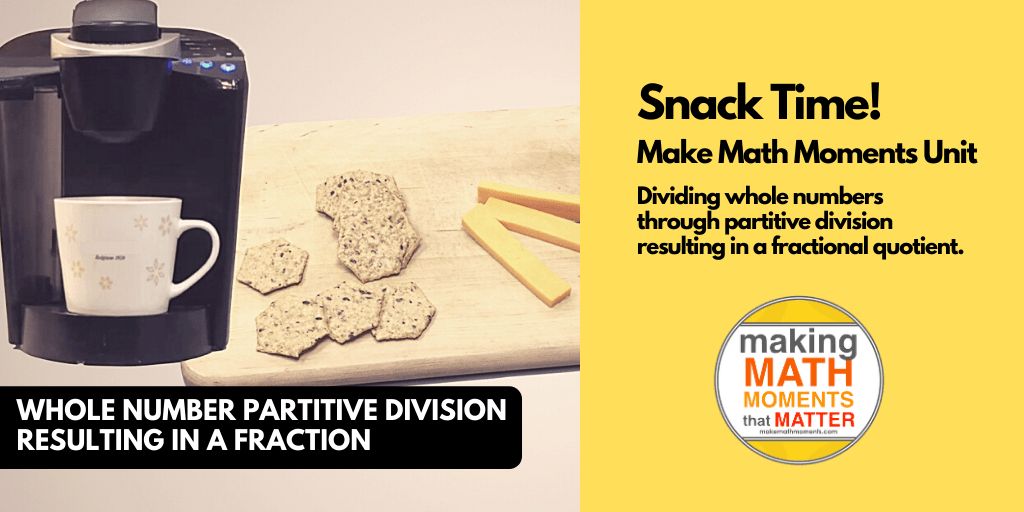
Partitive Division Resulting in a Fraction
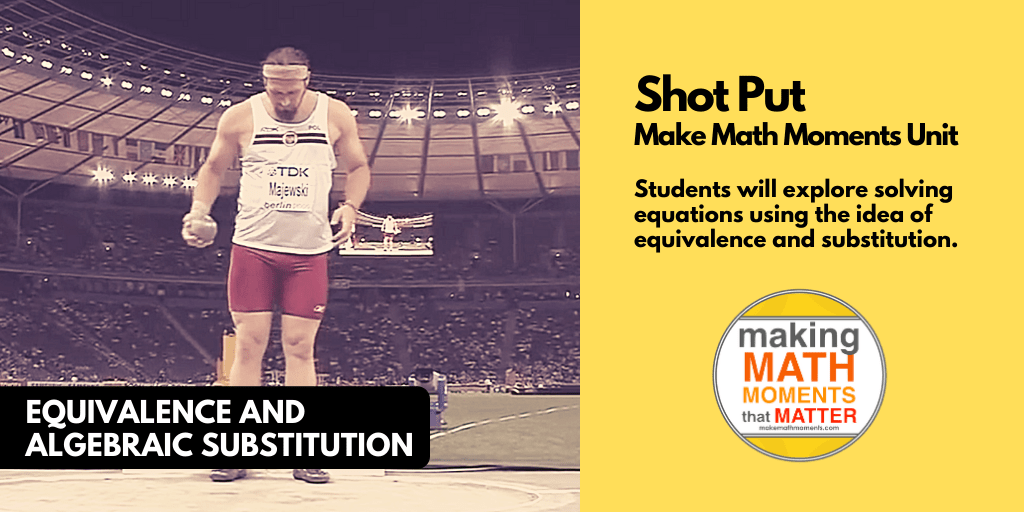
Equivalence and Algebraic Substitution
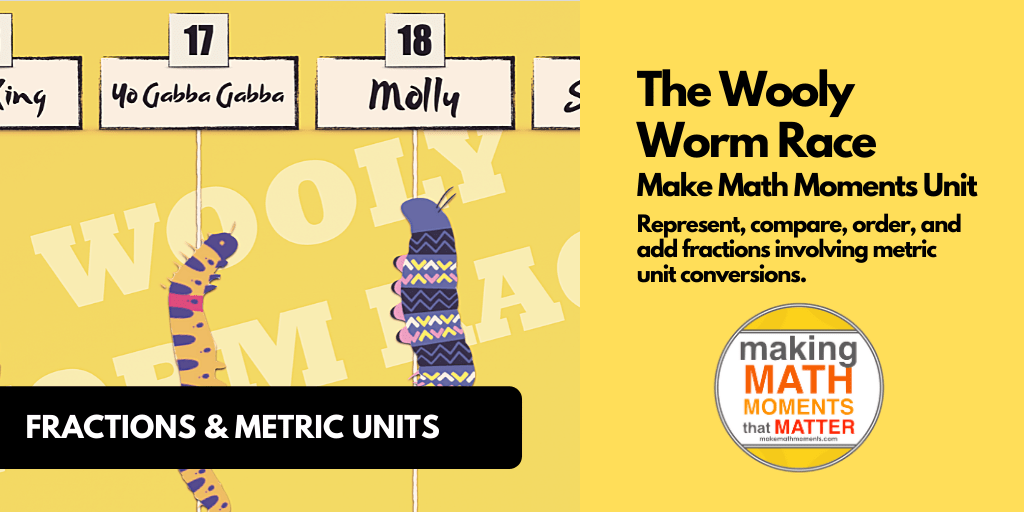
Represent Categorical Data & Explore Mean
Downloadable resources including blackline masters, handouts, printable Tips Sheets, slide shows, and media files do require a Make Math Moments Academy Membership.
ONLINE WORKSHOP REGISTRATION
Pedagogically aligned for teachers of K through Grade 12 with content specific examples from Grades 3 through Grade 10.
In our self-paced, 12-week Online Workshop, you'll learn how to craft new and transform your current lessons to Spark Curiosity, Fuel Sense Making, and Ignite Your Teacher Moves to promote resilient problem solvers.
0 Comments