
Episode #511: How To Structure Math Coaching in a School District
LISTEN NOW HERE...
WATCH NOW...
In this episode, Jon Orr and Yvette Lehman talk with Kelli McCoy and Jada Gehring, elementary instructional coaches from White Settlement School District, about how their approach to math coaching has changed over the past few years. They describe feeling overwhelmed as they jumped from classroom to classroom, offering activities and one-off PD that didn’t carry past the next lesson.
Kelli and Jada share how a K–12 math committee helped them narrow their focus, why they led daily numeracy at every leadership meeting and PLC, and how shifting their energy toward bright spot teachers created momentum across campuses. They also explain how modeling with teachers’ own students sparked real change, and what they’re focused on now: planning with teachers as learners.
In this episode, you'll explore:
- What math coaching looked like before the team had a shared focus
- How giving teachers activities can unintentionally create dependence on coaches
- How a K–12 math committee helped narrow the district’s focus to three areas
- Why the team led daily numeracy at every leadership meeting and PLC
- How training paired with administrator accountability helped practices reach classrooms
- Why the team shifted its coaching energy toward bright spot teachers
- The internal struggle of stepping back from teachers who weren’t ready
- How coaches modeling with teachers’ own students sparked lasting change
- Why seeing student results often comes before a shift in teacher beliefs
- How the team now plans with teachers by positioning them as learners
Look at how your coaching time is spent right now and ask: Where is most of my energy going, and is it creating momentum? Identify one or two bright spot teachers you could invest in more deeply this term. Then plan one opportunity to model a routine with their own students, debrief together, and come back in two weeks to see what has changed.
Attention District Math Leaders:
K-12 Math Leaders: Download our free Math Coherence Compass to help your teammates, system leaders, and educators create aligned instructional practices—without adding another initiative.
K-12 Math Leaders: Not sure what matters most when designing math improvement plans? Take this assessment and get a free customized report: https://makemathmoments.com/grow/
K-12 Math Leaders: Ready to design your math improvement plan with guidance, support and using structure? Learn how to partner with us and follow our 4 stage process. https://growyourmathprogram.com
Looking to supplement your curriculum with problem based lessons and units? Make Math Moments Problem Based Lessons & Units
Be Our Next Podcast Guest!
Join as an Interview Guest or on a Mentoring Moment Call
Apply to be a Featured Interview Guest
It will take less than two (2) minutes to book your Math Mentoring Moment call.
Book a Mentoring Moment Coaching Call
Take two (2) minutes to book your Math Mentoring Moment call and let's work together to shake that math pebble out of your shoe!
Are You an Official Math Moment Maker?
Ensure that you follow, rate and review on Apple Podcasts, Spotify and other platforms to show your support and ensure other math educators can find the show.



FULL TRANSCRIPT
Jon Orr: Hey there, Kelly and Jada. Welcome to the Make Math Moments That Matter podcast. We're excited to have you here today. It's been a long time coming. Yeah. We've, you know, we've been working with you and the team over there for a year or so and looking to share your journey here today. And that's really the purpose of our call is to share that. So would you mind doing us a favor? Introduce yourself, but introduce yourself the way that maybe the teachers you work with would introduce you.
Jada Gehring: Okay.
Kelly Mahoy: I am Kelly Mahoy. I work with elementary math teachers. And they would say that I get very passionate and excited about talking about math. That I'm likely to jump up and start gesturing with my hands wildly and modeling something and treating them like students and getting all excited when we're together.
Jada Gehring: And I'm Jada Gehring, instructional coach for elementary as well. I would say that the teachers would probably say I'm very analytical and very math brained.
Jon Orr: Right. Awesome. Awesome. Paint me a picture now of White Settlement in general. So schools, campuses, like give me this picture of like what we're talking about and who you're really supporting.
Jada Gehring: We have in our whole district, we have one middle school and one high school. And then we have four elementary schools that feed into the middle school and one early education that has our pre-K and our kindergarten. And we serve the elementary campuses.
Jon Orr: Right, the four, five of them. Right. Yeah, all five on them. Right, right, right, right. Now, now also like go back in the way, I guess go back, go in the way back machine here for a moment. So rewind a couple of years ago, before we started working together, before you met Yvette and share, like if we had walked into math classrooms and we had followed you on your daily path, what would we have seen back then? Like paint us that picture as well as like what did math support from your end, coaching look like a few years ago before we kind of ventured forward in this work that we've done together.
Kelly Mahoy: Well, I feel like we were kind of all over the place. You know, we went into a classroom and to see what was going on and we tried to troubleshoot what we thought was going on in that room. We might have seen one thing we wanted to focus on with this teacher and one thing we wanted to focus on with this teacher. We might come out of those visits saying, I need to have a professional learning on this. And so we're gonna hit this at this professional development after school on a Wednesday. And we do that and then we're like on to the next thing and go see the next teacher and see another problem. And okay, well, let's try to address that in the next power up. I mean, I feel like that's kind of how it was going.
Jada Gehring: Yeah. I don't think we had a driven focus for all of our elementaries to be going towards the same place. We were also in pockets and then we were kind of spread out, our the coaches were. So we were just trying to help what that campus needed at that time and we didn't have an alignment throughout all campuses.
Jon Orr: And like if you stay back there for a moment, like what did what did that feel like? You know, going into campuses every day and coming out and then planning and then going back. And then you kind of, you mentioned, you know, we didn't have the alignment, didn't have the focus, but what did that feel like back then? Did that feel like, you know, I guess I don't want to put words in your mouth, but maybe you tell me what it felt like.
Kelly Mahoy: I felt very overwhelmed. I felt like I had been brought in to try to help us move forward in math. But there were just so many directions we could go with this. And every time I talked with a teacher or watched a class, then I saw another thing that I thought, that's the most important thing. That's what I wanna. So to me, it was just very overwhelming. And I felt like we weren't necessarily making a lot of progress because we really just had, you know, like I said, a session to address a thing and then I saw the next thing and so I was moving on to another thing the next time. So it was overwhelming.
Jada Gehring: I think it was over, I would also agree overwhelming because we were also, as the coaches doing a lot of the work and we were prepping and preparing for plannings and for PLCs at that time. And we were doing the work and it wasn't transitioning to the teachers doing any work. They were just listening to us and okay, and then moving on in their classroom.
Kelly Mahoy: And I think a lot of times what I was offering was an activity or an idea to try. So that was helpful for that lesson. Great, I'm gonna use that activity. That'll be great. But that didn't take us anywhere past that lesson.
Jon Orr: Yeah. And what would you say the teachers would have said back then about the support that they were receiving?
Kelly Mahoy: I mean, I do think I had people that were very grateful for these activities they could do. Like they wanted to come and talk to me before we started a scope or a unit of study so that they could get all these neat ideas to use for their lessons. And then they went back and used those. So they liked the idea getting. But again, it didn't prepare them any more for the next unit, they needed to come talk to me again to get some of those ideas again.
Jada Gehring: They relied on us a lot. And so I think it almost created like a learned helplessness with the teachers and the coaches, just like you would see with students and teachers.
Jon Orr: I was gonna say that as like one of the things about my classroom is I always felt like kids were relying on me, my early years of teaching, of being like if I walked away, would they be able to do this on their own? Was a question. Right. And I wonder if that question popped into your minds as you're supporting teachers who are supporting kids. Was that something you were concerned about when you left the classroom or went to another school or another, you know, on one of the other campuses? Like, do you feel like they were, hey, I felt like there was a lingering, lasting effect here of the work that we were doing and that if I'm not here, it will continue.
Jada Gehring: Back then? Yeah, back then. No. Yeah. A few years ago, definitely not. I don't feel that way. They needed us a lot.
Kelly Mahoy: Yeah. Right. It was very much centered on what we were saying in the moment.
Jon Orr: Right, right, right. And let's start to move towards where you folks are now because you reached out to us, you were already, you know, focusing on some really important areas like productive struggle. You were focusing on some, you know, already kind of narrowed in on like where you wanted to go. And I think that's an important aspect that I think we need to kind of address here because many school districts will continually, what we used to say, throw spaghetti at the wall. It's like, let's try that, let's try that, let's try that. Let's we want improvement everywhere.
But you folks had already started to narrow down your focus into three big areas before you even reached out to us, which was great to see. And then you started to go, look, how do we get stronger in these areas? And specifically in terms of the coaching and the PLC work that you're doing. So walk us through some of those next steps. Like a year ago, like what were some of those first things, those first epiphanies that you had while, you know, while meeting with us through our coaching sessions and in starting to think about how you were using the coaches and yourselves differently in the classrooms?
Kelly Mahoy: Well, first of all, I'm gonna take you back just a minute. So before we reached out to y'all, we had reached out to your podcast, your what you had out there that people could access. Yep. So the reason we had even done that work and narrowed it down to three things was based on what you guys had put out. I can't remember, but it was a form that kind of walked us through that.
Jon Orr: Yep, yep.
Kelly Mahoy: Come up with this focus. In fact, we pulled together a math committee from people from K through twelve to come together and talk with us about problems we were seeing in the math program in the district and what areas we needed to focus on, where teachers saw that need. And so we brought it down to those three areas based on what you guys were already putting into our lives. You just didn't know it yet because we were, you know, reading you and watching you and doing that.
But we weren't real sure. We got those three areas and we weren't real sure what to do with that. So like one of the first things that we talked about, I guess, with Yvette was just that relentlessness of keeping those things in front of the teachers and the leaders, the principal, everybody. To just be relentless in those three things so that people didn't forget and they knew what we meant by that.
And so we did that by like we have a leadership meeting once a month on Fridays. That's all of our directors, superintendents, principals, everybody's in the room. And because daily numeracy was something we were really focused in on right away. Every time we met with those people, we were leading a daily numeracy for them and they were participating in it every time. And you know, some of the people above us were asking, okay, do y'all need to do that again in this meeting? We're like, Yes, we want to, we want 15 minutes, we want to put it in front of them again. By the end of that year, there was no question in anybody's mind that that was important. That was something we were going to focus on. That was something they should see in the rooms. And there was no question in their mind on what they should, what that should look like.
So if any of these people walked into a classroom, they understood what daily numeracy is and what that looks like, what the conversations look like, because they were having to have the conversations with us once a month. Jada and I also in our individual, we were at different campuses. And so in our PLC meetings, we started every PLC meeting with daily numeracy. Same kind of deal. Like we're standing up leading daily numeracy. Teachers are experiencing that. So this is not something that's going away. This is not something that I've just mentioned once, like we talked about in the past, where we just do a training on a Wednesday and then we're done with that. This is in front of teachers and principals and leaders all the time.
Jon Orr: Yeah, like just the consistency, like you use the word relentless, right? And relentlessly saying this is where we're going to be continually modeling and showcasing all the time in the hopes that we share these best practices, but show you what this looks like. Hear those conversations like you said, but then those hopes of transferring that in the classroom. Tell us about that part. Like where did you start to see some of this relentless work of saying we're always doing daily numeracy in every interaction we have with teachers? And then it show up in a classroom somewhere.
Jada Gehring: I think it's two parts. We were really invested in every math training that we had, was if it wasn't on all the three big ideas that we were talking about, it was at least one of them. So, like every single training had productive struggle, depth of the standard, and going back to that math reasoning with daily numeracy, and showing the principals and leaders what it looked like. So what Kelly said, we did model it, but we also had some classroom videos of teachers actually doing it. So those principals were able to see it is being done in classrooms.
So us training on it, the second part is the principals and the admin holding the teachers accountable to seeing that in their classrooms. So when they're going in, do they see that daily numeracy at the beginning of their block? Do they see the productive struggle happening with students? So I think that's the two biggest things is the training and accountability.
Jon Orr: Yeah, love it. Love it. One of the big ideas I think that we talk with many other districts and teams and school-based teams with a lot is the idea of trying to go narrow before we go wide. And I think you folks have done that exceptionally well here. So talk to us a little bit about like the who to coach. You know, like how do we like how do I get myself a little bit more narrow? Because I think what I heard from this team was that you tried to coach everyone. And then it was like when you started to go, okay, we heard some words from Yvette over and over and over, and now it's sinking in. We need to narrow our approach. So tell us about that who to coach moment and understanding your thinking around this.
Kelly Mahoy: This might have been the biggest takeaway that we all had in common when we would meet with Yvette. That she said focus on the bright spots. To all three of us, we're like, my gosh, we have been spending so much time and effort and energy with the very bottom of the barrel, like pick the very least person you want to work with, the person who's probably not even going to continue teaching, and let's go pour into them and pour into them and pour into them and try to make a change.
And it was just an aha moment when she said bright. In fact, we took that back to our whole team. So the reading and science specialists as well and it became a focus for our whole district at that point. It was like, aha, the bright spots, focus on the bright spots. Let's make them better. Let's make them have the passion that people are seeing that saying that they say in us. And all of a sudden, they're carrying the torch and they're bringing in other people.
And so what happened particularly over last year to this year is we had I had some people that I had been trying to work with that were not my bright spots that I had to let go of. And some people on the same team with them that I'm like, that's my bright spot right there. Well, these people have come along, come such a long way, like completely changed their practice. The one, the teammates that I stopped focusing on actually left the district during the summer. That person, those are gone. And so we have these teachers that I poured into last year that were catching my vision, that were getting excited about math themselves. And now they are just like growing exponentially because also they don't have anyone dragging them down to. I don't know if that makes sense. I don't know.
Jon Orr: It does for sure. And I guess maybe like help us understand some of the internal battle that often comes with that narrowing to a bright spot versus saying I need, because I think a lot of us, especially when we get into teaching, is that we are here to help the greatest number that we can. And therefore we want to ensure that, you know, I can reach as many kids as I can by reaching as many teachers as I can. And then so basically when you say, like, I had to say no, or I had to let go of these individuals over here to give these individuals more intensive coaching support on a regular basis and being more relentless with the work that we are pouring into them. How did you internally battle that? Like, is it okay that that happens? Is it okay that I push? And then did we get any pushback from that?
Jada Gehring: I would say it was hard because we came into this profession as teachers and we have that teacher heart that we want to see everybody grow. And we look at people also not just as in their profession, but they're humans. And so we look at them and part of us, we're like, well, we don't want to put them to the side because they are a person, not just an educator.
But then looking at the greater good for all kids, they're either going to get on the bus or they're not. And so when they see us pushing those brighter spots and working more with them, they are gonna either say, can you come help me now? And with them asking to be helped versus us just pushing in and helping them, I think it starts to change their mindset also.
Kelly Mahoy: I was just gonna say I had to put some trust in Yvette here. She said, you know, focus on the bright spots and the momentum will continue. The, you know, that will snowball. That's what I was looking for. And it is an internal struggle. Even as a teacher, I'm drawn to students that I feel like are struggling. So I wanna go to those people that are struggling the most and try to help there. And it feels like that's where I can make the most difference. But I just kept going back to her words. I wrote them down. And she was right.
So first it was a trust thing. I believe she knows what she's talking about. I'm gonna do that. But then as I start pouring into bright spots and then I see that happen, then it's not just blind trust in what Yvette said, then it's my gosh, she's right. These people are excited and now this whole team's excited. This whole team's excited and now it's moved into this other team as well.
Jon Orr: Right. How did the district office, like the downtown office, you know, think about that move? Was it, did you have to kind of share by proof back to them that this worked or did you say hey let me just, you know, let me ask for permission or like was there any sort of pushback from senior administration when you're like, hey, I'm gonna do this? Or was it we're gonna do this and then we'll ask for forgiveness later?
Kelly Mahoy: We really do, we meet every week and we talk with the level right above us and the level right above her. Right. Or we were last year when we were getting this going. And we're real lucky. We have, we put people that immediately that just resonated with them. Maybe they already believed that, but they were like, Yes, yes, that's what I want you to do. So we were lucky in that way. There was no battle to fight there. They had trust in us, they have, they have that belief already. And so we were able to run with that.
Jada Gehring: And well, and even something that stemmed off of that is now about once a month we have an instructional spotlight teacher for elementary and one for secondary. So I think that kind of stemmed from looking at those bright spots. And we kind of are able to pull from one of those, whether it's reading or math, and highlight them for the whole district. So our district has backed us on that, on highlighting those people.
Jon Orr: And what has the reception been and the impact of say promoting the bright spot classrooms for other teachers?
Kelly Mahoy: Are you talking about the promoting like what she was talking about?
Jon Orr: Yeah, like if we're if we're sharing bright spots and we're focusing on bright spots, like the idea that you had mentioned is that if we pour more into our bright spot teachers, they'll become leaders, they'll become the places that people want to see more what's happening over there and then being asked to like maybe I can get some of that support too. So how have you seen say that move affect other teachers over the last year who may not have been the bright spots?
Kelly Mahoy: Yeah, well, let me give a real specific example of something that we did that kind of came from this whole thing that we're talking about. We had a whole team at one campus. There were I think six people, five or six people on the team. And we said, you know what? We hear y'all are doing great things. We want to come in all at the same time. We brought all our coaches, whether they were math focused or not. We went in every classroom and said we just want to watch daily numeracy, how that's going in your room, because we've been talking about it so much.
So we all went in at the same time and saw the same routine. And then we came back and did a debrief about that. And then we talked as coaches and we talked about different tweaks we would make to the practice, things we wish the teacher would do a little bit better. And so we debriefed with them individually so that they didn't, you know, that was kind of a private conversation. And then we went back into those same classrooms and we modeled. So each of us did daily numeracy with their kids.
And it wasn't until and I'm gonna have, I know I keep giving Yvette all this credit, but I want to say that idea came from her as well. Like they need to see it with their own kids. So much of, I mean, I've been here seven years, and so much of our professional development is just in front of adults. Well now we did it with their kids that they're with every single day. And so that was when the light bulbs went off for teachers. It wasn't even in the feedback we gave them after we watched them do it. It was when they watched us lead with their kids, with their students and they were like, I see what you're doing there. Wait a minute. I want to try that.
So now they're excited about it. And they're they plan for another one. And we go in and watch them again. And we were super excited after we watched them again because everybody had changed their practice. Everybody was doing better things. We talked as a group. They talked about the things they were excited about and what growth they'd seen in their kids just in those two weeks that we went into that model. Well, then they got to go and talk in front of the school board and talk about that opportunity and then you've got other grade levels within their school going, wait a minute. What? And so we want to do that, right? So then that's where that starts spreading and everybody starts getting more excited about it.
Jon Orr: Yeah. And you have the right people talking about that for sure. And it what you just described really goes hand in hand with research around the idea of how teachers shift beliefs around what they're doing, and how that's related to student impact or student results. So for example, a lot of us think that, or a lot of people think that I need to shift teachers' beliefs and they might not use the word beliefs, but they'll use the word buy-in, right? Like we need to get buy-in from teachers and therefore to try a practice.
And if in through repetition of the practice, we will then see student results, which means we'll see the results shift in our classrooms. And that reinforces, hey, the practices work and therefore that makes sense. But what the research says is that teachers actually need to see the kids' results shift before the belief changes. And when that happens, teachers are more likely to start shifting those practices because they saw in real time with their own students that results were impacted because of that. And therefore, that actually is what shifts more beliefs with teachers.
And so your model of saying, we're gonna debrief with what we saw, and then we're gonna go model with our own kids, and then we're gonna debrief again actually supports a lot of the research around how teachers actually start to shift practice that changes results. So great addition to the work that you're doing there for sure.
Yvette's been here and been quiet this whole time. Yvette, any questions for Kelly and Jada right now?
Yvette Lehman: I'm obviously so thrilled for this team. I feel like one of the things that we do through part of our coaching in the district improvement program is to basically take these big ideas that are backed in research and in our own experience and help others internalize them. And I feel like it required no effort on my part with this team. Like I would just be like, I think what Kelly said was that they trusted me, which I really appreciate. That I would share an idea of, you know, have you considered this? And this team was not afraid to try, you know, and that you were willing to take those big ideas back to your system.
And I think you alluded to the fact as well that you knew you wanted the impact you were having to change. And we all talk about the fact that everybody in education is working hard. You know, coaches are working hard, teachers are working hard, principals are working hard. And when we're all exhausting ourselves but not necessarily feeling like we're having the greatest impact, it doesn't feel great, you know, and it feels sometimes like we're stuck and spinning our wheels. So I think we kind of met each other at the perfect time where your team was ready for change and there was enough trust amongst your team and with your leadership to take the risk.
So it's wonderful to hear. My question to the two of you is what advice would you give somebody who's resonating with your story and where you know you were, let's say two, three years ago? What would be the one lesson that you would like, it's almost like I've brought some learning to you and now imagine I'm pouring into you and you're pouring into another coach in another district who's on the same path. Maybe what's the one lesson or big idea that you would want to bring to that other coach?
Jada Gehring: I need time to think. Cause there were so many.
Kelly Mahoy: To me the narrowing the focus made all the difference. There's just there's so many things we can do. There's so much work we can do with people. But we can't do it all at the same time. And we want to. We know we're only here for this amount of time. But that ends up being no change at all. Not only are we overwhelmed, teachers are overwhelmed, kids are overwhelmed. So that whole idea of narrowing the focus, let's do one thing really well. You know, we narrowed down to three at the beginning, but then we really we said we are really going to hone in on daily numeracy. That's why that's the one thing we were bringing from leaders over and over. We still had our other two we were working on, but we really narrowed that down and I mean it caught on and it's I don't know, I feel like we've made an impact, whereas I went seven years of trying to hit everything and not feeling like I was making much impact at all. So that's what it'd be for.
Jada Gehring: And I think just going off of what Kelly said, just narrowing that focus, but then when we would meet with you monthly, it's just those guiding questions that you continue to ask us. Okay, well, what is your next step? Well, how are you gonna do that? You weren't just telling us all this information to do, you were just guiding us and coaching us that way. I think that's what improved our practices.
Jon Orr: Awesome. Awesome. Maybe just one more question. Today is so finish this sentence. Two years ago, I thought math improvement was about blank. But today I think it's about blank.
Kelly Mahoy: Two years ago I felt like math improvement was this huge, huge thing I have to do all at once. And today, I feel like math improvement is taking a bite, taking a manageable bite and working on that instead of trying to eat the whole thing at once.
Jada Gehring: That's good. Two years ago I would think that math is all about training, training, training, and that's all we're doing. And now I can see the side by side coaching and modeling is even more effective. But trainings are still there, but not all the time.
Jon Orr: Love it. Love it. What is one, I guess, really important move that you're trying to make by the end of next year?
Kelly Mahoy: We're what, 10 weeks into the school year. And I think the most important thing that we've done this year, and I'm trying to really hone in on it, is changing the way that we're planning with teachers. And I'm really trying to position, really what I've tried to do is think about my time with teachers the same as I thought with as my time with kids.
When I was a teacher in the classroom. So I want teachers growing. I want teachers, this is gonna sound familiar, collaborating. I want them to be curious and I want them to struggle. And so in my hour, a week that I have with them, I'm trying to position them as learners. I'm trying to get them curious about what, like a lot of times we'll look at a resource we're going to use. And in the past we would say, gosh, why why teach it like that? That's silly. And just discount it. I want to get curious about that. Why is it like that? What does that help the kids do? Can you go up there? How are you thinking about this? Could you stand at the board and model for me? Can we all work through this problem? Can I lead you as a student? Can you lead me as a student?
So I'm really trying to make sure that I'm leading teachers the way I would lead students because I think we're all learning and growing. And I want us all to grow. And in those conversations, I'm growing too by hearing what they have to say. And we think about how this might be a stumbling block for a student. And so how are we going to help them through that? And we're all collaborating around that. We're all growing through those conversations.
Jon Orr: Awesome. Awesome. Love it. Love it. Kelly, Jada, thanks so much for taking time out of your busy schedules and coaching schedules in the classrooms that you're serving to chat with us here today. And we look forward to continuing these chats and supporting you in the future. But thanks a lot. So thanks for your time.
Jada Gehring: Thank you. Thank you.
Your Customized Improvement Plan For Your Math Classroom.
Take the 12 minute assessment and you'll get a free, customized plan to shape and grow the 6 parts of any strong mathematics classroom program.
District leader/math coach? Take the District Assessment
Thanks For Listening
- Book a Math Mentoring Moment
- Apply to be a Featured Interview Guest
- Leave a note in the comment section below.
- Share this show on Twitter, or Facebook.
To help out the show:
- Leave an honest review on iTunes. Your ratings and reviews really help and we read each one.
- Subscribe on iTunes, Google Play, and Spotify.
The Making Math Moments That Matter Podcast with Kyle Pearce & Jon Orr
Weekly interviews, strategy, and advice for building a math classroom that you wish you were in.
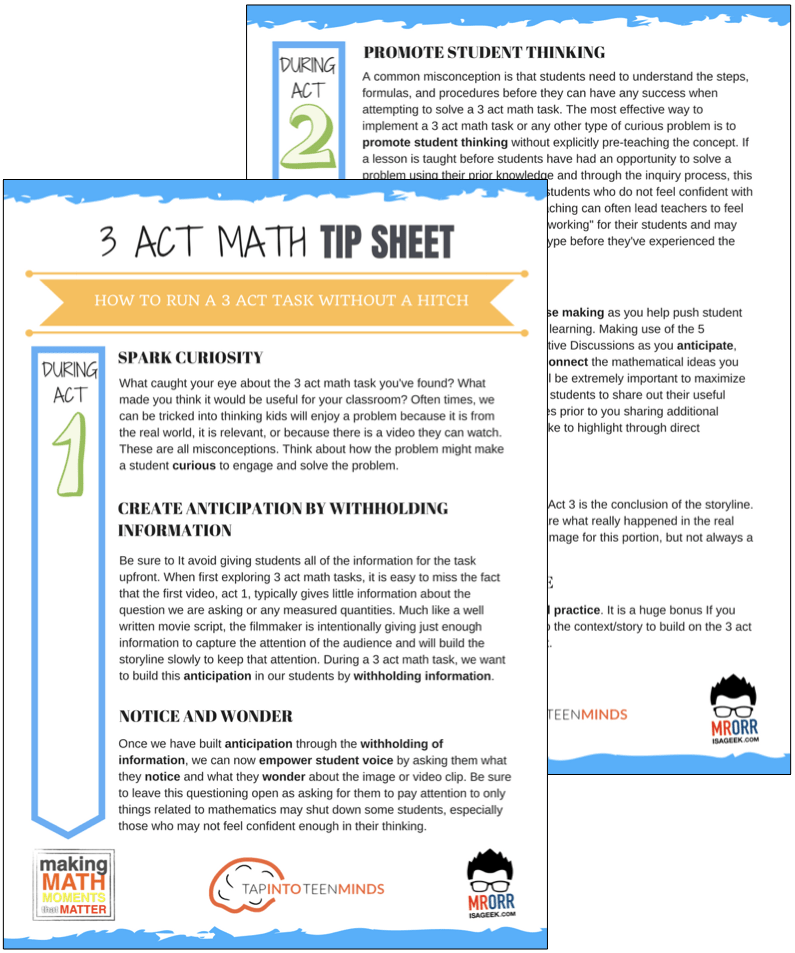
DOWNLOAD THE 3 ACT MATH TASK TIP SHEET SO THEY RUN WITHOUT A HITCH!
Download the 2-page printable 3 Act Math Tip Sheet to ensure that you have the best start to your journey using 3 Act math Tasks to spark curiosity and fuel sense making in your math classroom!
LESSONS TO MAKE MATH MOMENTS
Each lesson consists of:
Each Make Math Moments Problem Based Lesson consists of a Teacher Guide to lead you step-by-step through the planning process to ensure your lesson runs without a hitch!
Each Teacher Guide consists of:
- Intentionality of the lesson;
- A step-by-step walk through of each phase of the lesson;
- Visuals, animations, and videos unpacking big ideas, strategies, and models we intend to emerge during the lesson;
- Sample student approaches to assist in anticipating what your students might do;
- Resources and downloads including Keynote, Powerpoint, Media Files, and Teacher Guide printable PDF; and,
- Much more!
Each Make Math Moments Problem Based Lesson begins with a story, visual, video, or other method to Spark Curiosity through context.
Students will often Notice and Wonder before making an estimate to draw them in and invest in the problem.
After student voice has been heard and acknowledged, we will set students off on a Productive Struggle via a prompt related to the Spark context.
These prompts are given each lesson with the following conditions:
- No calculators are to be used; and,
- Students are to focus on how they can convince their math community that their solution is valid.
Students are left to engage in a productive struggle as the facilitator circulates to observe and engage in conversation as a means of assessing formatively.
The facilitator is instructed through the Teacher Guide on what specific strategies and models could be used to make connections and consolidate the learning from the lesson.
Often times, animations and walk through videos are provided in the Teacher Guide to assist with planning and delivering the consolidation.
A review image, video, or animation is provided as a conclusion to the task from the lesson.
While this might feel like a natural ending to the context students have been exploring, it is just the beginning as we look to leverage this context via extensions and additional lessons to dig deeper.
At the end of each lesson, consolidation prompts and/or extensions are crafted for students to purposefully practice and demonstrate their current understanding.
Facilitators are encouraged to collect these consolidation prompts as a means to engage in the assessment process and inform next moves for instruction.
In multi-day units of study, Math Talks are crafted to help build on the thinking from the previous day and build towards the next step in the developmental progression of the concept(s) we are exploring.
Each Math Talk is constructed as a string of related problems that build with intentionality to emerge specific big ideas, strategies, and mathematical models.
Make Math Moments Problem Based Lessons and Day 1 Teacher Guides are openly available for you to leverage and use with your students without becoming a Make Math Moments Academy Member.
Use our OPEN ACCESS multi-day problem based units!
Make Math Moments Problem Based Lessons and Day 1 Teacher Guides are openly available for you to leverage and use with your students without becoming a Make Math Moments Academy Member.

Partitive Division Resulting in a Fraction

Equivalence and Algebraic Substitution

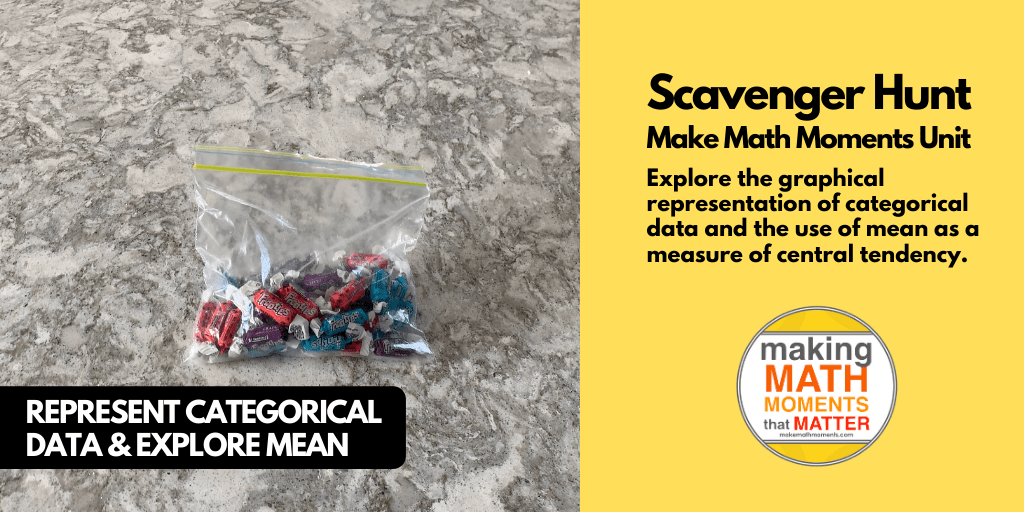
Represent Categorical Data & Explore Mean
Downloadable resources including blackline masters, handouts, printable Tips Sheets, slide shows, and media files do require a Make Math Moments Academy Membership.
ONLINE WORKSHOP REGISTRATION
Pedagogically aligned for teachers of K through Grade 12 with content specific examples from Grades 3 through Grade 10.
In our self-paced, 12-week Online Workshop, you'll learn how to craft new and transform your current lessons to Spark Curiosity, Fuel Sense Making, and Ignite Your Teacher Moves to promote resilient problem solvers.
0 Comments