Episode #489: How Do You Support 30 Schools at Once as a Math Coordinator? A Math Mentoring Moment
LISTEN NOW HERE...



WATCH NOW...
Stepping into a new math leadership role can feel exciting and overwhelming at the same time—especially when your responsibility suddenly expands from supporting one school or district to supporting dozens. Where do you begin when every district is at a different place, has different needs, and may already be working toward different mathematics goals? That's exactly the challenge facing one experienced math leader as she prepares to support 30 districts in a new regional role.
In this coaching conversation, Jon Orr explores why the first move isn't creating more professional development or trying to support everyone at once. It's going to Gemba: getting close to the work, building relationships, asking better questions, and understanding what is actually happening across the systems you serve. From there, the conversation explores how leaders can start narrow, learn fast, and implement slowly—using the Math Coherence Compass to create shared direction, identify meaningful goals and leading indicators, and build the internal capacity needed for improvement to spread sustainably.
In this episode, you'll explore:
- What "going to Gemba" looks like for math leaders
- Why starting narrow can lead to greater system-wide impact
- How to support multiple districts without spreading yourself too thin
- The importance of asking, "What are you working on, and how do you know?"
- How the Math Coherence Compass creates shared direction around mathematics improvement
- Why leading indicators provide more actionable information than test scores alone
- How to build capacity within districts instead of creating dependence on outside support
- The shift from being a reactive support provider to a proactive systems leader
If you're stepping into a math leadership role—or trying to create meaningful change across multiple schools or districts—this episode offers a practical place to begin. Start by getting closer to the work, understanding the systems you're supporting, and finding one place where you can learn deeply before trying to scale broadly.
Attention District Math Leaders:
K-12 Math Leaders: Download our free Math Coherence Compass to help your teammates, system leaders, and educators create aligned instructional practices—without adding another initiative.
K-12 Math Leaders: Not sure what matters most when designing math improvement plans? Take this assessment and get a free customized report: https://makemathmoments.com/grow/
K-12 Math Leaders: Ready to design your math improvement plan with guidance, support and using structure? Learn how to partner with us and follow our 4 stage process. https://growyourmathprogram.com
Looking to supplement your curriculum with problem based lessons and units? Make Math Moments Problem Based Lessons & Units
Be Our Next Podcast Guest!
Join as an Interview Guest or on a Mentoring Moment Call
Apply to be a Featured Interview Guest
It will take less than two (2) minutes to book your Math Mentoring Moment call.
Book a Mentoring Moment Coaching Call
Take two (2) minutes to book your Math Mentoring Moment call and let's work together to shake that math pebble out of your shoe!
Are You an Official Math Moment Maker?
Ensure that you follow, rate and review on Apple Podcasts, Spotify and other platforms to show your support and ensure other math educators can find the show.


FULL TRANSCRIPT
Jon Orr: How do you support 30 schools across a district or across a region all at once? stepping into a new math leadership role can feel exciting and overwhelming at the same time, especially when your responsibility suddenly expands from supporting one school to supporting many or dozens of schools. Where do you begin when every district is at a different place, has different needs, and may already be working towards different mathematical goals. That's exactly the challenge facing one experienced math leader as he prepares to support 30 individual schools and districts in a new regional role. Stick with us because in this conversation I'm going to unpack a and have a conversation with this leader. And we're going to dive into a coaching call that we had and we're going to kind of unpack why going to Gemba, you're going to learn what that is, looks like, what that looks like for math leaders, why starting narrow can lead to greater system-wide impact, how to support multiple schools or multiple districts even without spreading yourself too thin, and the importance of asking, what are you working on and how do you know? So let's get into this interview.
Guest: So I just took a new position. It's coordinator with the focus on math in our region to start off with. I'm coming from 12 years of teaching math and about 10 or 11 years as an instructional coach or district math coordinator. And so this is a new transition into a regional system.
Jon Orr: I guess the big question here is to say like you've done some digging in, you've done some learning before the role, but what is the What is your I guess biggest worry or pebble right now?
Guest: I would say how do I how to learn where each district is within their journey towards mathematics teaching and learning and really try to uncover some ideas of where they're at and how to support them regardless of where they're at right and making those connections and building those relationships I would say.
Jon Orr: What is your plan so far?
Guest: So far so I think getting the ball rolling with one like the early the districts who are ready to go, but also, you know, touching base and trying to start to build relationships with each of the other districts I'll be working with.
Jon Orr: Now, you being math coordinator at your own district, what did the role look like for the person that was supporting you at the regional office?
Guest: They sort of let me go and try to design professional learning in ways that best fit the needs at the time. At that time, our district was adopting new curriculum or materials. And so it was, how do we provide professional learning to support the initial beginning of the curriculum? So I had been part of a a different PD where we did something called Learning Labs or Studios. And so we got to design the lesson, build it together as a team, and go into the classroom, teach it, and, you know, talk about student learning. How did the decisions that we made impact student learning? And what were teachers' takeaways? And from that, teachers were, I heard from many teachers that this was the best PD that they'd ever had just 'cause it was in the moment, it was real. And so what we did for, we designed studios or learning labs for every grade level team with cycles in between to support the instruction or whatever their takeaways were to help them build upon those takeaways in the classroom. And so that's what that looked like. And that is what drew me to this position is that is a part of they have a real clear roadmap of their goals and how they want to get there. And that's part of the process. And so I'm thinking about that and I'm thinking with districts that's, you know, impossible to do that with all, but how can I build capacity with with leaders in districts that so they can they can use that form of professional learning to support their staff and teachers and you know whatever their goals are.
Jon Orr: Yeah. What is the I guess the the current mechanism or I guess what are the structures that currently exist for you to support these districts? What tell me what that looks like during the year? Like what is What does it look like from, like you're saying, like support leader, like what does it look like to support leaders? What does it look like to support curriculum coordinators? What does it look like to support any Tell me how that looks currently. I guess you're new, so it's maybe that might be the first step is like, what does, what am I working with here? Like what are the mechanics and the logistics that I have access to? Like is it that I can pull math coordinators every blank so often or do I get to, do I get time in front of system administrators or like the way that we look at things is there's a. There's a lot of gears that have to turn, especially from your perspective. But a lot of times it's like, I think where you started is building relationships so that you can inject learning in the right areas so that each district then can support each school to turn their own flywheels on their own. And that's really the way that we would love for school systems to build. But the farther you are away from the classroom, the longer that process takes and also the more the more we have to rely on relationships and coordination and key understanding and learning. So tell me, what does it look like?
Guest: Yeah, not having all of the information yet, but I know there is a regional math coordinator as well. And then there is regional science coordinator, literacy and MTSS coordinator that we're all part of a team. For my questions during the interview process and so on, it sounds like They want to work more as a team, but I don't know exactly what that looks like yet. Part of the math initiative, the setup has from teacher level all the way to superintendent, the monthly superintendent meetings that are held at the ESD. So providing information and getting to know people to build those relationships in those ways. I know being part of as a teacher in this ESD, There are math fellows, which is a network where there's four, I think, meetings throughout the school year. And it is leaders from districts who are tasked with building action plans towards something. It could be in their own classroom or it could be in their own PLC. It could be in their own school or their own district, but really trying to help create teacher leaders and build capacity within them.
Jon Orr: That's the part of the beginning, right, is what we have a phrase that we say is called going to Gemba. And every system, no matter where you stand in the system, whether you're at a school or whether you're at a district office or whether you're at the regional office, everyone has to decide on what going to Gemba looks like for them. And so Gemba is the Japanese term for go and see the work. One, and when we partner with schools and school districts, we start our leadership consultation in that way. We say, look, before you do anything, when was the last time you went to go to Gemba? Which is you went to classrooms, you went to district, you interviewed the key personnel. And so the farther you are, you now have more people to help, but you have to kind of decide where does that work live and who do I need to go and see so that I can see what's actually happening in schools, school districts, and what do their systems look like? So like, 'cause you're gonna be in a position that if you really want school classroom instruction to shift, and if you're looking for growth in students' achievement, but students' understanding of mathematics and maybe thinking about the proficiencies, strengthening the five different proficiencies in math, we really, it And we have kind of a saying is it always comes down to the classroom teacher, but the system that surrounds the classroom teacher makes their job easier or it can make the job harder. And so when we're not the classroom teacher, we have to look at what's happening around that in reality. What is happening at the principal level to allow that part to be easier? We were working with a district in California, and the way that they had been developing their professional development is that they were like, all schools have so much autonomy, but what they were doing was we're downloading so much to the principal level, but then not helping and supporting the principal level with what effective mathematics looks like, but they were asking them to shift mathematics instruction in their schools, but they weren't providing professional development for anything they're just saying, go make it happen. And we haven't really understood the reality of what's happening at that one school site. And then now multiply that by 60 school sites, multiply that by districts. We can't decide on what's happening across these systems without really understanding all the little pieces, because otherwise you're just setting everyone up for failure and designing the system to keep doing what it's doing, which is getting the results it's getting, which are not the same results you want. That's one of the biggest pieces. I think most leaderships, the farther they are the way, then they also feel like, oh, I shouldn't go down and see what's really happening across the systems. One of the big things that we always, I guess a practical move is to say, pick one. Pick one where you can follow. a school or get into a school. You don't have to go to all 30 or 60 schools in a district or 30 schools. Maybe you're working with, you know, there's only maybe one or three schools in a district, a middle, high school and elementary. But we always say if you can't understand what's happening in one, you cannot understand what's happening at all. And so go very, very narrow early. And we actually recommend the same with any sort of improvement support as well as like if you're going to look at designing any sort of professional development to offer anyone, decide whether that one school can take it on or that one school can create capacity around whatever we're deciding to do. If you can't do it with one, there's no way we can do it with one. The more narrow we can go early in the process, because the phrase we also, another phrase we actually use is like, is like, learn fast but implement slow. So when you go to work with a school, you're learning as fast as you can what will work and what won't. in that school setting so that you can develop the conditions for success. Some of our teams, we've coached them through that process to say we help them strengthen PLCs at a school site, strengthen what the leadership goals look like around mathematics so that they can support the PLC process and get this flywheel happening at a school site. We're trying to learn what conditions does this unique school have. that we can then go what other schools or what other school systems are like this one in this region or when this district that we can go they have the same conditions therefore we should be able to replicate and teach them this operating system over there so that now all of a sudden both of these are working but we couldn't have done that early on because we would have spread ourselves too thin. Try to figure out, let's learn quick at one, and the quick is to figure out what works and what doesn't, but then implement across a region or across an entire system slowly.
Guest: Yeah, that makes sense. What does going narrow for you look like? Are you in a building? Are you in classrooms when you're learning about districts?
Jon Orr: Yes, yes. So it depends. I guess it depends on the model that we help teams with. So sometimes what we do is when we partner with districts or schools is that we are generally working with the leadership team because what we're trying to do is take our operating system and install it in another operating system for somewhere else. And so usually what we're doing is we're working with school level. If we're working at the school level, the school level administrators, math coach, maybe the math department chair. At the regional or at the district level, it's like the math coordinator and maybe an assistant superintendent. And then usually what we're doing is consulting for also a kind of a math task force, a math regional or math team, which is made up of a group of teachers across different schools to support. They kind of act as the bridges. And so we are usually planning and strategizing what support could look like. And so we're teaching you the principles, but also the practical components of building an operating system for long-term sustainable support mathematics, which we call kind of a flywheel operating system. And so we teach the leadership team, but then what we do is depending on what the leadership team needs, we can then insert ourselves in certain spots. Our team can then maybe like, for example, there was a team in Wyoming. And so the team said, look, we understand what we need to create the flywheel. And this is out of school. And so actually it's a three school system, so it's kind of middle, high elementary. They were like, we need guidance on the leadership. We need to understand how do we make these system changes or support and develop professional development align. And we don't have a vision for math. We don't have a clear system for repeatable process yet. So we need that, but then that hinges. So the way that we unpacked it for them, they say like everything still hinges. If you wanna strengthen PLCs in school sites with grade level teams on unpacking the standards, strengthening math capacity, this is where the heart really gets to is that it starts there and it will unfold on your layers outwards. Well, sometimes we start way up here, but we say really it still comes down to that group and if that group can consistently to get stronger at the mathematics they're teaching and linking it to the curriculum and the standards and that network is strong, then that team will get better over time and all of a sudden now, but you now have to look at the layer outside to see how you can support that. So they were understanding that the layer outside they needed help with. I also needed help with the layer on the inside and that inside hinges early in the early days on a skilled facilitator, someone to lead the PLC. Because they're saying like, look, we need to prove that, but we don't have anyone that can do that. So that's usually like, because we always pride ourselves on saying like, we want to teach you that operating system so you do not have to rely on outside support forever. Because most teams, schools, school districts, they look at math improvement as someone will come and help us and we will then get that help. And then we'll do that down the road when we need more help instead of going, actually, we should be able to like, build something that we continually strengthen from the inside out and therefore we never need outside. So that when the new curriculum rolls out, we don't have to rely on them to come teach us how to use it. Or that's where we get our math PD is from the curriculum providers. We can do this within and we just need skilled facilitators to start that process. Sometimes you just don't have anything to start with. So in that team, in that example, we're coming back 10 times throughout the school year in person to support the PLC process, like a process to strengthen capacity and look into curriculum. So our coach is flying out to Wyoming 10 times throughout the school year to do that work. Sometimes like we do that work on that layer out where we come and we do a three day process with the leadership team and that task force where we build the math coherence compass together. So that got this decision-making framework, we got a vision, we know what our three-year goal's gonna look like, we know our systems of support structures, we know what our core values are to distribute to the leadership at the different school sites. Now we have it, we're ready to go. And then what we do is support virtually throughout the school year at that point. So now we're meeting monthly, we're meeting biweekly to pluck pebbles from the leadership shoes while they go and do that type of work, which is teach, teach people whole professional development on not just math, the systems that support the math. And that's, I think the biggest shift most leaders need to understand is it's, you're looking very micro and you not only have to plan for the micro moves, you gotta plan for the macro moves or at least teach people the macro moves so that you're shining transparency on how math improvement comes to be and not just trying to plug holes. And because that's how you build that sustainable part. So the people who are in your position, what we tend to do is we help them choose one or maybe two different sites or districts to pilot or partner with. so that you can go to Gemba, you can learn what they're working with, you can just help them really, while you're learning the process of the operating system or what goes into building long-term sustainable support. So we're teaching that group that, but then we're then side by side with them as we teach it to the district, because it's a learning curve really. Like the real power is, like I said, what's happening here, but the leadership team needs almost like an education around how to make that happen, right?
Guest: It does make sense. And I liked what you said about finding those similar systems and making those connections within this region. that I will be working into. Right. Okay. Can you talk about your coherence map and what that or compass and when do you use that? How do you use that? Is it with the leadership team that you talked about? And then what does that look like for going back to building sites and how how that information is is put back out to teachers and other staff?
Jon Orr: Okay, let me I got a big map here.
Jon Orr: Let's see how zooming works here. So here's an example. Okay. So typically what we recommend is this is we help teams and we consult on a four, we call it a four stage process, but it's not linear. But every single time we've helped a team develop their four stage process. And so their four stage process is what we call this flywheel. So Even though we may not do it in this order, but everyone starts with what we call design and measure math success. You can't create improvement unless you know where you're going and where you want to go. And then the compass is a way for you and everyone else to be on the same page is an easy way to explain it. Because what's happening is you might say, I want to strengthen math fluency in the district. That might be my number one goal for the next five years is to build capacity for educators, for students, and strengthen mathematics fluency strategies. But when you use the word fluency and the principals use the word fluency, you're talking, you think you're saying the same thing, but you have a completely different mental pictures of what that looks like in the classroom. And that is a big barrier that happens across school systems. And so what really your work ends up being, whether you're at the district coordinator, like that's their work too, is really just to create more coherence around things that you're focusing on. And so one of the first moves that we make is we would call this a milestone in any sort of work that we do with a district or a region is to say, you've built your compass. And so it's the, basically we help teams go through a number of activities depending on their unique constraints or their team dynamics or makeup. And our number one milestone to hit with every team is to have one of these in place at least at the leadership level, and then their job at the leadership level is to help everyone else understand how to think about this, use this to help make good mathematical decisions at their varying levels. The farther you go, the more important it is to convey coherence around these four big ideas that you, and here's the hard part is you don't develop them yourself. You have to develop them with the team or district or the school so that you aren't just saying, here's another thing you gotta do or another thing you gotta memorize or another thing that you're supposed to do, but you didn't have a say in it. You wanna do a grass floor kind of top down sandwich. so that you're bringing your expertise, you're using their understanding and their unique constraints to build something that's meaningful and manageable at whatever level that looks. And so typically what we're helping districts do is build one of these so that they can use this and teach their principal groups. Because the dream outcome here is that you've got schools operating with autonomy, but you've got principals at school sites making really great mathematic goals for instructional improvement and not just saying, hey, we're going to make 3% improvement on this standardized test next year. That's not a great goal. It's a long term measure, sure, but it's not the goal. The goal is something different. And so what we would like teams to do is help principals or school based teams build their own math goals that are around structural improvement, but really it's about student achievement in the classroom. Maybe you're going to be looking at a goal of strengthening fluency at the school level or strengthening productive struggle. Typically, the goals end up being our math practice standards, which we always kind of look at as the vehicle for or they sometimes the content standards are the vehicle for really getting at what matters for mathematical learning and mathematical understanding. And so we So like for example, that team that we went on site is we spent three days developing this. So on day one, we put them their leadership team. So they're, they had their math coordinator, they had their a principal or two, and I think they had a senior level administrator and then a few different teachers representing different grade levels. And what we did is we put them through different active mathematic activities. So tasks that span the grade levels for them to start pulling out things that they knew that they wanted their students to experience so that we together what we developed was first their vision. Like what do we want our students to experience here in our system and what do we really want to convey? This is kind of like the it's the South Point, but it's like the guiding light here. It's like, where do we want to go forever? Like 10 years from now, 20 years from now, what do we want that experience to look like? We also on that first day help them pick what is the number one thing that has to be shifted now for us to get closer to that vision. So that's a narrowing process for that district to go, what are we going to focus on moving forward? They'll say like, well, I want everything to change and well, what about that? What about that? What about that? Sure, they all matter and they all will eventually change because your one focus doesn't act in a silo. Many things change because of the one. But what you're going to do is you're going to pick one to measure. And the fact that you measure it means it will start changing. And so we say that's your three year or five year objective. So this example was this group wanted to build increased student confidence in math through fluency and number sense. That was it. It was like, it's very lot, it's still huge. Just saying anything moving forward, if it doesn't, if any decision that comes along, if it doesn't support that, we now have to start questioning whether we should do it or not. We got a new curriculum coming up, curriculum adoption coming up, we got to choose one. Well, does it do like, There are some that might do this better than others. We've got this school is now making their math goal. Why are they making the math goal that supports this? Help them make sure it does. And maybe in part of that process is helping them understand what fluency really means. Because if they don't know what fluency really means, then they can't make a goal around that effectively. And that becomes your coaching work up here to help support administrators, team leaders at school sites. The other part we did with them on the, actually we did that on the second day and we, over the course of the few days, we started building core values. These are things like non-negotiables, things that we truly believe about teaching and learning mathematics because they become a little bit of that filter as well. If we're making this choice around coaching or in our school district, does it help, like, are we violating any of these core values that we really believe about teaching and learning math. And if so, we then have to take a step back and go maybe we have to rethink how we do that instead of just do it this way. So those are important as well to kind of work out together. And really what you're doing together is just having a really open conversation about what teaching and learning mathematics looks like. And that's part of the coherence. So anyway the side part over here is about about the actual support structures that teams have access to that can actually support the goals you're putting in place. Lots of teams will pick goals, but have no idea how to actually support those goals. So they might say, I'm going to build fluency across the whole system and like, okay, great. Well, what exact mechanisms or coaching aspects or or PLCs or full day pullouts we're actually going to put into place to support them. And we have to coordinate all those. And if we're not coordinating all them, then you're misusing them. So that's an important component of that. So really what you're doing is you're calling to attention what each district has to work with to get a goal. So we did basically on the first day, what we did is we built the north and the south. with that team. And then the second day we, and this is optional sometimes, but a lot of teams help us decide like this is a good move is our team went into the schools and did almost like a mini audit to test whether those that objective was the right objective.
Jon Orr: We could see, hey, maybe you're already doing great at this. You just don't know it. Or maybe you should be focused on something else. So we went into the schools to look around. What we also did prior to that on that first day is we built a look for list based off the north and the south. What should it look like? What do we really want to see? And so that's the measurable part. How are we going to measure that it got better on fluency or number sense? Let's co-create not only a walkthrough checklist or a look for list, but a continuum. What should it look like now? What should it look like three years from now? What should it look like five years from now? How do we know we're improving? So we built that together and then really what that team now had was a rubric for not only measuring their success long term, but also a teaching rubric. Now when we go to co-plan lessons in the PLC, we can look to that to go, are we doing these items or are we not? And therefore now we use it to build coherence around lesson planning. So we tested that look for a list when we went in and then we made some modifications and came back on the third day and then really focused on this side of the How are you going to accomplish this? What does that look like? What is it gonna be? And then for that group, we focused on using PLCs 'cause they had time. That unique district had half-day Mondays. Every Monday they sent the kids home early and they spent the rest of that day using, that was supposed to be professional development time, but they had not used it well. It was logistics and you had a department meeting here, but they didn't really use it well. So we said, okay, look, if you've got an hour, Here's what you're going to do in that hour. And we gave them the format. We gave them the repeatable cycle and the structure so that they could start using this. And then now they not only have their compass, but they also know how they're going to start laying this out. And so the district got narrow and said, let's do this with one school so that we can learn how to do this with other schools. And then their job is to teach the leadership how to think about all these components.
Jon Orr: What else is on your mind?
Guest: Yeah, I'm just taking a ton away. I really like your, you know, what you mentioned about being narrow and starting small, you know, districts is impossible, you know, in the course of the next 365 days. So thinking about narrow and really learning about the districts, where are they, what are their needs, what resources they have, helping them think through their own thinking.
Jon Orr: Okay, we can I can send you like some of the prompts and getting started things that we use when we meet with teams to see like, this is the first activity we do and to start to unpack where they really want to go. Because what we're trying to be is the coaching role, but act as that leadership role. But instead of saying, because I think a lot of regional teams kind of go, they sit back and wait for someone to say, I need help with blank, send someone over here to help me with blank. Instead of being like, here's, let's go and and develop what our recommendations across the board would look like. But then also go here are the support pieces for the next three years we're going to support you with. so that you're not spread too thin and then you're not is to say, here's an important component. You're going to maybe go and part of your work will be to start to introduce yourself to different key people across the region and start to kind of build your network. Really going to Gemba is going to be really important for you so that you can then go, what you're seeing here and here? What does it look like over here and what are you focused on right now? What is your goal? What is your goal? What is your goal? And realize that everyone's goals are a little bit not real instructional goals for student growth, but they might be just standardized test goals. And so now you realize that, hey, we need to support in goal setting across the region. And that might be a thing that you offer. If the district, if the region is already in this mindset that we reach out to the regional team when we need support, you might be first starting to go, here's our course offerings and here's our timelines on what's important for long term sustainable math improvement. Or I'm holding a session here and we recommend you sending so and so, so and you know, this number of teachers or maybe it's about principles and building almost like what your course offering could look like and starting the process of saying, here are really the important pieces. we are consulting with so that you're now positioning yourself as a thought leader, but also a leadership role instead of saying that person that's saying like, hey, we need building thinking classroom work. Come over and help us.
Guest: Yes, and that's what I want. I've been sucked into that trap before and I know exactly what you're saying and trying to, I mean, I want to support the work that they're working on, but also want it to be more coherent and more sustainable.
Jon Orr: Exactly. Like to me, it's going to be for you asking really good questions that capture what are your goals? What are you working on? How do you know? How do you know you're making improvement in those areas and what does that look like? Like tell me what that looks like. And if they're saying, I look at the standardized test results, then what they're telling you is that they're looking at lagging indicators and not leading. So what are the leading indicators going to be so that we know throughout the year what moves we can adjust to create shift? And that technically usually means like, well, what are we doing to help learn what instruction shifts we need to make? Because lagging indicators like student test scores don't tell you anything about that. It's too cloudy, right? So we tend to help teams set up what those leading indicators could look like so that we can make adjustments as we go. And then we get to the end of the year, we know where the improvement is in terms of instructional practice. Most teams can't tell you that. So when you talk to leaders about goals and what their goals look like, what they're working on, Try to keep that in mind so that you'll like say, okay, so I'm hearing from five of these districts that they don't really understand. They're saying they're working on stuff, but they don't know how they're measuring it. And that's an issue for long term sustainable shift, because what you're going to what they're really telling their teachers is, I don't know what we're really measuring other than long term student achievement. But next year's stuff is gonna be different than this year's stuff because when we get to the end of the year, we're not gonna know if it worked and we're gonna start again. We're gonna start again and we're gonna start again. And so you'll know that part and go, okay, let's work on some goal setting and what we could be looking at with the leadership. And then if you're talking with individual math coordinators specifically, ask them the same questions. What are you working on? How do you know? Those are pretty much the guiding questions we ask all teams, and that really drives the work. Well, we're working on too many things. And then now all of a sudden that's their cue to be like, let's pick one. Let's pick our North Star on our campus. We need probably to look at how we're supporting that. Let's look at the west side of the compass. The compass can be a helpful tool for us to make sure that you're on track. And then now you're looking and you go back to that and you say, where are we on the compass? Where do we need support on the compass? And now you're coaching role, but you're kind of steering them to the right pieces.
Guest: Yeah, that's awesome. I can just see how valuable the compass can be with working with schools and with districts. So I really appreciate. this time together and just helping me process through this new role and get some ideas down. And it's been really, really helpful.
Jon Orr: Great. What would you say is your number one takeaway today?
Guest: My number one, I think the going to Gemba and really digging in and learning ground floor, you know, what's going on. That's number one, along with the questioning, you know, what are you working on and how do you know? And I think that, like you said, leads right into the north and south of the compass and helping to create the capacity to support teachers in student learning. All right. Awesome. Thank you, John.
Jon Orr: Of course. Anytime.
Guest: Okay. Have a great day.
Jon Orr: Take care. I hope you enjoyed that interview with this district, regional district coordinator. We had a great conversation. We hope that you had some takeaways from that conversation that may have related into your situation. If you are curious about the Math Coherence Compass, or if you are also curious about our district-wide math assessment, which is a tool that we put into place with many of our districts that we support, gives them a sense of where to start on math improvement planning. Head the links below. In the links of the description of this podcast episode, there are links to get the compass, show notes page. and also any of the goodies that we talked about here. Grab those links and you can get started. And if you are looking for having a coaching call like you heard just here, head on over to makemathmoments.com/district and we can be talking about what this strategy call looks like for you and maybe giving you some next steps to begin or continue your math improvement efforts.
Your Customized Improvement Plan For Your Math Classroom.
Take the 12 minute assessment and you'll get a free, customized plan to shape and grow the 6 parts of any strong mathematics classroom program.
District leader/math coach? Take the District Assessment
Thanks For Listening
- Book a Math Mentoring Moment
- Apply to be a Featured Interview Guest
- Leave a note in the comment section below.
- Share this show on Twitter, or Facebook.
To help out the show:
- Leave an honest review on iTunes. Your ratings and reviews really help and we read each one.
- Subscribe on iTunes, Google Play, and Spotify.
The Making Math Moments That Matter Podcast with Kyle Pearce & Jon Orr
Weekly interviews, strategy, and advice for building a math classroom that you wish you were in.
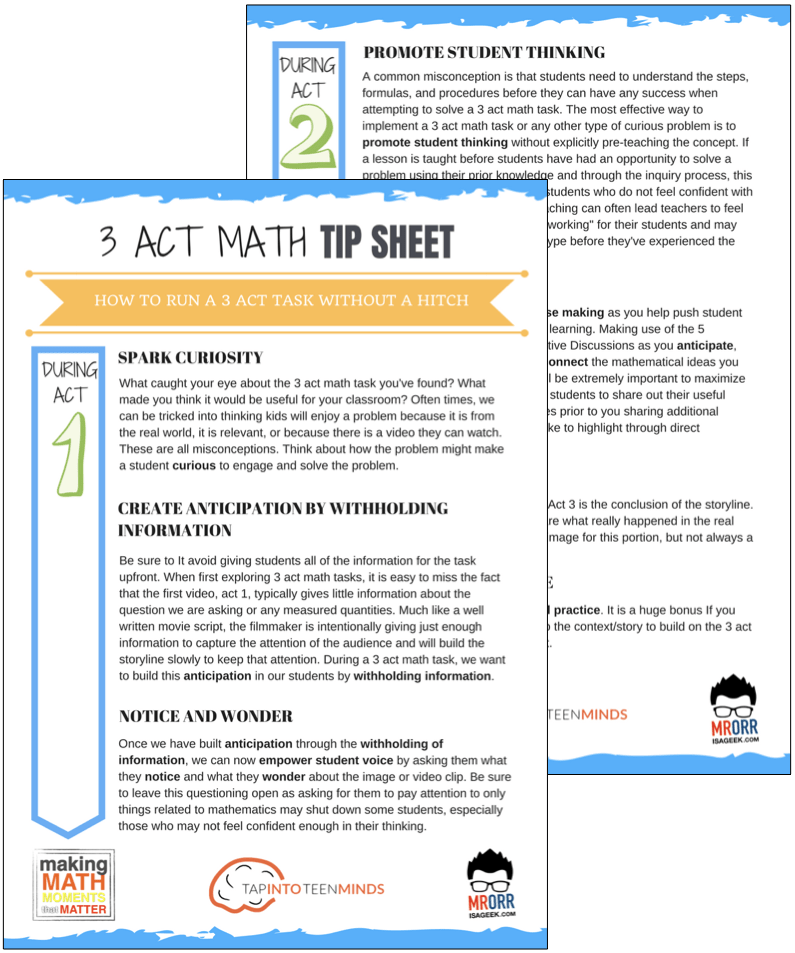
DOWNLOAD THE 3 ACT MATH TASK TIP SHEET SO THEY RUN WITHOUT A HITCH!
Download the 2-page printable 3 Act Math Tip Sheet to ensure that you have the best start to your journey using 3 Act math Tasks to spark curiosity and fuel sense making in your math classroom!
LESSONS TO MAKE MATH MOMENTS
Each lesson consists of:
Each Make Math Moments Problem Based Lesson consists of a Teacher Guide to lead you step-by-step through the planning process to ensure your lesson runs without a hitch!
Each Teacher Guide consists of:
- Intentionality of the lesson;
- A step-by-step walk through of each phase of the lesson;
- Visuals, animations, and videos unpacking big ideas, strategies, and models we intend to emerge during the lesson;
- Sample student approaches to assist in anticipating what your students might do;
- Resources and downloads including Keynote, Powerpoint, Media Files, and Teacher Guide printable PDF; and,
- Much more!
Each Make Math Moments Problem Based Lesson begins with a story, visual, video, or other method to Spark Curiosity through context.
Students will often Notice and Wonder before making an estimate to draw them in and invest in the problem.
After student voice has been heard and acknowledged, we will set students off on a Productive Struggle via a prompt related to the Spark context.
These prompts are given each lesson with the following conditions:
- No calculators are to be used; and,
- Students are to focus on how they can convince their math community that their solution is valid.
Students are left to engage in a productive struggle as the facilitator circulates to observe and engage in conversation as a means of assessing formatively.
The facilitator is instructed through the Teacher Guide on what specific strategies and models could be used to make connections and consolidate the learning from the lesson.
Often times, animations and walk through videos are provided in the Teacher Guide to assist with planning and delivering the consolidation.
A review image, video, or animation is provided as a conclusion to the task from the lesson.
While this might feel like a natural ending to the context students have been exploring, it is just the beginning as we look to leverage this context via extensions and additional lessons to dig deeper.
At the end of each lesson, consolidation prompts and/or extensions are crafted for students to purposefully practice and demonstrate their current understanding.
Facilitators are encouraged to collect these consolidation prompts as a means to engage in the assessment process and inform next moves for instruction.
In multi-day units of study, Math Talks are crafted to help build on the thinking from the previous day and build towards the next step in the developmental progression of the concept(s) we are exploring.
Each Math Talk is constructed as a string of related problems that build with intentionality to emerge specific big ideas, strategies, and mathematical models.
Make Math Moments Problem Based Lessons and Day 1 Teacher Guides are openly available for you to leverage and use with your students without becoming a Make Math Moments Academy Member.
Use our OPEN ACCESS multi-day problem based units!
Make Math Moments Problem Based Lessons and Day 1 Teacher Guides are openly available for you to leverage and use with your students without becoming a Make Math Moments Academy Member.

Partitive Division Resulting in a Fraction

Equivalence and Algebraic Substitution
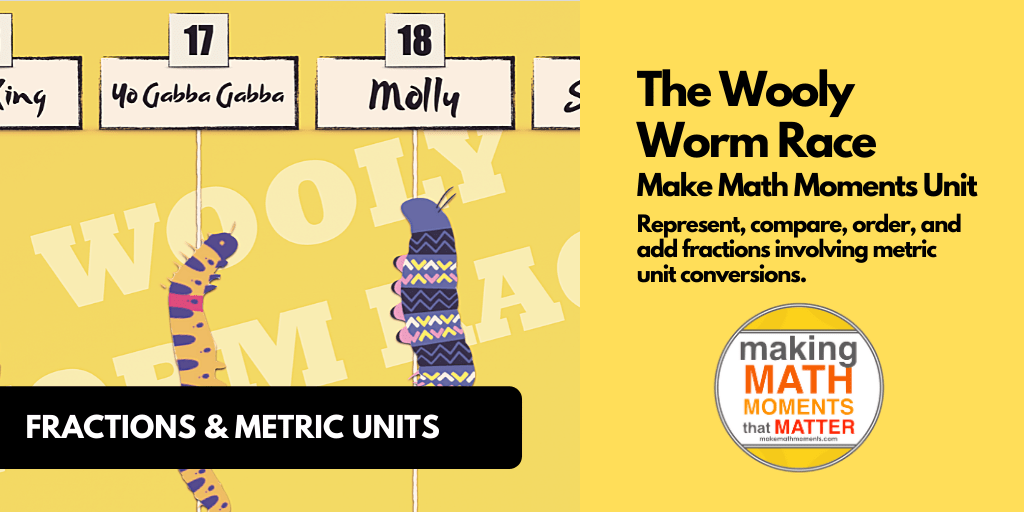
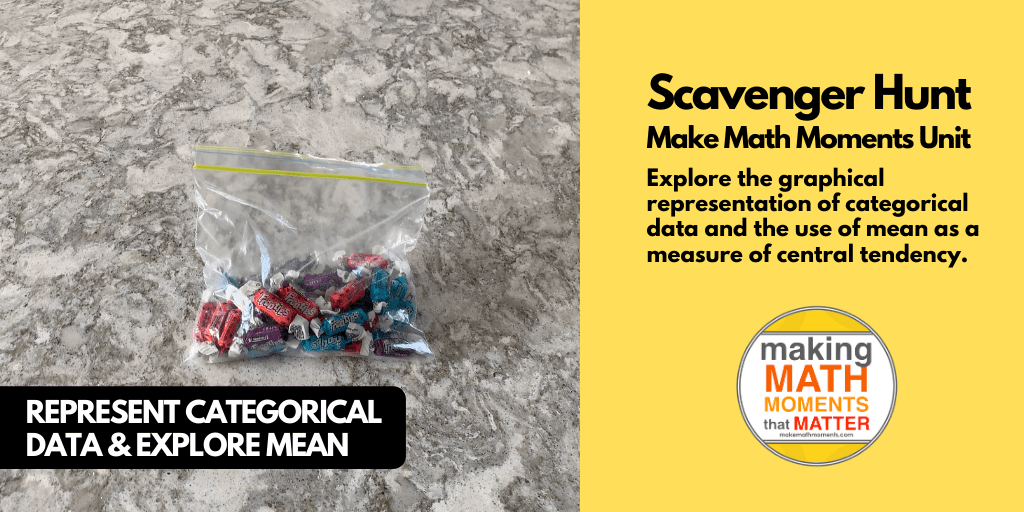
Represent Categorical Data & Explore Mean
Downloadable resources including blackline masters, handouts, printable Tips Sheets, slide shows, and media files do require a Make Math Moments Academy Membership.
ONLINE WORKSHOP REGISTRATION
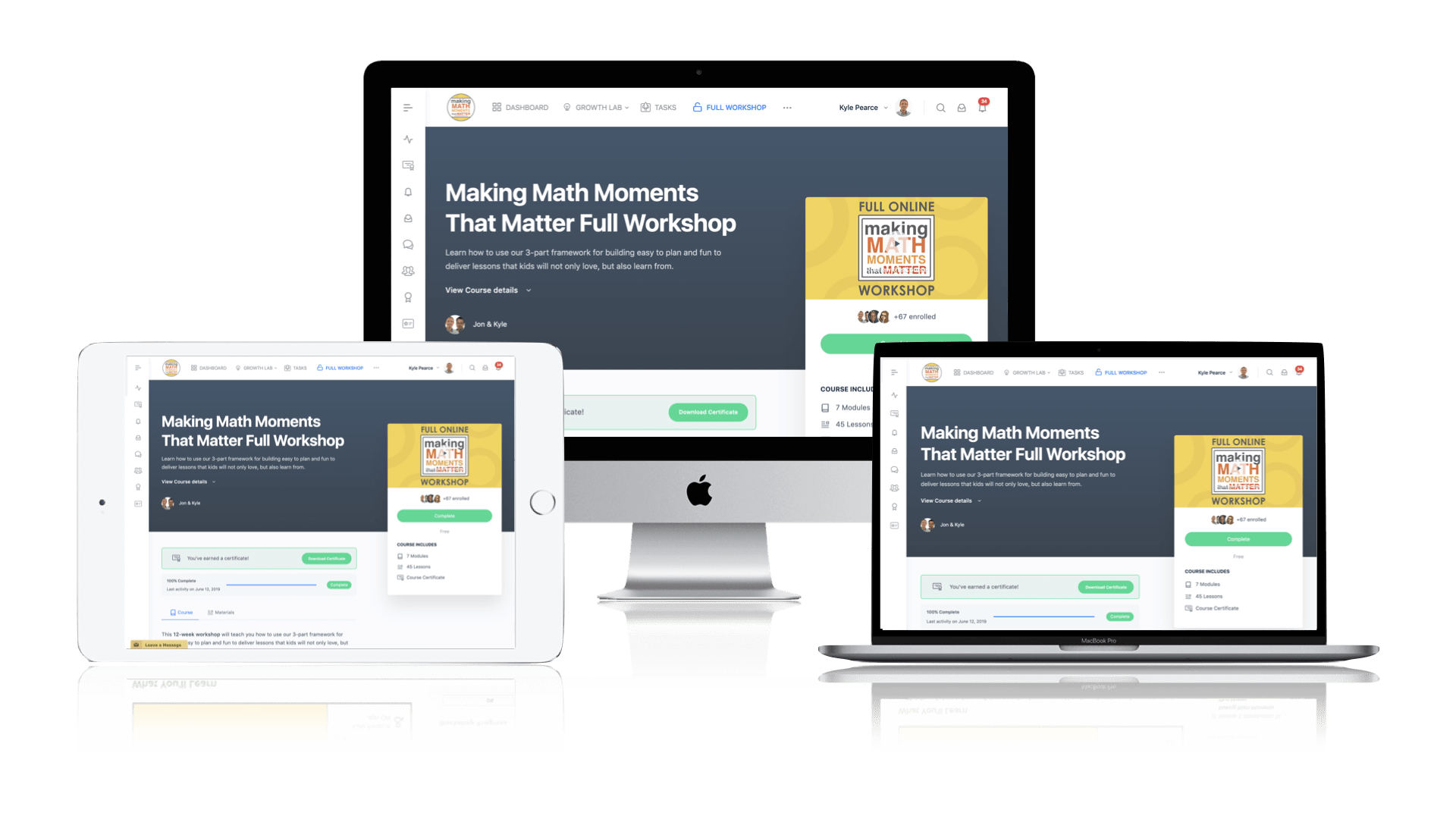
Pedagogically aligned for teachers of K through Grade 12 with content specific examples from Grades 3 through Grade 10.
In our self-paced, 12-week Online Workshop, you'll learn how to craft new and transform your current lessons to Spark Curiosity, Fuel Sense Making, and Ignite Your Teacher Moves to promote resilient problem solvers.
0 Comments