
Episode #509: Chris Luzniak & Kerry Smith: Using Improv in Math Class to Listen as a Learner
LISTEN NOW HERE...
WATCH NOW...
In this episode, Jon Orr talks with Kerry Smith and Chris Luzniak about their upcoming session at the 2026 Make Math Moments Virtual Summit, Listen as a Learner. Drawing on Chris’s background in theater improv and Kerry’s elementary experience, they explain why heavily scripted lessons can keep teachers focused on getting the right answer instead of listening to what students are actually thinking.
Kerry and Chris share the three Bs of improv, why clarity about your lesson goal gives you permission to adjust, and how to respond to unexpected answers in ways that keep students in the conversation. They also explain why improvising well still requires careful planning, and what “yes, and” really looks like in a math classroom.
In this episode, you'll explore:
- Why Chris hopes students see math as connected and beautiful, not isolated rules
- Why Kerry wants math to feel like a natural part of the day where every student belongs
- How scripted lessons can work against listening and responding to students
- The three Bs of improv: be present, be positive, and be curious
- How clarity about your lesson goal gives you freedom to adjust in the moment
- What a tour guide analogy reveals about responding to the group in front of you
- How to respond to unexpected or incorrect answers with an asset mindset
- Why you still need to plan carefully in order to improvise well
- Why responsive teaching may lead to less reteaching later
- What “yes, and” really means in math class, and why it starts with accepting a student’s thinking
The next time a student gives you an unexpected answer, pause before responding. Ask yourself: What is this student’s thinking, and what is reasonable about it? Try a “yes, and” response that accepts their reasoning as a starting point, then build from it toward your learning goal. Afterward, reflect on how the response affected that student and the rest of the class.
Attention District Math Leaders:
K-12 Math Leaders: Download our free Math Coherence Compass to help your teammates, system leaders, and educators create aligned instructional practices—without adding another initiative.
K-12 Math Leaders: Not sure what matters most when designing math improvement plans? Take this assessment and get a free customized report: https://makemathmoments.com/grow/
K-12 Math Leaders: Ready to design your math improvement plan with guidance, support and using structure? Learn how to partner with us and follow our 4 stage process. https://growyourmathprogram.com
Looking to supplement your curriculum with problem based lessons and units? Make Math Moments Problem Based Lessons & Units
Be Our Next Podcast Guest!
Join as an Interview Guest or on a Mentoring Moment Call
Apply to be a Featured Interview Guest
It will take less than two (2) minutes to book your Math Mentoring Moment call.
Book a Mentoring Moment Coaching Call
Take two (2) minutes to book your Math Mentoring Moment call and let's work together to shake that math pebble out of your shoe!
Are You an Official Math Moment Maker?
Ensure that you follow, rate and review on Apple Podcasts, Spotify and other platforms to show your support and ensure other math educators can find the show.



FULL TRANSCRIPT
Jon Orr: Hey there, Kerry and Chris. Welcome to the Making Math Moments That Matter podcast. We've been excited to have this conversation for a while. You're both speaking at the 2026 Make Math Moments Virtual Summit, but welcome today to talk about that session and I'm sure more. But how are things? How are things, folks?
Chris: Good, good. Thanks for having us.
Kerry Smith: Things are good. Yes. We're excited.
Jon Orr: Amazing. Amazing. So one of the, you know, we're going to be talking about improv and we're going to talk about Listen as a Learner, which is your session title at the summit, like I said. But before we do, I've been asking every guest so far in this series of interviews and podcast episodes that we've had to highlight the summit sessions coming up. The question I've been asking folks is, because in our past episodes, if you listen, and Chris, you would have answered this probably back when we had you on as a previous guest, which is, you know, we used to say, well, like, what's a math moment? A moment that sticks with you over the years.
But now what we want to do is look to the future. So imagine you've got a student that you've taught in maybe in your past, but imagine that you're teaching them now or they're in your care now, but it's been 10 years, it's 15 years, it's 20 years. You meet them at the store and you ran into them, you're like, oh, you know, good to see you. And you said, hey, what was the biggest takeaway, like what was the biggest takeaway you had in mathematics while you were in our school or our school district or just my classroom? And I guess the question that we need to reflect on is in that for each of you is just the question of what do you want them to say? What do you hope they say? Who wants to take that one on first?
Chris: I can go first. I think what I want for all my students always is to say to me down the road, like, wow, math makes so much sense. Math is so connected and it's so beautiful. I feel too many students and teachers just think of math as a bunch of isolated content rules and procedures they memorize. And I want students to say, this connects to that and it makes sense because of this. And I want all that reasoning to happen.
It's why, like some of the work Karen and I have been doing with improv, like really sitting with kids in the moment and building on what they know to get to the next step of understanding and build the stepladder or whatever of connections of the web of connections between the ideas. So I want my students, some of them who are, you know, my past students are in their like 30s and 40s now, but I'd love if they were like, hey, I just remember like this connects to that and I see it in the real world sometimes where like this is just like that method we did or something like that. I want the big picture and all the connections to be strong.
Jon Orr: Kerry?
Kerry Smith: I gosh, I was trying to be a good listener because that's also part of improv, right? So I was listening. Chris is my middle high school partner, right? I'm a little more elementary-minded because that's my background. And I guess in my opinion, in elementary school, math's become almost a little bit negative. And I don't know if I want my students to necessarily, I want math to just be like it was part of our day, right? Like I felt like I belonged in your classroom. I loved being in your classroom. I loved learning, but not math as not math as I remember learning this one thing about math and this one thing about reading and this one thing about science. I just want it to feel this sense of belonging and that they could do it, right?
Jon Orr: Right. Right. Yeah. You know what? Like when you said that last statement there, this is gonna be an analogy. Take it as it is, or maybe like Jon, you're way off base here, but it made basically it made me for s and this is my sports background coming into play, but I was a referee for basketball for a number of years, but it made me think almost like this like with the way you're saying it's like it's almost like part of just what we do. And it made me think about yeah, made me think about like if you're watching a sports game and you notice the referee, they did a terrible job. You know what I mean? Like you shouldn't notice the referee, which means like they blended into the background. It was just they're there. That's just part of the part of the game. It's like part of natural life, in a way, part of the sport. It's like you don't see them.
And it was like, and therefore, you didn't see that the referee was different than the players. It was like there's all one. And therefore, like to me, it was like what I was getting as an image of like just saying the mathematics is just what we're doing during the day, and it's part of who we are, and it's part of like it, you know, almost like and I w this is maybe my hope for kids is like you don't see it as the other subject. You know, it's just part of what we're learning on a regular basis and part of life, instead of seeing it as something completely separate, like you'd see a referee as separate to the game than the actual players.
Chris: Love that, yeah.
Kerry Smith: I don't love that one of my memories of math is that special day that we talked about mixed numbers and improper fractions. Like why do I remember that? Why don't I just remember talking about fractions overall, right? So I want them to see math as something we did in this classroom that I belonged in and I was challenged in and
Jon Orr: Right, right. Take me to the improv then, because your session is Listen as a Learner and in your description you talk about bringing improv principles into the math class. And I guess here's an interesting thinking is if we want math to blend in, and if I'm bringing improv principles into it, does that like all of a sudden mean I gotta it stands out? Like what is it about improv that we really need to consider in the math class?
Chris: I so here, let me first say I think my biggest pet peeve right now when you're working with teachers and colleagues is that I see the opposite of improv. I see super scripted lessons. And some of it comes from like pressure teachers feel to, you know, teach curriculum with fidelity, like high-quality instructional materials, all those kinds of things. And they feel like they have to do everything in the textbook or the curriculum or the resource exactly as it is in that order and there's no freedom to play and they're just kind of looking for, okay, did I get the answer I want? Check. Okay, I could not go to the next problem.
Jon Orr: Right, right.
Chris: And I think if you did improv, it would be the opposite of standing out. It would be much more natural conversation and give and take.
Kerry Smith: With yeah, and more responsive to what my students need in that moment.
Jon Orr: Right. Is it, I guess then is it like you're basically saying this the scripts that we currently have or you were seeing in our classrooms is is typically I think when I you what you said there is like what I got a sense of like when I thought to my first 10 years of teaching or what the math experience that I taught in, which is like, here's my lesson, I sit down, you know, go do your homework and we'll repeat that next year. And it the improv ideas of saying like, wait a minute, we need to create some sort of environment here where I'm not speaking first and then therefore am I reacting? Tell me more about like what this looks like for you folks.
Kerry Smith: So and so if all I'm doing is following a script that's from whatever I'm using, it does the script meet the needs of every single student in front of you? Are we assuming that they don't know? And so I need to start where this script starts, or could I just start with a question and see how they respond to me, right? And if I'm being a good listener and I'm listening as a learner, then I'm able to respond or ask a question based on what they are saying.
Chris: And I'll say like someone with coming I come from a theater improv background. Most people aren't just naturally good at these things, but they take classes and they have experiences and you know they're on stage or whatever over and over again and they grow the skill. And that's what I want to help teachers do is build those skills. Like we, I think in this current moment, especially, we as adults are not good listeners and we're just trying to get the answer we want and move on to the next thing.
And so kind of like what Carrie's saying, it's too many teachers I see in the classroom ask a question and are just looking for the right answer, aren't listening to what kids are saying. And some of the things they're saying are brilliant mistakes that could lead to like deep, deep understanding. But because they're just looking for the answer so they can move on to the next part of the script, they're not in the moment with the students and they're not responding to students as they go. And so it comes off kind of stiff, and I think kind of Carrie saying earlier, like it doesn't make kids feel included. It doesn't make them feel part of the conversation. And it makes it feel like there's just side of rules I memorize and I move on.
Jon Orr: So what are the skills? Like you said, you mentioned the skills. Like what if we've what do we like if I imagine I'm that teacher that you're thinking about right now? Tell tell me what do I need to think about to act more improv like in my classroom skill-wise? Because you're saying like people who are learning improv are taking classes, they're practicing. Like, what do I need to consider to say, take improv practices and apply it to my math class so that I get better at this?
Kerry Smith: Listening better with that. I mean, I feel like that's kind of the first a big piece of this is how do I listen, which we know is very hard. It's very hard as a as a spouse and as a teacher, because of all the things going through your head and the to-do list and the standards that I need to teach. And Chris and I were talking before this, like most teachers, I have 60 minutes to get this done. And so they're distracted and I have to keep going instead of pausing and listening to how students are responding. So I would say listening is a big skill, being a better listener.
Chris: Yeah, I Carrie and I we have a whole like three or six hour session we do on improv with teachers. I really dig in and we talk about the three Bs, like be present, be positive, and be curious. And I think those are some of the keys of improv. And we all think we're good better at some of these skills than we actually are. And so like we want to spend time with adults to build those skills and get them more comfortable with like letting go of all the things in your mind, letting go of the script somewhat. And being able to like just live in the moment, be present with students, listen to them, respond to them, and do it all with a positive attitude, which I think so many students feel like their answers are shut down if it's not the correct answer. And so that's an exclusionary practice for students.
Jon Orr: What I if I guess what is there like so there is there's to me there's sometimes a legitimate fear, right? Of of saying like if I have if I have relied on my curriculum, if I have relied on say the lesson plan and I'm I'm using air quotes now, like I'm teaching the curriculum to fidelity, I'm I'm following the line here. And then if I go off script, the fear of like, did I cover this? In the right time, or did I did I take too much time? Am I off track? Like, what do we say to these teachers who are concerned about going? I could go down this pathway, but if I go down this, like if I stick to this pathway, I know the timing is going to be okay. But if I go down this pathway, I'm like, it's a risk. And like, how do I help a how do we help a teacher kind of see battle that interior. I think it's an interior barrier that we're sometimes I think many of us are battling on a consistent basis of timing and and understanding where we need to go with students to help them the best way possible. Like how do I convince a teacher to like this is worth trying?
Chris: Yeah, I I'll say like I think a big part of it is clarity around your goal for the lesson. Like say I'm teaching Pythagorean theorem or whatever, my lesson may have twelve different problems and activities I could do, but if students are mastering it on the first two after the first two activities, do I have to do the next 10? Right? Like does it actually matter? Can I still follow the curriculum with in quotes fidelity if they are nailing it and like I'm saying like deeply mastering it in just like two or three problems, like is that enough? Can I just move on to something else or you know go a different direction? And I think teachers don't feel the freedom all the time to do that. That's where like the script becomes too heavy.
And the same thing, like what if I do all twelve and they still are clueless about what's going on? What do I do then? I don't just give the quiz and move on and say, you all failed. Like I have to do something in the moment. So it's like, and on all levels, like how do I respond to what students are doing in the moment and build the skills to build off of whatever is happening in the moment?
Jon Orr: Do you think do you think it's a lot of it is like we just don't we don't know that we have permission to do this? Like this type of thing.
Kerry Smith: Yes, yes.
Chris: Sometimes, yeah.
Kerry Smith: I we we know that students are in different places. I mean, the students sitting in front of us are all in different places, but I don't feel like our teaching practice is supporting that. Right? Because if I'm standing following this script, I'm assuming that everybody's running at the same speed.
Jon Orr: Yeah. Yeah.
Chris: Yeah, we talked a lot about the our tour guide analogy, Carrie and I, of like if you were on a tour in an art museum or, you know, in Europe in a city or whatever, there are some brilliant people who are tour guides who are not trained in pedagogy, who have a script and we need to go to this artwork and this building and let me tell you the history of this and we'll move to next one. But like, what about the person who needs to stop and get a drink of water? What about the person who wants to look at this one thing a little bit longer. What about the person who wants to like look at the side thing that wasn't part of your script? Like, how do you manage all of that?
And I'm not saying it's easy, but I think it's something we have to embrace and build skills around being present with the group that's in front of us. And like our first period is different than our second period if we're teaching multiple classes. And we have to learn and build those skills, especially I think in this super techie world where we're used to this like scrolling our phones, doom scrolling all day. Like how do we really be present with the people in the moment and respond to what they're saying? And some of it's giving yourself permission to deviate. And some of it is building the skills to know what to do in those moments.
Jon Orr: What I was gonna ask here is I guess specifically when you think about like your session that you're going to host coming up, if you think about flash to the end of the session and say you're you know, if you attend our session, you're gonna learn this to apply in your classroom and this to apply in your classroom and this to apply in classroom, what would one of those be so that we hey, that's worth attending.
Kerry Smith: Oh. The session is challenging us a little bit because we have to do it virtually, right? And improv virtually is challenging our thinking a little bit. And how can we practice improv virtually? I don't know. I guess my takeaway would be the importance of pausing and listening to what our students are saying. I don't know, lately I feel like we're making a lot of assumptions on what students can't do instead of let me listen to what they're saying because that can also guide me, that could make them a lesson move quicker, or that could help me better understand what gaps I need to fill in for students. So just this idea of listening in a positive way.
Chris: I'm thinking of I wish people will leave with like a playful curiosity to try some of these things with their students because we have some activities. I'm not sure how much will fit into their our hour or less and virtually it'll be a little tough. But some of the ways like when a student gives you a let's say unexpected answer, maybe partially right or or way off or whatever, like Carrie and I talk about the different ways we could deal with those in ways that are still welcoming and embracing positivity, like an asset mindset. And then using that to build the understanding of the lesson, like whatever your lesson goal is.
So I hope they leave playfully curious to be like, I want to try some of that out. Like when I get a weird answer from a kid tomorrow, I'm gonna try doing this instead of saying, like, no, that's not right. Does someone else have an answer? Like it's just kind of shutting that down. Like, how do we use some of these skills to engage the students and like, we could also some I sometimes and Carrie has done this, like teach a whole lesson off of a wrong answer. We get a wrong answer and then we actually get to the whole understanding from that. Like it can happen. And that's what we want to talk about with teachers. And so just all the ways we can play with responses we're getting from students in a way that makes it feel like this is genuinely happening in the moment.
Jon Orr: If I when I attend this like this session or any of the sessions around this idea, like if I'm a classroom teacher, what are some things I don't I haven't yet considered, like barriers that might be up against me currently that I should be aware of to make the practices that I would learn in a session like this easier to adopt to my classroom? Like what I guess what do I what do I need to go? Oh, you know what? I either need to be I need to bring this, I like I need to consider this thing in order to be better at that. Or I need to like address that there's this barrier ahead of me in order for me to do this in the classroom. Like what should I be aware of that I'm unaware of right now?
Kerry Smith: Chris, I'm thinking, is it something or I'm thinking like planning, right? Maybe a way that I don't know. I'm needing Chris to be my thought partner for a second. But just this idea of planning with instead of following this script that this is the way the lesson is supposed to go, almost planning, hey, here's my student learning goal and what do I what do I want to do to get there? What question do I want to ask to help me know where their thinking is? But so your path is almost a little rough, but we know we're getting to that student learning goal.
Chris: Yeah, we talk a little bit about the teacher paradox. Like you have to plan for improv. So it's it's it's a balancing act, right? You it's not that I don't go in there and just like show up one day and be like, okay, let's just see where the lesson and what happens today. Like I still have goals in mind, I still have activities in mind. It's just how do I give myself space and like how do I plan intentionally to give myself the space for the improv?
Jon Orr: Right. Like what do you plan? Like Chris, like what when you're actually practicing improv, like what do you plan going into that environment?
Chris: It depends on what we're doing. I mean, like sometimes very little, right? Sometimes it's just about getting the habits built around getting out of your head and just being in the moment. But sometimes it's like we need to practice, you know, I don't know, like the way we play with each other more in the scene. I want to do a scene where we are focusing more on our relationship and less on the environment or something. I wanna focus more on how we wrap up the scene in a way that like ties it all back together, like things like that. We might plan on things like goals we have, like objectives for a lesson, right? But then we go in not quite knowing what's gonna happen. And if we're doing it in front of a live audience, we may ask for suggestions, right? Like you're on a boat, you have an apple, whatever, like you have these things. Okay, we have to go with whatever the audience said, and we still want to get to this objective.
And that's what I'm trying to do with teachers. Like you're getting all these crazy answers from kids. How do you still get to that objective with the audience participation that's coming at you. And I think I also think part of it is just a skill. Like we have to practice this. I don't think it's natural for many people to do this. And so like we have a lot of games and activities we do with adults in our sessions that like go home, play this or practice some more with your husband or wife, with your best friend, whatever it is, just like practice and play with it and get used to like rolling with it in the moment.
Jon Orr: As a classroom teacher, is the practice then just being open and like we just have to be vulnerable enough to say, I'm committed to being a better listener in my classroom to create a more engaging environment, but also inclusive environment. And in the way I can only practice that is to just jump in and do it and then be okay with whatever happens in that day. And I have to push aside the I might have to reteach this someday, or I might have to go back over it. But what I'm doing is I'm committing to this type of process long term so that the student 10 years from now says that's the environment you created, but it doesn't, it's not created immediately. It's created over time. And we can't just expect to be good. We have to say, well, if I'm committed to having that type of environment in my classroom, I have to commit to it, which otherwise, where do I practice it? Right.
Kerry Smith: I actually think there's there would be less reteaching needed because I am being more responsive to them.
Chris: Yeah. People who are following the script have to go back and reteach all the time 'cause kids didn't get it. Yeah.
Kerry Smith: Because we're not listening.
Jon Orr: Yeah. Right.
Kerry Smith: Yes, we're not listening.
Jon Orr: Right. You're not listening. And then the other part that I tend to think that, and this is just a barrier I always try to identify for myself, is yes, I can be reactive to students, but I also have to make sure that I feel confident with the mathematics. I feel confident with where we need to go in that lesson. The learning goal. Like I need to know, like that if you say this strategy, I have to be pretty like I guess I have to be open enough to explore that concept in live time or feel good about where that is and in the trajectory of where we need to get to in a learning goal.
So I can tie it with a bow or I can communicate this strategy and relate it to this strategy or have students relate strategies to each other. But in that reflectiveness or that responsiveness, I think can be strengthened the more, the more work I've dug into to make sure that I conceptually understand the mathematics so that I can tie these things up in either that time period or the next class as well. Like I think that might be a barrier I always try to look at is like, where are my holes in say, solving two step equations right now that I need to be aware of? And that's that anticipatory part of the lesson planning, the planning part, right, that you mentioned, so that I can be more reflective and responsive in the classroom. And listen, 'cause you get the listening part's really important, but I feel like you then have to what happens after the listening.
Chris: Yeah, I think Carrie and I both work sometimes with a district that uses Marion Small's curriculum. And one of her planning questions from her intentional planning cycle is something else to the teacher. Like what do I know as a teacher? And I think it's really humbling as an experienced educator to realize that sometimes you don't know different methods for a certain topic or a certain procedure or different ways to represent it. Building that humility is I think a huge part of improv, just learning to be humble and like things are gonna go wrong and that's okay, but we can still like have a great experience, no matter what happens and having that confidence with those things.
Jon Orr: Right. I was watching Ted Lasso last week. And you know, I'm sure like I the way I'm seeing your faces right now, like it's just, you know, I think every time I mentioned Ted Lasso to a teacher, it's like the darling jewel TV show for teachers, I feel like, right. And the episode I think the other the other week was they had yes and they were saying believe. So they had the believe sign up, but they were practicing like not so no. Yes, and then and add on to it. So yes and is a is from my limited knowledge of improv is a common practice that you have to remember, I think in improv. Correct me if I'm wrong. But I was try you it reminded me when I saw that about improv. Look, where is yes and in the math class?
Chris: Whew. That's like our biggest thing. I know we could talk about it forever. Go ahead, Gary.
Kerry Smith: Ooh, all over the place. Gosh, we should we should have yes and what he just said. Shoot. Yes, and you might see this. There you go.
Jon Orr: Yeah, y there you go. You did it.
Kerry Smith: Um, well, I mean, Chris mentioned a few minutes ago how to respond to even that wrong answer, and that's something we could use yes and to practice. How how do we respond to all answers in a during a math lesson? Yes and would come up a lot, but I think that's something teachers need practice doing, but also students. That student discourse, how do they, how do we get them to do it to each other? You want a yes and, Chris?
Chris: Yeah, that that's yes. And that's a huge part of our session, really. It's like the yes ending part. Like, I don't think teachers know really what that means. And our friend Clay, who's got his PhD in improv and we pick his brain a lot about things, he says the yes is agreeing with a student's reality in that moment. So you're not saying two plus two equals five, yes. You're saying, yes, that's interesting thought, or yes, I see you thinking about this problem. And let's explore more about what what the truth of that is or whatever. So it's building that positive culture with a yes instead of always saying, like, no, no, no, no, no. Yeah, you're the smart kid over there. The one you got the one, you're the one who had the right answer. But how do you like say yes when you get a half correct answer or a fully incorrect answer? Like, how do you say yes to that?
And that's again a skill we want to build with teachers in our sessions. And I think it takes practice. And like that, if teachers are playfully curious and see what we're doing and try it out in their classroom, they will get better at it with practice. Like it's just something like anything that's a muscle they I want teachers to help build so they can build that positivity with their students and build the learning from the responses they're getting from kids.
Jon Orr: Love it. Love it. I can't wait. I can't wait to learn. I've you've created the curiosity here for me for sure. I've I've like I've been like, just tell me already. So I can't wait for the session to come up. It is in November. The registration is open currently right now. You can go and register and pick this session to for free to join in on. Head on over to the link below in the description. Kerry, Chris, if there's one last message you want folks to take away from today's conversation, what is that one thing?
Kerry Smith: I don't know. I think I want to use the title of the session, Listen as a Learner. I love that.
Jon Orr: There you go. Yep. Thank you.
Kerry Smith: There we go. There we go.
Chris: Yes, and I just I just say come ready to be silly because I want to get you playful in ways that will grow certain muscles you never used before.
Jon Orr: Love it. Thanks, you two and can't wait for the session. So thanks again for taking time today and we'll see you soon.
Kerry Smith: Yes, thank you.
Chris: Thanks for having us.
Your Customized Improvement Plan For Your Math Classroom.
Take the 12 minute assessment and you'll get a free, customized plan to shape and grow the 6 parts of any strong mathematics classroom program.
District leader/math coach? Take the District Assessment
Thanks For Listening
- Book a Math Mentoring Moment
- Apply to be a Featured Interview Guest
- Leave a note in the comment section below.
- Share this show on Twitter, or Facebook.
To help out the show:
- Leave an honest review on iTunes. Your ratings and reviews really help and we read each one.
- Subscribe on iTunes, Google Play, and Spotify.
The Making Math Moments That Matter Podcast with Kyle Pearce & Jon Orr
Weekly interviews, strategy, and advice for building a math classroom that you wish you were in.
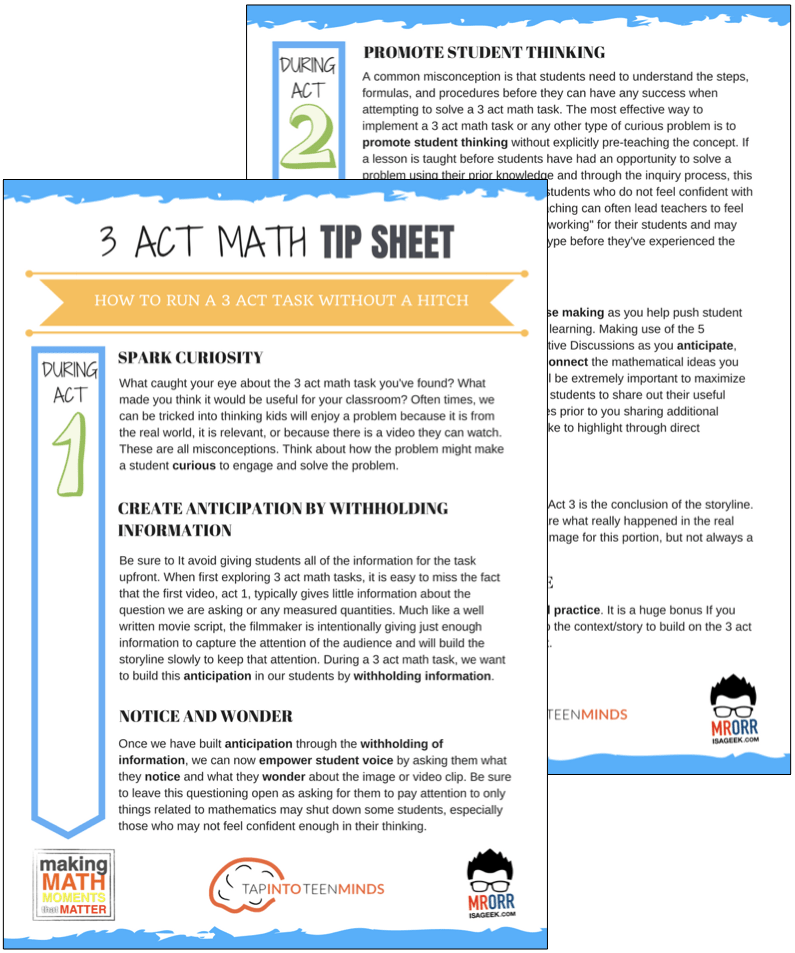
DOWNLOAD THE 3 ACT MATH TASK TIP SHEET SO THEY RUN WITHOUT A HITCH!
Download the 2-page printable 3 Act Math Tip Sheet to ensure that you have the best start to your journey using 3 Act math Tasks to spark curiosity and fuel sense making in your math classroom!
LESSONS TO MAKE MATH MOMENTS
Each lesson consists of:
Each Make Math Moments Problem Based Lesson consists of a Teacher Guide to lead you step-by-step through the planning process to ensure your lesson runs without a hitch!
Each Teacher Guide consists of:
- Intentionality of the lesson;
- A step-by-step walk through of each phase of the lesson;
- Visuals, animations, and videos unpacking big ideas, strategies, and models we intend to emerge during the lesson;
- Sample student approaches to assist in anticipating what your students might do;
- Resources and downloads including Keynote, Powerpoint, Media Files, and Teacher Guide printable PDF; and,
- Much more!
Each Make Math Moments Problem Based Lesson begins with a story, visual, video, or other method to Spark Curiosity through context.
Students will often Notice and Wonder before making an estimate to draw them in and invest in the problem.
After student voice has been heard and acknowledged, we will set students off on a Productive Struggle via a prompt related to the Spark context.
These prompts are given each lesson with the following conditions:
- No calculators are to be used; and,
- Students are to focus on how they can convince their math community that their solution is valid.
Students are left to engage in a productive struggle as the facilitator circulates to observe and engage in conversation as a means of assessing formatively.
The facilitator is instructed through the Teacher Guide on what specific strategies and models could be used to make connections and consolidate the learning from the lesson.
Often times, animations and walk through videos are provided in the Teacher Guide to assist with planning and delivering the consolidation.
A review image, video, or animation is provided as a conclusion to the task from the lesson.
While this might feel like a natural ending to the context students have been exploring, it is just the beginning as we look to leverage this context via extensions and additional lessons to dig deeper.
At the end of each lesson, consolidation prompts and/or extensions are crafted for students to purposefully practice and demonstrate their current understanding.
Facilitators are encouraged to collect these consolidation prompts as a means to engage in the assessment process and inform next moves for instruction.
In multi-day units of study, Math Talks are crafted to help build on the thinking from the previous day and build towards the next step in the developmental progression of the concept(s) we are exploring.
Each Math Talk is constructed as a string of related problems that build with intentionality to emerge specific big ideas, strategies, and mathematical models.
Make Math Moments Problem Based Lessons and Day 1 Teacher Guides are openly available for you to leverage and use with your students without becoming a Make Math Moments Academy Member.
Use our OPEN ACCESS multi-day problem based units!
Make Math Moments Problem Based Lessons and Day 1 Teacher Guides are openly available for you to leverage and use with your students without becoming a Make Math Moments Academy Member.
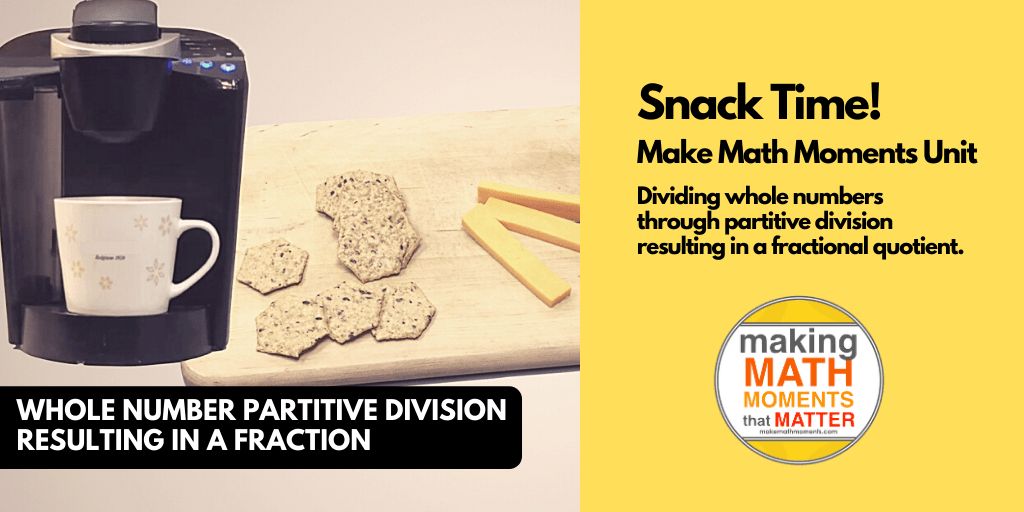
Partitive Division Resulting in a Fraction
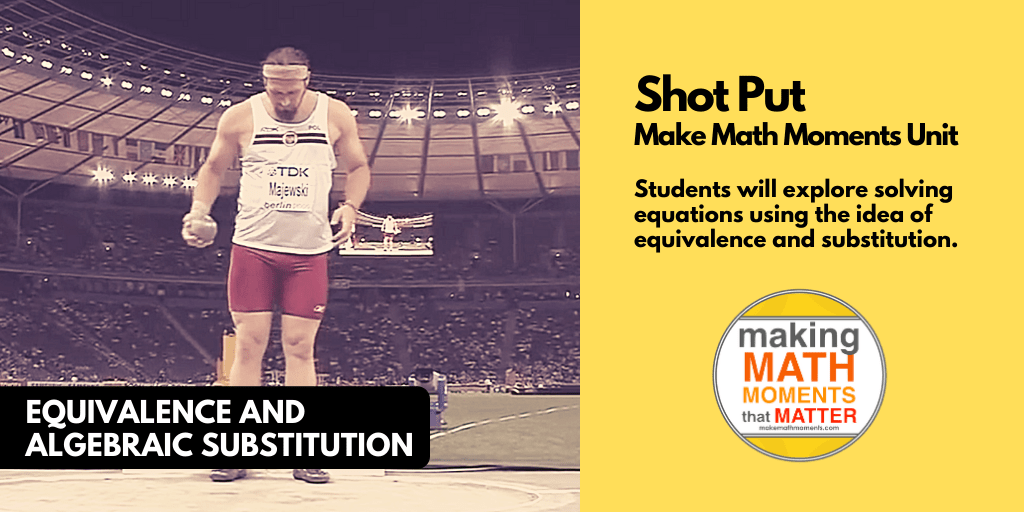
Equivalence and Algebraic Substitution
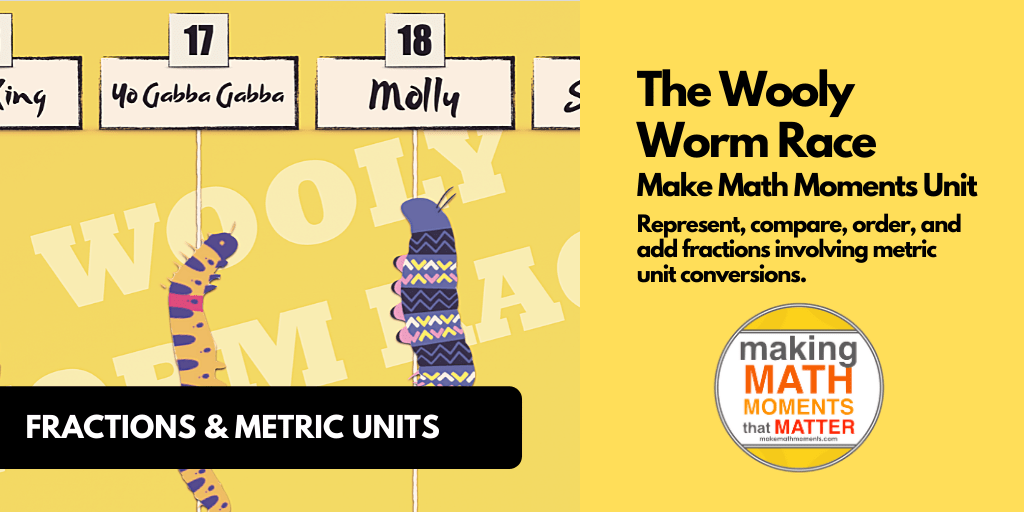
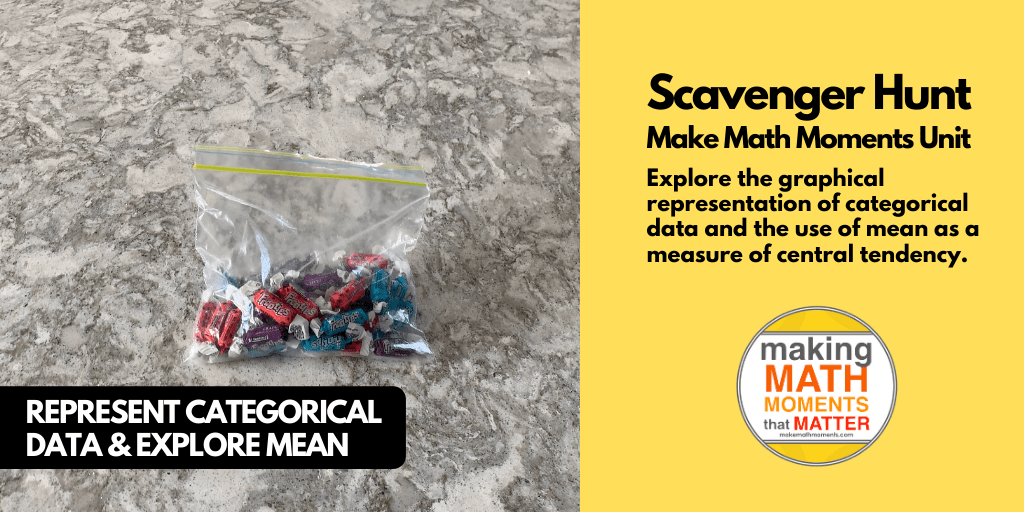
Represent Categorical Data & Explore Mean
Downloadable resources including blackline masters, handouts, printable Tips Sheets, slide shows, and media files do require a Make Math Moments Academy Membership.
ONLINE WORKSHOP REGISTRATION
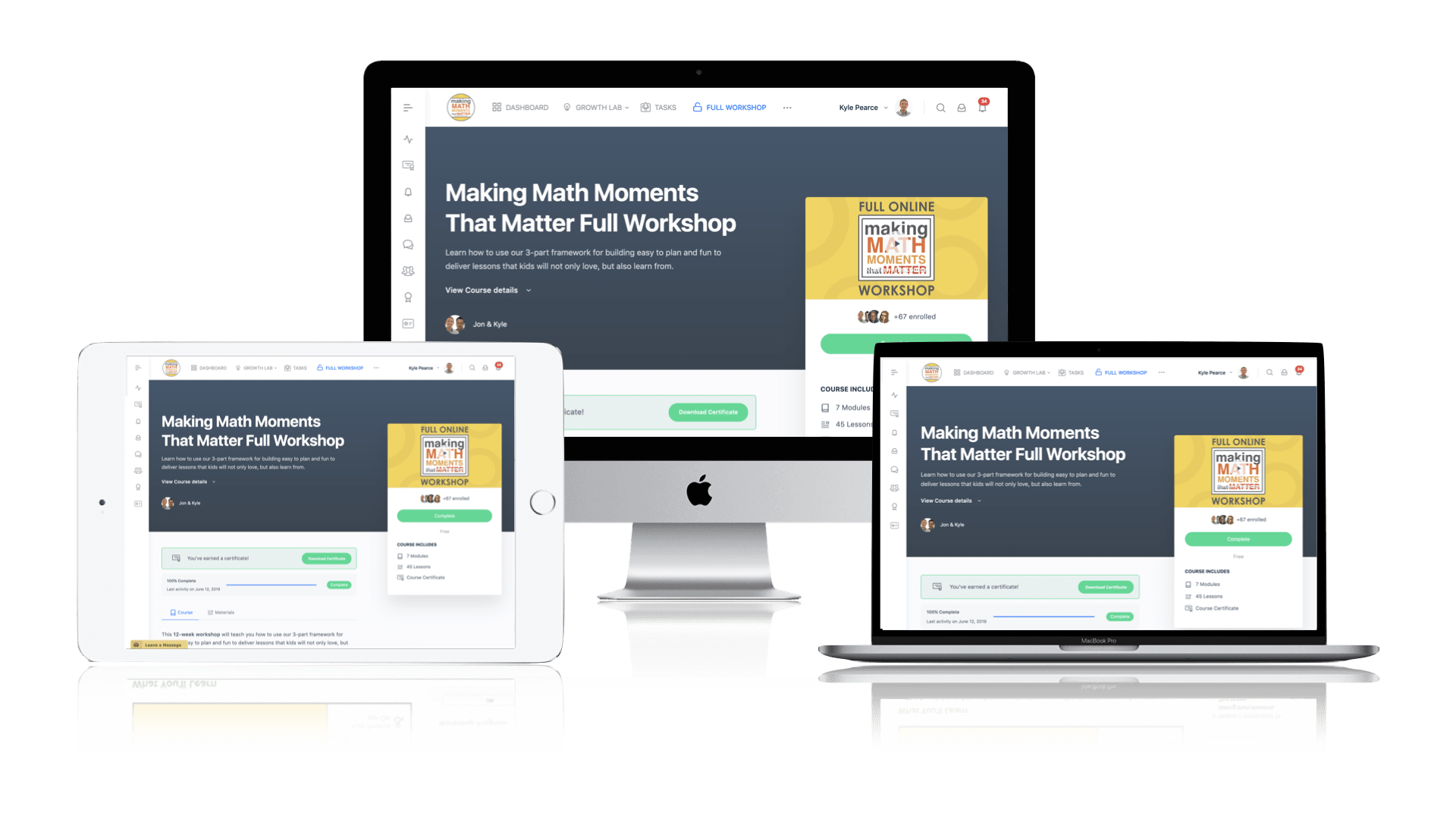
Pedagogically aligned for teachers of K through Grade 12 with content specific examples from Grades 3 through Grade 10.
In our self-paced, 12-week Online Workshop, you'll learn how to craft new and transform your current lessons to Spark Curiosity, Fuel Sense Making, and Ignite Your Teacher Moves to promote resilient problem solvers.
0 Comments